
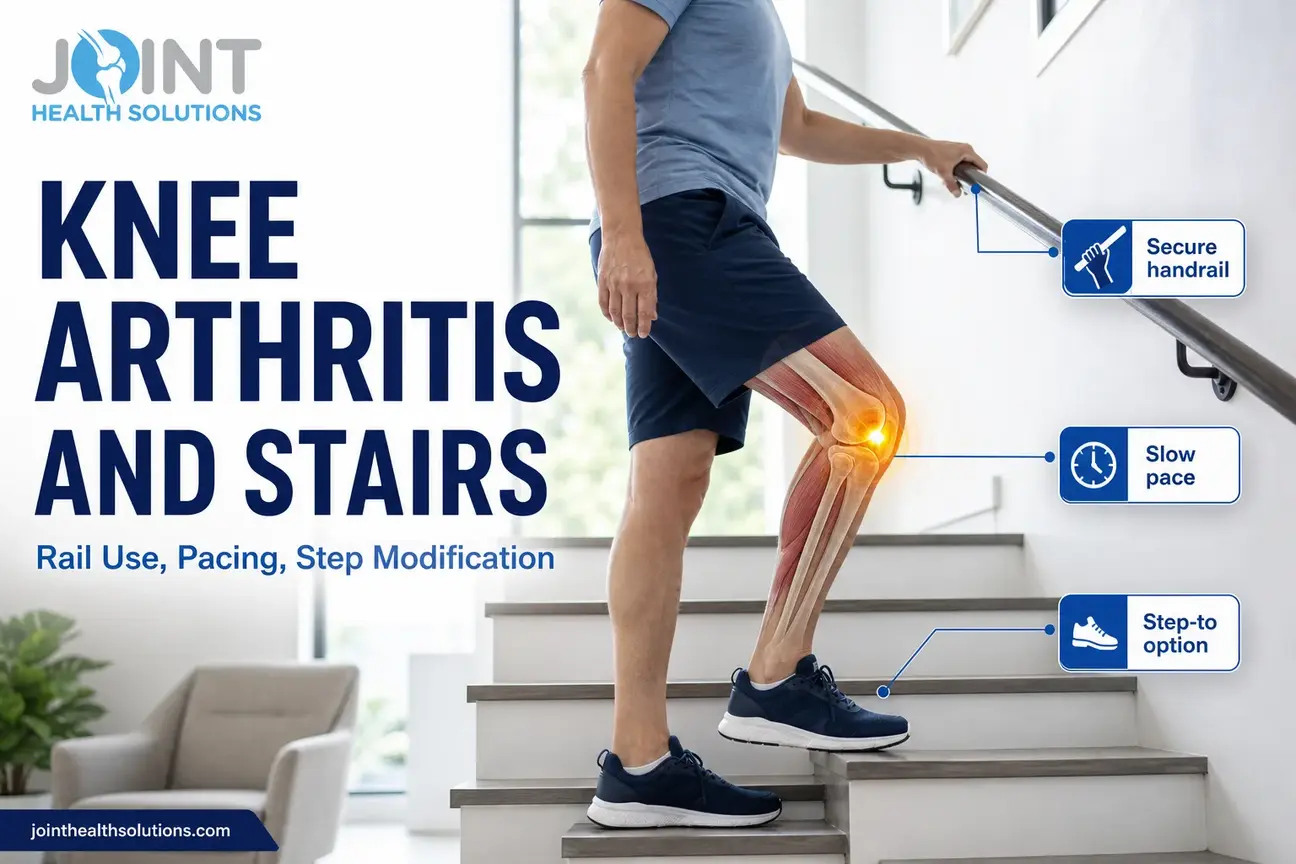
Knee Arthritis and Stairs: Safer Movement Strategies
Respuesta rápida: The phrase knee arthritis stairs often describes a frustrating pattern: the knee feels manageable on level ground, then hurts, stiffens, or feels less reliable on steps. Stairs can be challenging because they combine repeated knee bending, weight-bearing, balance, and controlled lowering or lifting. Safer movement may include slowing down, using a secure handrail, taking one step at a time when needed, keeping one hand free, and reducing unnecessary stair trips. Persistent, worsening, unstable, injured, or concerning symptoms should be evaluated rather than managed with self-care alone.
If stairs have become a repeated barrier to daily life, adults traveling from Huntersville or nearby communities can Solicite una cita with Joint Health Solutions for a clinical assessment at the Charlotte clinic. An evaluation can help clarify whether education, activity modification, fisioterapia, bracing, injections, or another conservative option may be appropriate for the individual situation.
IMAGE_PLACEHOLDER_FEATURED
Knee arthritis stairs safety starts with matching the strategy to the person
Stair difficulty is common in people with painful or stiff knees, but it does not have one single meaning. Some people feel sharp discomfort while going down; others notice stiffness after sitting, weakness when stepping up, or uncertainty about balance. The safer choice depends on the symptom pattern, the staircase, the person’s strength and confidence, and whether there has been a recent injury or change in function.
It is also important not to assume that stair symptoms prove arthritis. Knee arthritis can cause pain, stiffness, swelling, and functional limits, but stairs knee pain can also relate to other joint, muscle, tendon, balance, or movement issues. A clinical assessment may be needed when symptoms are persistent, worsening, or affecting routine activities.
This article focuses on general movement strategies, not a personalized exercise prescription. The goal is to help you think through practical options to discuss with a clinician or physical therapist, especially if climbing stairs has become stressful, unpredictable, or limiting.
Why stairs knee pain can feel different from level walking
Level walking and stair use are both everyday tasks, but they place different demands on the knees. With stairs, the knee repeatedly bends while the leg supports and moves body weight. Going up may require more effort from the thigh and hip muscles. Going down often requires controlled lowering, which can feel uncomfortable or uncertain when the knee is painful, stiff, swollen, or weak.
Stairs also narrow the margin for error. A person may have less time to adjust foot placement, fewer safe directions to move, and a greater need for balance. If the lighting is poor, the steps are uneven, or a person is carrying items, the task becomes more demanding. These environmental factors can contribute to stair pain or insecurity even when the underlying knee problem is not changing.
Joint stiffness can add another layer. If the knee feels stiff after sitting or first thing in the morning, the first few steps on stairs may feel especially awkward. For some people, the issue is not only pain but also trust: the knee may feel like it could give way, even if it has not actually buckled. That feeling deserves attention, especially when it affects safety.
Stair symptoms should be interpreted in context. Discomfort that is mild, brief, and predictable is different from escalating pain, repeated near-falls, locking, significant swelling, or difficulty bearing weight. If symptoms are changing quickly or feel unsafe, it is better to seek evaluation than to keep testing the knee on stairs.
Climbing stairs: 7 practical, safer movement choices
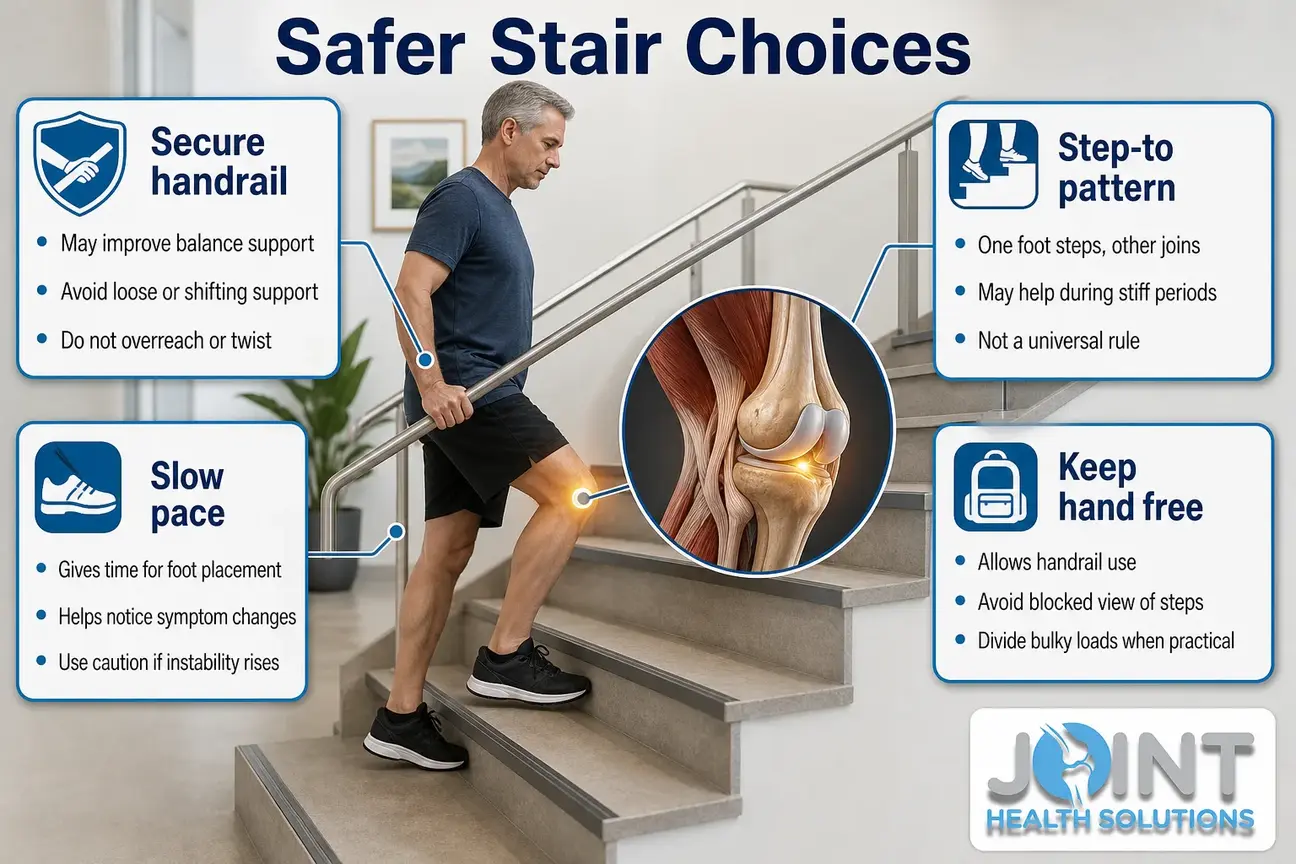
There is no single stair technique that is appropriate for everyone. Still, several general habits may help reduce avoidable strain and improve confidence while you decide whether clinical guidance is needed. These strategies are not arthritis treatments by themselves, and they do not eliminate fall risk. They are practical ways to make the task more controlled.
| Strategy | Why it may help | Use caution when |
|---|---|---|
| Use a secure handrail | May improve balance support and reduce reliance on the painful leg. | The rail is loose, too far away, or requires overreaching. |
| Slow the pace | Gives more time for foot placement and symptom awareness. | Pain, dizziness, or instability increases despite slowing down. |
| Try a step-to pattern when needed | Some people find bringing both feet to the same step more manageable. | You are unsure which leg should lead or feel unsafe practicing alone. |
| Keep one hand free | Allows use of a handrail and improves control. | You need to carry bulky, heavy, or unstable items. |
| Face forward and limit distractions | Supports steadier movement and better awareness of each step. | You are turning, rushing, using a phone, or looking away. |
| Pause safely when fatigue rises | May help you reset before symptoms escalate. | The staircase is crowded, narrow, or unsafe for stopping. |
| Modify unnecessary trips | Reduces repeated stair exposure without requiring complete avoidance. | Avoidance is causing more deconditioning or functional decline. |
Use a secure handrail for support
A handrail can provide balance support during climbing stairs, especially when the knee feels painful or uncertain. The key word is secure. A stable rail that is within comfortable reach is different from a loose banister, wall edge, furniture, or another object that could shift unexpectedly. Avoid reaching across the staircase or twisting the body to grab support.
Using a handrail does not mean pulling yourself up with the arms as the main strategy. For many people, the rail is most useful as a balance aid and a way to steady the body. If you feel you must pull forcefully with the arms to get up the stairs, or if you cannot descend without fear of falling, that may be a sign that further evaluation is appropriate.
Slow down and focus on foot placement
Rushing can make stair pain more noticeable and can increase the chance of a misstep. Slowing down gives you more time to place the foot securely, notice how the knee feels, and adjust before symptoms escalate. A deliberate pace can be especially helpful when stairs are unfamiliar, crowded, wet, poorly lit, or narrow.
Try to keep attention on the next step rather than multitasking. Looking at a phone, turning to talk, carrying loose objects, or stepping while distracted can make a painful knee feel less reliable. If symptoms or fatigue increase, pause only when it is safe to do so and avoid blocking a busy staircase.
Consider a step-to pattern for stair pain
A step-to pattern means placing one foot on a step, then bringing the other foot to the same step before moving again. Some people find this more manageable than alternating feet on every step, particularly during a painful or stiff period. However, stair pain varies, and the more comfortable lead leg can differ depending on whether you are going up or down.
Because balance, pain location, strength, and confidence all matter, a step-to pattern should not be treated as a universal rule. A physical therapist can demonstrate a pattern when appropriate and can help determine whether it is a useful temporary strategy, a safety need, or a sign that more comprehensive care should be considered.
Keep one hand free and reduce load
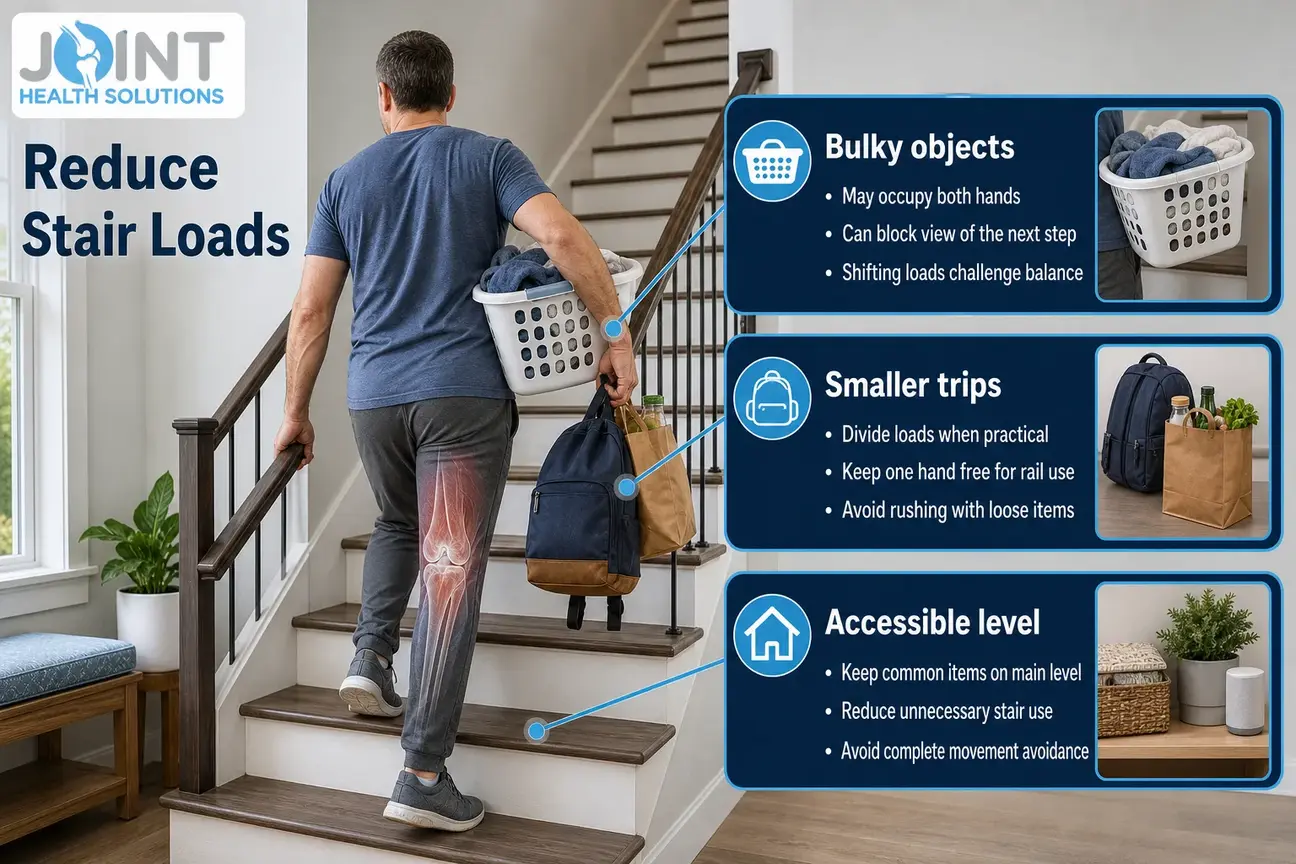
Carrying a laundry basket, groceries, work bag, or bulky object can turn a manageable staircase into a risky task. If both hands are occupied, you may not be able to use the handrail. If the load blocks your view, you may not see the next step clearly. If the load shifts, your knee and balance may have to react quickly.
When practical, divide loads into smaller trips, use a backpack-style bag that does not block vision, or ask for help with heavy items. For some people, organizing frequently used items on the most accessible level can reduce unnecessary stair use without requiring complete avoidance of stairs.
Face forward and limit distractions
Facing forward helps keep your attention on the step in front of you. Turning to talk, checking a phone, or looking away while moving can make climbing stairs more difficult, especially if the knee already feels painful or uncertain. A steady line of sight can support better foot placement and a calmer pace.
If you need to answer a message, adjust an item, or talk with someone, it is safer to do so before starting or after reaching a stable place. This is especially important on unfamiliar stairs, outdoor steps, or stairways with uneven surfaces.
Pause safely when fatigue or symptoms rise
Fatigue can change how the leg moves and how confident the knee feels. If symptoms rise during stair use, a brief pause may help you reset, but only if the location is safe. Avoid stopping where other people may bump into you, where the staircase is narrow, or where you cannot hold secure support.
If you often need to stop because of pain, weakness, shortness of breath, dizziness, or a fear of falling, do not treat that as normal stair difficulty. Those patterns are worth discussing with a clinician, especially if they are new, worsening, or limiting your daily routine.
Modify unnecessary trips without avoiding all movement
Reducing repeated stair trips can be a practical activity modification, particularly during a painful period. For example, you might gather several lightweight items before going upstairs, keep commonly used objects on the main level, or plan chores so climbing stairs is not repeated many times in a short span.
The goal is not to become inactive. It is to reduce unnecessary irritation while preserving safe, appropriate movement. If avoidance keeps increasing because stair pain feels unsafe or unpredictable, a more structured assessment may help identify next steps.
Activity modification is not the same as giving up movement
Activity modification means adjusting the task to improve safety and tolerance. It does not mean becoming inactive or assuming stairs must always be avoided. In fact, complete avoidance may reduce confidence and conditioning for some people. The goal is to reduce avoidable irritation while still supporting safe, tolerable movement when appropriate.
For daily life, modification might include planning stair trips around times when symptoms are lower, placing commonly used items on one level, using an elevator or ramp when available, keeping one hand free, or taking a safer route even if it is slightly longer. If stairs knee pain is predictable after a long day, it may help to schedule chores so the most stair-heavy tasks are not all clustered together.
At the same time, activity modification should not become a way to ignore warning signs. If the knee is repeatedly giving way, swelling substantially, locking, or limiting routine activities, a clinician should evaluate the pattern. Practical changes can make the environment safer, but they do not identify the underlying cause of symptoms.
Where knee strengthening fits into conservative care
Many people ask whether knee strengthening can help with stair difficulty. The general answer is that exercise can be an important part of osteoarthritis care, but the right plan should be individualized. Strength, balance, joint motion, pain sensitivity, medical history, and current function all influence what is appropriate.
The 2019 American College of Rheumatology/Arthritis Foundation guideline, published in 2020, states, “Exercise is strongly recommended for patients with knee, hip, and/or hand OA.” The same guideline notes that exercise for knee and hip osteoarthritis may include walking, strengthening, neuromuscular training, and aquatic exercise, with no hierarchy of one over another.
That wording matters. The guideline supports exercise as a broad category, but it does not establish one universally superior routine for every person with knee osteoarthritis. It also notes that evidence is insufficient to define one ideal exercise duration, intensity, or frequency for all patients. In plain language: knee strengthening may be part of a plan, but a generic online routine is not the same as individualized care.
The same ACR/Arthritis Foundation guideline also states that “Exercise is associated with better outcomes when supervised.” Supervision may help because a clinician or physical therapist can observe movement, adjust activities, and help match the plan to goals, symptoms, access, and preferences.
En Joint Health Solutions, fisioterapia may be part of an individual care plan for patients with joint pain, osteoarthritis, mobility limitations, or musculoskeletal injuries when appropriate. PT is not simply a list of exercises. It may include assessment of movement, functional tolerance, balance, education, mobility strategies, and progression based on the person’s response.
Why no single knee strengthening routine is listed here
It can be tempting to search for a quick knee strengthening routine and start immediately. For some people, general exercise is tolerated well. For others, the wrong starting point may worsen symptoms, reinforce guarded movement, or increase fear of stairs. A person with recent injury, swelling, instability, balance concerns, or difficulty bearing weight may need evaluation before choosing exercises.
That is why this article avoids prescribing sets, repetitions, resistance levels, or a stair-training program. The safer educational message is to discuss knee strengthening with a qualified clinician when symptoms are persistent, limiting, or uncertain. The plan may include strengthening, but it may also include mobility work, balance training, pacing, symptom monitoring, and task-specific strategies.
Exercise plans also need to be realistic. The guideline reports that effectiveness can be enhanced when patient preferences and access are considered and when exercise is supervised or paired with self-management support. A plan that fits your home, schedule, confidence, and goals is more likely to be sustainable than one that looks ideal on paper but is not practical.
How clinicians may think about stair-related knee symptoms
A clinical assessment starts with the story of the symptoms. When did the stair pain begin? Is it worse going up, going down, or both? Does the knee swell, catch, lock, or give way? Did symptoms begin after a fall, twist, impact, or other injury? What activities are now limited? These questions help separate general stiffness from patterns that may require more specific evaluation.
The assessment may also consider the knee’s motion, swelling, tenderness, functional strength, balance, and how the person moves during daily tasks. For people with suspected osteoarthritis, clinicians may consider how symptoms align with the broader picture of osteoarthritis, not just a single activity such as stairs. Imaging or other evaluation may be considered when clinically appropriate, but stair symptoms alone do not diagnose arthritis.
Joint Health Solutions provides personalized, conservative, minimally invasive, non-surgical care for joint pain, arthritis, stiffness, mobility limitations, and related musculoskeletal concerns. Depending on assessment findings, an individual plan may include education, physical therapy, Descarregar los tirantes de rodilla, injections, nutrition support, or other options when appropriate. No treatment is appropriate for everyone, and results vary.
When stair pain should be evaluated
Stair pain should be evaluated when it is persistent, worsening, or repeatedly limiting routine activities. If climbing stairs has become something you plan your day around, avoid entirely, or fear because of near-falls, it is reasonable to seek guidance rather than keep guessing. Evaluation is also appropriate when symptoms do not improve with reasonable activity modification.
Several signs deserve prompt attention. These include substantial swelling, reduced motion, difficulty bearing weight, repeated buckling, locking, or a knee that repeatedly feels unstable. Symptoms that began after a fall, twist, direct impact, or other injury should not be treated as routine arthritis discomfort without assessment.
Some symptoms may require urgent or emergency evaluation. Fever with knee pain, marked redness, warmth, rapidly increasing swelling, new calf swelling or pain, chest pain, shortness of breath, fainting, or severe injury symptoms should not be directed to a routine clinic appointment. For emergencies, call 911 or go to an emergency department.
If symptoms are not emergent but are affecting daily life, a routine evaluation can help identify a safer plan. Adults with Dolor en la rodilla, stiffness, or mobility limitations may benefit from discussing whether conservative care is appropriate and what should be avoided until the knee is assessed.
Stairs knee pain and the role of footwear, lighting, and home setup
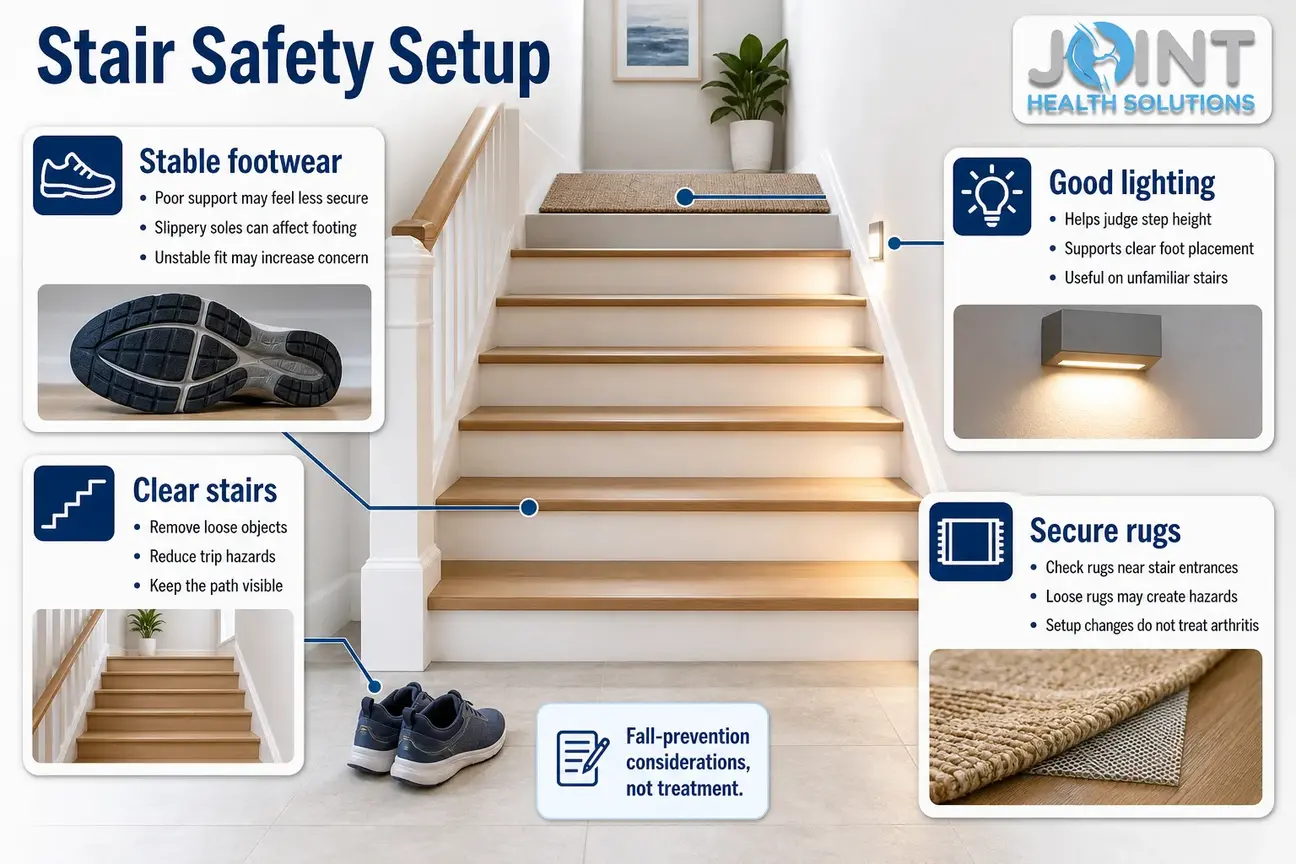
Footwear, lighting, and home setup do not treat arthritis, but they can influence safety. Shoes with poor support, slippery soles, or an unstable fit may make climbing stairs feel less secure. Dim lighting can make it harder to judge step height and foot placement. Clutter on stairs can create a trip hazard even for people without knee pain.
Simple environmental changes may include keeping stairways well lit, removing loose objects, securing rugs near stair entrances, and wearing footwear that feels stable for the task. These changes are fall-prevention considerations, not substitutes for medical evaluation. If you still feel unsafe on stairs after improving the environment, that is useful information to share with a clinician.
For some households, organizing the day can reduce repeated stair trips. Keep frequently used items where they are easiest to access. Consider whether laundry, pet supplies, medications, or work materials can be staged to avoid multiple trips in a short period. If a task requires both hands and blocks handrail use, ask for help or choose another method when possible.
Climbing stairs without pushing through warning symptoms
A common question is whether people should push through discomfort. Mild, familiar symptoms may be different from escalating pain or unsafe sensations. If discomfort increases with each step, if the knee starts to buckle, or if you feel dizzy or off balance, continuing may not be the safest choice. Stop only if you can do so safely, and seek help if needed.
Climbing stairs should not become a test of willpower. Pain can affect attention, confidence, and movement quality. A person who is trying to “get it over with” may rush, grip awkwardly, or misplace a foot. Slowing down and using support can help, but repeated difficulty is a reason to reassess the situation.
It may be useful to notice patterns rather than judge yourself. Does stair pain happen only after long walks? Is it worse after sitting? Does it improve after warming up, or does it escalate? Is descending harder than ascending? These observations can help a physical therapist or clinician understand the functional problem without relying on assumptions.
How stair pain fits into a broader conservative-care plan
Stairs are one functional task. A care plan usually looks at the person as a whole: symptoms, goals, activity level, medical history, mobility, balance, prior injury, and daily environment. Someone whose main goal is safely navigating a two-story home may need a different plan from someone who wants to return to hiking, recreational sports, or work tasks that involve stairs.
The American Academy of Orthopaedic Surgeons publishes a non-arthroplasty knee osteoarthritis guideline that reflects the broader clinical focus on non-surgical management options. For patient education, the important takeaway is not that one option is right for everyone; it is that knee osteoarthritis care often involves matching treatment choices to the person’s presentation and goals.
For some patients, conservative care may emphasize education, physical therapy, activity modification, and home strategies. For others, a clinician may discuss whether knee bracing, injections, or other minimally invasive options are appropriate. These decisions require clinical assessment. A person should not assume that a brace, injection, or specific exercise is needed based only on stair symptoms.
Joint Health Solutions’ approach is patient-centered and evidence-informed. The clinic focuses on conservative, minimally invasive, non-surgical joint care, but that does not mean every option fits every person. Suitability depends on the diagnosis, examination, history, goals, and any relevant risks or limitations.
When to consider a Charlotte appointment from Huntersville
Joint Health Solutions has a verified Clínica de Charlotte at 9350 Benfield Rd, Suite 109, Charlotte, NC 28269. The clinic serves patients from Huntersville as a service area; Huntersville is not a separate office or treatment location. Adults who are able to travel to the Charlotte clinic can call 704-833-3566, Contacte la clínica de Charlotte, or Crea una cita para una consulta to discuss knee pain, arthritis, stiffness, or mobility limitations.
A routine appointment may be appropriate if stair symptoms are limiting daily activities, recurring despite reasonable activity changes, or making you feel less safe. It may also be helpful if you are unsure whether physical therapy, activity modification, bracing, injections, or another conservative option belongs in your plan. An appointment does not ensure a specific treatment or result, but it can help clarify next steps.
If you are preparing for a visit, consider noting when symptoms occur, whether going up or down is harder, whether swelling or instability is present, what strategies help, and what activities you have stopped doing. These details can make the conversation more useful and help connect the plan to real-life function.
A practical way to think about stair pain going forward
Stair difficulty can feel discouraging, especially when it affects home life, work, errands, or recreational activities. A practical approach starts with safety: use secure support when available, slow down, keep one hand free, reduce unnecessary loads, and avoid pushing through escalating pain or instability. These habits may make stairs more manageable while you decide whether evaluation is needed.
At the same time, stairs knee pain should not be ignored when it is persistent, worsening, or limiting function. A personalized plan may include physical therapy, education, strengthening discussions, activity modification, or other conservative options when appropriate. The strongest evidence-based message is that exercise is an important part of osteoarthritis management, but the details should be individualized rather than copied from a generic routine.
For knee arthritis stairs concerns that interfere with daily life, a clinical assessment can help separate general discomfort from symptoms that deserve a more structured plan. Results vary, and no article can determine what is appropriate for an individual knee, but education and timely evaluation can support safer decisions.
Solo para educación general; no sustituye a los consejos médicos profesionales, el diagnóstico ni el tratamiento. La adecuación y los resultados varían y las necesidades individuales requieren una evaluación clínica.
Preguntas frecuentes
Why do stairs hurt more than walking on level ground?
Stairs combine knee bending, weight-bearing, balance, and controlled movement. That can make symptoms more noticeable than walking on a flat surface. However, stair pain can have several causes and does not by itself confirm arthritis.
Should I use a handrail if my knee hurts?
A secure handrail can provide balance support and may reduce the demand placed on a painful or less-confident leg. Use it carefully, avoid rushing, and avoid carrying items that prevent you from holding the rail safely.
Is taking one step at a time safer for knee arthritis?
A step-to pattern may feel more manageable for some people, especially during painful or stiff periods. It is not universally appropriate, and the safest pattern can vary. A physical therapist can assess whether it fits your situation.
Can physical therapy help with stairs and knee mobility?
Physical therapy may help address movement, strength, balance, education, and functional tasks when appropriate. A plan should be individualized rather than copied from a generic exercise routine.
Should I stop using stairs completely?
Not necessarily. Complete avoidance is not a universal recommendation. Activity modification usually focuses on safety, pacing, symptom tolerance, and maintaining appropriate movement when possible.
When should knee pain on stairs be evaluated?
Evaluation is appropriate when symptoms are persistent, worsening, limiting routine activities, associated with swelling or reduced motion, or accompanied by buckling, locking, difficulty bearing weight, injury, or repeated near-falls. Emergency symptoms require 911 or emergency-department care.
Are stair symptoms enough to diagnose knee arthritis?
No. Stair symptoms can occur with several knee, muscle, balance, or movement-related issues. Diagnosis requires appropriate clinical assessment and, when indicated, additional evaluation.
Fuentes
- American College of Rheumatology/Arthritis Foundation, 2019 Guideline for the Management of Osteoarthritis of the Hand, Hip, and Knee, published 2020
- PubMed record: American College of Rheumatology/Arthritis Foundation, 2019 Guideline for the Management of Osteoarthritis of the Hand, Hip, and Knee
- American Academy of Orthopaedic Surgeons, Management of Osteoarthritis of the Knee (Non-Arthroplasty), 2021 guideline document
- American College of Rheumatology, osteoarthritis treatment guideline announcement



 Spanish
 English