
Are you deciding between PRP vs cortisone injections Charlotte for knee or shoulder pain? Both are effective, but they work very differently. Cortisone offers rapid relief by reducing inflammation. PRP uses your body’s own growth factors to promote healing and tissue repair.
If you’re struggling with joint pain from arthritis, tendonitis, or an injury, you’ve likely heard about two common injection options: cortisone and PRP (platelet-rich plasma). Both are minimally invasive and can provide relief, but they work in fundamentally different ways.
Cortisone injections have been a mainstay for decades, offering rapid pain relief by reducing inflammation. PRP therapy, on the other hand, uses your body’s own growth factors to promote healing and tissue repair.
Choosing between them depends on your condition, goals, and overall health. At Joint Health Solutions, we help patients in Charlotte, Huntersville, Matthews, and surrounding areas make informed decisions based on the root cause of their pain.
Cortisone is a powerful corticosteroid that mimics hormones your body produces naturally. When injected directly into a joint or soft tissue, it delivers a concentrated anti-inflammatory effect.
Cortisone works by suppressing the immune response and reducing the production of inflammatory chemicals like prostaglandins and cytokines. This leads to:
The effects typically last from several weeks to a few months, depending on the condition and the individual.
Pros | Cons |
Quick relief (24-72 hours) | Temporary; does not heal underlying damage |
Widely available and covered by insurance | Repeated use can weaken cartilage and tendons |
Low risk of allergic reaction | May interfere with natural healing |
Can provide a ‘window’ for physical therapy | Potential side effects: flare reaction, skin thinning, elevated blood sugar |
PRP (platelet-rich plasma) therapy is a regenerative medicine treatment that uses your own blood to stimulate healing. It’s been widely used in sports medicine and orthopedics for conditions like knee arthritis, shoulder tendinopathy, and ligament injuries.
A small sample of your blood is drawn and placed in a centrifuge. The centrifuge spins the blood to separate platelets and growth factors from red blood cells. The concentrated PRP is then injected into the injured joint or tissue.
Platelets release growth factors that:
Pros | Cons |
Uses your body’s own cells – no foreign substances | May not be covered by insurance |
Addresses the underlying problem, not just symptoms | Relief takes longer (weeks to months) |
Low risk of allergic reaction or side effects | Multiple sessions may be needed |
Potential for long-lasting improvement | Mild soreness after injection common |
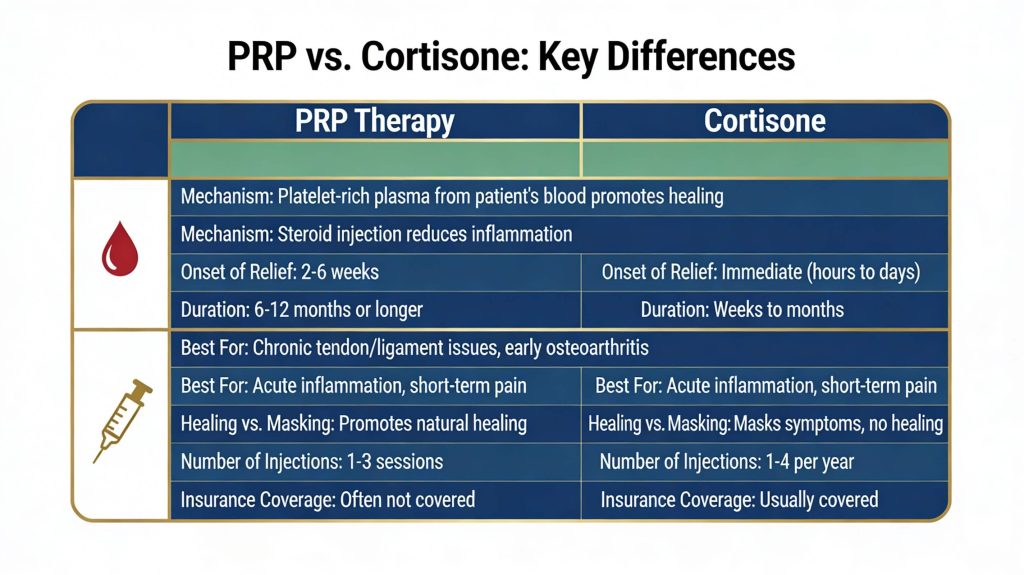
To help you choose, here is a direct comparison of **PRP vs cortisone injections Charlotte**:
Feature | PRP Therapy | Cortisone |
Mechanism | Stimulates healing via growth factors | Suppresses inflammation |
Onset | 2-6 weeks (gradual) | 1-3 days (rapid) |
Duration | Months to years (if tissue heals) | Weeks to months (temporary) |
Goal | Repair tissue | Reduce symptoms |
Repeatability | Can be repeated; no cumulative damage | Limited due to potential tissue damage |
Best For | Osteoarthritis, tendinopathy, ligament injuries | Acute flare-ups, severe inflammation |
Side Effects | Mild soreness, bruising | Flare reaction, skin atrophy, tendon rupture risk |
Your choice between PRP and cortisone depends on several factors:
In some cases, yes. However, timing matters. Cortisone can interfere with the healing process if given too close to PRP. Many practitioners recommend waiting at least 4-6 weeks after a cortisone injection before administering PRP.
Some protocols use cortisone to calm an acute flare, then follow with PRP once inflammation subsides to promote healing. Your provider will tailor the approach to your specific situation.
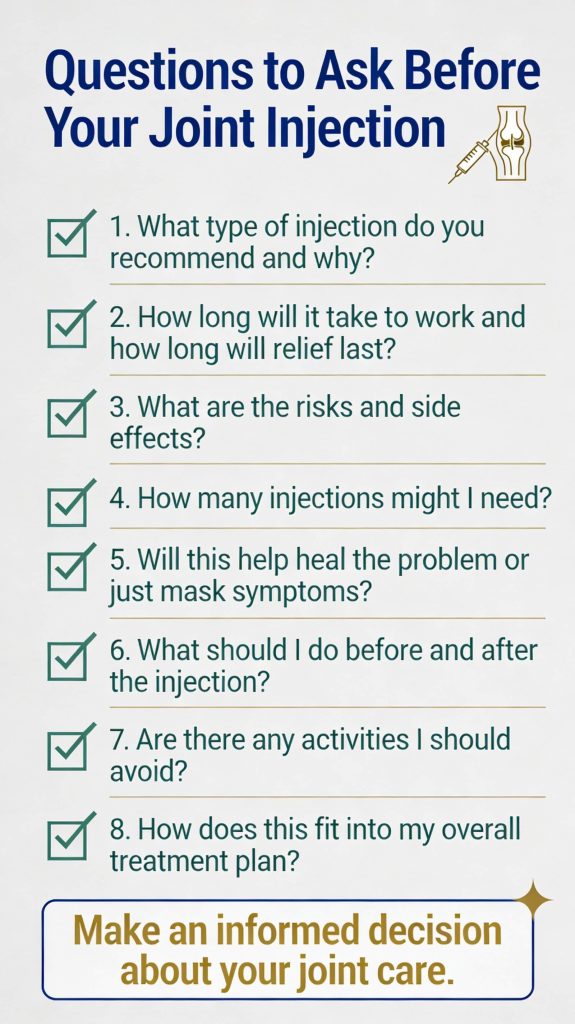
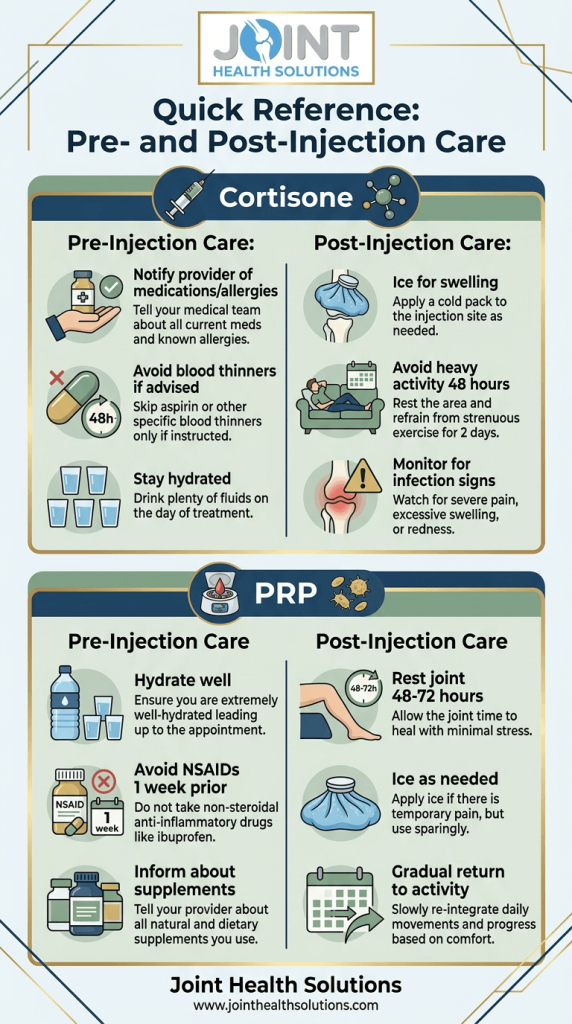
There’s no one-size-fits-all answer. The best choice depends on your specific condition, goals, and overall health. At Joint Health Solutions, we take a comprehensive approach:
Whether you’re dealing with Knee Pain, Shoulder Pain, or Degenerative Joint Disease, we’ll help you navigate your options.
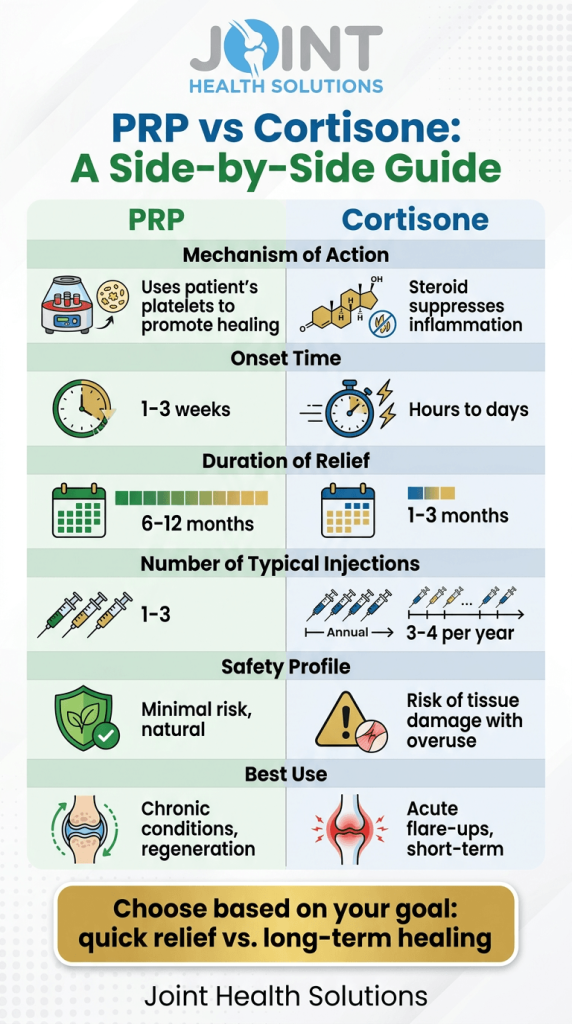
It depends on the condition. PRP aims to heal tissue, offering potential long-term improvement. Cortisone provides rapid relief but does not heal. For chronic conditions like osteoarthritis, PRP often yields better long-term outcomes.
Many patients benefit from one injection, but some conditions (like moderate osteoarthritis) may require a series of 2-3 injections spaced several weeks apart.
Repeated cortisone injections can weaken cartilage and tendons. Most guidelines recommend limiting them to 2-3 per year in a given joint.
Yes. Multiple studies show PRP can reduce pain and improve function in knee osteoarthritis, especially in mild to moderate cases.
The injection itself is similar to a cortisone injection. The area may be sore for a few days afterward, but this is a normal part of the healing response.
Relief typically begins around 2-4 weeks and continues to improve over 3-6 months as tissue healing progresses.
Because PRP uses your own blood, the risk of allergic reaction is extremely low. Minor risks include infection, bleeding, or increased pain (temporary).
Avoid NSAIDs (ibuprofen, naproxen) after PRP, as they can interfere with the healing process. Acetaminophen is usually acceptable. Follow your provider’s instructions.
Cortisone is generally covered by insurance and has a low copay. PRP is often not covered and may cost several hundred to over a thousand dollars per injection, depending on the joint and location.
Schedule a consultation. We’ll discuss your specific condition, goals, and preferences to help you make an informed decision.