
hyaluronic acid injections osteoarthritis CharlotteIf you’re considering hyaluronic acid injections osteoarthritis Charlotte for knee or shoulder pain, you’re not alone. Many patients with osteoarthritis have tried medications, physical therapy, or even cortisone shots. But when those options fall short, hyaluronic acid (HA) injections—also known as viscosupplementation—can offer a different approach.
Hyaluronic acid is a natural substance found in healthy joint fluid that acts as a lubricant and shock absorber. In osteoarthritis, the quality and quantity of HA decrease, leading to increased friction, inflammation, and pain. HA injections replenish this essential fluid, helping to restore joint function and provide lasting relief.
At Joint Health Solutions, we offer hyaluronic acid injections osteoarthritis Charlotte as part of our comprehensive, non-surgical approach. In this article, we’ll explain how they work, who benefits most, and how they compare to other injection options.
Hyaluronic acid is a gel-like substance naturally produced by your body. It’s a key component of synovial fluid—the lubricating fluid inside your joints. In a healthy joint, HA:
In osteoarthritis, the concentration and molecular weight of HA in the joint decrease, contributing to pain, stiffness, and further cartilage breakdown.
HA injections, also called viscosupplementation, involve injecting a purified form of hyaluronic acid directly into the affected joint. This restores the lubricating properties of the synovial fluid, reduces pain, and can help slow disease progression.
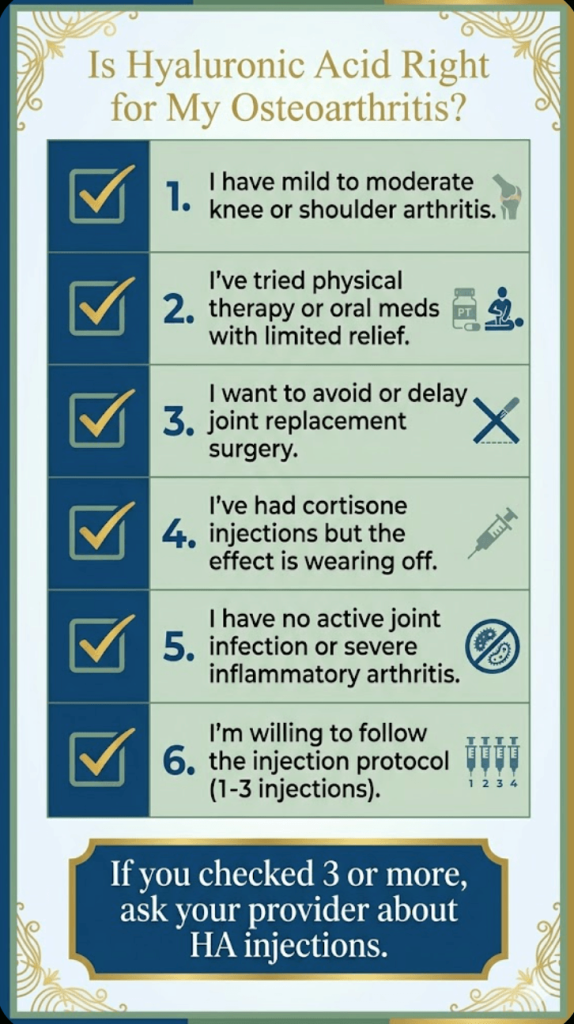
HA injections are most commonly used for knee osteoarthritis, but they can also be effective for shoulders, hips, and other joints. Ideal candidates:
HA injections are generally not recommended for severe osteoarthritis with significant joint space loss or for acute inflammatory arthritis (e.g., rheumatoid arthritis flare).
The procedure is quick and performed in our office:
After the injection, you may be advised to avoid heavy activity for 24-48 hours. Some patients experience mild soreness or swelling, which typically resolves quickly.

Multiple clinical studies have demonstrated the benefits of HA injections for osteoarthritis:
Effectiveness varies by individual, but many patients find HA injections to be a valuable part of their long-term osteoarthritis management plan.
HA injections are considered very safe. However, as with any injection, there are potential risks:
We take every precaution to minimize risks, including using image guidance when appropriate and selecting the right product for your needs.
HA injections work best as part of a comprehensive osteoarthritis care plan. We often combine them with:
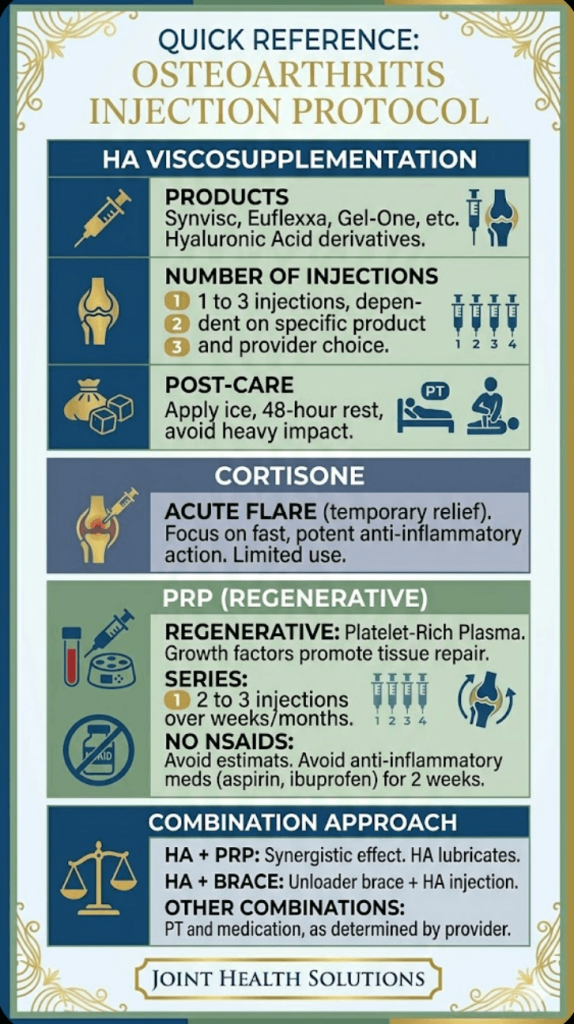
Feature | HA | Cortisone | PRP |
Mechanism | Lubricates & cushions | Suppresses inflammation | Stimulates healing |
Onset | 2-4 weeks | 1-3 days | 2-6 weeks |
Duration | 6-12 months | Weeks to months | Months to years |
Goal | Improve joint environment | Symptom relief | Tissue repair |
Repeatability | Safe to repeat | Limited (2-3/year) | Safe to repeat |
Best for | Mild-mod OA | Acute flare-ups | Chronic OA/tendinopathy |
Each treatment has its place. We often use HA for patients with significant mechanical symptoms (crepitus, stiffness) who need long-lasting lubrication, while PRP may be chosen for those who also have tendon involvement or desire regenerative potential. Cortisone is excellent for acute flares.
Most patients experience relief for 6-12 months. Some may benefit for longer, especially when combined with lifestyle measures and physical therapy.
Many insurance plans cover HA injections for knee osteoarthritis when conservative treatments have failed. Coverage for other joints varies. Our team can help verify your benefits.
It depends on the product. Some are single-injection formulations; others require a series of 3-5 weekly injections. Your provider will discuss the best option for your condition.
Most patients report minimal discomfort. We use local anesthetic and, if needed, imaging guidance to ensure precise placement.
Yes. Many patients have both knees treated, either in the same session or sequentially.
We recommend avoiding high-impact activities for 24-48 hours. Walking and gentle range of motion are encouraged.
We typically wait at least 4-6 weeks after cortisone before administering HA to avoid interference and reduce infection risk.
HA is generally safe, but it is not recommended for active joint infection, severe inflammatory arthritis (e.g., uncontrolled rheumatoid arthritis), or if you have a known allergy to avian proteins (some products are derived from rooster combs; newer products are non-avian).
HA injections are a non-surgical option that can delay or eliminate the need for joint replacement. Many patients successfully manage their symptoms with HA and other conservative measures for years.
Call the Joint Health Solutions office at 704-833-3566 to schedule a consultation. We’ll evaluate your joint, discuss your goals, and determine if HA injections are right for you.
Last Updated: May 9, 2026
This article is supported by the following authoritative sources. Click on any citation to view the original research.

Dr. Jeffrey Galvin

Ariel Curtis, FNP-C