
Meta description: Discover how sugar consumption drives inflammation, damages cartilage through glycation, disrupts gut health and contributes to joint pain. Learn practical steps to reduce sugar and adopt an anti‑inflammatory lifestyle.
You know sugar is bad for your waistline and your teeth. But did you know that every time you reach for a soda, a cookie or even a seemingly ‘healthy’ sweetened yogurt, you may be fueling the inflammation that makes your joints hurt?
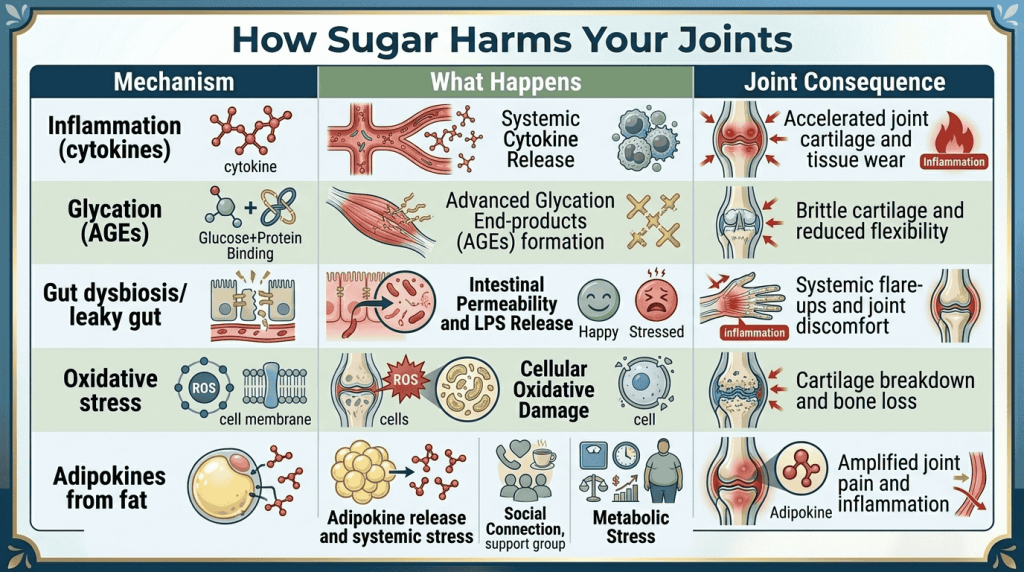
Sugar – especially refined sugar and high‑fructose corn syrup – is one of the most potent drivers of chronic inflammation in the modern diet. It triggers the release of inflammatory cytokines, damages collagen through a process called glycation, and disrupts the gut microbiome, all of which can worsen arthritis, joint stiffness and cartilage loss.
At Joint Health Solutions, we help patients reduce sugar as part of a root‑cause, anti‑inflammatory approach. In this article, we’ll explain exactly how sugar harms your joints, where it hides in your diet and practical steps to cut back without feeling deprived.
When you eat refined sugar or high‑fructose corn syrup, several inflammatory processes are set in motion:
Studies show that people who consume high amounts of added sugar have significantly higher levels of hs‑CRP and more severe osteoarthritis symptoms than those who limit sugar. Reducing sugar intake can therefore be a powerful way to lower systemic inflammation and relieve joint pain.
One of the most damaging effects of sugar on joints is glycation – a process where sugar molecules bind to proteins or fats without enzyme control, forming advanced glycation end products (AGEs). AGEs accumulate in cartilage and cause two major problems:
Sugar doesn’t just affect joints directly – it also wreaks havoc on your gut, which in turn fuels systemic inflammation. A high‑sugar diet feeds pathogenic bacteria and yeast, leading to dysbiosis. It disrupts tight junctions in the intestinal lining, allowing bacterial toxins like lipopolysaccharide (LPS) to enter the bloodstream and trigger inflammation that lands in joints.
Research shows that high intake of sugar increases the relative abundance of Proteobacteria while decreasing Bacteroidetes, tipping the microbiota towards a pro‑inflammatory profile. This imbalance reduces the gut’s capacity to regulate epithelial integrity and mucosal immunity. High simple sugar diets have also been found to increase gut permeability in both animal models and humans.
Learn more about gut health and joint pain in our article on gut health and joint pain.
Reducing sugar isn’t just about skipping dessert. Sugar is hidden in many everyday foods:
Food Category | Hidden Sugar Sources |
Beverages | Soda, sweetened tea, sports drinks, fruit juice, flavored coffee drinks, smoothies |
Condiments | Ketchup, barbecue sauce, teriyaki sauce, salad dressings, pasta sauce |
Breakfast | Flavored yogurt, cereal, granola, instant oatmeal, protein bars |
Snacks | Crackers, pretzels, flavored nuts, dried fruit (often with added sugar), granola bars |
“Healthy” foods | Sweetened plant‑based milks, protein powders, nut butters with added sugar, kombucha |
Packaged meals | Frozen dinners, canned soups, breaded meats |
Learn to read labels: sugar goes by many names – cane sugar, high‑fructose corn syrup, agave, honey, maple syrup, dextrose, maltose and fruit juice concentrate. The higher these appear on an ingredient list, the more sugar the product contains.
The American Heart Association recommends no more than 25 g (6 teaspoons) of added sugar per day for women and 36 g (9 teaspoons) for men, while children under 2 should have no added sugar. Most Americans consume far more than this – often over 70 g per day.
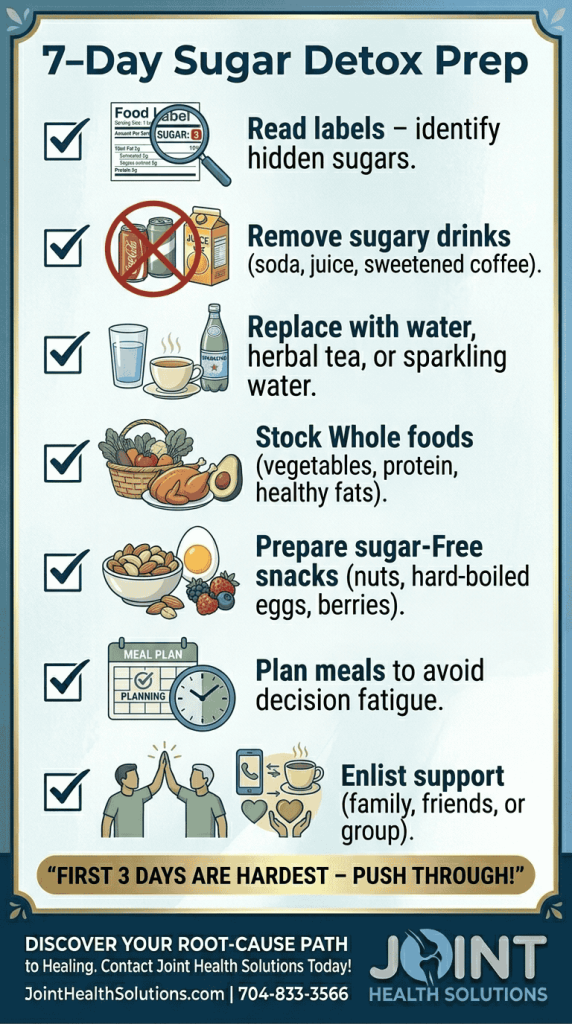
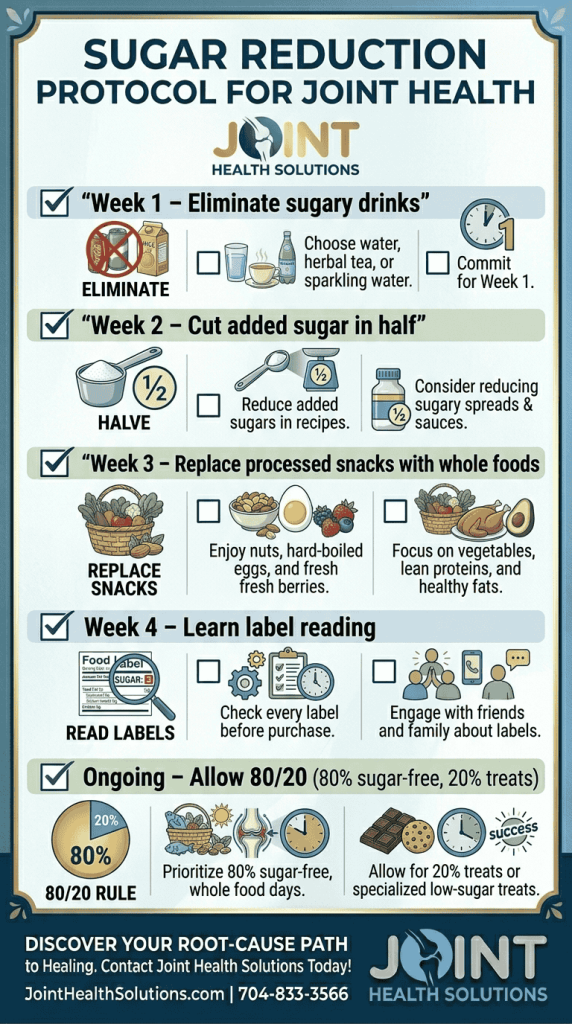
You don’t have to go cold turkey. These gradual steps are more sustainable:
Expect withdrawal: headaches, fatigue, cravings and irritability are common for 3–7 days. Stay hydrated and eat plenty of protein and healthy fats to stabilize blood sugar.
Instead of… | Try… |
Soda | Sparkling water with lemon, lime or berries |
Sweetened yogurt | Plain Greek yogurt with cinnamon and chopped walnuts |
Ice cream | Frozen banana “nice cream” or blended frozen berries |
Candy | Fresh berries or apple slices with almond butter |
Sugary cereal | Oatmeal with nuts, seeds and a few berries |
Flavored coffee creamer | Unsweetened almond milk plus a dash of vanilla extract |
Store‑bought dressing | Olive oil + vinegar + herbs |
Ketchup | Mustard or mashed avocado |
Natural sweeteners (use sparingly): stevia, monk fruit, erythritol and allulose do not spike blood sugar or AGEs. Honey and maple syrup are still sugars, though less processed, and should be used sparingly.
Reducing sugar is a powerful step, but it works best as part of a broader anti‑inflammatory lifestyle:
At Joint Health Solutions, we can help you create a personalized anti‑inflammatory plan that includes sugar reduction, gut healing and joint‑specific treatments like PRP Therapy or Hyaluronic Acid Injections.
Sugar triggers inflammation (cytokines), creates damaging AGEs that stiffen cartilage, disrupts gut health (dysbiosis and leaky gut) and promotes weight gain – all of which worsen arthritis.
It won’t cure structural damage, but many patients experience significantly less pain, stiffness and swelling within 2–4 weeks of reducing sugar.
The American Heart Association recommends ≤25 g (6 tsp) added sugar per day for women and ≤36 g (9 tsp) for men. Most people consume 70 g or more per day.
Whole fruit contains fibre, water and antioxidants that mitigate the negative effects. Limit fruit juice and dried fruit. Berries are the best choice.
They are still sugars and will trigger inflammation, though they have slightly more nutrients. Use them sparingly.
Many patients notice reduced morning stiffness and pain within 2–4 weeks. Full benefits may take 2–3 months.
Yes. High sugar intake, especially fructose, increases uric acid production, which can trigger gout flares.
Eat more protein and healthy fats to stabilize blood sugar. Drink water. Wait 10 minutes – cravings often pass. Try a piece of dark chocolate (70%+ cocoa) instead of milk chocolate.
Aspartame, sucralose and saccharin may disrupt the gut microbiome and are not recommended. Stevia, monk fruit and erythritol are better options.
Call our office. We can assess your diet, provide personalized guidance and integrate sugar reduction with other joint treatments.
Arthritis Foundation – How Too Much Sugar Affects Health and How to Cut Back – https://www.arthritis.org/health-wellness/healthy-living/nutrition/foods-to-limit/sugar
Advanced glycation endproducts in the development of osteoarthritis – Arthritis Research & Therapy – https://pmc.ncbi.nlm.nih.gov/articles/PMC2833544/
High Intake of Sugar and the Balance between Pro- and Anti-Inflammatory Gut Bacteria – Nutrients – https://pmc.ncbi.nlm.nih.gov/articles/PMC7284805/
American Journal of Clinical Nutrition – Added sugar intake and inflammatory markers – https://doi.org/10.1093/ajcn/nqy298
Mayo Clinic – Advanced glycation end products (AGEs) – https://www.mayoclinic.org/healthy-lifestyle/nutrition-and-healthy-eating/expert-answers/advanced-glycation-end-products/faq-20423422