
Active Recovery Days: Designing Joint-Friendly Movement Plans for Rest Days
You wake up on your rest day with a familiar ache in your knee or shoulder. The thought of doing nothing feels wrong—you know movement is good for your joints—but the fear of aggravating the pain holds you back. This is where the concept of active recovery becomes your greatest ally. Instead of complete rest, which can lead to stiffness and muscle atrophy, active recovery uses low-intensity, intentional movement to promote blood flow, reduce inflammation, and gently maintain joint function. But not all movement is created equal, especially when you have chronic joint pain. That’s why designing joint-friendly movement plans for your rest days is essential. In this guide, we’ll walk you through evidence-based strategies to move smarter, not harder, so you can recover effectively while protecting your joints.
Joint-Friendly Movement Plans: Why Active Recovery Matters for Joint Health
Active recovery is more than a buzzword—it’s a physiological necessity. When you exercise, your muscles and joints undergo stress that triggers microscopic damage and inflammation. Rest days are when your body repairs and strengthens. However, complete immobilization can reduce synovial fluid circulation, leading to joint stiffness and decreased range of motion. Active recovery, on the other hand, stimulates synovial fluid production, which lubricates the joints and nourishes cartilage. Studies show that low-intensity movement on rest days can reduce delayed onset muscle soreness (DOMS) and improve overall recovery. For individuals with arthritis or joint pain, joint-friendly movement plans are particularly beneficial because they minimize impact while maximizing benefits like improved circulation, reduced stiffness, and better mood. By incorporating active recovery into your routine, you create a sustainable cycle of movement that supports long-term joint health.
Key Principles of Joint-Friendly Movement
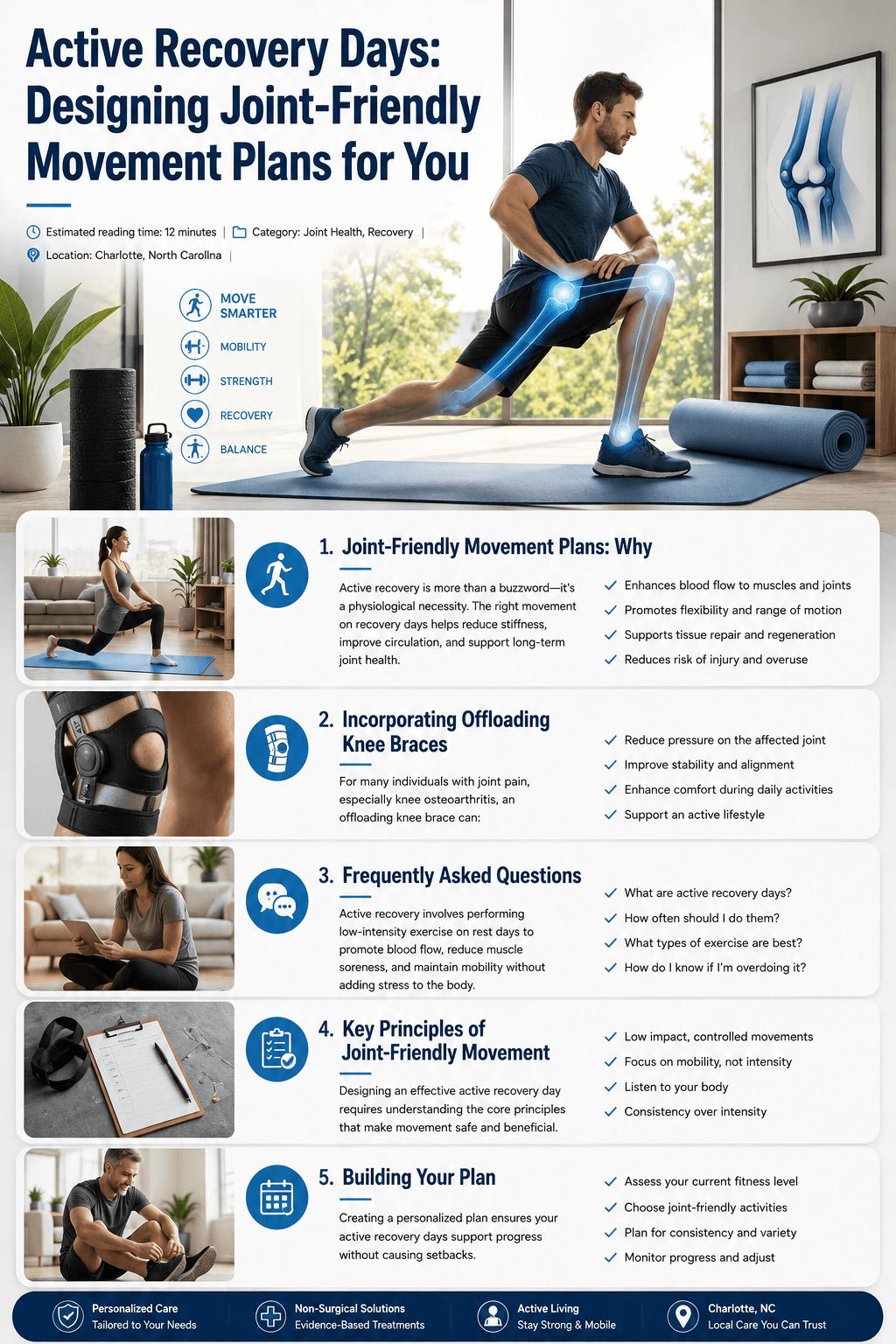
Designing an effective active recovery day requires understanding the core principles that make movement safe and beneficial for joints. First, prioritize low-impact activities that do not place excessive stress on weight-bearing joints. Examples include walking, swimming, cycling on a stationary bike, and gentle yoga. Second, focus on range-of-motion exercises rather than strength or endurance. The goal is to move the joint through its full, pain-free arc to maintain flexibility. Third, listen to your body’s signals. Pain is a warning—if an activity increases pain, stop and modify. Fourth, incorporate dynamic warm-ups and cool-downs to prepare the joints and reduce post-activity soreness. Fifth, use supportive tools like offloading knee braces or proper footwear to align the body and reduce strain. These principles form the foundation of any joint-friendly movement plan and can be tailored to your specific condition, whether you have knee osteoarthritis, shoulder impingement, or general joint stiffness.
The Power of Consistency Over Intensity When it comes to active recovery, the biggest mistake is treating a rest day like a modified workout session. Joint-friendly movement is not designed to burn calories or build cardiovascular endurance; its sole purpose is restoration. Consistency is far more valuable than intensity. By committing to just 15 to 20 minutes of intentional, low-impact movement, you keep the joint capsule healthy, reduce the accumulation of inflammatory fluid, and accelerate your return to normal activities. Think of these active rest sessions as a proactive investment in your joint longevity—a daily habit that bridges the gap between structured physical therapy and long-term, pain-free mobility right here in Charlotte.
For a visual guide, refer to the infographic below that outlines these key principles.
Sample Active Recovery Day Plan for Knee Pain
If you experience knee pain, your active recovery plan should focus on non-weight-bearing or low-weight-bearing activities that strengthen the surrounding muscles without jarring the joint. Here is a sample plan:
Morning: Gentle Range of Motion
Start with 10 minutes of ankle pumps and seated leg extensions. While sitting, slowly straighten your knee and hold for 5 seconds, then lower. Repeat 10 times per leg. Follow with heel slides: lying on your back, slowly slide your heel toward your buttocks, then return. This promotes synovial fluid movement.
Midday: Walking with Support
Take a 15-20 minute walk on a flat, soft surface like a track or grass. Wear supportive shoes and consider using an offloading knee brace if prescribed. The brace can reduce pressure on the affected compartment of the knee, making walking more comfortable. Maintain a steady, comfortable pace.
Afternoon: Stationary Cycling
Cycle on a stationary bike with low resistance for 10-15 minutes. Keep the seat high enough so your leg is almost fully extended at the bottom of the pedal stroke. This provides a smooth, non-impact cardiovascular workout that strengthens the quadriceps and hamstrings without stressing the knee joint.
Evening: Stretching and Ice
Perform gentle hamstring and quadriceps stretches, holding each for 20-30 seconds. If the knee feels warm or swollen, apply ice for 15 minutes. This routine helps reduce inflammation and prepares the joint for the next day’s activities.
Sample Active Recovery Day Plan for Shoulder Pain
Shoulder pain requires careful attention to avoid aggravating the rotator cuff or other structures. An active recovery day for the shoulder emphasizes gentle mobility and isometric exercises.
Morning: Pendulum Exercises
Lean forward slightly, letting your affected arm hang down. Gently swing your arm in small circles clockwise and counterclockwise for 1-2 minutes each direction. This promotes blood flow without straining the shoulder.
Midday: Wall Slides
Stand facing a wall with your hand against it. Slowly slide your hand up the wall as high as comfortable, then slide back down. Repeat 10 times. This exercise improves shoulder flexion and scapular mobility.
Afternoon: Isometric Holds
Stand in a doorway and press your forearm against the frame without moving. Hold for 10 seconds, relax, and repeat 5 times. This strengthens the shoulder muscles without joint movement, ideal for recovery.
Evening: Stretching and Heat
Perform cross-body stretches and triceps stretches gently. Apply a warm pack for 10 minutes to relax muscles before bed. This routine can help reduce stiffness and improve sleep quality.
Incorporating Offloading Knee Braces and Physical Therapy
For many individuals with joint pain, especially knee osteoarthritis, an offloading knee brace can be a game-changer during active recovery. These braces are designed to shift weight away from the damaged part of the knee, reducing pain and allowing for more comfortable movement. At Joint Health Solutions, we offer advanced offloading knee braces as part of our non-surgical treatment options. When combined with a personalized physical therapy program, these braces can help you stay active on rest days without exacerbating joint damage. Physical therapy focuses on strengthening the muscles around the joint, improving biomechanics, and teaching you proper movement patterns. Our therapists in Charlotte can design a joint-friendly movement plan that integrates brace use, exercises, and activity modifications. To learn more about our approach, visit about us or see our practice and meet our providers.
Nutrition Tips to Support Recovery
Nutrition plays a vital role in joint recovery. Anti-inflammatory foods can help reduce the systemic inflammation that contributes to joint pain. Incorporate omega-3 fatty acids from sources like salmon, walnuts, and flaxseeds. Antioxidant-rich fruits and vegetables, such as berries, spinach, and kale, combat oxidative stress. Adequate protein intake supports muscle repair, which is essential for joint stability. Stay hydrated to maintain synovial fluid viscosity. Avoid processed foods and excessive sugar, which can promote inflammation. While nutrition alone cannot cure joint problems, it complements your active recovery efforts. For a personalized nutrition plan, consider consulting with a specialist. At Joint Health Solutions, we offer nutrition counseling as part of our comprehensive care.
Institutional Sources
- American Academy of Orthopaedic Surgeons – Active Recovery
- Mayo Clinic – Exercise and Arthritis
- Cleveland Clinic – Active Recovery Workouts
- Harvard Health – The Benefits of Active Recovery
- National Institutes of Health – Physical Activity and Joint Health
Frequently Asked Questions
What is active recovery?
Active recovery involves performing low-intensity exercise on rest days to promote blood flow, reduce muscle soreness, and maintain joint mobility without causing additional stress.
Can I exercise on rest days with joint pain?
Yes, but only with low-impact, joint-friendly activities. Avoid high-impact exercises like running or jumping. Listen to your body and stop if pain increases.
How does nutrition affect joint recovery?
Anti-inflammatory foods can reduce systemic inflammation, while proper hydration supports synovial fluid. Protein aids muscle repair, which indirectly supports joint stability.
When should I use an offloading knee brace?
An offloading knee brace is typically used during weight-bearing activities to reduce pressure on the affected knee compartment. It is often prescribed for knee osteoarthritis.
What are the best low-impact activities for joint health?
Walking, swimming, stationary cycling, yoga, and gentle stretching are excellent low-impact activities that support joint health without excessive stress.
How often should I do active recovery?
Active recovery can be done on 1-2 rest days per week, or even daily if the intensity is low and you have no acute pain.
What if I feel pain during active recovery?
Stop the activity immediately. Pain is a sign that the joint is being irritated. Modify the movement or choose a different exercise. Consult a healthcare provider if pain persists.
Can active recovery replace physical therapy?
No, active recovery complements but does not replace physical therapy. Physical therapy provides a structured, individualized program to address underlying issues.
Is it safe to do active recovery with arthritis?
Yes, with appropriate modifications. Low-impact activities can help maintain joint function and reduce stiffness. Always consult your doctor before starting a new routine.
How do I create a personalized joint-friendly movement plan?
Start by assessing your pain levels and limitations. Choose low-impact activities you enjoy. Gradually increase duration. For best results, work with a physical therapist or specialist.