
Exercises After Knee Gel Injections: Do’s and Don’ts
If you’ve recently received knee gel injections—also known as viscosupplementation—you’re likely eager to get back to your normal activities. But you may be wondering: what exercises are safe, and which ones could interfere with your recovery? The right movement plan can make a meaningful difference in how your knee responds to the injection. This guide outlines the exercises after knee gel injections that may help you regain strength and mobility while avoiding common pitfalls.
Knee gel injections deliver hyaluronic acid, a substance naturally found in joint fluid, directly into the knee joint. The goal is to improve lubrication and cushioning, which may reduce pain and improve function in people with knee osteoarthritis. However, the injection itself is only part of the picture. How you move in the days and weeks afterward can influence your comfort and long-term results.
In this article, we’ll walk you through a step-by-step exercise plan, from the first few days to several weeks post-injection. We’ll also highlight exercises to avoid, signs that you’re overdoing it, and when to consult your healthcare provider. Whether you’re recovering at home or working with a physical therapist, this information can help you make informed decisions about your recovery.
Why Exercise Matters After Knee Gel Injections
Exercise is a cornerstone of joint health, especially after a procedure like knee gel injections. The injected hyaluronic acid may improve joint lubrication, but your muscles, ligaments, and tendons still need to work together to support the knee. Gentle, targeted exercise can help maintain range of motion, prevent muscle weakness, and promote circulation—all of which are important for recovery.
Research suggests that exercise combined with viscosupplementation may enhance outcomes. A 2021 meta-analysis of hyaluronic acid injections for knee osteoarthritis found that these injections may provide pain relief and functional improvement, though results vary (PMID: 34011337). Adding a structured exercise program could potentially amplify these benefits, though more studies are needed to confirm the optimal approach.
Physical therapy is often recommended after knee gel injections. A physical therapist can design a personalized program that addresses your specific weaknesses and movement patterns. They can also teach you proper form and help you progress safely. Even if you don’t attend formal therapy, incorporating some basic exercises at home can be beneficial.
How Soon Can You Exercise After the Injection?
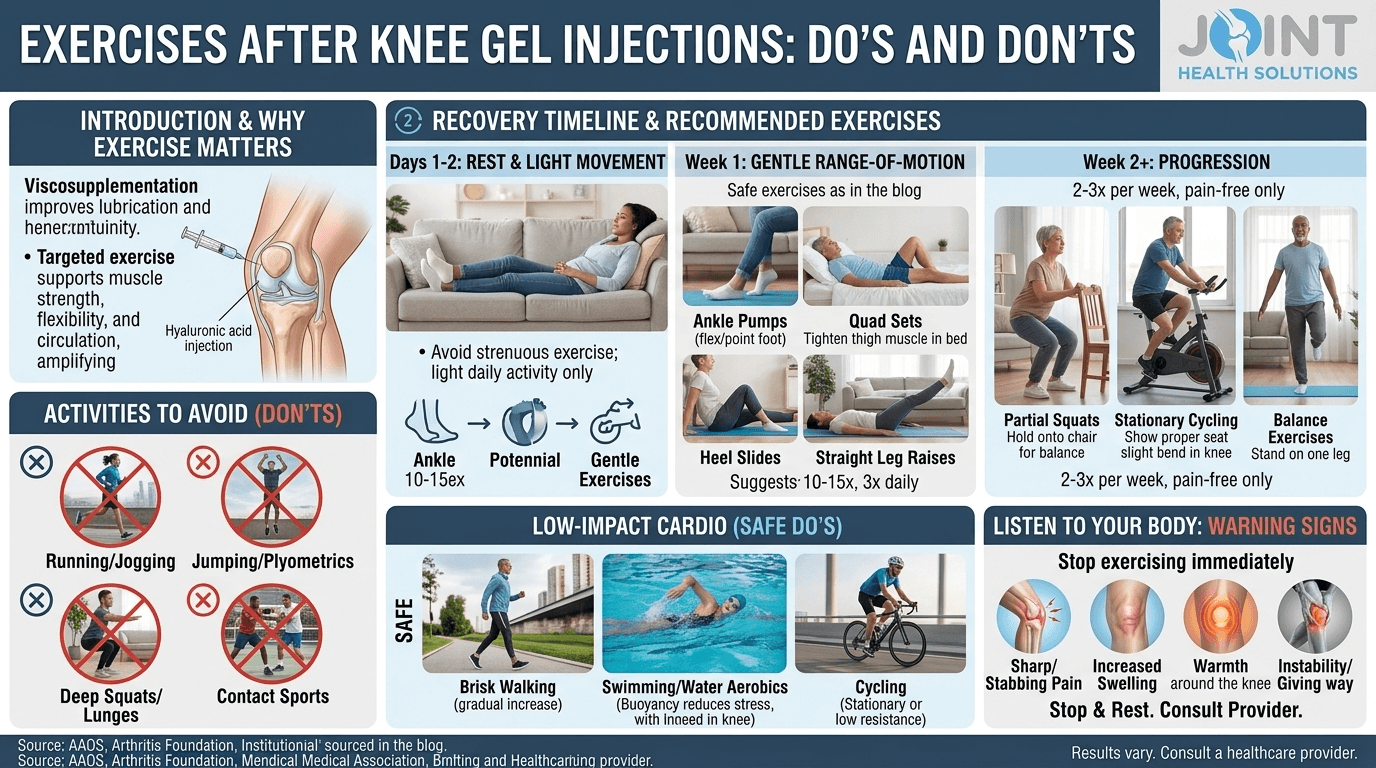
The immediate post-injection period is crucial. Your healthcare provider will give you specific instructions, but generally, you should rest the knee for the first 24 to 48 hours. This doesn’t mean complete bed rest—light activity of daily living is fine—but you should avoid strenuous exercise or prolonged standing.
After the first couple of days, you can begin gentle range-of-motion exercises. These are movements that don’t put much load on the joint but help keep it flexible. For example, ankle pumps, heel slides, and quad sets can be started early. These exercises are low-risk and can be done several times a day.
It’s important to listen to your body. If an exercise causes sharp pain, stop and consult your provider. Mild discomfort or stretching sensation is normal, but sharp or increasing pain is a red flag. Remember, everyone recovers at their own pace, and your individual response may differ.
Safe Exercises to Start in the First Week
During the first week after your injection, focus on gentle movements that don’t stress the knee joint. Here are some safe exercises to consider:
- Ankle pumps: While lying down or sitting, flex and point your foot. This helps maintain circulation in the lower leg without moving the knee.
- Quad sets: Sit with your leg straight, tighten the thigh muscle, and hold for 5–10 seconds. Relax and repeat 10–15 times. This strengthens the quadriceps without bending the knee.
- Heel slides: Lie on your back with your knee bent, slide your heel toward your buttocks, then straighten. This gently works on knee flexion and extension.
- Straight leg raises: Lie on your back, one knee bent, the other straight. Lift the straight leg a few inches off the floor, hold, and lower. This engages the hip and thigh muscles.
- Seated knee extensions: Sit in a chair, extend one leg out straight, hold briefly, then lower. This can be done with a light ankle weight if tolerated.
These exercises are designed to be gentle and can be performed daily. Start with a small number of repetitions and gradually increase as your comfort allows. Remember to breathe and avoid holding your breath.
Exercises to Progress to After Two Weeks
After the first two weeks, you may be ready for more challenging exercises, provided you’re not experiencing pain. These exercises help rebuild strength and stability:
- Partial squats: Stand with feet shoulder-width apart, hold onto a chair or counter for balance, and bend your knees to about 30–45 degrees. Keep your back straight and don’t let your knees go past your toes.
- Step-ups: Use a low step or platform. Step up with one leg, then step down. Start with a low step and increase height gradually.
- Leg presses (if available): Use a seated leg press machine with light resistance, ensuring your knees don’t lock out.
- Hamstring curls: Stand and hold onto a chair, bend one knee, bringing your heel toward your buttock. You can use ankle weights or a resistance band.
- Balance exercises: Stand on one leg for 10–30 seconds, using a wall or chair for support if needed. This improves proprioception and stability.
These exercises should be done 2–3 times per week, with rest days in between. If you experience increased pain or swelling, reduce the intensity or frequency and consult your provider.
Low-Impact Activities That Complement Recovery
In addition to specific exercises, low-impact activities can help maintain cardiovascular fitness without stressing your knee. These activities are generally well-tolerated after the initial recovery period:
- Walking: Start with short, slow walks on flat surfaces, gradually increasing duration. Walking helps maintain joint mobility and circulation.
- Swimming or water aerobics: The buoyancy of water reduces stress on the knee while providing resistance for muscle strengthening.
- Cycling (stationary): Set the seat height so your knee has a slight bend at the bottom of the pedal stroke. Start with low resistance and short sessions.
- Elliptical trainer: This machine provides a smooth, low-impact motion that can be easier on the knee than walking on hard surfaces.
- Tai chi or gentle yoga: These practices improve flexibility, balance, and body awareness, which can be beneficial for knee health.
Always warm up before activity and cool down afterward. Pay attention to how your knee feels during and after exercise. If you notice increased pain or swelling, modify the activity or take a rest day.
Exercises to Avoid After Knee Gel Injections
While exercise is encouraged, certain activities can put excessive stress on the knee and should be avoided, especially in the early stages of recovery. High-impact and high-load activities may counteract the benefits of the injection and increase the risk of injury.
| Activity | Why to Avoid | Safer Alternative |
|---|---|---|
| Running or jogging | High impact forces on the knee joint | Brisk walking or elliptical |
| Jumping or plyometrics | Sudden high loads can stress the joint | Low-impact strength training |
| Deep squats or lunges | Excessive knee flexion may increase pain | Partial squats or step-ups |
| Contact sports | Risk of twisting or impact injuries | Swimming or cycling |
| High-impact aerobics | Repetitive jarring of the knee | Water aerobics or walking |
Additionally, avoid exercises that require twisting or pivoting on the affected knee, such as certain dance moves or tennis. Also, be cautious with exercises that involve deep knee bends, such as full squats or lunges, as these can increase stress on the joint. If you’re unsure about a specific activity, consult your provider or physical therapist.
Signs You’re Overdoing It: When to Stop
It’s essential to recognize the signs that you may be pushing too hard. Overexertion can lead to increased pain, swelling, or even injury. Here are some warning signs:
- Sharp or stabbing pain during or after exercise
- Increased swelling or warmth around the knee
- A feeling of instability or giving way
- Pain that lasts more than a few hours after exercise
- Reduced range of motion compared to before exercise
If you experience any of these, stop the activity and rest. Apply ice to the knee to reduce swelling, and elevate the leg. If symptoms persist or worsen, contact your healthcare provider. It’s always better to err on the side of caution and seek professional advice.
How Physical Therapy Can Optimize Your Results
Working with a physical therapist can be highly beneficial after knee gel injections. A therapist can assess your specific movement patterns, muscle imbalances, and functional limitations, then design a tailored exercise program. They can also provide manual therapy, such as soft tissue mobilization, to improve joint mobility.
Physical therapy can help you progress safely, ensuring you don’t advance too quickly or use incorrect form. A therapist can also educate you on proper body mechanics for daily activities, such as stair climbing and rising from a chair. This guidance can be invaluable in maximizing the benefits of your injection.
At Joint Health Solutions in Charlotte, we offer physical therapy services that complement your injection treatment. Our team can work with you to develop a personalized plan that addresses your goals and needs. Hyaluronic acid injections are just one part of a comprehensive approach to knee pain relief.
Nutrition Tips to Support Joint Recovery
While this article focuses on exercise, nutrition also plays a role in joint health. A balanced diet rich in anti-inflammatory foods may support your recovery. Consider incorporating foods high in omega-3 fatty acids, such as salmon and walnuts, as well as plenty of fruits and vegetables. Staying hydrated is also important for joint lubrication.
Some patients find that maintaining a healthy weight reduces stress on the knee joint. Even modest weight loss can ease pain and improve function. If you need guidance, our team can provide nutrition planning as part of your overall care.
Remember, nutrition is not a substitute for exercise or medical treatment, but it can complement your efforts. Always discuss dietary changes with your healthcare provider, especially if you have underlying health conditions.
When to Call Your Doctor
While knee gel injections are generally safe, it’s important to know when to seek medical attention. Contact your doctor if you experience any of the following:
- Signs of infection, such as redness, warmth, or fever
- Severe pain that doesn’t improve with rest or medication
- Sudden swelling or effusion in the knee
- Inability to bear weight on the leg
- Numbness or weakness in the leg
These symptoms could indicate a complication, such as infection, allergic reaction, or injury. Prompt medical evaluation is essential to ensure proper treatment.
The decision to pursue knee gel injections should be made in consultation with your provider, weighing potential benefits and risks. Not every patient is a candidate, and outcomes vary. Our specialists at Joint Health Solutions can help you determine if this treatment is right for you.
Your Next Step: A Personalized Exercise Plan in Charlotte
At Joint Health Solutions in Charlotte, North Carolina, we understand that every patient’s recovery is unique. That’s why we offer comprehensive care, including knee gel injections in Charlotte and physical therapy services. Our team can help you develop a personalized exercise plan that complements your treatment and supports your long-term joint health.
If you’re considering knee gel injections or have already received them and need guidance on safe exercises, we’re here to help. Contact us at 704-833-3566 to schedule a consultation. Our specialists, including Dr. Jeffrey Galvin — Board-certified physician in Emergency Medicine and Obesity Medicine — and Ariel Curtis, FNP-C — Board-certified Family Nurse Practitioner — can assess your condition and recommend the best course of action.
Remember, the right exercises after knee gel injections may help you get back to the activities you love. But it’s essential to approach recovery with patience and a plan. Let us help you every step of the way.
Ready to take the next step? Explore our treatments and services, or call Joint Health Solutions today at 704-833-3566 to schedule your consultation and learn how we can help you develop a safe and effective exercise plan after knee gel injections.
Institutional Sources
- AAOS Clinical Practice Guideline on Treatment of Osteoarthritis of the Knee
- NIAMS: Osteoarthritis
- Mayo Clinic: Hyaluronic acid injections for knee osteoarthritis
- Arthritis Foundation: Exercise and Arthritis
- Viscosupplementation for knee osteoarthritis: Cochrane review (PMID: 17143954)
Frequently Asked Questions
How long after knee gel injections can I walk?
Most patients can walk immediately after the injection, but it’s best to avoid long walks or strenuous activity for the first 24–48 hours. After that, you can gradually increase your walking time as tolerated.
Can I climb stairs after knee gel injections?
Climbing stairs is generally safe, but you should use caution. In the first few days, use a handrail and take steps one at a time if needed. Avoid excessive stair climbing until your knee feels stable.
What exercises are safe after knee gel injections?
Gentle range-of-motion exercises like ankle pumps, quad sets, and heel slides are safe in the first week. After two weeks, you can progress to partial squats, step-ups, and balance exercises, as long as you’re pain-free.
When can I return to running after knee gel injections?
Running is a high-impact activity and is generally not recommended for at least 4–6 weeks after the injection, and only if you were running before. Consult your provider before resuming running.
What should I avoid after knee gel injections?
Avoid high-impact activities, deep squats, lunges, and any exercise that causes sharp pain. Also avoid prolonged standing or walking for the first couple of days.
Can I do physical therapy after knee gel injections?
Yes, physical therapy is often recommended. A therapist can design a safe exercise program tailored to your needs, which may enhance your recovery.
Is it normal to have mild soreness after exercise?
Mild muscle soreness is normal, but sharp joint pain or increased swelling is not. If you experience severe pain, stop and consult your provider.
How soon can I return to work after knee gel injections?
Most patients can return to desk work within a day or two. If your job requires physical labor, you may need more time. Discuss your specific situation with your provider.
Can I swim after knee gel injections?
Swimming is a great low-impact exercise that can be started after the initial recovery period (usually after a few days). Ensure the pool is clean to reduce infection risk.
Do I need to rest completely after the injection?
No, but you should avoid strenuous activities for the first 24–48 hours. Gentle movement is encouraged to prevent stiffness.