
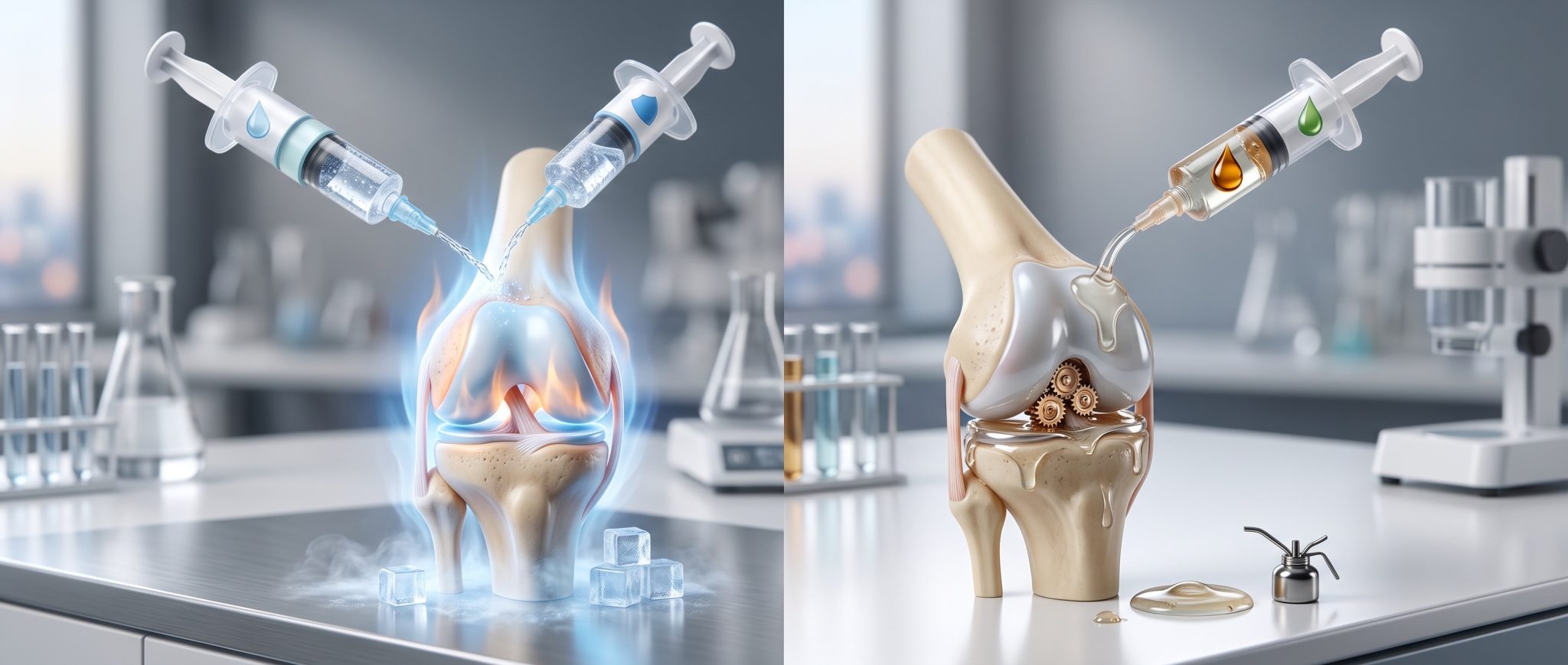
Gel Injections vs. Cortisone Shots for Knee Osteoarthritis in Charlotte
Living with knee osteoarthritis often means facing a difficult decision between different injection therapies. You may have heard about cortisone shots from a friend who got quick relief, or you might have read about gel injections that promise longer-lasting lubrication. But which one is right for you? This guide walks you through the differences between these two common knee osteoarthritis injections in Charlotte, so you can make an informed choice with your healthcare provider.
Understanding Knee Osteoarthritis and the Role of Injections
Knee osteoarthritis (OA) is the most common form of arthritis and a leading cause of disability worldwide. It occurs when the protective cartilage that cushions the ends of your bones wears down over time. As cartilage deteriorates, bones may rub against each other, causing pain, stiffness, swelling, and reduced mobility. The condition often develops gradually, and many people first notice symptoms during activities like climbing stairs, walking, or even getting up from a chair.
The pain of knee OA is not just from mechanical wear; inflammation also plays a key role. Inflamed synovial tissue produces inflammatory chemicals that irritate nerve endings and contribute to joint swelling. This dual nature—mechanical and inflammatory—is why different injection therapies target different aspects of the disease process.
Injection treatments are considered when conservative measures like physical therapy, weight management, and oral pain relievers no longer provide adequate relief. They deliver medication directly into the joint space, which can be more effective and have fewer systemic side effects than oral medications. Two of the most frequently used injections are corticosteroids (cortisone) and hyaluronic acid (gel).
Corticosteroids are powerful anti-inflammatory agents that work quickly to reduce swelling and pain. Hyaluronic acid, on the other hand, is a natural component of joint fluid that acts as a lubricant and shock absorber. When injected into the knee, it may help restore the viscous properties of synovial fluid, potentially improving joint function and reducing pain over a longer period.
Choosing between these options is not always straightforward. Your doctor will consider the severity of your arthritis, your pain pattern, your activity level, and any other medical conditions you have. It’s also important to understand that neither injection cures osteoarthritis; they are palliative treatments aimed at symptom management.
What Are Cortisone Shots and How Do They Work?
Cortisone shots, also known as corticosteroid injections, are among the most widely used treatments for knee OA flare-ups. Corticosteroids are synthetic drugs that mimic the effects of cortisol, a hormone your body produces naturally. When injected into an inflamed joint, they work by suppressing the immune response and reducing the production of inflammatory chemicals such as prostaglandins and cytokines.
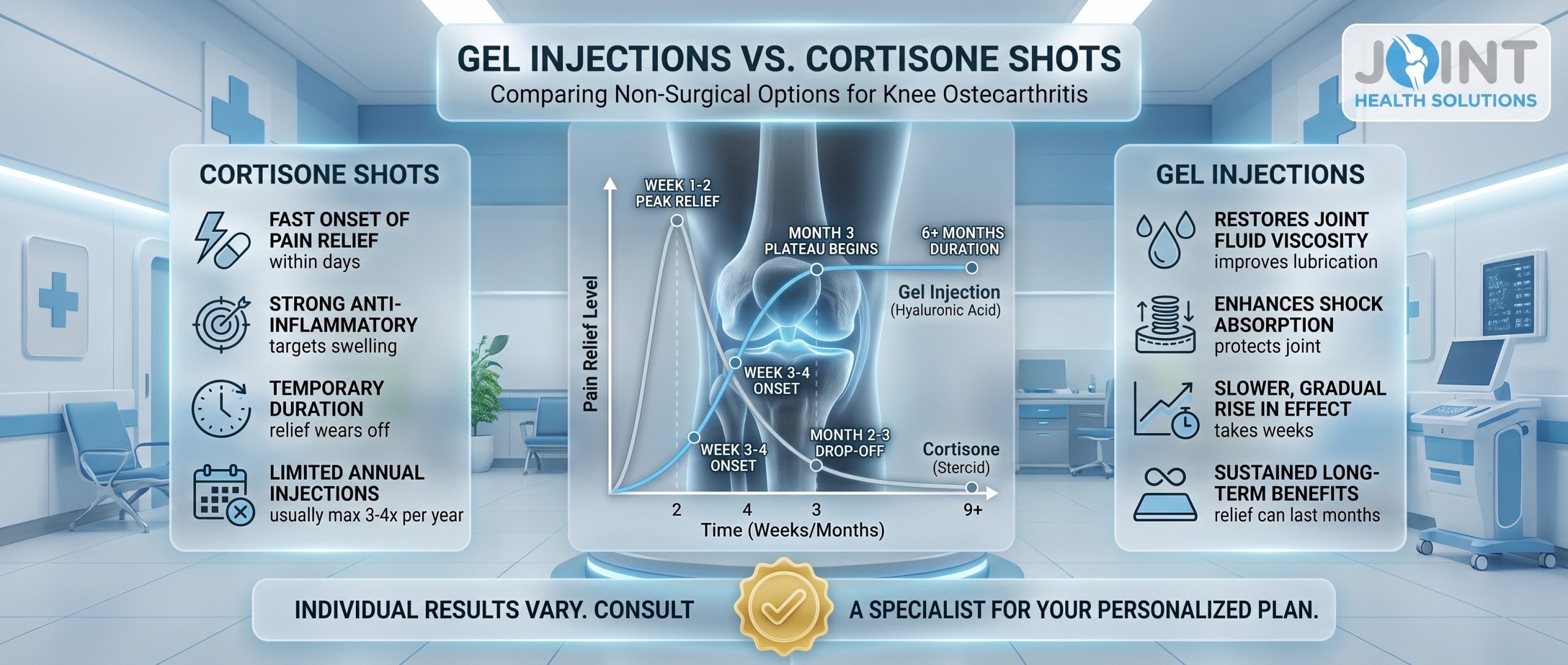
The primary goal of a cortisone shot is to provide rapid pain relief by calming inflammation. Many patients experience significant improvement within a few days, and the effect can last anywhere from several weeks to a few months. However, the duration of relief varies widely from person to person and depends on the severity of the arthritis and the dose used.
It’s important to note that cortisone does not repair damaged cartilage or alter the progression of osteoarthritis. It simply reduces inflammation and pain, giving you a window of relief that can be used to engage in physical therapy or other rehabilitation activities.
Commonly used corticosteroids for knee injections include methylprednisolone, triamcinolone, and betamethasone. These are often combined with a local anesthetic to provide immediate pain relief and to confirm that the medication is placed correctly in the joint.
Because cortisone is a potent medication, there are limits to how often you can receive it. Repeated injections over a short period can damage joint cartilage, weaken tendons, and increase the risk of infection. Most guidelines recommend limiting cortisone injections to two to three per year in the same joint, with at least three months between injections.
For some patients, cortisone is the first-line injection because it works quickly and can help break a cycle of pain and inflammation. It is especially useful for acute flare-ups or when you need short-term relief to participate in physical therapy.
What Are Gel Injections (Hyaluronic Acid) and How Do They Work?
Gel injections, also known as viscosupplementation, involve injecting hyaluronic acid (HA) directly into the knee joint. Hyaluronic acid is a naturally occurring substance in the synovial fluid that gives it its thick, elastic properties. In osteoarthritic knees, the concentration and molecular weight of HA decrease, making the fluid thinner and less capable of cushioning the joint.
The idea behind viscosupplementation is to supplement the joint’s natural HA, restoring some of its lubricating and shock-absorbing qualities. This may help reduce friction, improve joint mobility, and provide pain relief. HA injections are FDA-approved for knee osteoarthritis and are typically given as a series of one to three injections, depending on the product.
Unlike cortisone, HA does not have a direct anti-inflammatory effect. Instead, it works mechanically and may also have some biological effects on joint tissues. Some studies suggest that HA can stimulate the body’s own production of HA and may have mild anti-inflammatory properties, but the exact mechanism is still being studied.
The onset of relief from gel injections is slower than cortisone. Some patients notice improvement after the first injection, but it often takes several weeks to achieve the full effect. The duration of relief can last from six months to over a year, though this varies widely. Some patients may benefit from a repeat course after several months.
It’s important to note that the AAOS 2021 Clinical Practice Guideline rates HA injections as “Inconclusive” for knee OA, meaning there is insufficient evidence to recommend for or against their use. However, many patients do report significant pain relief, and the treatment remains a common option in clinical practice.
HA injections are not for everyone. They are generally considered for patients with mild to moderate knee OA who have not responded adequately to conservative treatments. They may be less effective in advanced cases where bone-on-bone contact is severe. Also, HA injections generally cost more than cortisone injections.
Comparing Effectiveness: Pain Relief Duration and Onset
When deciding between gel and cortisone, the most important factors are how quickly you need relief and how long you want it to last. The table below summarizes the key differences.
| Treatment | How It Works | Limitations | Risks |
|---|---|---|---|
| Cortisone (corticosteroid) | Suppresses inflammation directly, reducing swelling and pain | Short-term relief (weeks to months); repeated use may harm cartilage | Infection, bleeding, cartilage damage, tendon weakening, temporary pain flare |
| Gel (hyaluronic acid) | Replenishes joint lubrication, improving shock absorption and joint function | Slower onset (weeks); variable efficacy; may not help advanced OA; cost | Infection, pain at injection site, swelling, rare allergic reactions |
Clinical studies have compared the two. Meta-analyses of randomized trials have found that HA injections provide modest pain relief compared to placebo, though the effect is smaller than earlier studies suggested. Some evidence suggests that HA may be more effective in younger patients with less severe OA, while cortisone may be better for older patients with more inflammation.
In practice, many doctors choose cortisone first if a patient is in significant pain and needs quick relief. If the pain is more chronic and mechanical, they may suggest HA. Some patients receive both types of injections at different times, though not simultaneously.
It’s also worth noting that the placebo effect is strong in joint injections. Studies show that even saline injections can provide substantial pain relief, which complicates the interpretation of clinical trials. This highlights the importance of individualized treatment decisions based on your specific symptoms and response to previous treatments.
Safety and Side Effects: What to Expect
Both cortisone and gel injections are generally safe when performed by a skilled provider, but they carry potential side effects.
Cortisone side effects: The most common side effect is a temporary increase in pain and swelling for a day or two after the injection, known as a “steroid flare.” This usually resolves on its own. More serious but rare risks include infection, bleeding, nerve damage, and joint damage if injections are repeated too frequently. Long-term use of cortisone can lead to weakening of tendons and ligaments, and it may accelerate cartilage loss in the joint.
Gel injection side effects: HA injections are generally well tolerated. The most common side effects are pain, swelling, and stiffness at the injection site, which typically resolve within a few days. There is a small risk of infection, as with any injection. Rarely, some patients may experience an allergic reaction, especially if they are allergic to avian proteins (some HA products are derived from rooster combs).
To minimize risks, your provider should use sterile technique, and you should inform them of any allergies, bleeding disorders, or medications that affect blood clotting.
Both types of injections can be performed in the office with local anesthesia or a numbing spray. Fluoroscopy or ultrasound guidance may be used to ensure accurate placement, especially in difficult cases.
Candidacy: Which Injection Is Right for Your Knee Condition?
Not every patient is a candidate for every injection. Your doctor will assess several factors to determine the best approach.
For cortisone: You may be a good candidate if you have moderate to severe pain from an inflammatory flare, if you have joint effusion (swelling), or if you need rapid relief to participate in physical therapy. Cortisone is often recommended for patients with advanced OA who have not responded to other conservative measures. It may also help clarify whether the knee is the primary source of pain, as relief after injection supports the joint’s involvement.
For gel injections: You may be a better candidate if you have mild to moderate knee OA, if you want to avoid repeated steroid use, or if you have not experienced lasting relief from cortisone. Gel injections are sometimes preferred in younger patients who want to delay surgery. However, they are less likely to help if you have severe bone-on-bone arthritis or significant joint deformity.
Other factors include your overall health, any allergies, and your personal preferences, as well as cost, since gel injections generally involve a higher self-pay cost than cortisone.
It’s essential to have a thorough evaluation before any injection, including a physical exam and possibly imaging studies like X-rays or MRI. This helps rule out other causes of knee pain, such as meniscal tears, ligament injuries, or infections.
The Injection Procedure: What Happens During Treatment?
Both cortisone and gel injections are performed in the office and typically take only a few minutes. Here’s what you can expect:
- You will be seated or lying down with your knee bent.
- The skin over the injection site is cleaned with antiseptic.
- A local anesthetic may be sprayed or injected to numb the area.
- Using a sterile needle, the doctor inserts the needle into the joint space. They may use ultrasound or fluoroscopy to guide the needle precisely.
- The medication is injected slowly. For gel injections, the process may take a few minutes, and you may feel pressure.
- The needle is removed, and a bandage is applied.
After the injection, you will be observed for a short time to ensure there are no immediate adverse reactions. You may be advised to rest the knee for 24 hours and avoid strenuous activities for a few days. Ice can help reduce swelling.
For gel injections, you may need a series of injections, typically one per week for three weeks, depending on the product. Your doctor will give you a specific schedule.
It’s normal to experience some mild discomfort after the injection, but if you have severe pain, fever, or increased swelling, you should contact your provider immediately.
Recovery and Rehabilitation: Maximizing Your Results
The recovery time after a knee injection is generally short, but it varies depending on the type of injection and your individual response. Many patients can return to normal activities the next day, though you should avoid heavy lifting or high-impact exercise for at least 48 hours.
For cortisone injections, you may experience a temporary flare of pain for 24-48 hours, after which relief typically begins. For gel injections, improvement may take a week or more, and some patients need the full series before noticing significant benefit.
To maximize the results of your injection, it’s important to follow your doctor’s recommendations. This may include physical therapy to strengthen the muscles around the knee, weight management to reduce stress on the joint, and using supportive devices like offloading knee braces. These measures can help prolong the benefits of the injection and improve your overall knee function.
Your provider may also suggest a specific rehabilitation plan. For example, they might recommend low-impact exercises like swimming or cycling, which are easier on the knee than running or jumping. They may also advise you to avoid prolonged standing or kneeling.
Remember, injections are not a cure for osteoarthritis. They are tools to manage symptoms and improve your quality of life. A comprehensive treatment plan that includes lifestyle modifications and regular exercise is essential for long-term management.
Cost and Payment Options for Charlotte Patients
The cost of knee injections can vary, and it’s important to understand your options before proceeding.
Cortisone injections are generally less expensive, often ranging from $100 to $300 per injection, depending on the facility and whether imaging guidance is used.
Gel injections cost more, with each injection ranging from $300 to $1,000 or more. A full series of three injections can cost over $2,000.
At Joint Health Solutions, we operate on a self-pay basis and believe in transparent, upfront pricing. Before your procedure, we’ll provide a clear cost estimate so there are no surprises, and we offer flexible payment options for those who qualify. Our goal is to make high-quality knee care accessible to Charlotte residents.
When considering cost, remember that the effectiveness of the injection and its duration of relief should be factored in. A more expensive injection that provides six months of relief may be more cost-effective than a cheaper one that only lasts a month.
Combining Injections with Other Non-Surgical Treatments
Injections are often most effective when combined with other non-surgical treatments. At Joint Health Solutions, we offer a range of services that can complement your injection therapy, including physical therapy, offloading knee braces, and nutritional counseling.
Physical therapy can strengthen the quadriceps and hamstrings, which helps stabilize the knee and reduce pain. Offloading knee braces are designed to shift weight away from the most damaged part of the knee, providing immediate relief during activity. Nutritional support may help reduce inflammation and support joint health.
For some patients, other injection options like PRP (platelet-rich plasma) therapy may be considered. PRP is not FDA-approved as a drug; the device used to concentrate platelets is FDA-cleared, but evidence for knee OA is mixed. It’s important to discuss all options with your provider.
Your doctor may recommend a combination of treatments tailored to your specific needs. For example, you might receive a cortisone injection to manage an acute flare, followed by a course of physical therapy and a gel injection for longer-term relief. The key is to have a personalized plan.
To learn more about the non-surgical treatments available at Joint Health Solutions, you can explore our treatments and services page. Our providers team is dedicated to helping you find relief without surgery.
Non-Surgical Options for Bone-on-Bone Knee OA: From Viscosupplementation to Offloading Braces
When knee osteoarthritis progresses to the point where cartilage is nearly gone, you might think surgery is the only option. However, several non-surgical approaches can help manage symptoms and improve function. In addition to injections, offloading braces and physical therapy play crucial roles.
Offloading knee braces are specially designed to redistribute the load on your knee, shifting pressure away from the most affected compartment. This can reduce pain during walking and other weight-bearing activities. They are fitted and provided in-office at Joint Health Solutions, and are often used in combination with injections to enhance relief.
Physical therapy focuses on strengthening the muscles around the knee, improving flexibility, and correcting gait abnormalities. Stronger muscles can absorb more shock and reduce stress on the joint. Your therapist can also teach you exercises to do at home.
Weight management is another critical component. Even a small amount of weight loss can significantly reduce the load on your knees. Our team can provide nutritional guidance to help you achieve a healthy weight.
At Joint Health Solutions, we take a comprehensive approach to knee OA. We assess your entire condition and develop a personalized treatment plan that may include a combination of injections, bracing, physical therapy, and lifestyle changes. Our goal is to help you stay active and avoid surgery if possible.
If you’re interested in exploring these options, we encourage you to learn more about our approach. Our specialists in Charlotte are here to guide you.
Consult Our Charlotte Specialists to Find Your Best Option
Choosing between gel injections and cortisone shots is a personal decision that should be made with expert guidance. At Joint Health Solutions, our board-certified providers, Dr. Jeffrey Galvin and Ariel Curtis, FNP-C, have extensive experience in non-surgical knee care. We offer comprehensive evaluations and personalized treatment plans to help you find relief.
If you’re considering knee osteoarthritis injections in Charlotte, we invite you to schedule a consultation. Call us at 704-833-3566 or visit our reviews page to see what other patients have experienced. We look forward to helping you get back to the activities you love.
Institutional Sources
- AAOS Clinical Practice Guideline on Treatment of Osteoarthritis of the Knee
- OARSI Guidelines for the Non-Surgical Management of Knee Osteoarthritis
- NIAMS: Osteoarthritis
- Mayo Clinic: Knee Osteoarthritis
- Arthritis Foundation: Viscosupplementation
Frequently Asked Questions
How long does a cortisone shot last in the knee?
Relief from a cortisone shot typically lasts anywhere from a few weeks to a few months. Duration varies based on the severity of your arthritis, the dose used, and your individual response. Repeated injections tend to provide diminishing benefit over time.
How long does a gel injection last?
Gel (hyaluronic acid) injections may provide relief for six months to over a year in some patients, though results vary widely and not everyone responds. Some patients benefit from a repeat course after several months if the initial relief fades.
Can I get both cortisone and gel injections?
Yes, but not at the same time. Some patients receive a cortisone injection to manage an acute flare, followed by a gel injection later for longer-term joint lubrication. Your provider will help sequence treatments appropriately based on your symptoms.
How much do gel injections cost, and are payment options available?
Gel injections typically cost more than cortisone, often $300 to $1,000 or more per injection, with a full series potentially exceeding $2,000. Joint Health Solutions operates on a self-pay basis with transparent, upfront pricing and flexible payment options — we’ll provide a clear cost estimate before your procedure.
Which injection is better for knee osteoarthritis?
Neither injection is universally “better” — the right choice depends on your specific symptoms, the severity of your arthritis, how quickly you need relief, and your personal goals. Many patients try cortisone first for fast relief, while others prefer gel injections for potentially longer-lasting lubrication.
How often can I get a cortisone shot?
Most guidelines recommend limiting cortisone injections to two to three per year in the same joint, with at least three months between injections, to reduce the risk of cartilage and tendon damage from repeated use.
Do gel injections hurt?
Most patients tolerate gel injections well. A local anesthetic is typically used to numb the area first. You may feel pressure or mild discomfort during the injection, and some soreness or swelling at the injection site is common for a day or two afterward.
Can I walk after a knee injection?
Yes, most patients can walk and resume light activity the same day. However, it’s generally recommended to avoid strenuous activity or high-impact exercise for at least 24 to 48 hours to allow the injection site to settle.
Are there alternatives to injections for knee osteoarthritis?
Yes. Alternatives and complements to injections include physical therapy, weight management, offloading knee braces, oral anti-inflammatory medications, and lifestyle modifications. Many patients combine several of these approaches with injections for the best results.
How do I know if I’m a candidate for injections?
A comprehensive evaluation — including a physical exam and often imaging such as X-rays or MRI — helps determine whether cortisone, gel injections, or another treatment is most appropriate for your specific knee condition. Schedule a consultation to discuss your options.




 English
  Spanish