

Hyaluronic Acid Gel Injections for Shoulder Osteoarthritis
If you have shoulder osteoarthritis, you know the deep ache that comes with raising your arm, reaching behind your back, or simply trying to sleep on your side. The cartilage that once cushioned the ball-and-socket joint has worn away, leaving bone rubbing against bone. This can cause stiffness, swelling, and a grinding sensation that makes everyday tasks feel like a challenge. While many people think of osteoarthritis as a knee problem, the shoulder is a common site as well, especially as we age. When conservative options like physical therapy and oral medications no longer provide sufficient relief, you may be exploring other possibilities. One option that has gained attention is the use of shoulder hyaluronic acid injections, a treatment that aims to restore some of the joint’s natural lubrication. This article will explain what these injections involve, who might benefit, what the procedure entails, and how to weigh them against other treatments.
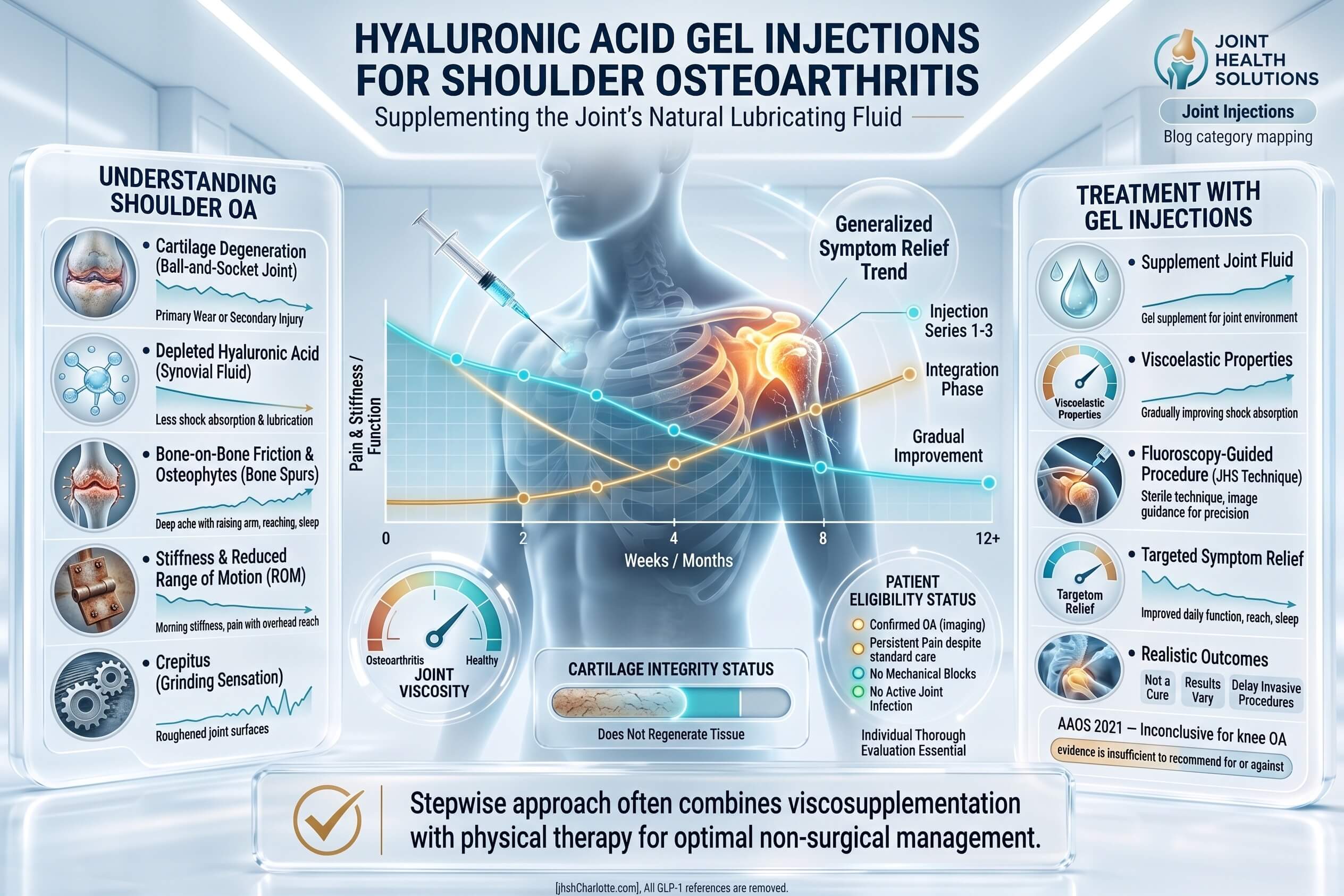
Hyaluronic acid is a naturally occurring substance in your body, found in high concentrations in joint fluid and cartilage. In a healthy joint, it acts as a shock absorber and lubricant, allowing smooth movement. In an arthritic joint, the concentration and molecular weight of hyaluronic acid decrease, contributing to pain and stiffness. The idea behind injecting a gel-like form of hyaluronic acid is to supplement this depleted supply, potentially improving the joint environment. However, it is important to understand that this is not a cure for arthritis. It does not reverse cartilage loss or regenerate damaged tissue. Rather, it may provide temporary symptomatic relief for some patients, allowing them to function more comfortably and perhaps delay more invasive procedures.
Before delving into the details, it is crucial to set realistic expectations. The medical evidence for hyaluronic acid injections in the shoulder is not as robust as it is for the knee. The American Academy of Orthopaedic Surgeons (AAOS) has issued guidelines for the use of these injections in knee osteoarthritis, but for the shoulder, the evidence is less clear. This article aims to give you a balanced view, presenting both the potential benefits and the limitations, so you can make an informed decision in partnership with your healthcare provider.
Understanding Shoulder Osteoarthritis
Osteoarthritis of the shoulder, medically known as glenohumeral osteoarthritis, is a degenerative joint disease that affects the main joint of the shoulder, where the head of the humerus (upper arm bone) meets the glenoid (part of the shoulder blade). This joint is responsible for the wide range of motion that lets you lift, rotate, and swing your arm. Over time, the cartilage that covers the ends of these bones can wear down, leading to the characteristic symptoms of arthritis.
The exact cause of shoulder osteoarthritis is often multifactorial. It can be primary, meaning it develops with age and wear and tear, or secondary, resulting from previous injury, such as a dislocation or fracture, or from conditions like rheumatoid arthritis or avascular necrosis. Repetitive overhead activities, certain occupations, and a family history of arthritis can also increase your risk. The prevalence of shoulder osteoarthritis increases with age, and it is more common in people over 60, though it can occur earlier, especially after trauma.
Symptoms typically develop gradually. You might notice a deep, aching pain in the shoulder that worsens with activity, particularly with overhead movements or reaching behind your back. Stiffness is common, especially in the morning or after periods of inactivity. You may hear or feel a grinding, clicking, or popping sensation called crepitus, which results from roughened cartilage surfaces rubbing together. As the condition progresses, you may experience a reduced range of motion, making it difficult to comb your hair, fasten a bra, or reach into a high cabinet. In advanced cases, the pain can be constant, even at rest, and may interfere with sleep.
Diagnosis typically involves a thorough medical history and physical examination. Your provider will assess your range of motion, strength, and areas of tenderness. Imaging studies, such as X-rays, can reveal joint space narrowing, bone spurs (osteophytes), and subchondral sclerosis, which are hallmarks of osteoarthritis. In some cases, an MRI may be used to evaluate the cartilage and surrounding soft tissues, such as the rotator cuff tendons. It is important to differentiate shoulder osteoarthritis from other causes of shoulder pain, such as rotator cuff tears, impingement syndrome, or adhesive capsulitis (frozen shoulder), as the treatment approach may differ.
Non-surgical management of shoulder osteoarthritis typically begins with lifestyle modifications, physical therapy to strengthen the muscles around the shoulder and improve flexibility, and oral medications such as acetaminophen or nonsteroidal anti-inflammatory drugs (NSAIDs) for pain and inflammation. Corticosteroid injections can provide short-term relief by reducing inflammation. When these measures are insufficient, some patients and providers consider viscosupplementation with hyaluronic acid. It is essential to understand that the shoulder is a complex joint, and the response to any treatment can vary widely from person to person.
How Hyaluronic Acid Gel Works in the Joint
Hyaluronic acid is a large glycosaminoglycan molecule that is a key component of synovial fluid, the thick, viscous fluid that lubricates and cushions joints. In a healthy joint, hyaluronic acid helps maintain the viscoelastic properties of the synovial fluid, allowing it to absorb shock and provide smooth gliding of the articular surfaces. In osteoarthritis, the concentration and molecular weight of hyaluronic acid in the synovial fluid decrease, leading to a thinner, less protective fluid. This contributes to increased friction, pain, and further cartilage irritation.
The concept behind viscosupplementation is to inject a gel-like preparation of hyaluronic acid directly into the joint space to restore the viscoelastic properties of the synovial fluid. The injected hyaluronic acid is intended to supplement the body’s own depleted supply, potentially improving shock absorption and lubrication. Additionally, some research suggests that hyaluronic acid may have anti-inflammatory effects, though the exact mechanisms are not fully understood. It may interact with cell surface receptors, such as CD44, and modulate the production of inflammatory mediators. These potential effects are an area of active investigation.
It is crucial to note that the evidence for the effectiveness of hyaluronic acid injections in the shoulder is less robust than for the knee. The AAOS 2021 Clinical Practice Guideline for the treatment of knee osteoarthritis rated the use of hyaluronic acid as “inconclusive,” meaning there is insufficient evidence to recommend for or against its use. For the shoulder, the evidence is even more limited, with some studies showing modest benefits and others showing no significant difference compared to a placebo. Therefore, it is essential to approach this treatment with realistic expectations and to discuss the potential risks and benefits with your provider.
For the shoulder, the use of hyaluronic acid is considered off-label, as the FDA has approved these products specifically for the knee. This means that while the injection is legal and commonly performed, it has not undergone the same rigorous regulatory review for the shoulder. Your provider should explain this to you and ensure that you understand the evidence base. Despite the lack of definitive proof, some patients do experience meaningful pain relief and improved function after shoulder hyaluronic acid injections, and for those who have not responded to other conservative measures, it may be a reasonable option to consider. To learn more, you can also read our blog post on hyaluronic acid injections.
Who Is a Candidate for Shoulder Gel Injections?
Not everyone with shoulder osteoarthritis is a candidate for hyaluronic acid gel injections. The decision to pursue this treatment should be individualized, based on a thorough evaluation of your symptoms, the severity of your arthritis, your overall health, and your response to other treatments. Generally, candidates are those who have:
- Moderate to severe shoulder osteoarthritis confirmed by imaging (X-ray or MRI).
- Persistent pain and functional limitation despite conservative treatments like physical therapy, oral medications, or corticosteroid injections.
- No significant mechanical block to movement, such as a large rotator cuff tear or severe joint deformity.
- No active infection in the joint or skin infection at the injection site.
- No allergy to hyaluronic acid products, particularly if derived from avian sources.
- Realistic expectations about the potential outcomes, understanding that results vary and the effect is not permanent.
It is also important to consider the stage of arthritis. In very early stages, when there is still significant cartilage, the potential benefit may be higher. In advanced stages with bone-on-bone contact and significant deformity, the injection may be less effective, as the joint mechanics are severely compromised. However, some patients with advanced arthritis still report some relief, so it is not an absolute contraindication.
Certain factors may make you a less suitable candidate. If you have a bleeding disorder or are taking blood-thinning medications, the risk of bleeding into the joint may be increased. If you have a known hypersensitivity to hyaluronic acid or to avian proteins, you should avoid these products. Pregnant or breastfeeding women should also avoid this treatment due to lack of safety data. Additionally, if you have an active infection or skin breakdown near the injection site, the procedure should be postponed.
Your provider at Joint Health Solutions will conduct a comprehensive assessment, including a review of your medical history, a physical examination, and a review of your imaging studies. They will discuss your symptoms, your goals, and the available treatment options. They will help you weigh the potential benefits and risks of shoulder hyaluronic acid in the context of your specific condition. It is essential to have an open and honest conversation about your expectations and to ask any questions you may have.
The Injection Procedure: Step by Step
If you and your provider decide that a shoulder hyaluronic acid injection is appropriate, the procedure will be performed in the clinic. The steps are generally straightforward, but the use of imaging guidance, such as ultrasound or fluoroscopy, can improve accuracy and safety. At Joint Health Solutions, we utilize fluoroscopy-guided injections to help ensure precise placement of the medication into the joint space.
Here is what you can typically expect during the procedure:
- Preparation: You will be seated or lying down in a comfortable position. The skin over the shoulder will be cleaned with an antiseptic solution to minimize the risk of infection. A local anesthetic may be used to numb the skin and deeper tissues.
- Imaging guidance: If fluoroscopy is used, you will be positioned so the imaging equipment can visualize the joint. The provider will identify the correct entry point using real-time imaging. In some cases, a contrast dye may be used to confirm the needle is within the joint space. Ultrasound guidance is another option, which uses sound waves to visualize the needle and joint.
- Injection: Once the needle is correctly placed, the hyaluronic acid gel is slowly injected into the joint. You may feel some pressure or a mild sensation as the gel is injected. The volume varies depending on the product and the size of the joint, but the entire procedure usually takes less than 15 minutes.
- Post-injection care: After the injection, a small bandage will be applied, and you will rest for a few minutes before being released. You may experience some soreness or swelling at the injection site, which is normal and typically resolves within a day or two.
The number of injections needed varies. Some products are administered as a single injection, while others require a series of two to three injections, typically spaced one week apart. Your provider will discuss the specific protocol for the product they recommend. It is important to follow the recommended schedule to achieve the best possible outcome.
Expected Benefits and Realistic Outcomes
What can you realistically expect from shoulder hyaluronic acid? The primary goal is to reduce pain and improve function, potentially allowing you to perform daily activities with greater ease. Some patients report a meaningful reduction in pain, improved range of motion, and a better quality of life. However, it is important to emphasize that the response is highly variable. Some patients experience little to no benefit, while others may have substantial improvement that lasts for several months.
The onset of relief is not immediate. Unlike a corticosteroid injection, which can work within days, hyaluronic acid may take several weeks to take effect. This is because the gel needs to integrate with the joint fluid and exert its lubricating effects. You may notice gradual improvement over the first few weeks after the injection series. The duration of relief also varies, but it is often reported to last from six months to a year, after which the treatment can be repeated if needed.
It is crucial to understand that these injections do not slow or reverse the progression of osteoarthritis. They are a symptomatic treatment, not a disease-modifying one. They do not repair damaged cartilage or regenerate joint tissue. The goal is to manage pain and improve function, not to cure the underlying arthritis. This distinction is essential for setting realistic expectations.
The evidence for these benefits in the shoulder is mixed. Some clinical studies have shown that hyaluronic acid injections can reduce pain and improve function in patients with shoulder osteoarthritis, while others have found no significant difference compared to a placebo injection. Therefore, it is important to discuss the potential benefits and limitations with your provider, and to consider this treatment as one option in a comprehensive management plan.
Potential Risks and Side Effects
Like any medical procedure, shoulder hyaluronic acid injections carry some risks and potential side effects. Fortunately, serious complications are rare, but it is important to be aware of them. The most common side effects are local and transient, including:
- Pain, swelling, or redness at the injection site: This is a common reaction and typically resolves within a few days. Applying ice to the area may help reduce discomfort.
- Joint pain or stiffness: Some patients experience a temporary increase in joint pain or stiffness immediately after the injection, often called a “flare.” This is usually mild and resolves within a few days.
- Bleeding or bruising: If you are taking blood-thinning medications, you may be at an increased risk of bleeding or bruising at the injection site. You should not stop any medication without consulting your prescribing physician.
More serious, but rare, risks include:
- Infection: There is a small risk of introducing bacteria into the joint. This is a serious condition that requires immediate medical attention. Signs include increased pain, redness, swelling, warmth, and fever. Sterile technique and proper skin preparation minimize this risk.
- Allergic reaction: Although rare, some people may be allergic to hyaluronic acid or to other components in the injection. If you have a known allergy to avian products, inform your provider. Symptoms can include hives, itching, difficulty breathing, and swelling of the face or throat.
- Nerve or blood vessel irritation: Although very rare with image guidance, there is a theoretical risk of irritating a nerve or blood vessel during the injection.
It is essential to report any unusual or persistent symptoms to your provider after the injection. They can assess whether you are experiencing a normal reaction or if further evaluation is needed. The use of image guidance, as done at Joint Health Solutions, can help reduce the risk of complications by supporting accurate needle placement.
Comparing Gel Injections to Other Treatments
To help you understand where hyaluronic acid injections fit in the treatment landscape, it is useful to compare them with other common options for shoulder osteoarthritis. The following table provides an overview of the different treatments, how they work, their limitations, and potential risks.
| Treatment | How It Works | Limitations | Risks |
|---|---|---|---|
| Hyaluronic acid injections | Supplements joint fluid, may improve lubrication and reduce pain | Evidence for shoulder is inconclusive; results vary; not disease-modifying; off-label use | Injection site pain, swelling, rare infection, allergic reaction |
| Corticosteroid injections | Powerful anti-inflammatory effect, reduces pain and swelling | Short-term relief (weeks to months); repeated use may affect cartilage; not for everyone | Injection site pain, infection, cartilage effects with frequent use, elevated blood sugar |
| Physical therapy | Strengthens muscles, improves flexibility and range of motion | May not be enough alone for severe arthritis; requires time and commitment | Minimal; may cause temporary muscle soreness |
| Oral NSAIDs | Reduce inflammation and pain throughout the body | Long-term use can cause stomach, kidney, or cardiovascular issues | GI upset, kidney issues, cardiovascular risk |
Each treatment has its own set of benefits and drawbacks. Hyaluronic acid injections offer a less invasive option with a relatively low risk of serious side effects, but the evidence for their effectiveness in the shoulder is not definitive. Corticosteroid injections can provide quicker relief but may not last as long. Physical therapy is a foundational treatment that can help improve function on its own or alongside other treatments.
The choice of treatment depends on many factors, including the severity of your arthritis, your age, your activity level, your overall health, and your personal preferences. A stepwise approach is often recommended, starting with conservative measures and progressing from there. Hyaluronic acid injections may be considered as one option among several in a broader treatment plan.
Preparing for Your Shoulder Injection
Proper preparation can help ensure a smooth and successful injection experience. Here are some steps you can take before your appointment:
- Review your medications: Inform your provider about all medications you are taking, especially blood thinners like warfarin, apixaban, or aspirin. You may need to stop these for a few days before the procedure to reduce the risk of bleeding. Never stop any medication without your doctor’s approval.
- Wear comfortable clothing: Choose clothing that allows easy access to your shoulder, such as a loose-fitting top or a tank top.
- Eat a light meal: There is no need to fast before a shoulder injection, but eating a light meal beforehand can help prevent lightheadedness.
- Ask questions: Write down any questions you have about the procedure, the recovery, and the expected outcomes. Bring this list to your appointment.
- Follow pre-procedure instructions: Your provider may give you specific instructions, such as avoiding certain activities or medications. Be sure to follow them carefully.
At Joint Health Solutions, our team will guide you through the entire process. We will explain what to expect, answer your questions, and ensure you are comfortable before, during, and after the injection. Our goal is to provide a positive and reassuring experience.
Recovery and Rehabilitation After the Injection
Recovery after a shoulder hyaluronic acid injection is generally quick, but it is important to follow your provider’s instructions to optimize results and minimize complications.
Immediately after the injection, you may experience some soreness or swelling at the injection site. This is normal and typically resolves within a day or two. You can apply ice to the area for 15-20 minutes at a time, several times a day, to reduce discomfort. You may also take over-the-counter pain relievers like acetaminophen, but you should avoid NSAIDs (like ibuprofen or naproxen) for the first few days, as they may interfere with the intended effect of the hyaluronic acid.
You should avoid strenuous activity, heavy lifting, or repetitive overhead movements for at least 24-48 hours after the injection. This allows the gel to settle in the joint and minimizes the risk of irritation. You can gradually resume your normal activities as your comfort allows.
Many patients find that a structured rehabilitation program enhances the benefits of the injection. Physical therapy can help strengthen the muscles around the shoulder, improve flexibility, and restore full range of motion. The combination of viscosupplementation and physical therapy may provide more lasting improvement than either treatment alone.
For hyaluronic acid injections specifically, most patients begin noticing gradual improvement over the first two to four weeks as the gel integrates with the joint fluid, with continued benefit building over the following weeks. Individual response varies, and if you do not experience meaningful relief after the initial series, your provider may discuss alternative options, such as repeating the injections, trying a different product, or considering other treatments.
Making Your Decision: Next Steps
Deciding whether to pursue shoulder hyaluronic acid is a personal decision that should be made in partnership with a knowledgeable healthcare provider. It is essential to have a clear understanding of the potential benefits, limitations, and risks. While the evidence for this treatment in the shoulder is not definitive, many patients do find meaningful relief, and it may be a valuable option for those who have not responded to other conservative measures.
If you are struggling with shoulder osteoarthritis and are looking for non-surgical options, we encourage you to schedule a consultation at Joint Health Solutions. Our team has extensive experience performing image-guided injections and will take the time to understand your unique situation and develop a personalized treatment plan.
Explore our full treatments and services, or call us at 704-833-3566 to schedule your consultation. We are here to help you find relief and get back to the activities you love.
Institutional Sources
- AAOS: Clinical Practice Guideline on Treatment of Osteoarthritis of the Knee
- NIAMS: Osteoarthritis
- Mayo Clinic: Osteoarthritis
- Arthritis Foundation: Hyaluronic Acid Injections
Frequently Asked Questions
How long does hyaluronic acid gel last in the shoulder?
The duration of relief varies from person to person. Some patients experience pain relief for six months to a year, while others may have a shorter or longer response. The injected gel is gradually broken down and cleared from the joint, but the clinical benefit may persist even after the gel is no longer detectable. If the treatment is effective, it can be repeated as needed.
Is the injection painful?
Most patients tolerate the injection well. You may feel a brief sensation when the local anesthetic is administered, and some pressure as the gel is injected. The procedure itself is usually quick, lasting only a few minutes. Afterward, you may experience some soreness at the injection site, which typically resolves within a day or two.
How many injections are needed?
The number of injections depends on the specific hyaluronic acid product used. Some products require a single injection, while others are administered as a series of two or three injections, usually spaced one week apart. Your provider will discuss the recommended protocol for the product they recommend for you.
When can I return to normal activities?
You can typically return to light activities immediately after the injection, but you should avoid strenuous exercise, heavy lifting, and repetitive overhead movements for at least 24-48 hours. Your provider will give you specific activity guidelines based on your situation. Most people can resume their normal routine within a day or two.
What does a shoulder hyaluronic acid injection cost?
Joint Health Solutions operates on a self-pay basis with transparent, upfront pricing. Cost depends on the specific product used and the number of injections in your recommended series. Our team can provide a quote during your consultation.
What is the difference between hyaluronic acid and corticosteroid injections?
Hyaluronic acid injections aim to supplement the joint’s natural lubricating fluid, while corticosteroid injections are powerful anti-inflammatory medications. Corticosteroids can provide faster pain relief, but the effect may be shorter-lived. Hyaluronic acid may take longer to work but could provide more durable relief for some patients. The choice depends on your specific condition and goals.
Can I have both hyaluronic acid and corticosteroid injections?
In some cases, a provider may recommend a corticosteroid injection first to reduce inflammation, followed by a hyaluronic acid injection at a later date. However, this is not always recommended, as the corticosteroid may affect the hyaluronic acid. Your provider will determine the best sequence for your situation.
What if the injection doesn’t work?
If you do not experience significant relief after the injection series, it does not mean that all hope is lost. There are other treatment options to consider, such as repeat injections, a different type of injection, physical therapy, or a broader evaluation of your treatment plan. Your provider will work with you to explore alternative approaches.
Are there any long-term side effects?
Long-term side effects are rare. The safety profile of hyaluronic acid injections is generally good, especially when performed by an experienced provider using image guidance.
How do I know if I’m a candidate?
The best way to determine if you are a candidate is to undergo a comprehensive evaluation with a qualified provider. They will review your medical history, examine your shoulder, and review your imaging studies. They will then discuss the potential risks and benefits of the injection in the context of your specific condition.




 English
  Spanish