
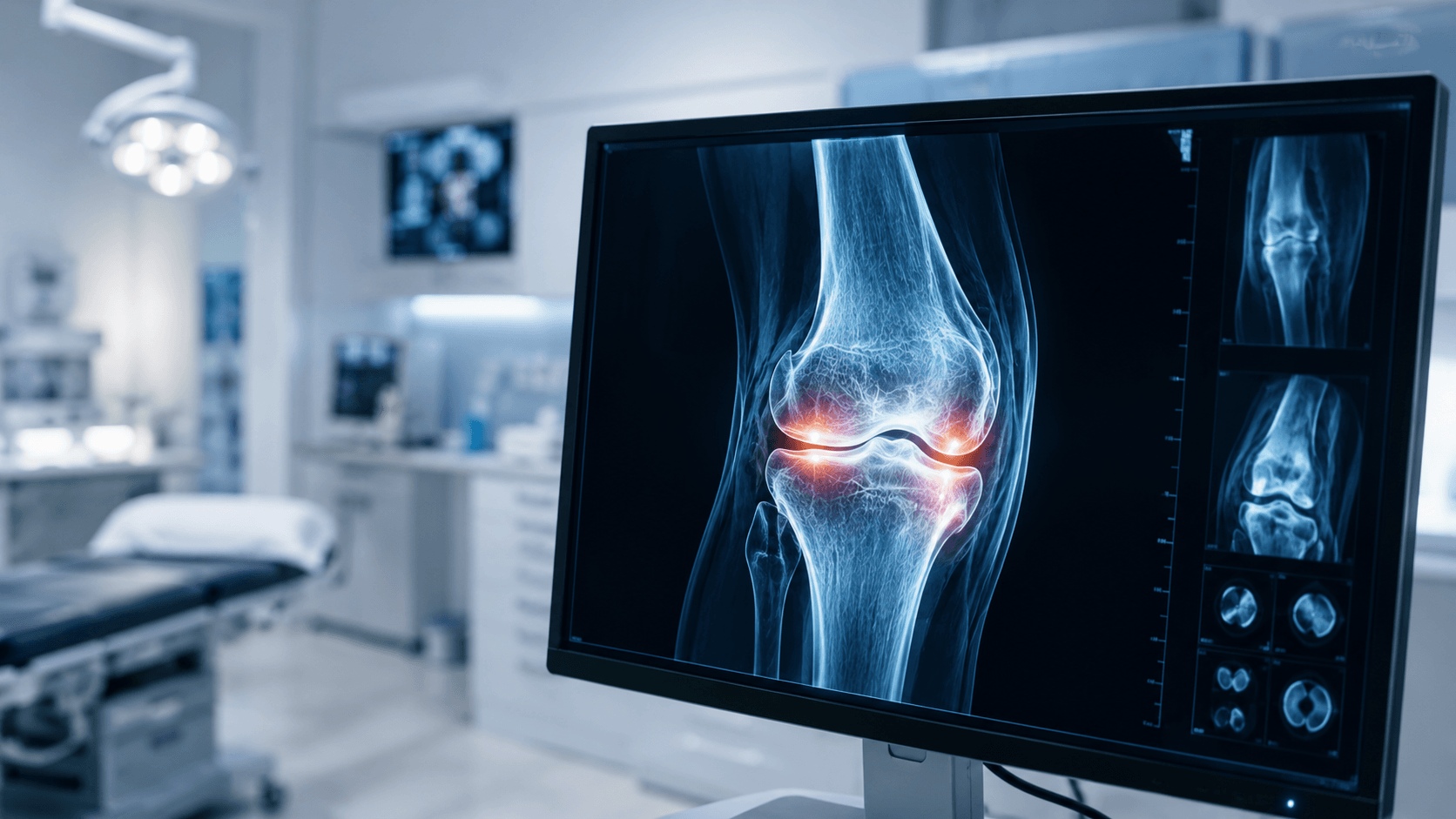
Red Flags: When Joint Pain Requires Urgent Medical Diagnostics in Charlotte
Urgent Joint Pain Diagnostics Charlotte: Introduction
Joint pain is one of the most common complaints that brings patients to a medical clinic. For many, it’s a nagging ache after a long day or a twinge when climbing stairs—something that can be managed with rest, ice, or over-the-counter anti-inflammatories. But there are times when joint pain signals something more serious, something that demands immediate attention and advanced diagnostics rather than simple lifestyle tweaks. Ignoring these red flags can lead to irreversible damage, chronic disability, or even systemic illness. At Joint Health Solutions in Charlotte, North Carolina, we specialize in identifying the underlying causes of joint pain through comprehensive evaluation and state-of-the-art imaging. This article will help you distinguish between benign aches and warning signs that require urgent medical diagnostics. If you or a loved one is experiencing any of these red flags, seek professional evaluation promptly. Your joints are too important to gamble with home remedies when serious conditions may be at play.
Understanding the Difference: Normal Aches vs. Red Flags
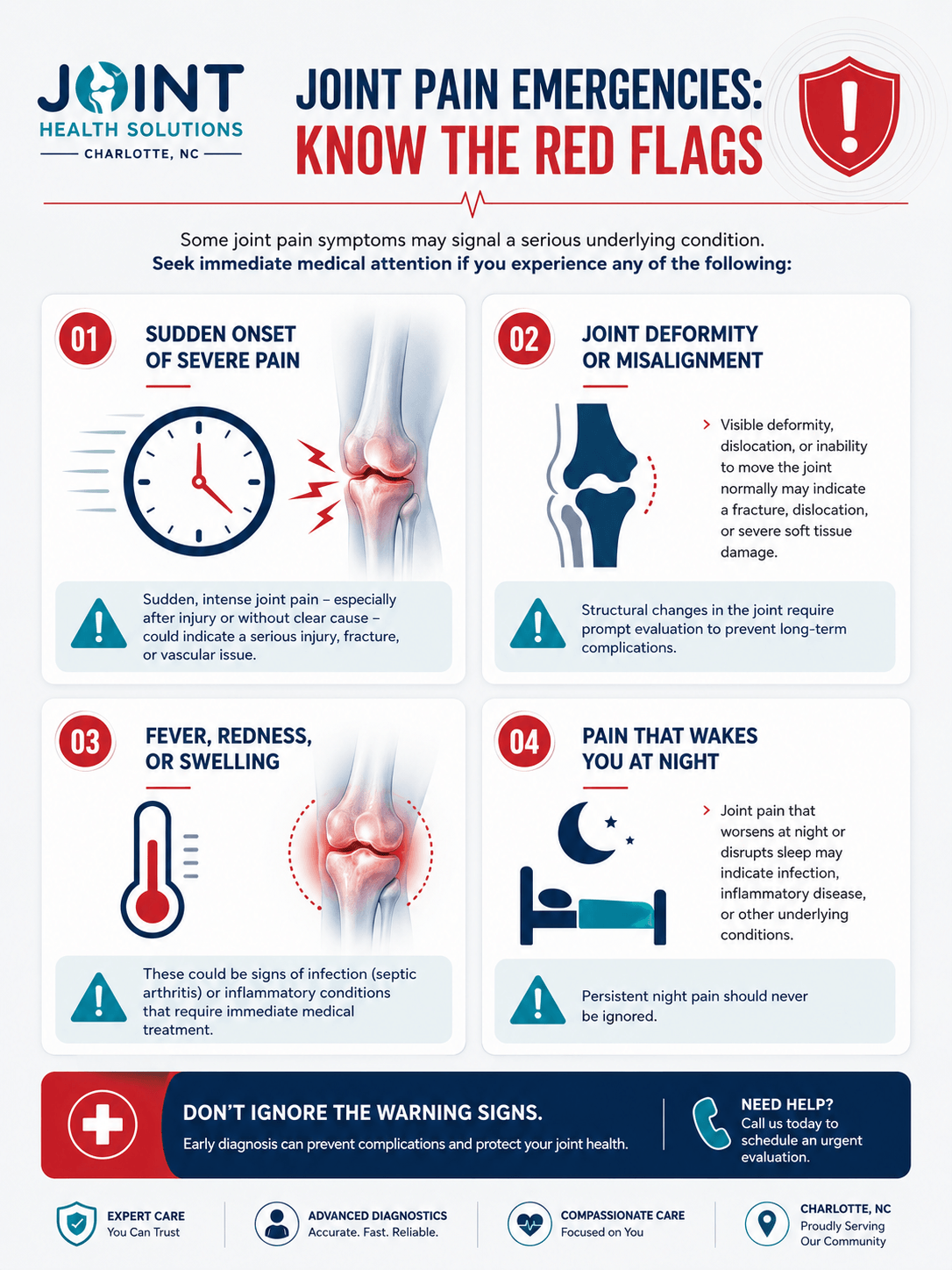
Not all joint pain is created equal. Normal aches from overuse, mild arthritis, or weather changes typically respond to rest, activity modification, and over-the-counter medications. They come on gradually, are manageable, and don’t interfere significantly with daily life. Red flags, on the other hand, are symptoms that suggest an underlying pathology requiring urgent medical diagnostics. These include sudden severe pain, joint deformity, inability to bear weight, fever, redness, warmth, night pain, or pain that wakes you from sleep. Recognizing these distinctions can be the difference between a simple treatment and a medical emergency. At Joint Health Solutions, we educate our patients on these warning signs and offer prompt diagnostic services to get to the root of the problem.
Red Flag #1: Sudden Onset of Severe Pain or Swelling
A sudden, severe pain in a joint—especially if accompanied by rapid swelling—is a classic red flag. This could indicate a fracture, ligament tear, meniscal injury, or even a septic joint (infection). Unlike gradual arthritis pain, which builds over months or years, acute onset pain demands immediate evaluation. For example, if you twist your knee and hear a pop, followed by immediate swelling and inability to move the joint, you may have a torn anterior cruciate ligament (ACL) or a meniscal tear. Similarly, sudden hip pain could be a sign of avascular necrosis or a stress fracture. In such cases, home remedies will not suffice. You need urgent joint pain diagnostics in Charlotte to determine the extent of injury and guide appropriate treatment. At Joint Health Solutions, we use fluoroscopy-guided injections and advanced imaging to accurately diagnose these acute conditions.
Red Flag #2: Joint Deformity or Inability to Bear Weight
If a joint looks visibly deformed—out of place, misshapen, or significantly swollen—this is a clear sign that something is wrong. Deformity can result from dislocation, fracture, or severe ligamentous injury. Inability to bear weight on a leg or use an arm normally is another major red flag. For instance, if you cannot put any weight on your ankle after a fall, you may have a fracture or severe sprain that requires immobilization and possibly surgery. Similarly, a knee that feels like it’s going to give out or locks in place could indicate a meniscal tear or loose body. These symptoms require immediate medical evaluation, including X-rays, MRI, or CT scans. Our team at Joint Health Solutions can perform these diagnostics and offer non-surgical interventions like joint injections or bracing to stabilize the joint while healing occurs.
Red Flag #3: Fever, Redness, or Warmth Around the Joint
A joint that is hot, red, and swollen, especially when accompanied by fever, is a medical emergency until proven otherwise. These are classic signs of septic arthritis—a bacterial infection inside the joint space that can destroy cartilage within hours. Other causes include gout, pseudogout, or inflammatory arthritis like rheumatoid arthritis. Septic arthritis requires prompt diagnosis via joint aspiration (arthrocentesis) and culture, followed by antibiotics and possibly surgical drainage. Delaying treatment can lead to irreversible joint damage and systemic sepsis. If you experience these symptoms, do not wait for a primary care appointment. Go to an emergency room or contact a specialist immediately. At Joint Health Solutions, we can perform knee arthrocentesis to aspirate the joint and analyze the fluid, providing rapid answers. For non-infectious inflammatory conditions, we offer anti-inflammatory IV therapy and cortisone injections to reduce inflammation quickly.
Red Flag #4: Pain That Worsens at Night or Wakes You Up
Pain that is worse at night or wakes you from sleep is a hallmark of serious pathology. Unlike mechanical pain from arthritis, which typically improves with rest, night pain is often associated with inflammatory conditions, tumors, or infection. For example, a bone tumor may cause a dull ache that intensifies when lying down. Similarly, inflammatory arthritis like rheumatoid arthritis often causes morning stiffness and night pain. If you find yourself consistently waking up due to joint pain, it’s time for a thorough evaluation. At Joint Health Solutions, we use advanced imaging such as MRI to rule out occult fractures, avascular necrosis, or tumors. Our approach includes personalized treatment plans that may involve PRP therapy to promote healing or trigger point injections to relieve muscle spasms contributing to pain.
When to Seek Advanced Diagnostics and Non-Surgical Treatment
If you experience any of the red flags described above, it’s crucial to seek advanced diagnostics rather than relying on lifestyle modifications alone. At Joint Health Solutions in Charlotte, we offer a comprehensive range of diagnostic and non-surgical treatment options. Our services include fluoroscopy-guided injections for precise medication delivery, joint injections for knee, shoulder, and hip pain, and PRP therapy to harness your body’s natural healing factors. We also provide offloading knee braces to reduce pressure on arthritic joints, physical therapy to strengthen supporting muscles, and nutrition plans to reduce systemic inflammation. Our goal is to identify the root cause of your pain and provide effective, non-surgical solutions that help you regain function and quality of life.
The Problem with Conventional Treatments (Pills, Steroids, Surgery)
Many patients with joint pain are initially managed with over-the-counter pain relievers, prescription anti-inflammatories, or corticosteroid injections. While these can provide temporary relief, they often mask symptoms without addressing the underlying cause. Repeated use of NSAIDs can lead to gastrointestinal and kidney issues. Frequent steroid injections may weaken cartilage and tendons over time. Surgery, while sometimes necessary, carries risks of infection, blood clots, and prolonged recovery. Moreover, many patients are not candidates for surgery due to age, health status, or personal preference. At Joint Health Solutions, we believe in a more comprehensive approach that combines accurate diagnostics with targeted non-surgical therapies. The table below compares conventional treatments with our personalized care model.
| Treatment | How It Works | Limitations | Risks |
|---|---|---|---|
| Pills (NSAIDs, Acetaminophen) | Reduce pain and inflammation systemically | Does not address cause; temporary relief; GI/kidney issues with long-term use | Stomach ulcers, kidney damage, cardiovascular risks |
| Steroid Injections | Powerful anti-inflammatory effect locally | May weaken cartilage and tendons with repeated use; temporary relief | Joint infection, tendon rupture, cartilage damage, increased pain |
| Surgery (Arthroscopy, Joint Replacement) | Repair or replace damaged structures | Invasive; long recovery; not all patients are candidates; may not resolve pain | Infection, blood clots, nerve damage, implant failure, stiffness |
| Non-Surgical Personalized Care at Joint Health Solutions | Comprehensive diagnostics; targeted injections (cortisone, hyaluronic acid, PRP); bracing; physical therapy; nutrition | Requires commitment to multiple modalities; results vary | Minimal; injection-related risks (pain, infection, allergic reaction) are low |
How Joint Health Solutions Treats Joint Pain Without Surgery
At Joint Health Solutions, we take a multifaceted approach to joint pain that starts with accurate diagnosis and includes a range of non-surgical interventions tailored to each patient’s condition and goals. Our services include:
Joint Injections
We offer a variety of joint injections, including cortisone injections for inflammation, hyaluronic acid injections for lubrication, and PRP therapy to stimulate healing. These are performed under fluoroscopy guidance to ensure precise placement.
Knee Injections Charlotte
Specialized knee injections for osteoarthritis, meniscal tears, and other conditions. We use ultrasound or fluoroscopy to target the exact area of pathology.
Shoulder Injections Charlotte
For rotator cuff injuries, bursitis, and adhesive capsulitis, our shoulder injections provide targeted relief and can be combined with physical therapy.
Fluoroscopy-Guided Injections
Using real-time X-ray guidance, we deliver medications precisely into the joint or around nerves, improving accuracy and outcomes.
Cortisone Injections
Powerful anti-inflammatory steroids for acute flares. Used sparingly to avoid side effects.
Hyaluronic Acid Injections
Also known as viscosupplementation, these injections add lubrication to arthritic joints, reducing pain and improving function.
PRP Therapy
Platelet-rich plasma is derived from your own blood and injected into damaged tissues to promote natural healing. Effective for tendinopathy and osteoarthritis.
Anti-Inflammatory IV Therapy
Intravenous infusion of vitamins and anti-inflammatory agents to reduce systemic inflammation and support joint health.
Sports Recovery IV Therapy
Designed for athletes to speed recovery from injuries and optimize performance.
Toradol IM Injections
Intramuscular ketorolac for acute pain relief, often used for flare-ups.
Trigger Point Injections
Targeting muscle knots that refer pain to joints, providing relief and improving mobility.
Knee Arthrocentesis
Joint aspiration to remove excess fluid and analyze for infection or crystals. Both diagnostic and therapeutic.
Offloading Knee Braces
Custom braces that redistribute weight away from damaged areas of the knee, reducing pain and delaying surgery.
Physical Therapy
Strengthening and stretching programs to stabilize joints, improve range of motion, and prevent future injuries.
Nutrition Plan
Anti-inflammatory dietary guidance to support joint health and reduce systemic inflammation.
Offloading Knee Braces
Custom-fitted braces that unload the arthritic compartment, providing significant pain relief and improved function. Often used for medial compartment knee osteoarthritis.
Physical Therapy
Individualized exercise programs focusing on strengthening the quadriceps, hamstrings, and core to support the knee and hip joints. Includes manual therapy and modalities.
Nutrition Plan
Anti-inflammatory diet rich in omega-3s, antioxidants, and fiber to reduce joint inflammation. Includes guidance on avoiding pro-inflammatory foods like processed sugars and trans fats.
The Science Behind Our Approach (Evidence Summary)
Our treatments are grounded in evidence-based medicine. Studies published in the Journal of Orthopaedic Research and the American Journal of Sports Medicine have demonstrated the efficacy of PRP therapy for knee osteoarthritis and tendinopathy. Hyaluronic acid injections are supported by AAOS guidelines for knee osteoarthritis. Fluoroscopy-guided injections have been shown to improve accuracy and outcomes compared to blind injections. Offloading knee braces have been proven to reduce pain and improve function in medial compartment arthritis. Physical therapy is a cornerstone of conservative management for most joint conditions. Our nutrition plans are based on research linking diet to inflammation markers. While results vary, many patients experience significant improvement and are able to delay or avoid surgery.
What to Expect During Your First Visit to Joint Health Solutions
Your first visit begins with a comprehensive history and physical examination. We will ask about your pain, its onset, aggravating and relieving factors, and any prior treatments. We will perform a focused orthopedic exam, assessing range of motion, strength, stability, and tenderness. Based on our findings, we may recommend diagnostic imaging such as X-rays, ultrasound, or MRI. If indicated, we may perform a joint aspiration or injection for both diagnosis and treatment. We will then discuss your diagnosis and develop a personalized treatment plan that may include one or more of our non-surgical services. Our goal is to provide you with a clear understanding of your condition and a roadmap to recovery.
Real Patient Success Stories
Note: These are hypothetical examples based on common clinical scenarios and do not represent actual patients.
Case 1: A 55-year-old active woman presented with sudden knee swelling and inability to bear weight after twisting her knee while gardening. MRI revealed a medial meniscal tear. She opted for a series of PRP injections combined with physical therapy. Within three months, she was able to return to walking and light hiking without pain.
Case 2: A 62-year-old man with chronic knee osteoarthritis was considering total knee replacement. After evaluation, he was fitted with an offloading knee brace and started a nutrition plan and physical therapy. He experienced significant pain reduction and was able to postpone surgery for over two years.
Case 3: A 45-year-old runner developed hip pain that worsened at night. Imaging revealed early avascular necrosis. He underwent fluoroscopy-guided core decompression and PRP therapy, which helped preserve his hip joint and allowed him to return to low-impact activities.
Why Joint Health Solutions – 10 Years of Experience in Charlotte, North Carolina
With a decade of experience serving the Charlotte community, Joint Health Solutions has become a trusted provider of non-surgical orthopedic care. Our team of board-certified physicians and skilled staff are dedicated to accurate diagnosis and personalized treatment. We invest in the latest technology, including fluoroscopy and ultrasound, to ensure precise interventions. Our comprehensive approach means you don’t have to visit multiple specialists—we offer diagnostics, injections, bracing, therapy, and nutrition under one roof. We are committed to helping you achieve pain relief and improved function without unnecessary surgery. Learn more about our practice and about us.
Call to Action – Book Your Consultation
Don’t ignore the warning signs. If you are experiencing any of the red flags discussed in this article, schedule a diagnostic evaluation at Joint Health Solutions today. Our team will perform a thorough assessment and recommend the best non-surgical options for your condition. Call us at 704-833-3566 or visit our website to book your appointment. Take the first step toward pain-free living with expert care in Charlotte, North Carolina.
- Sudden severe pain or swelling
- Joint deformity or inability to bear weight
- Fever, redness, or warmth around the joint
- Pain that worsens at night or wakes you up
- Pain that does not improve with rest or over-the-counter medications
- History of cancer or recent infection
- Numbness, tingling, or weakness in the limb
Medical Disclaimer: This article is for educational purposes only and is not a substitute for medical advice, diagnosis, or treatment. Results vary, and not every patient is a candidate for every treatment. A qualified healthcare provider should evaluate your condition and discuss risks, benefits, and alternatives before treatment.
Institutional Sources
- American Academy of Orthopaedic Surgeons (AAOS) – Red Flags in Orthopaedics
- Mayo Clinic – Joint Pain: Causes and When to Seek Care
- Cleveland Clinic – Septic Arthritis: Diagnosis and Treatment
- National Institutes of Health (NIH) – Diagnostic Imaging for Joint Disorders
- Harvard Health Publishing – When Joint Pain Means Something More Serious
Frequently Asked Questions
What are the most common red flags for joint pain?
The most common red flags include sudden severe pain, joint deformity, inability to bear weight, fever with redness or warmth, and pain that wakes you at night. These symptoms warrant immediate medical evaluation.
When should I see a specialist instead of trying home remedies?
If your joint pain is severe, persistent, or accompanied by any red flag symptoms, you should see a specialist promptly. Home remedies are not sufficient for fractures, infections, or significant ligament tears.
Can imaging like fluoroscopy help diagnose joint issues?
Yes, fluoroscopy provides real-time X-ray guidance that helps visualize joint anatomy and guide injections precisely. It is especially useful for diagnosing subtle instability and for performing therapeutic injections.
What non-surgical treatments are available for urgent joint pain?
Non-surgical options include joint injections (cortisone, hyaluronic acid, PRP), offloading braces, physical therapy, anti-inflammatory IV therapy, and trigger point injections. These can provide significant relief and improve function.
How do I know if my joint pain is an emergency?
If you have sudden severe pain, deformity, inability to move the joint, fever, or signs of infection (redness, warmth), it is a medical emergency. Seek immediate care at an emergency room or call your specialist.
What is the role of PRP therapy in joint pain?
PRP therapy uses your own platelets to release growth factors that promote healing. It is effective for tendinopathy, osteoarthritis, and ligament injuries, and can be part of a comprehensive non-surgical plan.
Are offloading knee braces effective?
Yes, offloading knee braces are proven to reduce pain and improve function in patients with medial compartment knee osteoarthritis by redistributing weight away from the damaged area.
How long does it take to see results from non-surgical treatments?
Results vary. Some patients experience relief within days after an injection, while others may require several weeks of physical therapy or multiple PRP sessions. Your specialist will discuss expected timelines.
Do you accept insurance for diagnostic evaluations?
We accept many insurance plans. Please contact our office at 704-833-3566 to verify your coverage and discuss any out-of-pocket costs.
What should I bring to my first appointment?
Bring your insurance card, photo ID, a list of medications, any prior imaging reports or CDs, and a list of your symptoms and questions. Wear comfortable clothing that allows access to the affected joint.