
Being told that a knee or shoulder is “bone-on-bone” can sound alarming. The phrase is commonly used when imaging shows advanced osteoarthritis with substantial cartilage loss and severe narrowing of the space between the bones.
Adults looking for Bone-on-Bone Arthritis Treatment Near Gastonia NC can visit Joint Health Solutions for a symptom-led evaluation and personalized nonsurgical care planning.
Joint Health Solutions serves patients from Gastonia, Belmont, Cramerton, Dallas, Mount Holly, Bessemer City, and nearby Gaston County communities at its Charlotte clinic. The practice does not currently operate a physical Gastonia office.
Treatment decisions should consider your symptoms, joint movement, strength, stability, previous care, available imaging, medical history, and daily goals—not imaging terminology alone.
Medically reviewed by: Dr. Jeffrey Galvin & Ariel Curtis, FNP-C
Bone-on-bone arthritis does not automatically mean that joint replacement must happen immediately.
Depending on the affected joint, symptom severity, health history, and functional goals, nonsurgical care can include physical therapy, activity modification, knee bracing, nutrition or weight support when appropriate, medication review, aspiration for selected swollen knees, and carefully chosen injections.
These approaches can support comfort, mobility, strength, and daily function. They do not regrow lost cartilage, reverse advanced osteoarthritis, or guarantee that surgery can be delayed or avoided.
“Bone-on-bone” is an informal phrase commonly used when an X-ray shows severe joint-space narrowing associated with advanced osteoarthritis. It is not a separate diagnosis and does not fully explain how much pain or functional loss a person will experience.
Cartilage normally covers the ends of bones and helps a joint move smoothly. As osteoarthritis advances, cartilage, bone, the joint lining, muscles, and other supporting tissues can change.
Imaging findings and symptoms do not always match. One person can have advanced structural changes with manageable symptoms, while another experiences substantial pain, stiffness, weakness, or reduced mobility. Treatment should therefore consider the complete clinical picture. X-rays can show joint-space loss, bone remodeling, bone damage, and bone spurs, but they do not directly measure pain or daily function.

Advanced arthritis can cause aching, soreness, sharp discomfort, tenderness, or pain that becomes worse with movement. Some patients also experience pain during rest or sleep.
Reduced movement can result from structural joint changes, swelling, bone spurs, muscle weakness, or pain-related guarding.

Irritation of the joint lining can contribute to recurring swelling, warmth, pressure, or tenderness during a flare.

Symptoms can affect walking, stairs, standing, lifting, reaching, dressing, exercise, work, sleep, and everyday independence.
Advanced osteoarthritis affects the whole joint rather than cartilage alone. Osteoarthritis can involve cartilage, bone, the synovial lining, tendons, ligaments, muscles, and the knee meniscus.

The cartilage surface becomes less able to distribute pressure and support smooth joint movement. Current nonsurgical treatments do not reliably replace advanced cartilage loss.

Because cartilage is not clearly visible on a standard X-ray, the space between the bones is used as an indirect sign of cartilage thickness. Severe narrowing can lead to the phrase “bone-on-bone.”

The bone beneath the cartilage can become thicker or change shape as the joint responds to altered loading.

Osteophytes, commonly called bone spurs, can form around the edges of the joint. They can contribute to stiffness or reduced motion, although they are not always painful.
Inflammation of the joint lining can contribute to warmth, tenderness, swelling, or recurring symptom flare-ups.

Pain and reduced activity can weaken the muscles supporting the affected joint. Weakness can then affect movement control, stability, balance, and confidence.
These changes explain why care often combines strengthening, movement support, joint protection, symptom management, and referral guidance rather than relying on a single treatment.
Joint Health Solutions focuses this page on advanced knee and shoulder osteoarthritis.

Advanced knee osteoarthritis can affect the inner, outer, or kneecap compartment.
Common symptoms include:
A knee can show severe joint-space narrowing without producing identical symptoms in every patient. Knee function, stability, alignment, and activity limitations should also guide care.

Advanced glenohumeral osteoarthritis affects the main ball-and-socket joint of the shoulder.
Common symptoms include:
Shoulder symptoms can also involve the rotator cuff, AC joint, bursae, or surrounding muscles. An evaluation helps determine whether arthritis or another condition is contributing to the symptoms.
| Symptom | What It May Feel Like |
|---|---|
| Joint Pain | Aching, sharp discomfort, soreness, or pain that worsens with activity. |
| Stiffness | Difficulty bending, straightening, lifting, reaching, or moving after rest. |
| Grinding or Clicking | Popping, cracking, catching, or grinding sensations during movement. |
| Swelling | Puffiness, tenderness, warmth, or pressure around the knee or shoulder. |
| Reduced Mobility | Trouble walking, using stairs, lifting, reaching, exercising, or working. |
| Weakness | The joint may feel tired, unstable, or less supportive during activity. |
| Morning Discomfort | Stiffness or pain may feel worse after sleeping, sitting, or inactivity. |
Seek prompt medical care for:
These signs can indicate an infection, fracture, dislocation, blood clot, major soft-tissue injury, or another condition requiring a different evaluation pathway.

Treatment planning begins by understanding your symptoms, movement limitations, medical history, previous care, and the effect arthritis has on everyday activities.

Your provider reviews when symptoms started, what makes them worse, what has helped, prior injuries, previous treatments, medications, and how arthritis affects daily life.

A physical evaluation may include checking range of motion, tenderness, swelling, strength, posture, stiffness, and functional movement.

Bring relevant X-ray reports, MRI reports, orthopedic records, or previous procedure information when available.
Existing imaging can help identify joint-space narrowing, bone remodeling, bone spurs, alignment changes, and other structural findings. Imaging alone does not determine symptom severity or which treatment must be selected.
Advanced arthritis does not make every nonsurgical strategy ineffective. These approaches are designed to support comfort, mobility, strength, stability, and informed decision-making. They do not replace lost cartilage.

Changing painful movements, reducing repetitive strain, adjusting exercise routines, and improving body mechanics may help reduce irritation while keeping the joint moving safely.

Weight management may help reduce pressure on painful knees and support overall joint health. For shoulder arthritis, overall wellness, strength, nutrition, and activity habits can still influence comfort and function.

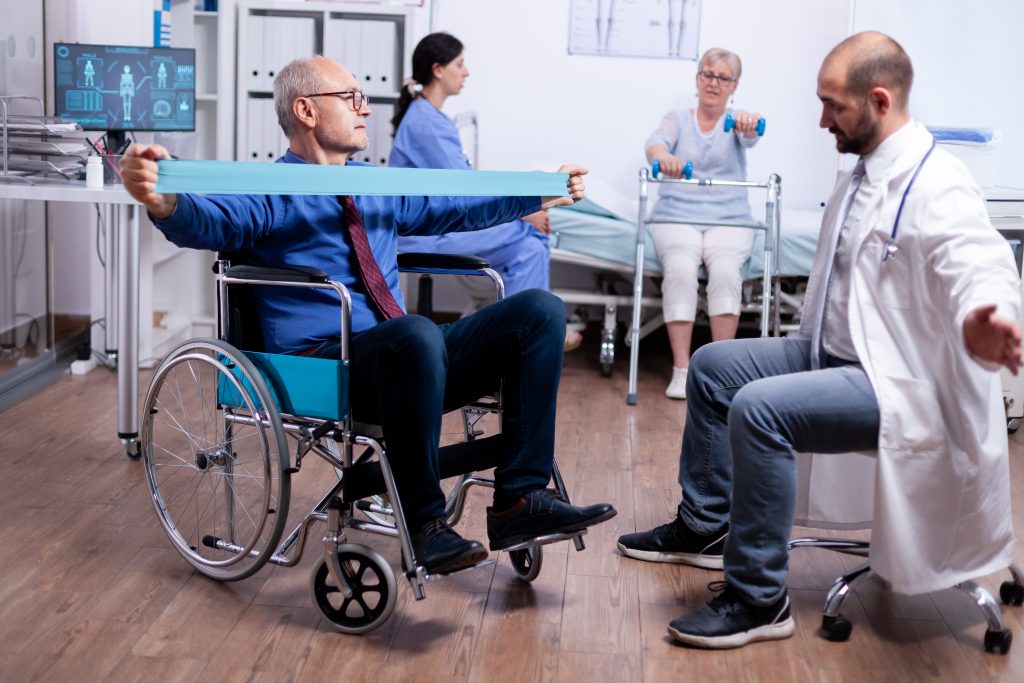
Physical therapy support may help improve strength, flexibility, range of motion, balance, and movement control. Progress can vary, and consistency is important.
For selected knee bone-on-bone arthritis patients, an offloading knee brace may help reduce pressure on the painful side of the knee and improve stability. When bracing is appropriate, Joint Health Solutions handles brace support in office instead of referring patients out.

Medication options may help manage inflammation and discomfort when appropriate. Your provider can discuss whether medication support fits your health history and care plan.

Toradol IM is ketorolac administered into a muscle, not into the knee or shoulder joint. It may be considered for short-term acute-pain support after reviewing gastrointestinal, kidney, cardiovascular, bleeding, medication, and other individual risks. It is not routine treatment for chronic arthritis or joint stiffness.
An injection should be considered only after reviewing the affected joint, symptoms, medical history, previous care, evidence, alternatives, and treatment limitations.
| Injection Type | Commonly Considered For | Typical Goal | Important Limitations |
|---|---|---|---|
| Corticosteroid Injection | Knee or shoulder inflammation, swelling, painful flare-ups | Help reduce inflammation and improve comfort | Relief varies and is not a cure for arthritis. |
| Hyaluronic Acid Injection | Selected knee osteoarthritis patients | Support knee joint lubrication | Used for knee care only when appropriate; results vary. |
| PRP Therapy | Selected knee or shoulder discomfort or soft tissue irritation | Support the body’s natural healing response | Not guaranteed to regenerate cartilage or prevent surgery. |
| Toradol Injection | Selected inflammation-related joint discomfort | Non-opioid symptom support | Not appropriate for every patient; health history matters. |
Platelet-rich plasma is prepared from a sample of the patient’s blood. The sample is processed, and a platelet-rich portion is collected for treatment.
For selected patients with symptomatic knee osteoarthritis, PRP can be discussed after reviewing:
Evidence for knee osteoarthritis remains limited, and preparation methods vary. Some patients experience symptom or function improvement, while others do not respond.
PRP does not guarantee:
PRP should not be promoted as established treatment for glenohumeral shoulder osteoarthritis because reliable supporting evidence is lacking.


Orthopedic or joint-replacement consultation can be appropriate when advanced arthritis causes substantial pain or functional loss and a suitable nonsurgical plan no longer provides enough support.
Referral can be considered when there is:
A referral does not mean surgery will automatically be recommended. It provides access to further assessment and a balanced discussion of surgical and nonsurgical choices.
Symptom-Led Evaluation
Recommendations consider pain, movement, strength, stability, previous treatment, existing records, and functional limitations rather than relying on imaging terminology alone.
Knee and Shoulder Focus
Care planning distinguishes advanced knee osteoarthritis from shoulder osteoarthritis instead of applying the same treatment evidence to both joints.
Nonsurgical Care Planning
Physical therapy, activity changes, knee bracing, nutrition support, medication review, aspiration, and selected procedures can be considered when appropriate.
Evidence-Aware Guidance
Patients receive clear information about realistic goals, evidence limitations, possible risks, alternatives, and when orthopedic referral should be considered.
Provider-Led Care
The care team includes Ariel Curtis, FNP-C, and Jeffrey Galvin, MD, Medical Director.
Gastonia-Area Patient Access
Joint Health Solutions welcomes adults from Gastonia, Belmont, Cramerton, Dallas, Mount Holly, Bessemer City, and nearby Gaston County communities at its Charlotte clinic.
Exercise, strengthening, range-of-motion work, and other appropriate physical activities are central parts of osteoarthritis care. These approaches can support pain reduction, flexibility, muscle strength, endurance, and daily function. Knee bracing can also be considered for selected patients when the brace is properly chosen and fitted.
Corticosteroid injections are mainly used for short-term symptom support. They do not restore cartilage or permanently change advanced osteoarthritis. Repeated injection decisions require individual review rather than a universal schedule.
Recommendations for knee hyaluronic acid injections differ among professional organizations. AAOS does not recommend routine use for symptomatic knee osteoarthritis. Hyaluronic acid should not be promoted for shoulder osteoarthritis because current AAOS guidance reports no demonstrated benefit for glenohumeral osteoarthritis.
PRP can be discussed for selected knee osteoarthritis patients, but evidence remains limited, protocols vary, and response is not predictable. PRP does not establish cartilage regeneration, structural joint restoration, or guaranteed avoidance of surgery.
Toradol IM has a different role. It is a systemic NSAID injection used for selected short-term acute-pain situations—not a joint injection or ongoing osteoarthritis treatment. Official labeling limits adult ketorolac treatment to five days because of the potential for serious adverse effects.
Improvement in symptoms or movement does not mean that lost cartilage has returned. The goal of nonsurgical care is to support comfort, function, strength, mobility, and informed treatment decisions.
No. The phrase describes advanced structural changes, but it does not determine treatment by itself. Some patients can support function through physical therapy, activity changes, knee bracing, weight support when appropriate, medication review, or selected procedures. Surgery becomes more relevant when pain, deformity, instability, or functional loss remains substantial despite an appropriate nonsurgical plan.
Current nonsurgical treatments do not reliably regrow advanced cartilage loss or restore normal joint space. Care generally focuses on pain, movement, strength, stability, and daily function. A patient can experience meaningful symptom improvement without cartilage regeneration. Claims that an injection, supplement, exercise program, or regenerative treatment reliably rebuilds a bone-on-bone joint should be treated cautiously.
Yes. Physical therapy can support strength, movement, balance, stability, and function even when imaging shows advanced arthritis. Stronger supporting muscles can improve movement control and confidence. Therapy should be adapted to the affected joint and symptom tolerance. It does not restore lost cartilage or guarantee that joint replacement will never be needed.
No. An injection is only one possible part of care. Physical therapy, activity modification, knee bracing, nutrition support, medication review, and other strategies can be appropriate depending on the symptoms and goals. Cortisone, hyaluronic acid, PRP, and Toradol have different uses and limitations. No injection reliably restores cartilage or provides permanent relief.
Some patients with symptomatic knee osteoarthritis report improvement, but professional recommendations differ and individual response varies. AAOS does not recommend hyaluronic acid for routine knee osteoarthritis use. The treatment does not rebuild cartilage or restore normal joint space. It should not be promoted for shoulder osteoarthritis because current guidance reports no demonstrated benefit for glenohumeral osteoarthritis.
PRP can be discussed for selected knee osteoarthritis patients, but the evidence remains limited and preparation methods vary. PRP does not regrow advanced cartilage or guarantee avoidance of knee replacement. Reliable evidence is lacking for PRP as established treatment for glenohumeral shoulder osteoarthritis. Expected goals, uncertainty, costs, alternatives, and limitations should be reviewed before treatment.
Walking is not automatically harmful, but the amount and type of activity should match the patient’s pain, stability, and function. Shorter distances, flatter surfaces, supportive footwear, an appropriate brace, or a temporary assistive device can make movement more manageable. Severe pain, major swelling, instability, or worsening symptoms should be evaluated rather than pushed through.
X-rays show structural findings such as joint-space narrowing, bone remodeling, alignment changes, and bone spurs, but they do not directly measure pain or daily function. One person can have advanced imaging changes with manageable symptoms, while another experiences major limitations. Treatment decisions should combine imaging with symptoms, movement, strength, health history, and personal goals.
Referral can be appropriate when arthritis causes persistent rest or night pain, progressive deformity, instability, major loss of motion, or substantial difficulty walking, lifting, reaching, working, sleeping, or completing personal care. Referral provides access to further assessment and does not automatically mean surgery will be recommended.
Appointments are held at Joint Health Solutions, 9350 Benfield Rd, #109, Charlotte, NC 28269. The practice serves adults from Gastonia and surrounding Gaston County communities but does not currently operate a physical Gastonia clinic. Call 704-833-3566 for current scheduling information, directions, and appointment preparation guidance.
Advanced knee or shoulder arthritis can affect movement, sleep, work, exercise, and everyday independence. A focused evaluation can help clarify whether physical therapy, knee-specific support, a procedure consultation, additional assessment, or orthopedic referral should be considered.