
Conditions We Treat / Degenerative Joint Disease in Mint Hill, NC

Non-Surgical Degenerative Joint Disease Treatment in Mint Hill, NC

Degenerative joint disease can make everyday movement feel painful, stiff, and limited. Walking, climbing stairs, reaching, lifting, exercising, working, or getting through the day without joint discomfort can become more difficult when joint wear begins affecting mobility.

Joint Health Solutions provides non-surgical degenerative joint disease treatment for adults in Mint Hill, NC and nearby communities who want clear answers, personalized care, and treatment options beyond simply living with joint pain.

Our care focuses on understanding how joint degeneration is affecting your movement, explaining your options clearly, and building a plan that may help reduce pain, improve function, and support long-term joint health.

Depending on your condition, your plan may include image-guided injections, cortisone injections, PRP therapy, hyaluronic acid injections for eligible knee arthritis patients, bracing support, physical therapy guidance, mobility support, activity modification, weight and lifestyle guidance, or a combination of treatments designed around your symptoms and goals.

Call 704-833-3566 to schedule a degenerative joint disease treatment consultation.

Medically reviewed by: Dr. Jeffrey Galvin & Ariel Curtis, FNP-C

What Is Degenerative Joint Disease?

Degenerative joint disease is commonly used to describe osteoarthritis, a joint condition that develops when cartilage, cushioning, bone surfaces, and surrounding joint structures change over time. As the joint becomes less cushioned or more irritated, movement may become painful, stiff, swollen, or limited.

For adults in Mint Hill, degenerative joint disease may affect the knees, shoulders, hips, spine, or multiple joints. Symptoms may begin gradually as mild soreness or stiffness, then become more noticeable during walking, stairs, lifting, reaching, standing, bending, or getting up after sitting.

At Joint Health Solutions, we help patients understand what may be contributing to their joint pain and which non-surgical treatment options may be appropriate. Your provider reviews your symptoms, medical history, activity level, prior treatments, joint function, and goals before recommending a personalized care plan.

The goal is not only to reduce discomfort, but also to help you move with more confidence, protect long-term function, and make informed decisions about your joint health.

Degenerative Joint Disease Treatment in Mint Hill

What Happens Inside a Joint Affected by DJD?

Degenerative joint disease can affect more than one part of the joint. Pain may come from cartilage changes, inflammation, joint fluid changes, bone stress, soft tissue irritation, weakness, or altered movement mechanics.

Common joint changes may include:

These changes can make the joint feel painful, stiff, unstable, swollen, or harder to use during daily activity. A personalized evaluation helps determine which factors may be contributing to your symptoms and which treatment options may fit your condition.

Common Areas Affected by Degenerative Joint Disease

Degenerative joint disease can affect different joints, and symptoms may look different depending on the area involved.

Knee DJD

Knee degenerative joint disease may cause pain with walking, stairs, standing, bending, kneeling, or getting up from a chair. Patients may also notice stiffness, swelling, grinding, or reduced mobility.

Hip DJD

Hip degenerative joint disease may cause pain in the groin, outer hip, thigh, or buttock. It may affect walking, standing, sitting, stairs, or getting in and out of a car.

Shoulder DJD

Shoulder degenerative joint disease may cause pain with reaching, lifting, dressing, driving, sleeping on the affected side, or using the arm overhead.

Spine DJD

Degenerative changes in the spine may contribute to stiffness, aching, reduced flexibility, or discomfort during standing, walking, bending, or certain positions.

Multiple Joint DJD

Some patients experience degenerative joint symptoms in more than one area. A full evaluation can help identify which joints are most affected and how treatment should be prioritized.

Symptoms of Degenerative Joint Disease

Degenerative joint disease symptoms can develop slowly and may become more noticeable over time. Some patients experience mild stiffness after activity, while others have daily pain, swelling, or reduced mobility.

Joint Pain – Pain may occur during walking, stairs, lifting, reaching, standing, bending, or other daily movements. It may begin as activity-related discomfort and become more persistent over time.

StiffnessStiffness is common after sleeping, sitting, or staying in one position for a long time. Many patients notice stiffness in the morning or after periods of inactivity.

Swelling or Tightness – Swelling may happen when the joint becomes irritated or inflamed. This can create pressure, tightness, or reduced range of motion.

Grinding, Clicking, or PoppingSome patients notice grinding, clicking, catching, popping, or rough movement inside the joint.

Reduced Range of MotionDegenerative joint changes can make it harder to bend, straighten, rotate, lift, reach, or fully use the affected joint.

Joint Weakness or InstabilityThe joint may feel weak, unreliable, or less stable during walking, lifting, stairs, or weight-bearing activity.

Recurring Flare-Ups  – Symptoms may come and go, especially after increased activity, repetitive motion, weather changes, or prolonged stress on the joint.

Risk Factors for Degenerative Joint Disease

Certain factors may increase the likelihood of developing degenerative joint disease or worsening joint symptoms over time.

Risk Factor How It May Contribute
Age Joint cartilage, cushioning, and soft tissues can change gradually over time.
Previous Injury Past joint injuries can increase the chance of developing degenerative changes.
Repetitive Stress Repeated pressure or overuse may speed up cartilage wear.
Excess Joint Pressure Extra pressure on weight-bearing joints may increase discomfort.
Genetics Some patients may be more likely to develop joint degeneration.
Activity Level Certain work, sports, or lifestyle habits may increase joint stress over time.

Risk factors do not always mean a person will develop severe symptoms. They simply help guide evaluation, prevention strategies, and treatment planning.

How Degenerative Joint Disease Is Diagnosed

A clear care plan starts with understanding your symptoms, joint function, and movement goals.

01

Medical History

Your provider reviews when your pain started, what makes it worse, what helps, prior injuries, previous treatments, work demands, activity level, and how symptoms affect daily life.

02

Physical Examination

Your provider may evaluate tenderness, swelling, stiffness, range of motion, strength, stability, walking tolerance, posture, and movement patterns to better understand how the affected joint is functioning.

03

Imaging

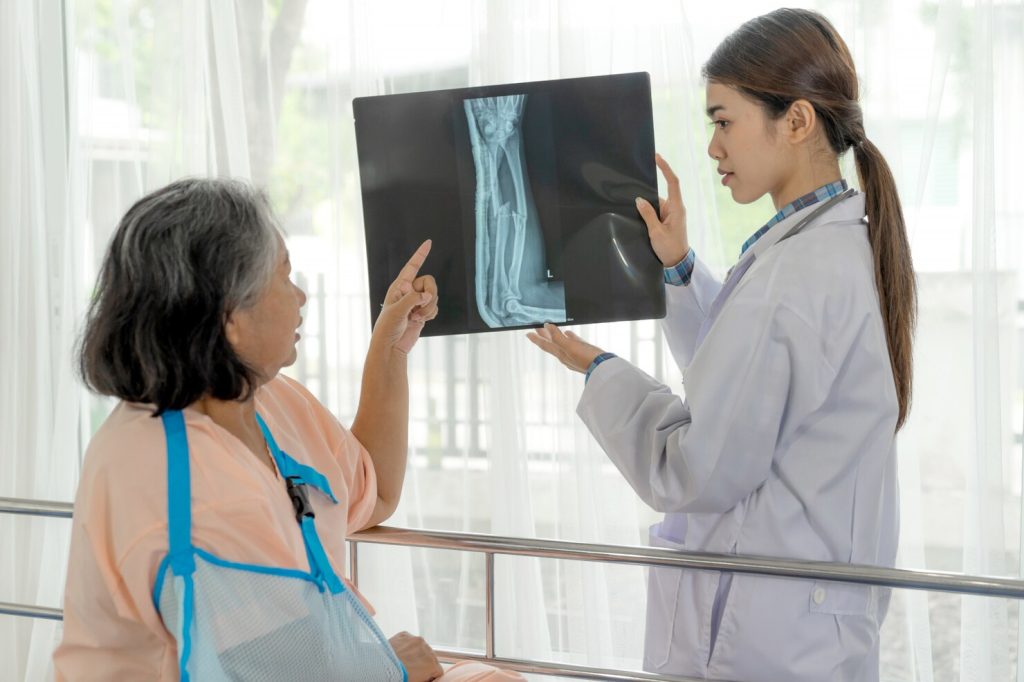
If imaging is needed, your provider can discuss the next step. Imaging may help show joint space changes, cartilage loss, bone spurs, inflammation patterns, or other findings that may affect treatment planning.

The goal is to build a treatment plan based on your symptoms, joint condition, function, medical history, and long-term goals.

Injection Options for Degenerative Joint Disease

Image-guided injections may be considered when degenerative joint disease causes pain, inflammation, stiffness, swelling, or reduced function. When appropriate, image guidance can help place treatment more precisely inside or around the affected joint.

Injection Type Best For Main Goal
Cortisone Injection Inflammation, swelling, arthritis flare-ups Helps reduce pain and inflammation
Hyaluronic Acid Injection Joint stiffness and reduced lubrication Supports smoother joint movement
PRP Therapy Chronic joint pain or soft tissue irritation Supports the body’s natural healing response

The right injection depends on the affected joint, severity of symptoms, medical history, activity goals, and provider recommendation.

Regenerative Medicine for Degenerative Joint Disease

For selected patients, regenerative medicine may be considered as part of a non-surgical degenerative joint disease care plan. Platelet-rich plasma therapy, often called PRP therapy, uses a concentrated portion of the patient’s own blood that contains platelets and growth factors.

PRP may be discussed for certain patients with chronic joint pain, arthritis-related irritation, or soft tissue concerns. It is not the right choice for every patient, and results can vary.

Your provider will review your symptoms, medical history, joint condition, activity level, and goals before recommending whether PRP is appropriate. The goal is not to promise a cure or cartilage regrowth. The goal is to determine whether PRP may support your broader plan for pain relief, improved movement, and long-term joint function.

Regenerative medicine for degenerative joint disease in Mint Hill, NC
Surgery consultation for degenerative joint disease in Mint Hill, NC

When Surgery May Be Considered

Non-surgical care can help many patients manage degenerative joint disease symptoms, but it is not the right solution for every case. Surgery or orthopedic referral may be considered when joint degeneration is advanced, pain is severe, mobility is significantly limited, or conservative treatment no longer provides enough relief.

Your provider may recommend further imaging or referral if you have major instability, severe loss of function, suspected fracture, infection concerns, rapidly worsening symptoms, or pain that does not match a typical degenerative joint disease pattern.

At Joint Health Solutions, our goal is to help patients understand their options clearly. If non-surgical care is appropriate, we build a plan around your needs. If a higher level of orthopedic care is needed, we help you understand that next step.

Why Choose Joint Health Solutions for Degenerative Joint Disease Care

Joint Health Solutions provides non-surgical joint pain care for adults dealing with degenerative joint disease, osteoarthritis, stiffness, inflammation, swelling, and mobility limitations. Patients from Mint Hill choose our Charlotte clinic because the care is personalized, practical, and focused on helping them move through daily life with greater confidence.

Care is led by Ariel Curtis, FNP-C, a board-certified family nurse practitioner and joint injection specialist, with Jeffrey Galvin, MD serving as Medical Director. The practice emphasizes evidence-informed, patient-centered care for adults seeking non-surgical joint pain solutions.

Non-Surgical Joint Care

Treatment planning focuses on conservative options when appropriate before surgery is considered.

Personalized Treatment Plans

Your care plan is based on your symptoms, joint function, lifestyle, medical history, and goals.

Image-Guided Treatments

When recommended, image guidance may help support accurate treatment placement.

Experienced Providers

Your care is guided by a team focused on joint pain, mobility, and non-surgical treatment planning.

Local Access Near Mint Hill

Joint Health Solutions is located at 9350 Benfield Rd, #109, Charlotte, NC 28269, serving patients from Mint Hill, Matthews, Indian Trail, Harrisburg, Charlotte, and nearby communities.

Frequently Asked Questions About Degenerative Joint Disease

What is the difference between degenerative joint disease and osteoarthritis?

Degenerative joint disease (DJD) and osteoarthritis (OA) are the same condition. The terms are used interchangeably. DJD emphasizes the progressive wear-and-tear nature, while osteoarthritis is the clinical diagnosis.

Yes. Many patients may benefit from non-surgical treatment, including physical therapy guidance, activity modification, bracing, weight support, image-guided injections, cortisone injections, PRP therapy, and selected knee lubrication injections.

The best treatment depends on the affected joint, severity of symptoms, range of motion, swelling, mobility, medical history, and goals. A personalized evaluation helps determine which options may be appropriate.

PRP may be considered for selected patients with chronic joint pain, arthritis-related irritation, or soft tissue concerns. A consultation helps determine whether PRP is appropriate.

Injections may help some patients manage pain, inflammation, stiffness, or mobility limitations. The right injection depends on the joint involved, symptoms, and treatment goals.

Physical therapy guidance may help improve strength, flexibility, balance, and movement control. Stronger support around the joint may help reduce strain and improve daily function.

Degenerative joint disease is often used to describe osteoarthritis, which is one of the most common forms of arthritis.

You should consider care if joint pain lasts more than a few days, keeps returning, causes swelling, limits movement, affects sleep, or interferes with walking, stairs, lifting, work, exercise, or daily routines.

Yes. Joint Health Solutions provides non-surgical degenerative joint disease treatment for patients from Mint Hill, NC and nearby areas. The clinic is located at 9350 Benfield Rd, #109, Charlotte, NC 28269.

Stop Guessing. Start Healing.

Degenerative joint disease should not keep you from walking, reaching, lifting, working, exercising, or moving through daily life with confidence. If you are looking for degenerative joint disease treatment in Mint Hill, NC, Joint Health Solutions can help you explore non-surgical options designed around your symptoms, joint condition, mobility goals, and long-term health.

Schedule an appointment today or call 704-833-3566 to take the next step toward better joint comfort, movement, and function.