
For years, joint pain has been treated as a purely mechanical issue—wear and tear on cartilage, aging, or overuse. While these factors play a role, there is a deeper, often overlooked contributor to joint inflammation and pain: your gut.
The connection between your digestive system and your joints is a powerful one. When the delicate balance of your gut microbiome is disrupted, it can trigger a cascade of systemic inflammation that directly impacts your knees, shoulders, and other joints. This is why many people with conditions like osteoarthritis, rheumatoid arthritis, and chronic joint stiffness find that their symptoms are closely linked to their diet and digestive health.
In functional medicine, we do not just treat the joint; we look for the root cause. Often, the path to pain-free movement begins in the gut.
The gut-joint axis is a concept that describes the bidirectional communication between the gastrointestinal tract and the musculoskeletal system. It operates through:
When the gut is healthy and its lining is intact, it acts as a barrier, keeping inflammation in check. When it is not, the entire body, including your joints, suffers.
The gut lining is home to 70–80% of your immune cells. When it is irritated by food sensitivities, infections, or dysbiosis, it produces pro-inflammatory cytokines like IL-6 and TNF-alpha. These cytokines enter the bloodstream and can directly inflame joint tissue, worsening conditions like osteoarthritis and degenerative joint disease. Learn more on our Conditions We Treat page.
Some pathogenic bacteria can trigger an immune response that, due to similar protein structures, begins to attack joint cartilage. This is a key driver behind autoimmune forms of arthritis. While this is a complex process, it underscores why gut health is foundational for those with chronic joint pain.
A healthy gut microbiome produces butyrate and other SCFAs, which have potent anti-inflammatory properties. Dysbiosis, or an imbalance in gut bacteria, reduces SCFA production. This allows pro-inflammatory signals to dominate, contributing to the stiffness and swelling associated with Joint Stiffness Treatment needs.
Leaky gut allows lipopolysaccharides (LPS), a component of bacteria, to enter the bloodstream. This condition, known as endotoxemia, is a powerful driver of systemic inflammation. Individuals with higher levels of LPS in their blood often have more severe joint pain and arthritis symptoms.
A chronically inflamed gut does not absorb nutrients efficiently. Key nutrients for joint health, like vitamin D, magnesium, and omega-3 fatty acids, may become deficient, impairing the body’s ability to repair cartilage and manage inflammation.
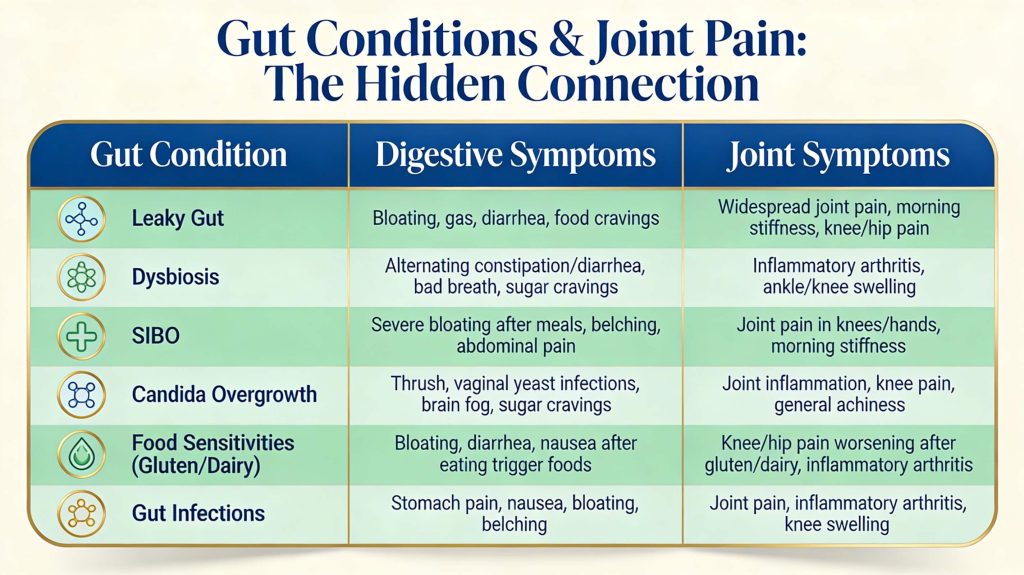
To help you connect the dots between digestive issues and joint symptoms, we have created a visual reference table.
To identify the root cause of your joint pain, we use advanced testing to explore the gut-joint connection:
The first step is removing inflammatory triggers. We often start with an anti-inflammatory elimination diet to identify food sensitivities. This may include:
Based on your test results, we may use targeted herbal or prescription antimicrobials to address SIBO, candida overgrowth, or other gut infections that are fueling systemic inflammation.
To repair the gut lining and reduce inflammation, we utilize:
We use probiotics strategically. While beneficial for some, certain probiotics can worsen SIBO. We tailor our approach to your unique gut profile to restore a healthy, anti-inflammatory balance.
Chronic stress impairs digestion and increases gut permeability. We incorporate stress management, vagal nerve stimulation, and breathwork into your protocol to support the gut-brain-joint connection.
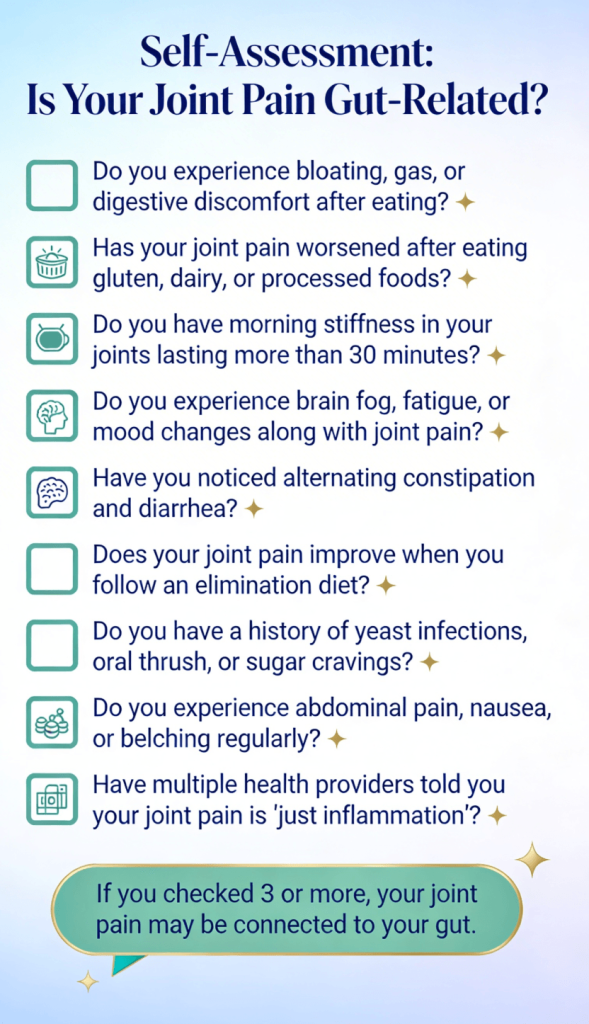
To help you assess your own risk, we have created a self-assessment checklist.
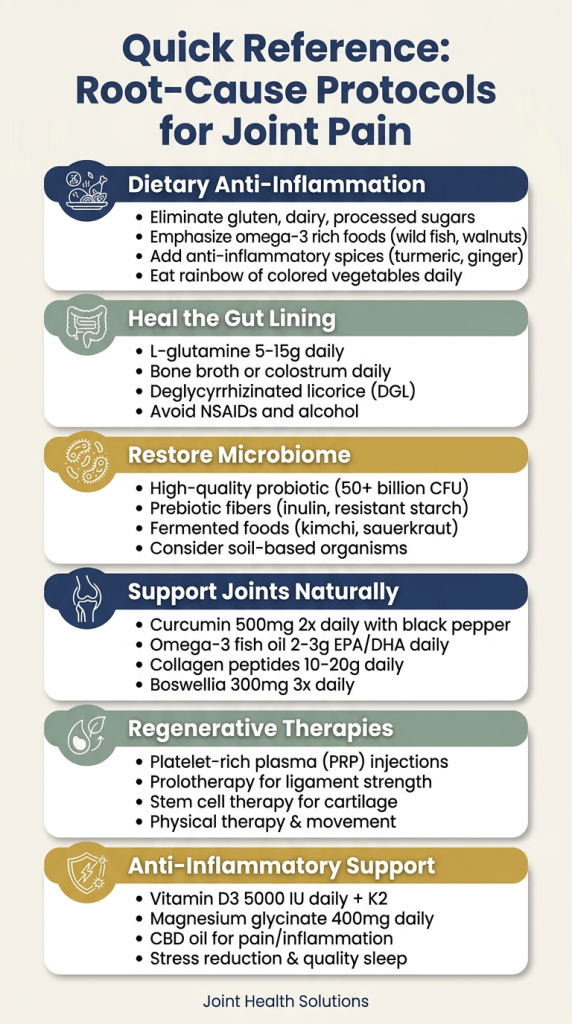
For patients with chronic, stubborn joint pain, we often combine foundational gut healing with advanced regenerative and supportive therapies offered at our clinic.
For a quick reference on the specific protocols used for gut-related joint pain, we’ve prepared visual summaries.
At Joint Health Solutions, we believe that chronic joint pain is rarely just about the joint itself. Our comprehensive approach evaluates the whole person:
This integrated approach allows us to provide personalized care that goes beyond symptom management to address the root cause of your pain. We serve patients throughout the Charlotte area, including Charlotte NC, Huntersville NC, Matthews NC, and Fort Mill SC. Learn more about our Areas We Serve page.
If you’re tired of temporary fixes and are ready to find the true source of your joint pain, we can help.
Call our office at +1-704-123-4567 to schedule a consultation and begin your journey to lasting joint health.
Yes. A growing body of research confirms the gut-joint axis. Inflammation from a compromised gut can travel through the bloodstream and directly inflame joint tissue.
If your joint pain flares up after eating certain foods, or if it is accompanied by digestive issues like bloating, gas, or irregular bowel movements, there is a strong chance it is gut-related.
Absolutely. Osteoarthritis is driven by chronic inflammation. By reducing systemic inflammation through gut healing, you can help slow the progression of the disease and reduce pain, making treatments like hyaluronic acid injections or offloading knee braces even more effective.
SIBO is an overgrowth of bacteria in the small intestine. It causes significant systemic inflammation, which can worsen pain in any joint, including the knees, shoulders, and hips.
The most common culprits are gluten, dairy, refined sugar, and processed vegetable oils. We often use an elimination diet to pinpoint your specific triggers.
They can be a powerful tool, but it is not a one-size-fits-all solution. In some cases, certain probiotics can worsen SIBO. We use testing to determine the right strains for you.
Stress impairs digestion and increases intestinal permeability, creating a vicious cycle of inflammation that directly impacts your joints.
Yes. Even after replacement, addressing the underlying inflammation that contributed to the joint degeneration can help improve overall function and reduce strain on other joints.
Injections like PRP, hyaluronic acid, or cortisone can provide targeted relief to a painful joint, reducing the pain cycle. This allows patients to be more comfortable while we implement the longer-term dietary and gut-healing protocols needed to address the root cause.
Call our office at +1-704-123-4567 to schedule a consultation. We will take a thorough history, order appropriate testing, and develop a personalized plan to heal your gut and restore pain-free movement.

Discover the innovative features of our software that streamline your workflow and enhance productivity. With user-friendly interfaces and powerful tools, you can easily manage tasks and collaborate with your team effectively.
Subscribe for wellness tips, treatment updates, and clinic news.
Trusted Expertise
Safe & Effective Care
Built Around You
Local & Accessible
© 2025 Joint Health solutions. All rights reserved.
Discover the innovative features of our software that streamline your workflow and enhance productivity. With user-friendly interfaces and powerful tools, you can easily manage tasks and collaborate with your team effectively.
© 2025 Joint Health solutions. All rights reserved.