
IV therapy for joint pain in Charlotte is an advanced treatment option designed to reduce inflammation, support healing, and improve mobility.
When you think of joint pain treatment, injections, physical therapy, and oral medications likely come to mind. But there’s another powerful tool that works at the cellular level: intravenous (IV) therapy.
IV therapy delivers high concentrations of vitamins, antioxidants, amino acids, and other nutrients directly into your bloodstream, bypassing the digestive system for near‑complete absorption. For patients with chronic joint pain, inflammation, or difficulty absorbing nutrients from food or oral supplements, IV therapy can be a game-changer.
At Joint Health Solutions, we offer several IV therapies tailored to joint health, including Anti‑Inflammatory IV, NAD+ IV, and Sports Recovery IV. In this article, we’ll explain how they work, their benefits, and who can benefit.
When you take oral supplements, your digestive system breaks them down, and absorption can be as low as 20‑50% depending on the nutrient and your digestive health. IV therapy bypasses the digestive tract entirely, delivering 100% of the nutrients directly into your bloodstream. This allows for:
Higher concentrations than can be achieved orally
Immediate availability to cells and tissues
Rapid reduction of inflammation
Support for patients with digestive issues that affect nutrient absorption
Each IV session takes 30‑60 minutes, during which you relax in a comfortable chair while the solution drips through a small IV catheter.
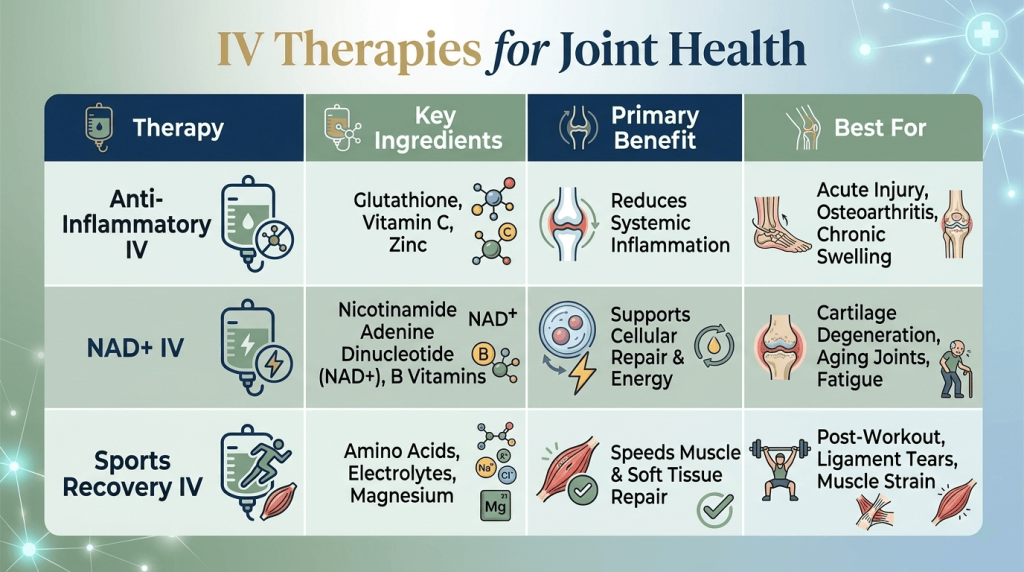
This powerful blend is designed to rapidly reduce systemic inflammation. It typically contains:
High‑dose Vitamin C: A potent antioxidant that neutralizes free radicals and reduces inflammatory markers.
Glutathione: The body’s “master antioxidant,” which supports detoxification and reduces oxidative stress.
Zinc: Essential for immune regulation and tissue repair.
B‑complex vitamins: Support energy production and nerve health.
Magnesium: Relaxes muscles and reduces joint stiffness.
Best for: Patients with elevated CRP, post‑surgical inflammation, autoimmune arthritis flares, or chronic osteoarthritis.
Learn more on our Anti‑Inflammatory IV Therapy page.
NAD+ (nicotinamide adenine dinucleotide) is a coenzyme found in every living cell. It’s essential for:
Mitochondrial energy production (cellular fuel)
DNA repair
Reducing oxidative stress
Regulating inflammation
NAD+ levels decline with age, chronic stress, and inflammation. IV NAD+ therapy rapidly restores these levels, helping to break the cycle of chronic inflammation that drives joint pain.
Best for: Patients with chronic fatigue, fibromyalgia, or persistent inflammation despite other treatments.
Visit our IV NAD+ Therapy page for more information.
Designed for active individuals and athletes, this IV blend supports muscle recovery, reduces exercise‑induced inflammation, and replenishes electrolytes. It typically includes:
Amino acids (arginine, glutamine): Support muscle repair
Electrolytes (calcium, potassium, magnesium): Prevent cramping
B vitamins: Energy metabolism
Vitamin C: Antioxidant protection
Best for: Patients recovering from sports injuries, post‑workout soreness, or those preparing for joint surgery.
See our Sports Recovery IV Therapy page.
IV therapy offers several advantages for patients with joint conditions:
Rapid reduction of inflammation: High‑dose vitamin C and glutathione can lower CRP and other inflammatory markers within days.
Improved energy and mental clarity: NAD+ and B vitamins combat the fatigue that often accompanies chronic pain.
Enhanced tissue repair: Amino acids and antioxidants support cartilage and soft tissue healing.
Bypasses gut malabsorption: Helpful for patients who have difficulty absorbing nutrients from food or oral supplements.
Customizable: We can tailor IV blends to your specific needs (e.g., adding more magnesium for muscle cramps).
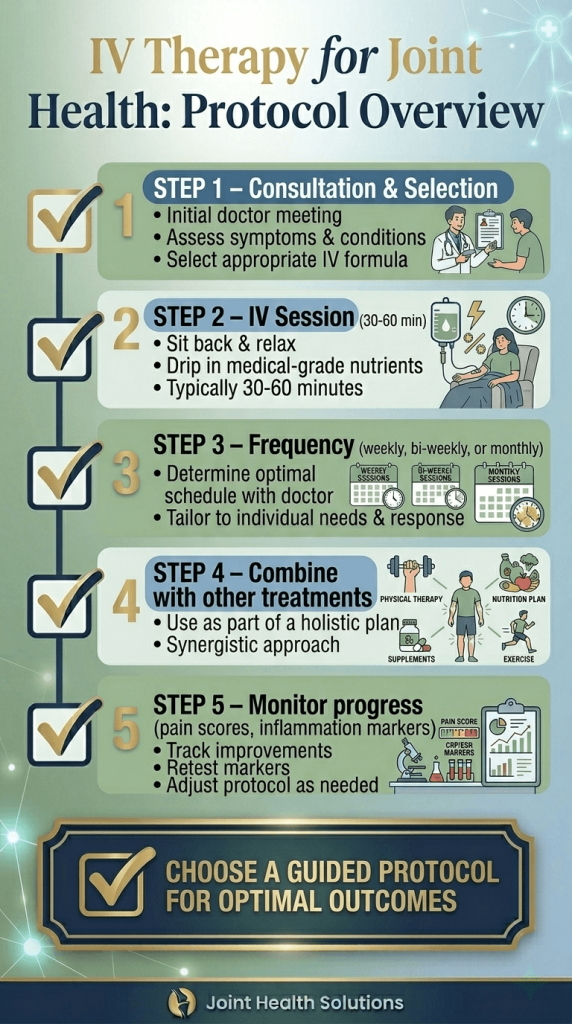
Consultation: We review your health history, symptoms, and goals to select the right IV blend.
Setup: You recline in a comfortable chair. A small IV catheter is placed in your arm or hand.
Infusion: The IV drip runs over 30‑60 minutes. You can read, work on a laptop, or relax.
Completion: The catheter is removed, and you may rest briefly before driving home.
Most patients feel a subtle sense of well‑being during or after the infusion. Some experience a mild warm sensation or taste (due to the vitamins), which is normal.
IV therapy is not a standalone treatment for most joint conditions, but it complements our other services beautifully:
PRP Therapy: IV therapy reduces systemic inflammation, creating a better healing environment for PRP. Learn about PRP Therapy .
Hyaluronic Acid Injections: IV glutathione can reduce oxidative stress that degrades HA. See Hyaluronic Acid Injections .
Offloading Knee Braces: By reducing inflammation, IV therapy may make brace wear more comfortable.
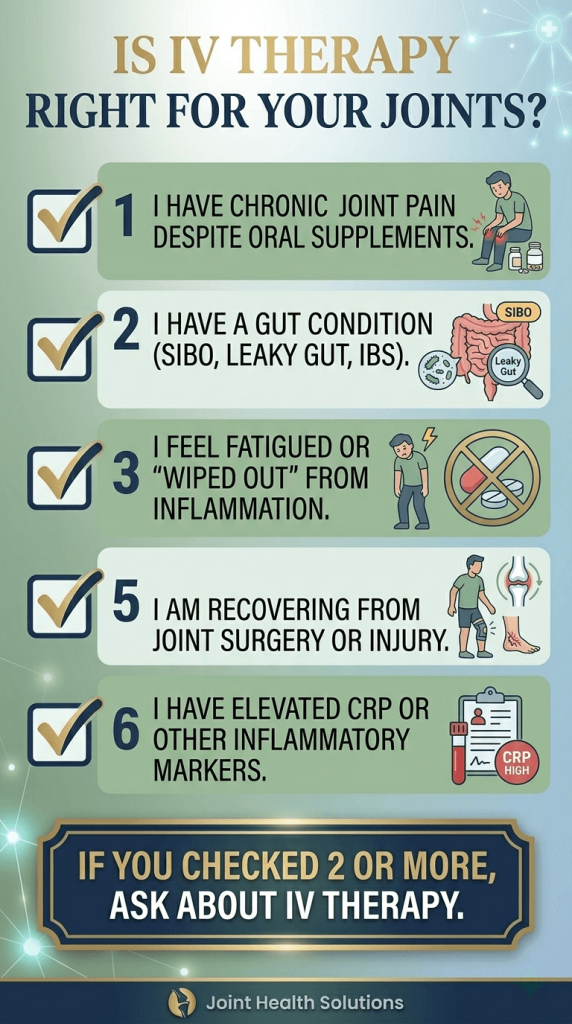
IV therapy may be particularly helpful for:
Patients with osteoarthritis who have failed oral anti‑inflammatories
Those with inflammatory arthritis (rheumatoid, psoriatic) as an adjunct to conventional treatment
Individuals with digestive conditions that impair nutrient absorption (e.g., Crohn’s disease, celiac disease, or other malabsorption issues)
Post‑surgical patients (e.g., after knee or shoulder surgery) to reduce inflammation and speed recovery
Athletes with overuse injuries or chronic tendonitis
Patients with fibromyalgia or chronic fatigue syndrome who have joint pain
We do not recommend IV therapy for patients with active infections, kidney failure (depending on the formula), or certain electrolyte imbalances.
It depends on your condition. Some patients benefit from weekly sessions for 4‑6 weeks, then transition to monthly maintenance. Others use it as needed for flares.
Mild side effects can include a warm sensation, metallic taste (from vitamins), or minor bruising at the IV site. Serious reactions are very rare.
Most insurance plans do not cover IV therapy for joint pain. However, we offer competitive self‑pay rates and packages.
Yes, eat a light meal beforehand to prevent lightheadedness. Stay hydrated.
Some patients feel more energetic immediately. Reduction in joint pain may take 24‑72 hours and continues to improve with repeated sessions.
It depends on the blood thinner. We will consult with your prescribing physician before proceeding.
Yes, when administered by trained medical professionals. Some patients may experience temporary nausea or a “flush” sensation, which resolves quickly.
No. IV therapy works systemically, while injections target a specific joint. They are complementary, not replacements.
Typically 45‑60 minutes for most blends. NAD+ may take 2‑3 hours due to slower infusion rates.
Call our office to schedule a consultation. We’ll evaluate your condition and recommend the right IV protocol for you.
National Institutes of Health (NIH) – Vitamin C and inflammation.
🔗 https://pubmed.ncbi.nlm.nih.gov/29099763/
Cleveland Clinic – IV Vitamin Therapy for Arthritis.
🔗 https://my.clevelandclinic.org/health/treatments/22932-iv-vitamin-therapy
Frontiers in Immunology – NAD+ and inflammation.
🔗 https://doi.org/10.3389/fimmu.2020.594313
Journal of the International Society of Sports Nutrition – IV hydration for recovery.
🔗 https://jissn.biomedcentral.com/articles/10.1186/s12970-019-0305-3

Discover the innovative features of our software that streamline your workflow and enhance productivity. With user-friendly interfaces and powerful tools, you can easily manage tasks and collaborate with your team effectively.
Subscribe for wellness tips, treatment updates, and clinic news.
Trusted Expertise
Safe & Effective Care
Built Around You
Local & Accessible
© 2025 Joint Health solutions. All rights reserved.
Discover the innovative features of our software that streamline your workflow and enhance productivity. With user-friendly interfaces and powerful tools, you can easily manage tasks and collaborate with your team effectively.
© 2025 Joint Health solutions. All rights reserved.