
Knee arthritis is one of the most common causes of chronic pain, affecting millions of people. While treatments like injections, physical therapy, and bracing play important roles, one of the most powerful tools for managing knee arthritis is often overlooked: what you eat.
The food you consume directly influences inflammation levels, cartilage integrity, and even pain perception. An anti‑inflammatory diet can reduce swelling, slow cartilage breakdown, and improve your ability to stay active.
At Joint Health Solutions, we integrate nutritional strategies with advanced treatments to provide comprehensive care for knee arthritis. Whether you’re in Charlotte, Huntersville, or Fort Mill, we can help you use food as medicine for your knees.
The connection between diet and knee arthritis is rooted in inflammation. Certain foods trigger the release of pro‑inflammatory cytokines, which can worsen synovitis and accelerate cartilage loss. Others provide antioxidants, omega‑3 fatty acids, and phytonutrients that help calm inflammation and support joint repair.
Additionally, weight management is critical—every extra pound of body weight adds approximately 4 pounds of pressure on the knees. A nutrient‑dense, anti‑inflammatory diet naturally supports healthy weight while providing the building blocks your joints need.
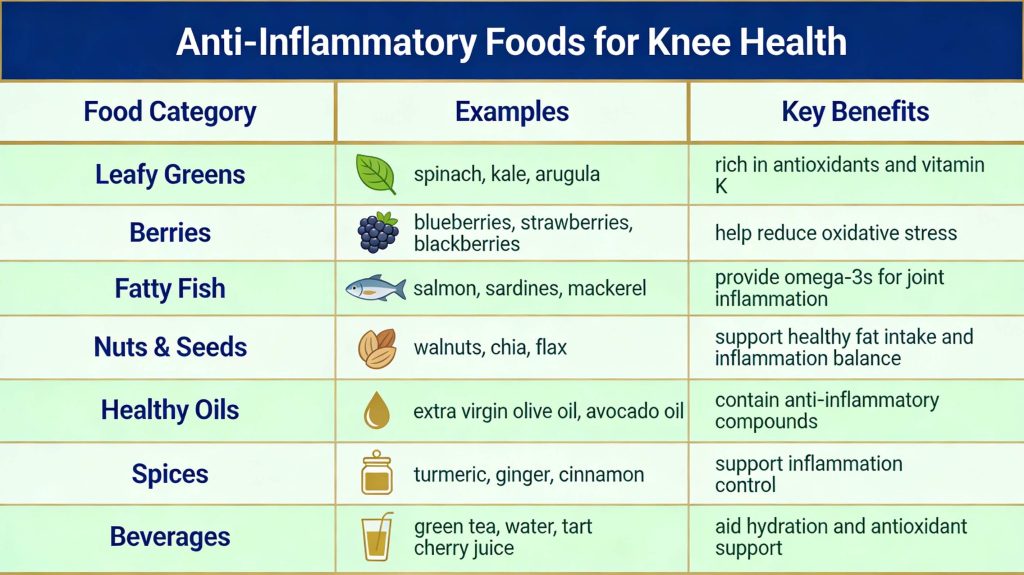
Focus on whole, unprocessed foods that are rich in antioxidants, fiber, and healthy fats:
Certain foods promote inflammation and should be minimized or eliminated:
Beyond whole foods, certain nutrients are essential for maintaining and repairing cartilage:
Making dietary changes doesn’t have to be overwhelming. Start with simple swaps:
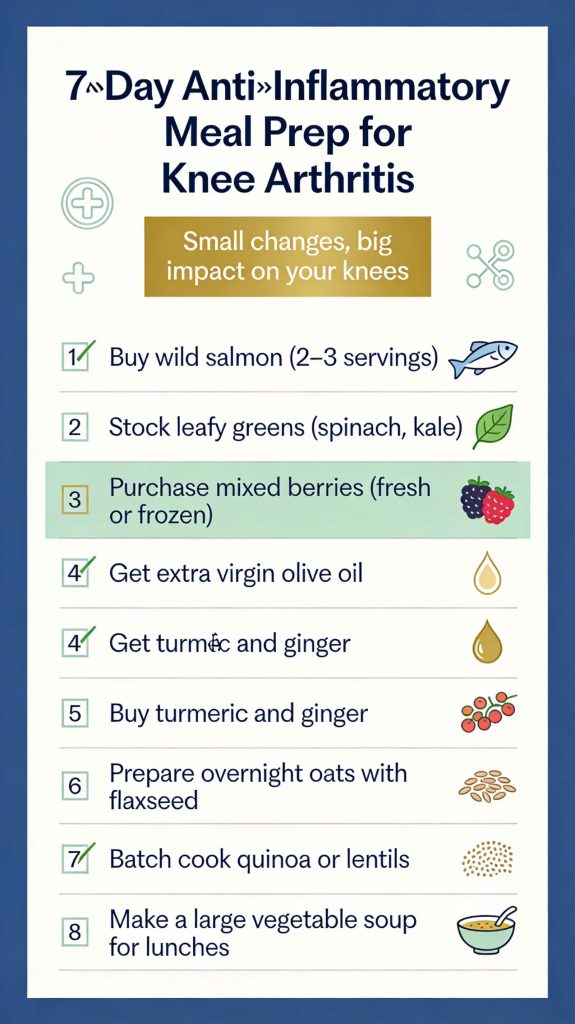
Meal | Example |
Breakfast | Oatmeal with blueberries, walnuts, and cinnamon; green tea |
Snack | Apple slices with almond butter |
Lunch | Grilled salmon over mixed greens with olive oil, lemon, and avocado |
Snack | Carrot sticks with hummus or a handful of almonds |
Dinner | Turmeric‑spiced lentil soup with kale and a side of roasted broccoli |
Evening | Ginger tea or warm golden milk (turmeric latte) |
While diet is foundational, many patients benefit from combining nutrition with advanced treatments:
Hyaluronic Acid Injections: Provide lubrication and cushioning in the knee joint. Learn more on our Hyaluronic Acid Injections page.
Offloading Knee Braces: Reduce pressure on the arthritic compartment. Explore Offloading Knee Braces.
PRP Therapy: Uses your body’s growth factors to promote healing. Visit our PRP Therapy page.
Anti‑Inflammatory IV Therapy: Delivers high‑dose nutrients to rapidly reduce inflammation. See Anti‑Inflammatory IV Therapy.
Physical Therapy and Exercise: Strengthens muscles around the knee for better stability.
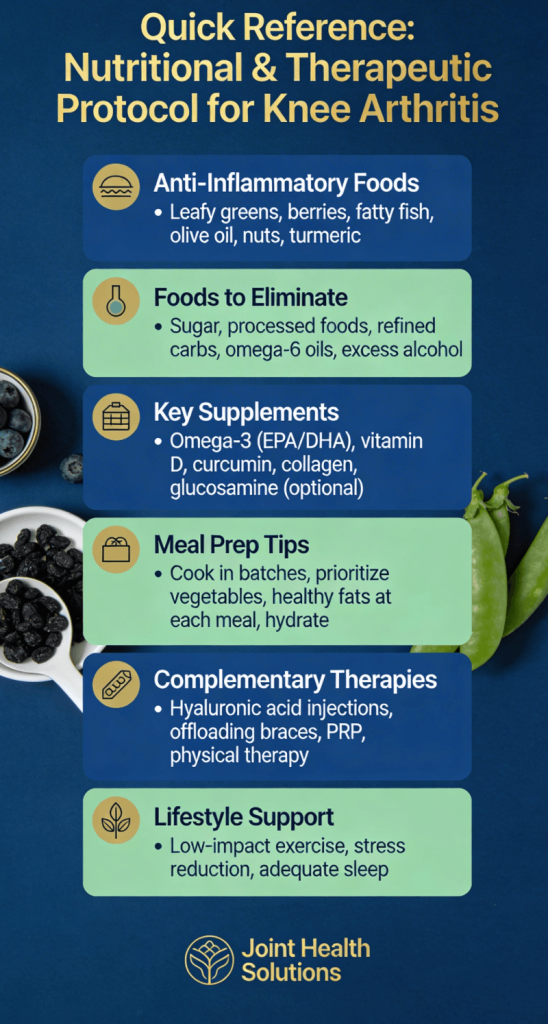
If you’re struggling with knee arthritis, you don’t have to rely on medication or surgery alone. By combining an anti‑inflammatory diet with the right treatments, you can reduce pain, improve function, and protect your joints for years to come.
Learn more about our approach to Knee Arthritis Treatment Charlotte.
Explore our Treatments & Services.
Read patient experiences in our Success Stories.
Call our office at [Your Phone Number] to schedule a consultation and start your journey to healthier knees.
Lorem ipsum dolor sit amet, consectetur adipiscing elit. Ut elit tellus, luctus nec ullamcorper mattis, pulvinar dapibus leo.
Yes. Studies show that an anti‑inflammatory diet can reduce pain, improve function, and slow the progression of knee osteoarthritis.
Many patients notice reduced stiffness and pain within 2–4 weeks of consistently following an anti‑inflammatory diet.
Not everyone. However, these are common triggers for inflammation. An elimination diet can help determine if they affect your knees.
Omega‑3 fatty acids have the strongest evidence. Vitamin D and curcumin are also beneficial. Always consult with your provider before starting supplements.
Yes, but focus on complex carbohydrates like vegetables, legumes, and whole grains. Avoid refined carbs and sugars.
Every extra pound adds 4 pounds of pressure to the knees. Losing just 10% of body weight can significantly reduce pain.
Hydration is important for joint lubrication. Aim for at least 8 cups of water daily.
No single food repairs cartilage, but a diet rich in vitamin C, collagen, and antioxidants supports the body’s natural repair processes.
Absolutely. Diet addresses systemic inflammation, while injections target the joint directly. They work well together.
Call Joint Health Solutions at 704-833-3566 to schedule your consultation. We’ll assess your diet, identify triggers, and create a customized plan alongside other treatments.

Discover the innovative features of our software that streamline your workflow and enhance productivity. With user-friendly interfaces and powerful tools, you can easily manage tasks and collaborate with your team effectively.
Subscribe for wellness tips, treatment updates, and clinic news.
Trusted Expertise
Safe & Effective Care
Built Around You
Local & Accessible
© 2025 Joint Health solutions. All rights reserved.
Discover the innovative features of our software that streamline your workflow and enhance productivity. With user-friendly interfaces and powerful tools, you can easily manage tasks and collaborate with your team effectively.
© 2025 Joint Health solutions. All rights reserved.