
If you have knee osteoarthritis, you know the feeling: pain on the inside (medial) or outside (lateral) of your knee, especially when walking, standing, or climbing stairs. An offloading knee brace (also called an unloader brace) can be a game-changer. It works by shifting pressure away from the arthritic compartment of your knee, reducing pain and improving function.
But with so many options available, how do you choose the right one? In this guide, we’ll explain how offloading braces work, who they are for, and what to look for when selecting a brace.
At Joint Health Solutions in Charlotte, we offer custom fitting and prescription offloading braces as part of our non-surgical approach to knee arthritis remediation.
An offloading knee brace is a medical device designed to reduce pain and improve mobility in people with unicompartmental osteoarthritis—arthritis that affects one side of the knee (usually the medial or inner side, less often the lateral or outer side).
Unlike a simple compression sleeve, an offloading brace applies corrective forces to “unload” the damaged compartment, transferring weight to the healthier side of the joint.
The brace uses a system of straps, hinges, and rigid frames to create a three-point pressure system:
Studies show that offloading braces can reduce knee pain by 50-80% and improve walking distance, stair climbing, and quality of life—often allowing patients to delay or avoid knee replacement surgery.
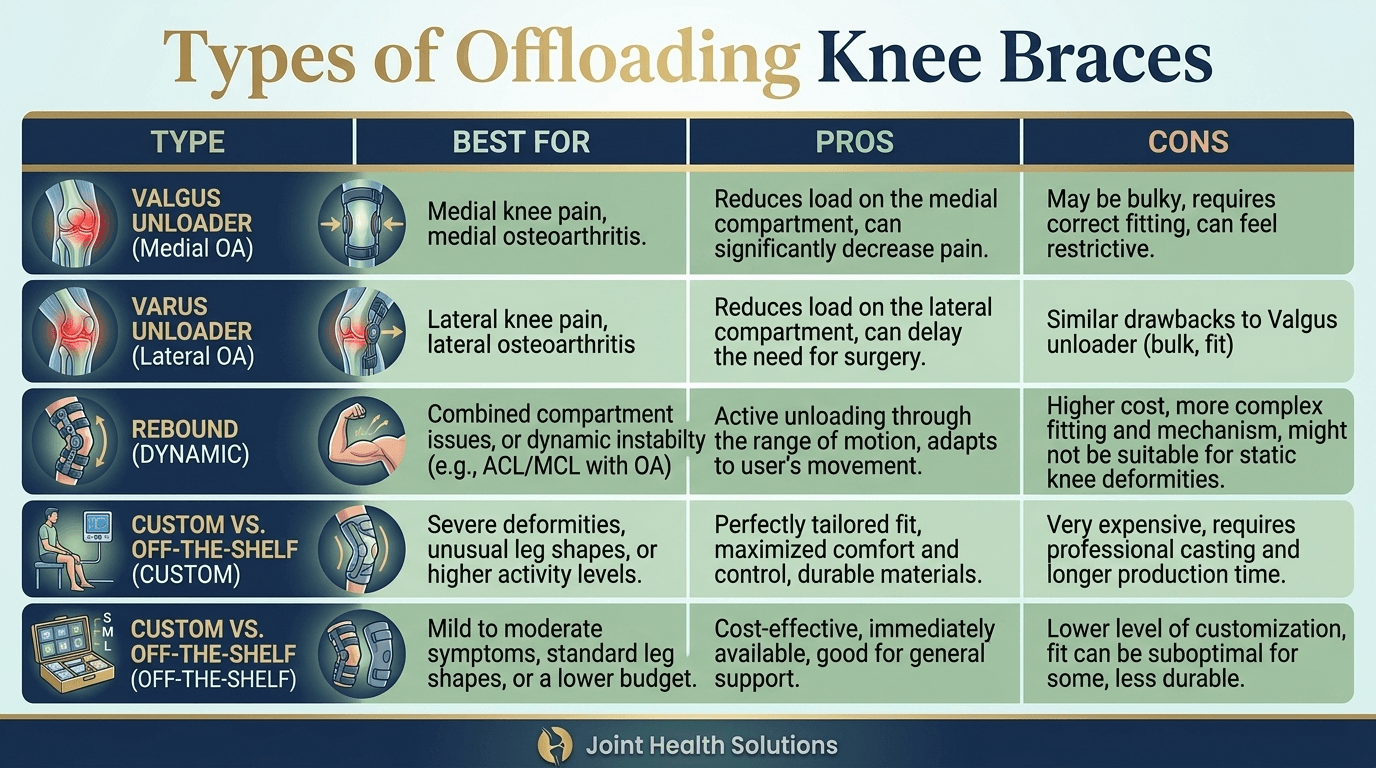
You may be a good candidate for an offloading brace if:
Offloading braces are not recommended for:
Proper fitting is essential for effectiveness and comfort. At Joint Health Solutions, we follow a systematic process:
Most patients adapt to the brace within 1-2 weeks.
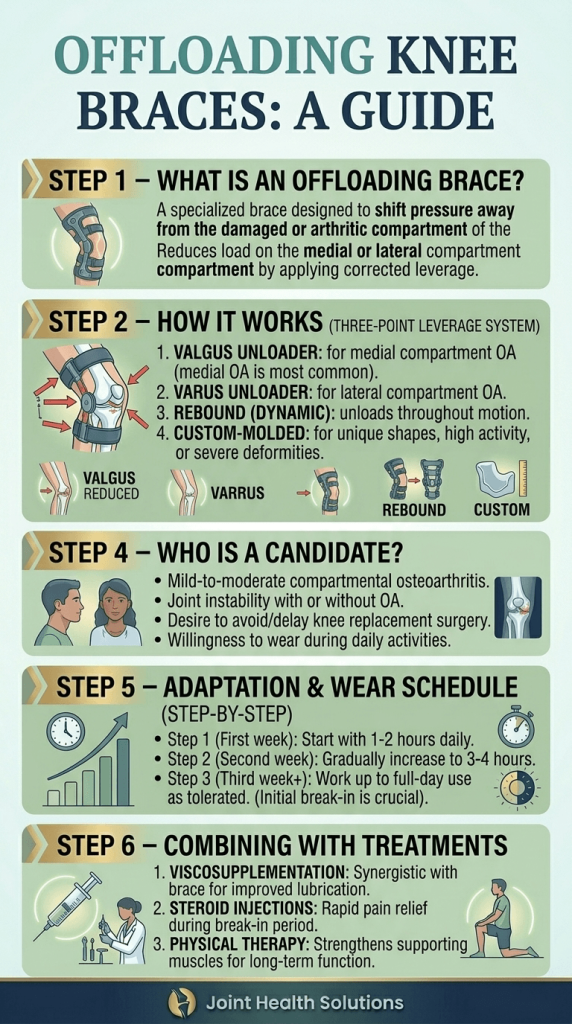
An offloading brace is most effective when combined with other evidence-based treatments:
With proper care, a quality offloading brace can last 1-3 years.
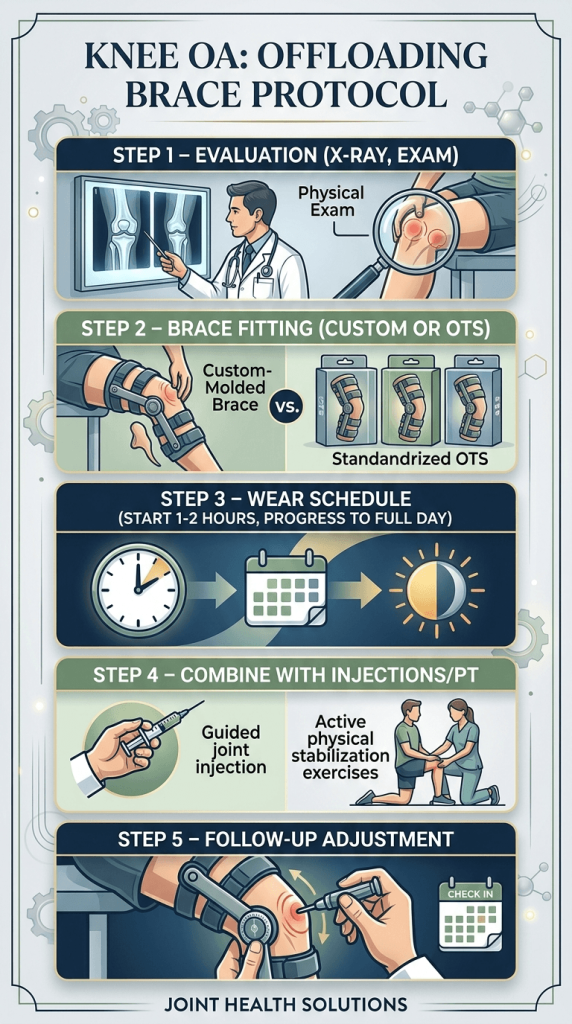
Start with 1-2 hours per day and gradually increase. Most patients wear the brace during weight-bearing activities (walking, standing, exercise) but remove it during rest or sleep.
Yes, once you’re accustomed to it. Some patients wear it 8-12 hours daily. Remove it when sitting for long periods or sleeping.
No, but it can significantly reduce pain and improve function, allowing you to stay active and delay surgery.
Many insurance plans, including Medicare, cover offloading braces when prescribed for osteoarthritis. We can help verify your benefits.
Typically, 2-4 weeks from casting to delivery. Off-the-shelf braces are available immediately.
Yes. Many patients walk, cycle, use elliptical machines, and even play golf or tennis with an offloading brace. Avoid high-impact activities unless cleared.
No. In fact, by reducing pain, it often allows you to strengthen your leg muscles more effectively.
Most braces are designed to be worn over lightweight clothing (leggings, thin pants). Avoid bulky seams under the brace.
You should feel pressure on the healthy side of the knee and relief on the painful side. There should be no sharp pain, numbness, or skin breakdown.
Call the Joint Health Solutions office at 704-833-3566 to schedule a consultation. We’ll evaluate your knee, order X-rays if needed, and fit you for the right brace.

Discover the innovative features of our software that streamline your workflow and enhance productivity. With user-friendly interfaces and powerful tools, you can easily manage tasks and collaborate with your team effectively.
Subscribe for wellness tips, treatment updates, and clinic news.
Trusted Expertise
Safe & Effective Care
Built Around You
Local & Accessible
© 2025 Joint Health solutions. All rights reserved.
Discover the innovative features of our software that streamline your workflow and enhance productivity. With user-friendly interfaces and powerful tools, you can easily manage tasks and collaborate with your team effectively.
© 2025 Joint Health solutions. All rights reserved.