
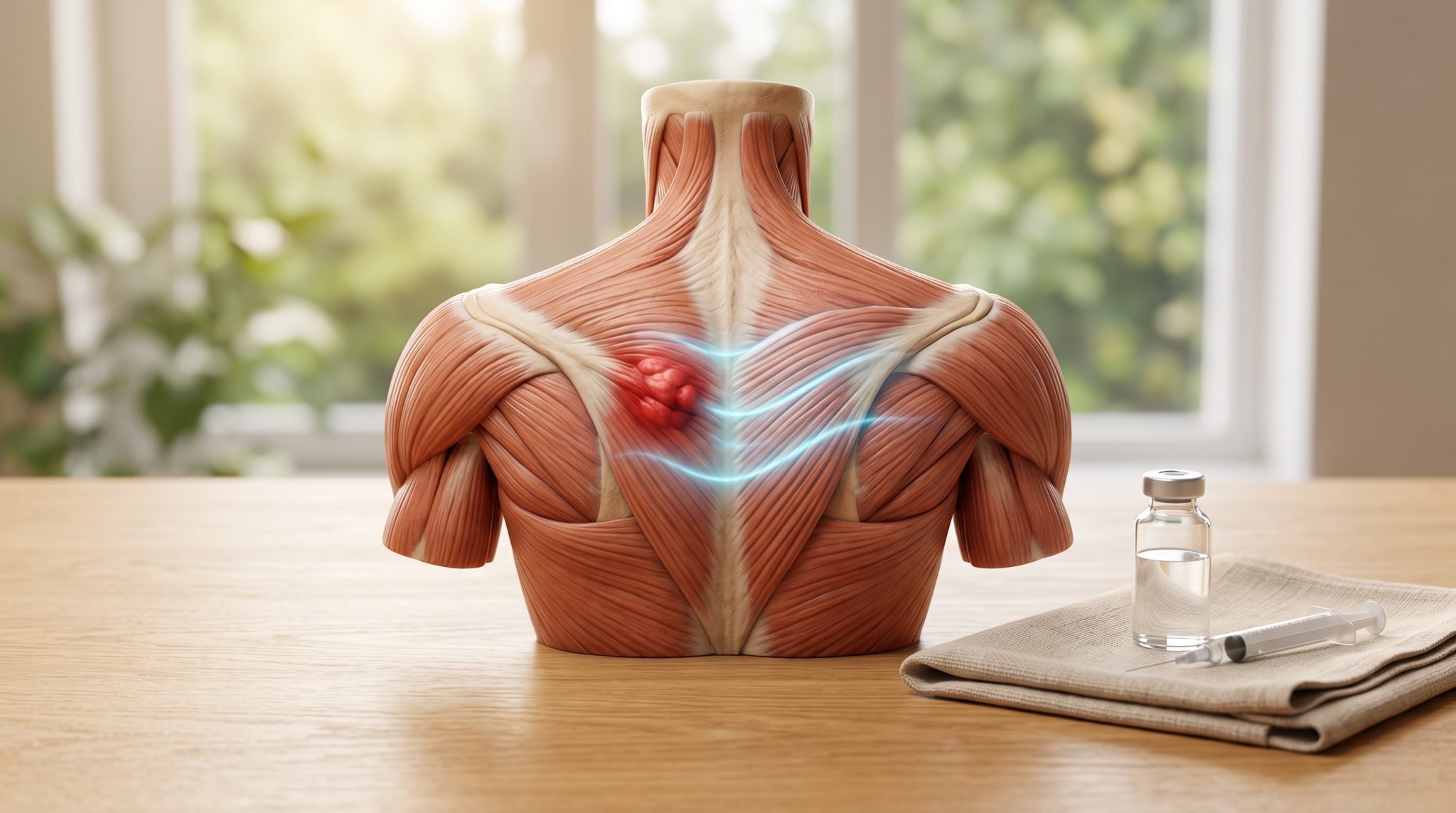
Upper Back Trigger Point Injections: What They Are and How They Work
If you have ever felt a persistent, knotted ache between your shoulder blades or at the base of your neck, you know how disruptive upper back discomfort can be. Reaching for a cup, turning your head to check traffic, or simply sitting at a desk can become a reminder of that deep, nagging tightness. For many people, this discomfort stems from a specific type of muscle dysfunction known as an active myofascial trigger point. Understanding what these points are, why they form, and how treatments like upper back trigger point injections may provide relief is the first step toward regaining comfortable movement.
What Are Active Trigger Points?
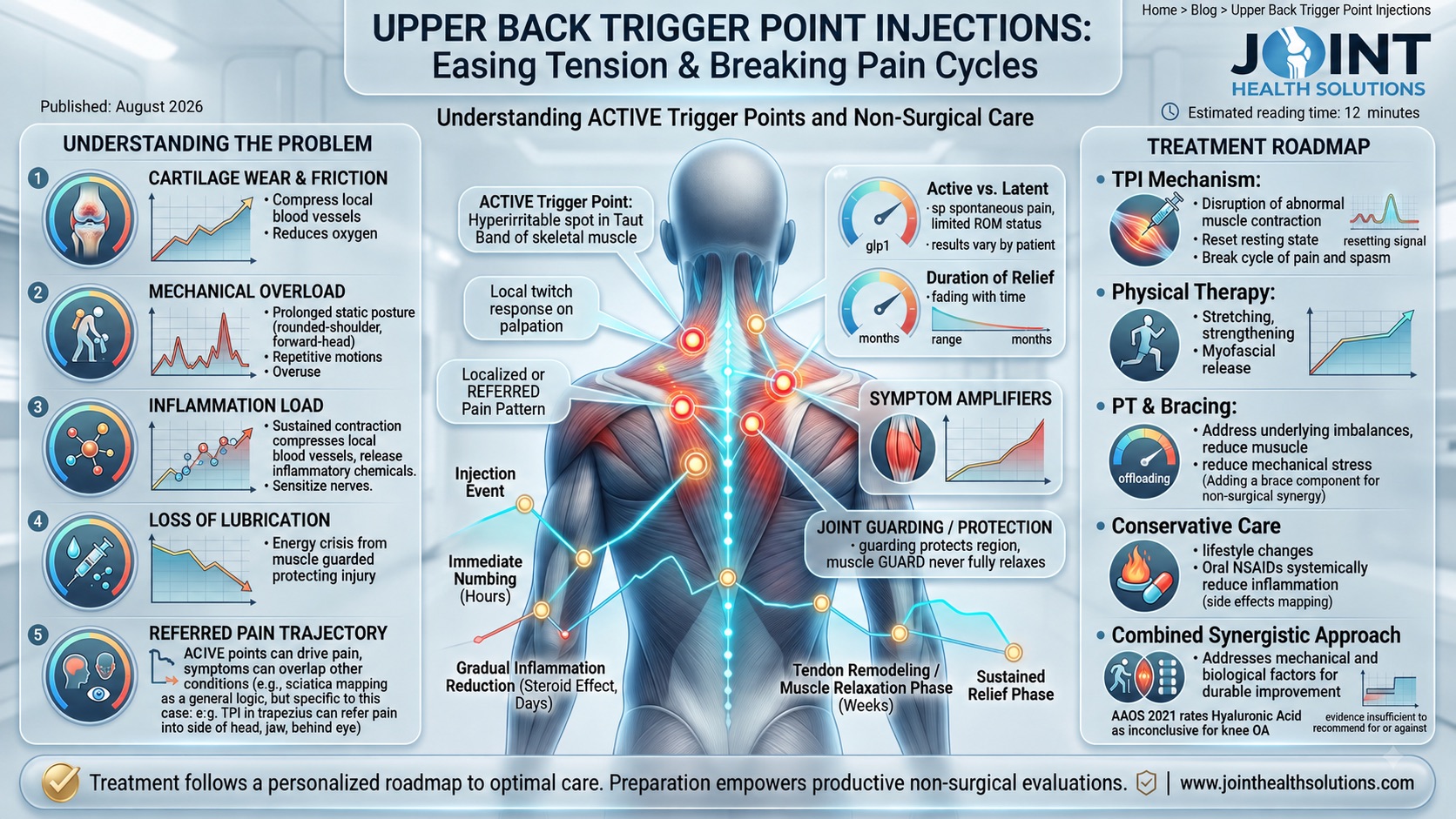
Active trigger points are hyperirritable spots within a taut band of skeletal muscle. Unlike a simple muscle knot that feels tight but does not produce symptoms, an active trigger point is one that causes referred pain—pain that is felt in a different area than the point itself. For example, a trigger point in the upper trapezius muscle, which runs from the back of your skull to your shoulder blade, can refer pain into the side of your head, your jaw, or behind your eye. This referral pattern is what distinguishes a trigger point from a tender spot or a muscle spasm.
Clinicians often describe trigger points as being either active or latent. An active trigger point is one that consistently produces pain, even at rest, and can limit your range of motion. A latent trigger point may not hurt spontaneously, but it can become active when irritated by poor posture, stress, or overuse. Both types can contribute to stiffness and discomfort, but active points are the ones that drive people to seek medical care.
From a physiological standpoint, a trigger point represents a localized area of muscle fiber contraction that has not relaxed. This sustained contraction compresses local blood vessels, reducing oxygen delivery and nutrient exchange. The resulting energy crisis leads to the release of inflammatory chemicals that sensitize nearby nerve endings. This is why trigger points can feel tender to the touch and why they can produce a dull, aching pain that worsens with activity or sustained postures.
How Trigger Points Develop in the Upper Back
Several factors can contribute to the formation of active trigger points in the upper back. One of the most common is prolonged static posture, particularly the forward-head, rounded-shoulder position that many people adopt while working on computers or using handheld devices. When you hold your head forward of your shoulders, the muscles at the back of your neck and upper back—especially the levator scapulae and upper trapezius—must work harder to keep your head upright. Over time, this constant low-level contraction can create the perfect environment for a trigger point to develop.
Repetitive movements are another culprit. Activities that require repeated reaching, lifting, or twisting—such as painting a ceiling, loading boxes, or even swimming—can overload specific muscle groups. If the muscle does not have adequate time to recover between bouts of activity, microtrauma can accumulate, leading to the formation of taut bands.
Stress and emotional tension also play a role. When you are under psychological stress, your body’s fight-or-flight response activates, causing muscles throughout your body to tense. The upper back and neck are particularly prone to this tension, and chronic stress can keep those muscles in a state of low-grade contraction, making them more susceptible to trigger points.
Other contributing factors include poor sleep and underlying conditions such as fibromyalgia or myofascial pain syndrome. In some cases, a trigger point can develop as a secondary response to an injury, such as a whiplash episode or a fall, where the muscle guards to protect the area and never fully relaxes.
Common Symptoms of Active Trigger Points
The symptoms of an active trigger point in the upper back can vary from person to person, but they often include:
- Deep, aching pain that is localized to the area or referred to another region, such as the head, shoulder, or arm.
- Limited range of motion, particularly when turning your head or reaching across your body.
- Muscle stiffness that is worse in the morning or after long periods of inactivity.
- Weakness in the affected muscle, which can affect your ability to lift or carry objects.
- A noticeable taut band of muscle that feels like a rope or cord beneath the skin.
- Tenderness that is reproducible when pressure is applied to the point.
It is important to note that these symptoms can overlap with other conditions, such as cervical radiculopathy or shoulder impingement. A thorough evaluation by a qualified healthcare provider is essential to rule out more serious causes and to confirm the diagnosis of myofascial trigger points.
Diagnosing Active Trigger Points
There is no single laboratory test or imaging study that can definitively diagnose an active trigger point. Instead, diagnosis relies on a careful clinical examination. Your healthcare provider will take a detailed history, asking about your symptoms, activities, and any factors that make your pain better or worse. They may also ask you to describe where you feel pain, as referred pain patterns can provide important clues.
During the physical exam, the provider will palpate—or feel—the muscles in your upper back, looking for taut bands and discrete, tender nodules. When pressure is applied to an active trigger point, you may feel a local twitch response, which is a brief, involuntary contraction of the muscle fibers. You may also experience reproduction of your familiar pain, which helps confirm that the point is indeed the source of your symptoms.
In some cases, your provider may use diagnostic imaging, such as an MRI or ultrasound, to rule out other structural problems. However, these tests are not used to identify trigger points themselves — the diagnosis remains clinical.
Non-Invasive Treatments for Upper Back Pain
Before considering injections, many patients benefit from conservative, non-invasive treatments. These approaches aim to reduce muscle tension, improve posture, and break the cycle of pain and dysfunction. Some common options include:
- Physical therapy: A physical therapist can teach you stretching and strengthening exercises to correct muscle imbalances and improve your posture. They may also use techniques like myofascial release, dry needling, or massage to address trigger points directly.
- Heat therapy: Applying a warm compress or taking a warm shower can help relax tight muscles and increase blood flow to the area, which may provide temporary relief.
- Over-the-counter pain relievers: Nonsteroidal anti-inflammatory drugs (NSAIDs) like ibuprofen or naproxen can help reduce inflammation and ease discomfort, though they do not address the underlying trigger point.
- Stress management: Techniques such as deep breathing, meditation, or progressive muscle relaxation can help reduce overall muscle tension, which may prevent trigger points from forming.
- Ergonomic adjustments: Adjusting your workstation, using a supportive chair, and taking frequent breaks to stand and stretch can reduce the strain on your upper back muscles.
These conservative measures are often the first line of treatment and can be quite effective for many people. However, if your pain persists despite these efforts, or if it is severe enough to interfere with your daily activities, your provider may recommend a more targeted approach, such as trigger point injections.
How Trigger Point Injections Work
Trigger point injections are a procedure in which a healthcare provider inserts a thin needle directly into the taut band of muscle that contains the trigger point. The injection typically contains a local anesthetic, such as lidocaine or bupivacaine, and sometimes a corticosteroid. The anesthetic provides immediate pain relief by numbing the nerve endings in the area, while the steroid, if used, helps reduce inflammation over a longer period.
The mechanism of benefit is twofold. First, the physical act of inserting the needle into the trigger point can help disrupt the abnormal muscle contraction. This is known as dry needling, and it can cause a local twitch response that may help reset the muscle’s resting state. Second, the injected medication can help break the cycle of pain and spasm by blocking pain signals and reducing local inflammation.
It is important to understand that trigger point injections are not a cure for the underlying cause of your trigger points. They are a treatment that can provide temporary relief, allowing you to participate more fully in physical therapy and other rehabilitative measures. The goal is to use the injection as a window of opportunity to make progress with stretching, strengthening, and posture correction. At Joint Health Solutions, trigger point injections are offered for the neck, traps, back, shoulders, and glutes.
| Treatment | How It Works | Limitations | Risks |
|---|---|---|---|
| Trigger point injections | Injects anesthetic/steroid into the taut band to relieve pain and spasm | Effects are temporary; results vary | Bleeding, infection, nerve irritation (rare) |
| Physical therapy | Uses exercises and manual techniques to correct muscle imbalances | Requires time and active participation | Minimal; may cause temporary soreness |
| Oral medications | Reduce inflammation or relax muscles systemically | May cause side effects; not targeted | GI upset, drowsiness, interactions |
| Dry needling | Uses a needle without medication to disrupt trigger points | Effectiveness varies; may require multiple sessions | Similar to injections |
At Joint Health Solutions in Charlotte, North Carolina, our team offers trigger point injections as part of a comprehensive, non-surgical approach to musculoskeletal pain. Our providers are experienced in performing these injections with precision and care.
What to Expect During a Trigger Point Injection Procedure
If you and your provider decide that a trigger point injection is appropriate, you will likely have the procedure done in the office. Here is a general idea of what to expect:
- Preparation: You will be positioned comfortably, either sitting or lying on your stomach, so that the provider can access the affected muscles. The skin over the area will be cleaned with an antiseptic.
- Identification: The provider will use their fingers to locate the exact trigger point, feeling for the taut band and the tender nodule.
- Injection: A very thin needle is inserted into the trigger point. You may feel a brief sting or a deep ache as the needle enters the muscle. The provider may move the needle slightly to elicit a twitch response, which is a good sign that the needle is in the right spot.
- Medication delivery: A small volume of anesthetic, with or without steroid, is injected. You may feel a temporary burning sensation as the medication is delivered, but this usually subsides quickly.
- Aftercare: The needle is removed, and pressure is applied to the site to prevent bleeding. A small bandage may be placed over the area. You will be asked to rest for a few minutes before leaving.
The entire procedure usually takes less than 15 minutes, and you can typically return to your normal activities the same day. Some soreness at the injection site is common and may last for a day or two. Your provider will give you specific aftercare instructions, including when you can resume strenuous activities.
Recovery and Aftercare Following Injections
Some patients experience immediate relief from the anesthetic, which may last for a few hours, followed by a return of some discomfort as the anesthetic wears off. This is normal, and the full benefit of the injection may not be apparent for several days.
To optimize your recovery, your provider may recommend the following:
- Apply ice to the injection site for 10-15 minutes several times a day to reduce soreness.
- Avoid strenuous activity or heavy lifting for the first 24 hours.
- Gentle stretching of the affected muscle can help maintain flexibility, but avoid aggressive stretching that might aggravate the area.
- Stay well-hydrated, as dehydration can worsen muscle cramps and tension.
- Follow up with physical therapy or a home exercise program to address the underlying muscle imbalances.
It is also important to recognize that a single injection may not be enough. Some patients require a series of injections, spaced several weeks apart, to achieve sustained relief. Your provider will work with you to develop a treatment plan that meets your individual needs.
Potential Risks and Side Effects of Trigger Point Injections
Trigger point injections are generally considered safe when performed by a trained healthcare provider. However, like any medical procedure, they carry some risks and potential side effects. These include:
- Bleeding or bruising: It is common to have a small amount of bleeding or bruising at the injection site. This usually resolves on its own.
- Infection: Although rare, there is a small risk of infection at the injection site. Signs of infection include increased redness, warmth, swelling, or drainage.
- Nerve irritation: There is a very small risk of contacting a nerve with the needle, which could cause temporary numbness or weakness. This is more likely if the injection is performed without image guidance.
- Allergic reaction: Some people may be allergic to the anesthetic or steroid used in the injection. Be sure to inform your provider of any known allergies.
- Temporary increase in pain: Some patients experience a flare of pain for a day or two after the injection before it improves.
To minimize these risks, it is essential to have the procedure performed by a qualified professional who is familiar with the anatomy of the upper back. At Joint Health Solutions, our providers take great care to use proper technique and, when appropriate, image guidance to ensure accuracy.
Are You a Candidate for Trigger Point Injections?
Trigger point injections may be a good option for you if you have been diagnosed with active myofascial trigger points in the upper back and have not responded adequately to conservative treatments like physical therapy, massage, or oral medications. They may also be considered if your pain is severe enough to limit your daily activities or if you are unable to participate in rehabilitation due to pain.
However, not everyone is a candidate. Injections may not be appropriate if you have a bleeding disorder, are taking blood thinners, have an active infection at the injection site, or are allergic to any of the medications used. Pregnant women and individuals with certain medical conditions should also discuss the risks and benefits with their provider.
Your healthcare provider will conduct a thorough evaluation to determine if trigger point injections are right for you. This includes a detailed medical history and physical exam, and possibly imaging studies to rule out other causes of your pain.
Take the Next Step Toward Relief
If you are struggling with persistent upper back pain and are curious whether upper back trigger point injections could be part of your solution, the team at Joint Health Solutions in Charlotte, North Carolina, is here to help. We offer a range of non-surgical treatments, including trigger point injections, physical therapy, and sports recovery IV therapy to support your recovery. Our providers will work with you to develop a personalized plan that addresses your specific needs.
Take the first step toward a more comfortable life. Explore our full treatments and services, or call us today at 704-833-3566 to schedule a consultation and explore your options.
Institutional Sources
- NIAMS: Back Pain
- Mayo Clinic: Trigger Point Injections
- Cleveland Clinic: Myofascial Pain Syndrome
- Johns Hopkins Medicine: Trigger Point Injections
Frequently Asked Questions
How long do trigger point injections last?
The duration of relief varies widely from person to person. Some patients experience relief for several weeks, while others may benefit for months. The effect depends on the underlying cause, the number of trigger points, and whether you also participate in physical therapy or other rehabilitative measures. Your provider can give you a better idea based on your specific situation.
Do trigger point injections hurt?
Most patients report that the injection itself is relatively uncomfortable but brief. You may feel a sharp sting as the needle penetrates the skin, and a deep ache when the needle enters the muscle. However, the anesthetic often provides quick relief. Your provider may use a topical numbing spray or ice to minimize discomfort.
How many trigger point injections are needed?
The number of injections needed depends on the severity of your condition and your response to treatment. Some patients feel relief after a single injection, while others may require a series of 2-3 injections spaced a few weeks apart. Your provider will monitor your progress and adjust your treatment plan accordingly.
Can trigger point injections be used for chronic upper back pain?
Yes, trigger point injections can be part of a comprehensive treatment plan for chronic upper back pain, especially when active trigger points are identified as a contributing factor. However, they are not a standalone cure. Combining injections with physical therapy, posture correction, and lifestyle modifications is often the most effective approach.
What is the difference between a trigger point injection and a cortisone injection?
A trigger point injection typically uses a local anesthetic (with or without a small amount of corticosteroid) and is targeted at a specific muscle knot. A cortisone injection is a larger dose of corticosteroid that is often used to reduce inflammation in a joint or tendon. Both are performed in a clinic setting, but they address different problems.
What does a trigger point injection cost?
Joint Health Solutions operates on a self-pay basis with transparent, upfront pricing. Cost depends on the number of trigger points treated and whether a series of sessions is recommended. Our team can provide a quote during your consultation.
Can I drive myself home after a trigger point injection?
Yes, in most cases you can drive yourself home after the procedure, as long as you do not feel dizzy or lightheaded. The injection itself does not usually cause significant sedation. However, if you receive a steroid that can cause a temporary increase in blood sugar or a feeling of flushing, you may want to have someone drive you, especially if you have diabetes or other medical conditions.
What should I avoid after a trigger point injection?
For the first 24 hours, avoid strenuous exercise, heavy lifting, or activities that put excessive strain on the injected muscle. You may also want to avoid soaking in a hot tub or pool to reduce the risk of infection. Your provider will give you specific instructions tailored to your situation.
Are there any alternative treatments to trigger point injections?
Yes, alternatives include dry needling, physical therapy, massage, ultrasound therapy, transcutaneous electrical nerve stimulation (TENS), and oral medications. These may be used alone or in combination with injections. Your provider can help you decide which approach is best for you.
How do I know if my upper back pain is caused by trigger points?
Trigger points often cause a deep, aching pain that is reproducible when pressure is applied to a specific spot. You may also notice referred pain in areas like your head or arm. However, only a healthcare professional can accurately diagnose trigger points through a physical exam. If you are experiencing persistent upper back pain, consider scheduling an evaluation.




 English
  Spanish