

Chronic knee pain can affect nearly every part of daily life, from walking and exercising to climbing stairs and sleeping comfortably. Whether your pain is caused by osteoarthritis, sports injuries, inflammation, or age-related joint wear, finding the right treatment is essential for long-term mobility and comfort.
Two of the most commonly recommended non-surgical treatments today are knee injections and PRP therapy. Many patients searching for alternatives to surgery often ask the same question: Which treatment works better for joint pain relief?
In this guide, we will compare knee injections vs PRP therapy, explain how each treatment works, discuss benefits and side effects, and help you understand which option may be best for your condition.
When comparing knee injections vs PRP therapy, patients often want to know which option offers faster relief, longer-lasting results, and better support for daily movement.
Knee injections are minimally invasive treatments designed to reduce inflammation, relieve pain, and improve knee function. These injections are commonly used for patients with arthritis, swelling, tendon irritation, or chronic knee discomfort.
There are several types of knee injections available, including:
The purpose of knee injections is typically to provide faster pain relief and reduce inflammation inside the joint.
Knee injections are often recommended for:
Many patients experience improved movement and reduced discomfort shortly after treatment.
PRP therapy, also known as Platelet-Rich Plasma therapy, is a regenerative treatment that uses a patient’s own blood to support natural healing.
During PRP therapy, a small blood sample is collected and processed to concentrate platelets and growth factors. The platelet-rich plasma is then injected into the injured or painful area of the knee.
Unlike traditional injections that mainly focus on reducing symptoms, PRP therapy aims to stimulate tissue repair and healing.
PRP therapy works by delivering concentrated growth factors directly into damaged tissues. These growth factors may help:
PRP therapy has become increasingly popular among athletes and active adults looking for non-surgical joint pain treatment options.
Understanding the differences between these two treatments can help patients make informed decisions about their knee health.
| Feature | Knee Injections | PRP Therapy |
|---|---|---|
| Main Purpose | Reduce inflammation and pain | Promote healing and tissue repair |
| Treatment Source | Medication or lubricating solution | Patient’s own blood platelets |
| Relief Speed | Often faster pain relief | Gradual improvement over time |
| Duration of Results | Temporary relief | Potential longer-lasting improvement |
| Best For | Inflammation and arthritis pain | Chronic injuries and tissue damage |
| Recovery Time | Minimal downtime | Mild soreness for a few days |
| Surgical Alternative | Yes | Yes |
The main difference in knee injections vs PRP therapy is that injections often focus on pain and inflammation relief, while PRP therapy supports the body’s natural repair process.
Knee injections remain one of the most common treatments for joint pain because they can provide fast symptom relief.
Many patients notice pain reduction within days after treatment.
Certain injections help calm joint inflammation and swelling.
Patients often experience easier movement and less stiffness.
Knee injections can delay or reduce the need for surgery.
Most patients can return to normal activities shortly after treatment.
PRP therapy focuses more on healing rather than temporary symptom management.
Because PRP comes from the patient’s own blood, it is considered a natural treatment option.
PRP therapy may help improve damaged tendons, ligaments, and cartilage.
Some patients report longer-lasting improvement compared to traditional injections.
Since the injection uses the patient’s own blood, the risk of rejection is low.
PRP therapy is often chosen by people seeking regenerative treatment options.
Knee injections may be a good option for patients who:
Patients with severe joint damage may require additional evaluation to determine the most effective treatment approach.
PRP therapy may benefit patients who:
PRP therapy is often used for active individuals who want to maintain mobility and physical activity.
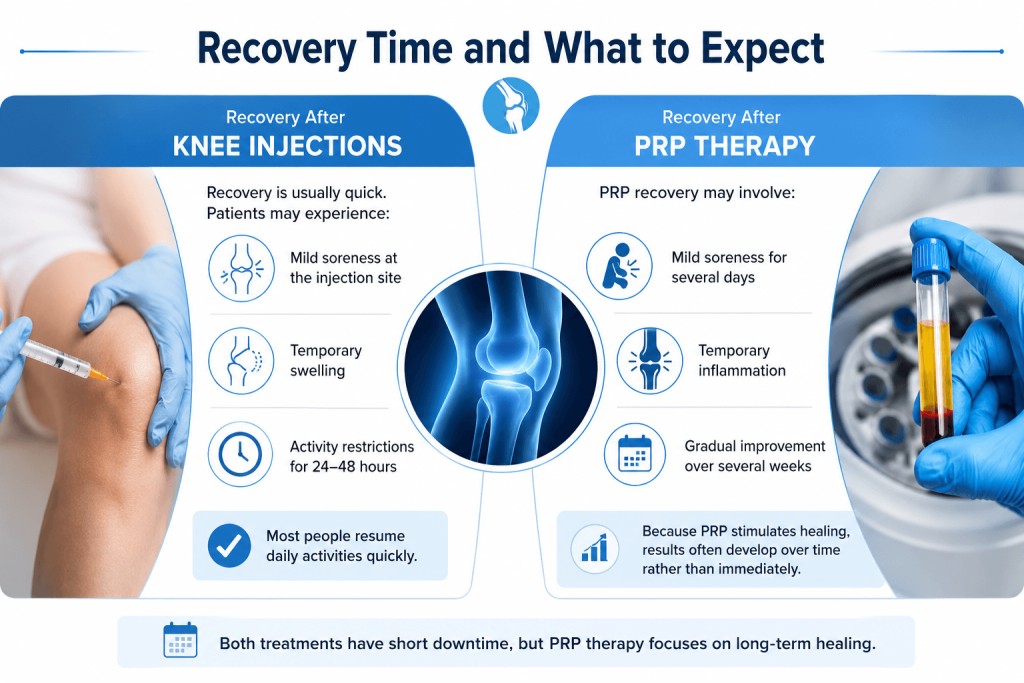
Recovery is usually quick. Patients may experience:
Most people resume daily activities quickly.
PRP recovery may involve:
Because PRP stimulates healing, results often develop over time rather than immediately.
Like any medical treatment, both procedures may have potential side effects.
Patients should always discuss risks and medical history with a qualified provider before treatment.
One of the most common questions patients ask is whether knee injections or PRP therapy provides longer-lasting results.
Traditional knee injections often focus on short-term symptom relief. Some patients may require repeat injections over time.
PRP therapy aims to encourage healing, which may lead to longer-lasting improvement for certain patients. However, results can vary depending on the severity of joint damage, lifestyle, and overall health.
In some cases, providers may recommend combining regenerative therapies with other non-surgical treatments for better overall joint support.
Additional treatments may include:
A personalized treatment plan can often provide better long-term outcomes.
Choosing between knee injections vs PRP therapy depends on several factors, including:
Patients looking for fast inflammation relief may prefer traditional injections, while those seeking regenerative healing may consider PRP therapy.
The best approach is to consult with a qualified joint pain specialist who can evaluate your condition and recommend a customized treatment plan.
No matter which treatment you choose, healthy lifestyle habits can improve joint function and reduce pain.
Long-term joint care often requires a combination of medical treatment and healthy daily habits.
When comparing knee injections vs PRP therapy, there is no one-size-fits-all answer. Both treatments offer important benefits for patients dealing with chronic knee pain and mobility issues.
Knee injections may provide faster symptom relief and reduced inflammation, while PRP therapy focuses on supporting the body’s natural healing process.
The right treatment depends on your condition, goals, and overall joint health. Working with an experienced provider can help you determine the best non-surgical option for lasting pain relief and improved mobility.
Before choosing between knee injections vs PRP therapy, it is important to understand your pain source, joint condition, and recovery goals.
No. Diet is not a cure for arthritis and it cannot reverse structural damage like cartilage loss. However, it can help manage systemic inflammation. To address structural issues, you may want to learn about PRP therapy.
Some patients notice gradual improvement over several weeks as healing develops.
Most patients experience only mild discomfort during and after the procedure.
PRP therapy may help some patients with mild to moderate arthritis symptoms and joint degeneration.
Results vary depending on the type of injection and the patient’s condition.
In some cases, non-surgical treatments may delay or reduce the need for surgery.
Harvard T.H. Chan – Mediterranean Diet

A board-certified physician in Emergency Medicine and Obesity Medicine with over 25 years of experience

A board-certified Family Nurse Practitioner with over 12 years of nursing experience