
Piriformis Syndrome: Non-Surgical Relief for Deep Gluteal Pain and Sciatica
Piriformis syndrome treatment Charlotte is the core clinical focus of this definitive medical guide. This resource is specifically designed to provide patients and healthcare consumers with an exhaustive, evidence-based overview of non-surgical interventions, advanced interventional diagnostics, and specialized regenerative medicine protocols engineered to resolve deep pelvic nerve entrapment.
Joint pain and severe neuromuscular dysfunction can rapidly transform standard daily activities into exhausting physical challenges. For many active adults and working professionals in Charlotte, North Carolina, experiencing a persistent, deep ache in the gluteal region that radiates aggressively down the back of the leg is a terrifying symptom. Too often, patients immediately assume they are suffering from a severe spinal disk herniation that will inevitably require invasive neurosurgery. However, a significant percentage of these cases are actually rooted entirely in the pelvic musculature—a condition known as piriformis syndrome. At Joint Health Solutions, we specialize in delivering the highly precise, non-surgical piriformis syndrome treatment Charlotte residents rely on to restore pain-free mobility and safeguard long-term musculoskeletal wellness without the use of a scalpel.
According to statistical data compiled by the Centers for Disease Control and Prevention (CDC) and various orthopedic registries, chronic lower body pain and degenerative joint diseases impact millions of adult Americans annually. In Charlotte, where an active lifestyle is deeply woven into the local culture—from distance runners training along the Little Sugar Creek Greenway to weekend tennis players competing in local Mecklenburg County leagues—pelvic and gluteal dysfunction can instantly sideline the most dedicated athletes.
Traditional management techniques typically rely on the heavy use of nonsteroidal anti-inflammatory drugs (NSAIDs). While these medications can mask acute symptoms, their long-term use introduces significant medical risks, including gastrointestinal mucosal bleeding, cardiovascular strain, and renal duress. Similarly, repetitive, unguided corticosteroid injections administered into generic soft tissues can accelerate local tissue degeneration, weaken tendinous attachments, and cause localized muscle wasting.
Orthobiologics and precision interventional sports medicine offer a compelling, biologically sound alternative. By targeting the exact mechanical and cellular mechanisms driving muscle hypertonicity and subsequent nerve compression, we can successfully stimulate the body’s natural healing cascade. This comprehensive article serves as the ultimate local resource for Charlotte residents seeking an evidence-based pathway to understanding, treating, and permanently overcoming piriformis syndrome.
Section I: Deep Anatomy and Pathophysiology of the Piriformis Muscle
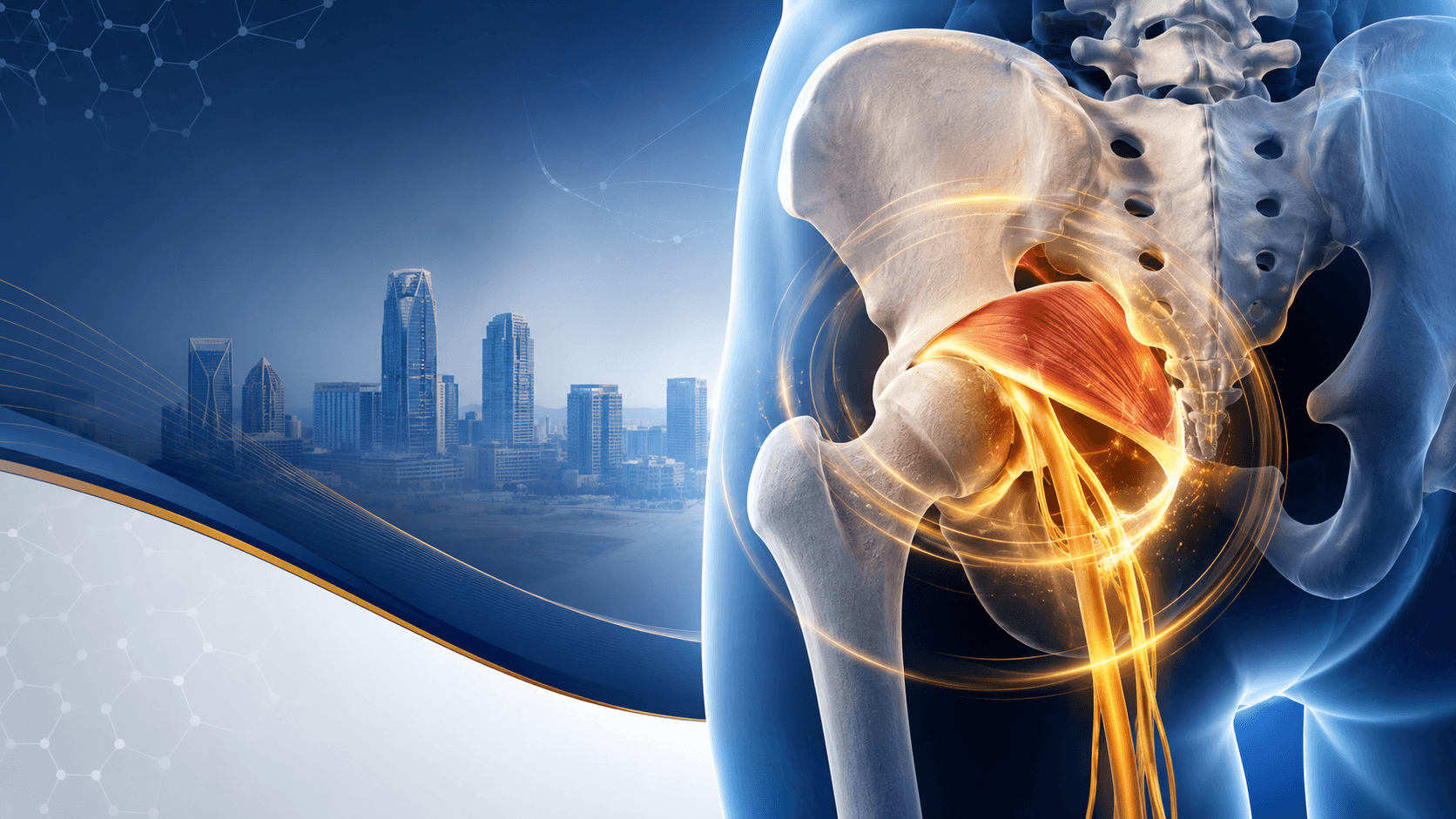
To truly understand why piriformis syndrome treatment Charlotte requires specialized medical expertise, one must first explore the complex, crowded anatomical landscape of the deep gluteal space. The piriformis muscle is a flat, pyramidal, band-like muscle that originates directly from the anterior surface of the sacrum (the lower segment of your spine). It travels laterally through the greater sciatic notch of the pelvis before inserting cleanly onto the upper border of the greater trochanter of the femur (the prominent bony point of your outer hip).
Under normal physiological conditions, the piriformis muscle performs vital biomechanical operations:
-
External Rotation: It acts as a primary external rotator of the hip joint when the thigh is in an extended position.
-
Horizontal Abduction: It assists in moving the leg outward away from the midline of the body when the hip is flexed to 90°.
-
Postural Stabilization: It functions as a dynamic stabilizer of the femoral head within the hip socket during the stance phase of walking, running, and jumping.
The anatomical relationship between the piriformis muscle and the sciatic nerve—the largest single nerve structure in the entire human body—is incredibly intimate. In approximately 80% to 85% of the population, the massive sciatic nerve exits the pelvis by running directly beneath the belly of the piriformis muscle. However, normal anatomical variations are common. In some individuals, the sciatic nerve splits into separate divisions, with one branch piercing directly through the center of the piriformis muscle fibers, while in other variations, the nerve travels entirely over the top of the muscle structure.
Regardless of your native anatomy, when the piriformis muscle is subjected to repetitive micro-trauma, structural overloading, or prolonged static compression, it responds by entering a state of chronic hypertonicity, adaptive shortening, or acute spasm. As the muscle belly swells and hardens, it exerts a direct mechanical compressive force against the underlying sciatic nerve sheath.
This compression compromises the delicate microvascular blood supply running to the nerve, inducing localized neural ischemia, intraneural edema, and subsequent nerve fiber irritation. The result is the classic, agonizing presentation of piriformis syndrome: deep, relentless gluteal pain coupled with radiating neurological symptoms that travel along the path of the sciatic nerve down the back of the single leg.
Section II: Differentiating Piriformis Syndrome from Lumbar Sciatica
One of the greatest challenges in modern orthopedic medicine is the frequent misdiagnosis of deep gluteal pain. Because the sciatic nerve pathways are shared, true lumbar disc-driven sciatica and muscular piriformis syndrome present with overlapping clinical symptoms. Chasing the wrong diagnosis can lead to months of failed therapies, unnecessary spinal injections, and even inappropriate lumbar surgeries.
At Joint Health Solutions, we prioritize an exhaustive diagnostic differentiation process. The table below highlights how our medical team distinguishes between these two distinct pathologies:
| Clinical Feature | Piriformis Syndrome (Deep Gluteal Syndrome) | Lumbar Radiculopathy (True Sciatica) |
| Primary Site of Pathology | Myofascial hypertonicity of the pelvic musculature. | Herniated disc, foraminal stenosis, or nerve root compression in the L4-S1 spinal levels. |
| Lower Back Pain | Minimal to completely absent; pain is strictly localized to the buttock and leg. | Prominent; typically accompanied by central or unilateral lumbar stiffness and aching. |
| Impact of Sitting | Severe, immediate aggravation due to direct mechanical pressure on the spasmed muscle. | Variable; pain is often worse with forward bending (spinal flexion) regardless of surface. |
| Straight Leg Raise Test (SLR) | Typically negative or only mildly uncomfortable at extreme angles of hip rotation. | High rate of positive reproduction of sharp, electric leg pain between 30° and 70° of elevation. |
| Palpation Characteristics | Exquisite, sharp tenderness and reproducible trigger points directly over the mid-gluteal notch. | Tenderness is primarily localized to the lumbar paraspinal muscles and the sciatic notch is less reactive. |
| Neurological Deficits | Extremely rare to find true motor drop-foot or diminished deep tendon reflexes at the knee/ankle. | Common; may present with a diminished Achilles reflex, localized dermatomal numbness, or muscle weakness. |
Section III: Clinical Signs, Progressive Symptoms, and Etiology
The onset of piriformis syndrome can be either acutely traumatic or insidiously progressive. Understanding the underlying etiology can help Charlotte residents modify their daily habits to prevent recurrence.
Primary Causes and Trigger Factors
-
Prolonged Static Sitting: Often called “dead butt syndrome” or “wallet sciatica,” sitting for hours on hard office chairs or during long commutes along I-77 directly compresses the gluteal structures, causing chronic muscle ischemia and reactive spasms.
-
Repetitive Overuse and Training Errors: Distance running, cycling, or aggressive heavy squatting without proper pelvic alignment can lead to micro-tearing and subsequent hypertrophic scarring of the piriformis muscle tendon.
-
Gluteal Amnesia and Muscular Imbalances: Chronic weakness in the primary hip abductors—specifically the gluteus medius and gluteus minimus—forces the smaller, deep piriformis muscle to work overtime to stabilize the pelvis during movement, leading to severe compensatory hypertrophy.
-
Acute Pelvic Trauma: Slip-and-fall accidents on icy surfaces, direct impacts during contact sports, or vehicular accidents can cause direct contusions to the gluteal tissue, resulting in massive inflammatory swelling and protective muscle guarding.
Comprehensive Symptom Checklist
If you are tracking your symptoms to determine if you need to seek specialized piriformis syndrome treatment Charlotte, look for these specific, interconnected signs:
-
A localized, intense, dull ache concentrated deep within the fleshy part of one buttock.
-
An inability to sit comfortably for more than 15 minutes without feeling a burning sensation or a need to shift weight constantly.
-
Radiating “pins and needles,” tingling, or electric numbness traveling down the posterior thigh, occasionally extending past the knee into the outer calf or the bottom of the foot.
-
A marked increase in pain when walking up steep hills, climbing stairs, or performing activities that require forceful hip extension.
-
Severe local tenderness and physical guarding when any direct manual pressure is applied over the sciatic notch area.
-
Temporary, mild relief experienced when walking with an externally rotated gait (toes pointed outward), which naturally slackens the piriformis muscle.
Section IV: Advanced Conservative Treatment Pillars at Joint Health Solutions
To achieve a true cure for deep gluteal nerve entrapment, a treatment plan must address both the active muscular spasm and the underlying biomechanical flaws that caused it. At Joint Health Solutions, we do not believe in generic care. We utilize a highly coordinated, multi-step conservative treatment framework tailored specifically to your body’s unique anatomy.
1. Advanced Physical Therapy and Manual Fascial Release
True rehabilitation begins by addressing the structural limitations of the soft tissue. Our physical therapy protocols avoid generic hamstring stretches, focusing instead on precise, multi-planar mobilizations of the pelvic girdle:
-
Myofascial Release (MFR): Utilizing targeted manual techniques to break down rigid scar tissue and deep fascial adhesions that cross-link the piriformis muscle fibers to the sciatic nerve sheath.
-
Reciprocal Inhibition Exercises: Activating specific antagonist muscle groups (such as the internal hip rotators) to neurologically force the hypertonic piriformis muscle to relax its grip.
-
Progressive Closed-Kinetic Chain Strengthening: Once the acute spasm is broken, we implement eccentric strengthening protocols for the gluteus medius and core stabilizers. This prevents the pelvis from dropping during walking or running, ensuring that the piriformis never has to assume a compensatory stabilizing load again.
2. Precision Trigger Point Injections (TPI)
When a deep muscle group is locked in an intense, long-standing spasm cycle, the local nerve endings release a continuous stream of acetylcholine, keeping the muscle fibers contracted indefinitely. No amount of standard stretching can break this loop.
A localized trigger point injection delivered directly into the hypertonic band of the piriformis muscle introduces a small volume of a specialized long-acting local anesthetic combined with a highly purified, low-dose anti-inflammatory corticosteroid.
This treatment instantly depolarizes the locked muscle cell membranes, relaxes the microscopic muscle cross-bridges, flushes out trapped metabolic waste products, and immediately breaks the pain-spasm-pain loop. This mechanical reset creates a vital “window of opportunity” lasting several weeks, allowing you to engage in aggressive, pain-free physical therapy that was previously impossible.
3. Ultrasound and Fluoroscopy-Guided Joint & Muscular Injections
The human gluteal region is dense and deep. Attempting to inject the piriformis muscle using a traditional, unguided “blind” needle technique is highly imprecise, carrying an elevated risk of hitting adjacent blood vessels, failing to reach the target tissue depth, or directly injuring the sciatic nerve itself.
To guarantee safety and clinical efficacy, the specialists at Joint Health Solutions perform Fluoroscopy-Guided Injections and high-resolution diagnostic ultrasound-guided procedures.
By utilizing real-time digital X-ray visualization or acoustic wave imaging, our interventional providers can track the exact path of the micro-needle as it passes through the skin and subcutaneous fat layers, entering the precise facial sheath of the piriformis muscle. We can visually confirm correct placement via a tiny contrast injection before any therapeutic medication is introduced. This level of medical precision ensures that 100% of the powerful anti-inflammatory medication is delivered directly to the site of nerve entrapment, maximizing your pain relief while keeping your overall medication dose exceptionally low.
4. Regenerative Platelet-Rich Plasma (PRP) Therapy
For patients suffering from chronic, unyielding cases who have failed traditional physical therapy and standard steroid injections, advanced PRP Therapy offers an exciting, cutting-edge biological solution. This modern regenerative treatment is ideal for individuals who want to avoid synthetic chemicals and leverage their own body’s natural cellular healing mechanisms.
The scientific process of PRP therapy at our Charlotte clinic is highly specialized:
-
Autologous Blood Harvest: A small volume of blood (typically 30ml to 60ml) is drawn from your arm in a standard, comfortable outpatient procedure.
-
Double-Spin Centrifugation: The blood sample is placed into a specialized, dual-stage medical centrifuge. The machine spins the blood at ultra-high, controlled speeds to separate the heavy red and white blood cells from the lighter platelets and plasma. This double-spin protocol allows us to achieve a highly concentrated serum with platelet counts that are 4 to 6 times higher than your baseline blood levels.
-
Growth Factor Concentration: These concentrated blood platelets contain hundreds of vital signaling proteins and active growth factors, including Transforming Growth Factor-Beta (TGF-β) and Platelet-Derived Growth Factor (PDGF).
-
Targeted Biologic Delivery: Under strict sterile conditions and guided by real-time ultrasound imaging, this potent, nutrient-rich cellular serum is injected directly into the degenerated piriformis muscle-tendon junction and the surrounding inflamed perineural space of the sciatic nerve.
Once injected, these concentrated growth factors bind directly to specialized receptors on your local tissue cells. This initiates a rapid cellular cascade that downregulates chronic, destructive inflammatory cytokines, stimulates local tissue remodeling, increases healthy micro-vascular blood supply to the ischemic nerve sheath, and repairs any micro-tears or chronic tendinosis within the deep pelvic structure.
Unlike temporary steroid fixes, PRP actively works to repair and regenerate the damaged soft tissues, offering a long-term cure for chronic pain. For patients exploring options for Joint Injections Charlotte, our comprehensive regenerative strategies provide a powerful, non-surgical alternative.
5. Anti-Inflammatory IV Support Protocols
To accelerate your recovery and maximize the efficacy of our localized treatments, we seamlessly combine our interventional injections with targeted Anti-Inflammatory IV Therapy. When a nerve is compressed, it generates a cascade of localized oxidative stress and inflammatory markers that can sensitize your entire nervous system, keeping your pain levels elevated.
Our specialized IV infusions deliver an advanced blend of high-dose vitamin C, magnesium sulfate (a natural, potent smooth-muscle relaxant that helps calm deep muscle spasms), glutathione, and critical B-complex vitamins directly into your bloodstream, bypassing the digestive system entirely. This ensures 100% cellular bioavailability, providing your body with the molecular resources required to reduce systemic oxidative stress, calm irritated neural pathways, relax hypertonic muscle fibers, and dramatically accelerate the cellular tissue healing initiated by your PRP or trigger point therapies.
Section V: Comprehensive Non-Surgical Care Matrix
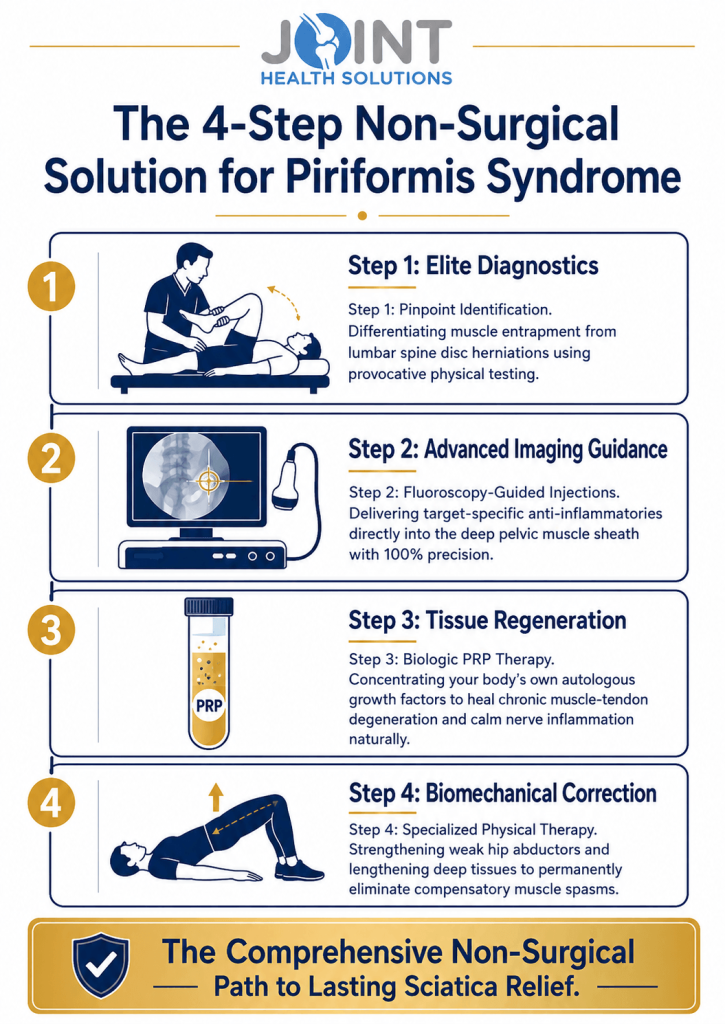
To help you easily digest your options, the clinical matrix below details the mechanical actions and expectations associated with each of our advanced non-surgical treatment options:
| Advanced Treatment Modality | Primary Mechanical / Biological Action | Expected Clinical Timeline | Key Longevity & Recovery Advantages |
| Manual Fascial Release & PT | Corrects structural alignment; lengthens short tissues; builds abductor strength. | 4 to 8 weeks of progressive, consistent clinical engagement. | Resolves the biomechanical root cause, preventing future recurrence. |
| Trigger Point Injections (TPI) | Blocks local acetylcholine release; resets cellular muscle membranes. | Near-instant muscle relaxation occurring within 24 to 72 hours. | Provides immediate relief to kick-start active physical therapy. |
| Fluoroscopy-Guided Therapy | Real-time X-ray targeting to ensure precise delivery to deep tissues. | Anti-inflammatory action takes full effect within 3 to 7 days. | Eliminates guesswork; maximizes safety; reduces overall steroid exposure. |
| Regenerative PRP Infusion | Delivers concentrated autologous growth factors to stimulate natural tissue repair. | Gradual improvement building over 4 to 12 weeks as tissue regenerates. | Promotes authentic biological tissue repair, avoiding synthetic drug risks. |
| Anti-Inflammatory IV Therapy | Rapid systemic antioxidant delivery; direct smooth-muscle relaxation. | Noticed immediately post-infusion; enhances ongoing therapies. | Lowers total body oxidative stress; speeds up baseline cellular recovery. |
Section VI: Real Patient Success Pathways
Case Study 1: The Corporate Professional
A 42-year-old financial analyst spent 10 to 12 hours a day sitting in corporate offices in Uptown Charlotte. Over six months, he developed an agonizing, burning pain in his right buttock that radiated down past his knee, making it impossible to sit through afternoon meetings. He had been told he might need a lumbar discectomy.
Upon presenting to Joint Health Solutions, a thorough physical assessment revealed a negative straight-leg raise test but an intensely positive FAIR test, combined with severe trigger point sensitivity over his right pelvic notch. He was diagnosed with classic piriformis syndrome driven by static compression.
Our team administered a precise, ultrasound-guided trigger point injection to instantly relax the locked muscle fibers, coupled with 6 weeks of targeted myofascial release and gluteal activation exercises. Within 3 weeks, his radiating leg symptoms completely disappeared. Today, he utilizes a standing desk, performs his prescribed daily mobility movements, and remains 100% pain-free.
Case Study 2: The Half-Marathon Runner
A 31-year-old amateur athlete was training for a local Charlotte marathon when she suddenly experienced a sharp, stabbing ache deep in her left gluteal region that forced her to stop running entirely. She tried resting and taking oral NSAIDs, but her pain returned immediately upon hitting the pavement.
An evaluation at our practice revealed that a severe weakness in her left gluteus medius was forcing her piriformis muscle to work overtime to stabilize her pelvis during her stride, leading to severe compensatory hypertrophy and sciatic nerve friction.
Because her condition had progressed to chronic tendinosis at the femoral insertion site, she underwent a precise, fluoroscopy-guided PRP injection to stimulate natural tissue repair, paired with an advanced biomechanical gait correction physical therapy program. Following an initial 4-week healing phase, she began a progressive return-to-running protocol. Within 10 weeks post-injection, she successfully completed her training program and ran her half-marathon completely free of gluteal pain or sciatica.
Section VIII: Why Choose Joint Health Solutions?
With over a decade of dedicated clinical experience serving the greater Charlotte, North Carolina community, Joint Health Solutions stands as a premier center for non-surgical orthopedic excellence and regenerative sports medicine. Our elite medical providers are deeply committed to staying at the forefront of evidence-based conservative medicine.
We understand that you are an individual with unique lifestyle goals, and we refuse to offer generic, rushed treatments. We take the time required to listen to your history, perform an exhaustive physical evaluation, uncover the hidden root causes of your neuromuscular dysfunction, and craft a personalized recovery plan that respects your body and protects your future mobility. When you choose our team, you are choosing a compassionate group of medical peers who prioritize your long-term health and joint preservation above all else.
📅 Are you ready to stop suffering from deep gluteal pain and radiating sciatica?
Do not let chronic muscle spasms or nerve entrapment keep you from enjoying your life. The clinical team at Joint Health Solutions is ready to help you find lasting relief without invasive spine surgery. Explore our comprehensive Treatments & Services and schedule your non-surgical consultation online today!
Institutional Sources & Clinical References
-
American Academy of Orthopaedic Surgeons (AAOS) – Clinical Management of Deep Pelvic Syndromes
-
National Institutes of Health (NIH) – StatPearls: Piriformis Syndrome Pathophysiology and Diagnosis
-
Cleveland Clinic – Non-Surgical Sciatica and Piriformis Solutions
Frequently Asked Questions
Can piriformis syndrome go away on its own?
In some cases, mild piriformis syndrome may resolve with rest and gentle stretching. However, if symptoms persist or worsen, professional treatment is recommended to prevent chronic issues.
What is the best exercise for piriformis syndrome?
Gentle stretches that target the piriformis muscle, such as the seated figure-four stretch or lying piriformis stretch, are often effective. A physical therapist can guide you on proper technique.
How long does it take for piriformis syndrome to heal?
With appropriate treatment, many patients experience significant improvement within 4 to 6 weeks. Chronic cases may take longer, but consistent therapy often yields good results.
Is piriformis syndrome the same as sciatica?
No. Sciatica is a symptom of nerve irritation, while piriformis syndrome is a specific cause of that irritation. True sciatica often originates from the spine, whereas piriformis syndrome originates in the buttock muscle.
What happens if piriformis syndrome is left untreated?
Untreated piriformis syndrome can lead to chronic pain, muscle weakness, and altered gait. It may also contribute to secondary problems in the hip, knee, or lower back.
Are injections painful?
Most patients tolerate injections well. We use a local anesthetic to minimize discomfort, and the procedure typically takes just a few minutes.
Can I continue working while undergoing treatment?
Yes. Most treatments allow you to continue daily activities. We may recommend temporary modifications, such as taking breaks from prolonged sitting.
Do I need a referral to see a specialist?
Some insurance plans require a referral, but many do not. Our team can help verify your coverage before your visit.
Will I need surgery?
Surgery is rarely needed for piriformis syndrome. Non-surgical treatments are effective for the vast majority of patients. We explore all conservative options first.
How do I schedule an appointment?
You can call us at 704-833-3566 or schedule your visit online. We look forward to helping you.