

How Hyaluronic Acid Injections Lubricate and Protect Osteoarthritic Knees
Estimated reading time: 12 minutes | Category: Joint Health | Location: Charlotte, North Carolina
If you have been living with knee osteoarthritis, you know the feeling well: a deep, aching pain that worsens with activity, stiffness after sitting, and a grinding sensation when you bend your knee. This condition affects millions of Americans, and for many, it can make everyday activities like walking, climbing stairs, or getting out of a car feel like a challenge. While there is no cure for osteoarthritis, there are effective non-surgical treatments that can help manage symptoms and improve quality of life. One such treatment is hyaluronic acid injections, also known as viscosupplementation. This article explains how hyaluronic acid injections lubricate and protect osteoarthritic knees, and why they have become a popular option for patients seeking relief in Charlotte, North Carolina.
Understanding Osteoarthritis and the Role of Synovial Fluid
Osteoarthritis (OA) is the most common form of arthritis, characterized by the gradual breakdown of cartilage—the smooth, cushioning tissue that covers the ends of bones in a joint. In a healthy knee, cartilage allows bones to glide smoothly against each other. The joint is also filled with synovial fluid, a thick, viscous substance that provides lubrication and shock absorption.
In OA, the cartilage wears down, and the synovial fluid becomes thinner and less effective, leading to increased friction, pain, and inflammation. The loss of this natural lubrication is a key factor in the progressive degradation that characterizes knee osteoarthritis. When the body’s internal shocking mechanisms break down, every step transfers destructive kinetic forces directly to the subchondral bone layers.
What Are Hyaluronic Acid Injections?
Hyaluronic acid (HA) is a naturally occurring substance found in synovial fluid and cartilage. It is responsible for the viscosity and elasticity of the fluid, allowing it to lubricate the joint and absorb shock. In osteoarthritis, the concentration and molecular weight of HA in the synovial fluid decrease significantly, compromising its protective properties.
Hyaluronic acid injections involve injecting a specialized gel-like solution of HA directly into the knee joint to supplement the depleted natural HA. This treatment is widely known in longevity medicine as viscosupplementation because its primary mechanism restores the proper biological viscosity of the synovial environment. By rebuilding this fluid boundary, the joint environment transitions out of an actively degrading mechanical state.
How Hyaluronic Acid Lubricates and Protects the Knee Joint
Once precisely delivered via clinical instrumentation, hyaluronic acid provides several key benefits to an active joint environment:
-
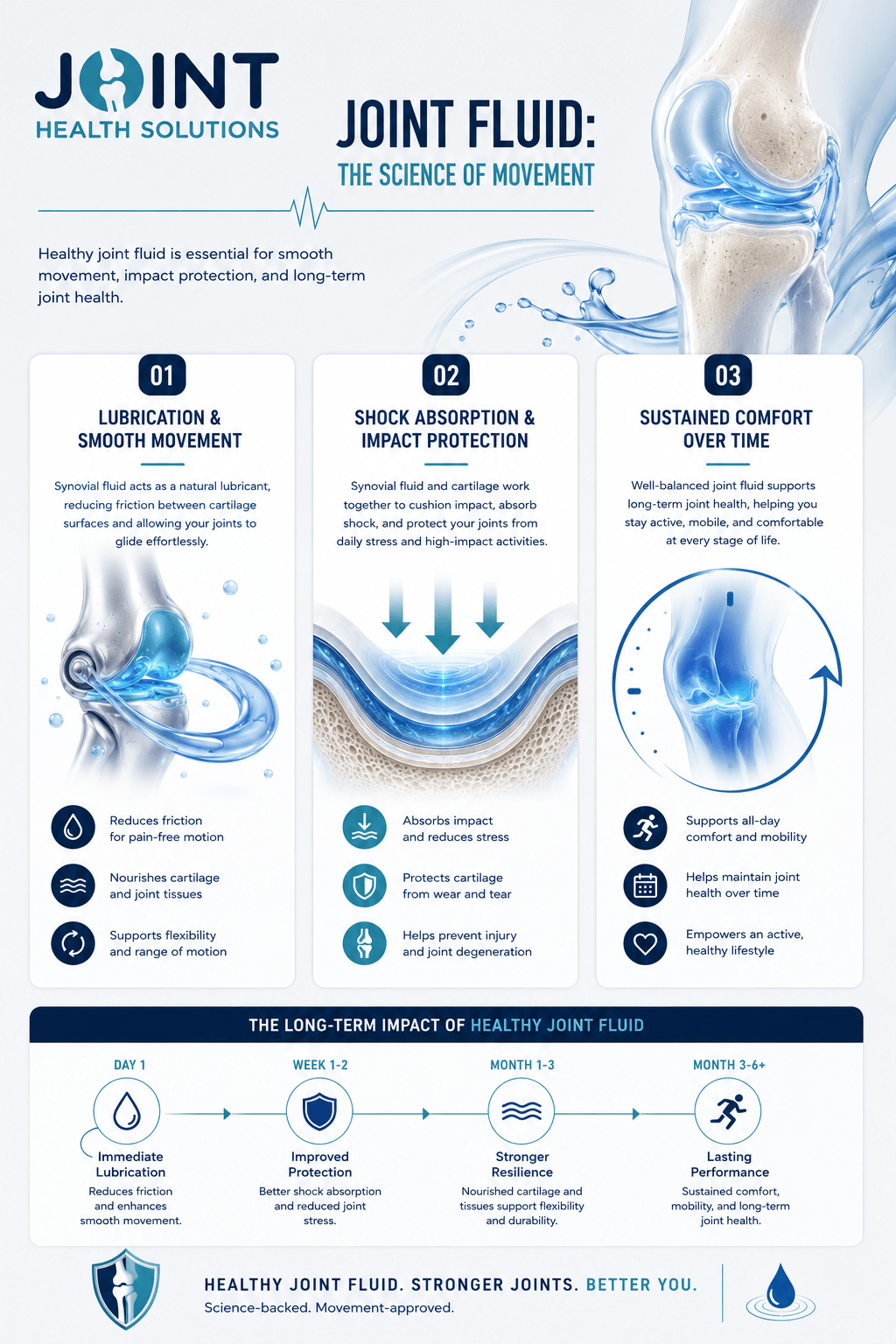
Mechanical Lubrication: HA instantly increases the structural viscosity of the remaining synovial fluid, dramatically reducing friction between the articular surfaces during movement. This helps the knee glide more smoothly, decreasing pain and stiffness.
-
Dynamic Shock Absorption: The unique viscoelastic properties of HA allow it to absorb and distribute mechanical loads during weight-bearing movements, successfully protecting the remaining cartilage matrix from further impact damage.
-
Targeted Anti-Inflammatory Effects: HA can reduce inflammation within the joint capsule by biochemically inhibiting the local production of pro-inflammatory mediators and damaging free radicals.
-
Cartilage Matrix Protection: Some peer-reviewed studies suggest that introduction of exogenous HA may stimulate the body’s own cells to produce natural HA and temporarily promote baseline cartilage health.
These cellular and mechanical effects typically last for 6 to 12 months, after which the injection protocol can be safely repeated. Patients often experience significant pain relief and improved functional mobility, allowing them to effectively delay or avoid invasive knee replacement surgery. For those seeking advanced hyaluronic acid injections in Charlotte, Joint Health Solutions offers this treatment as part of their comprehensive non-surgical approach.
The Long-Term Outlook: Cartilage Preservation and Disease Modification
While many patients view viscosupplementation purely as an effective method for temporary pain management, its clinical value extends far deeper into the realm of joint preservation. Chronic knee osteoarthritis is not a static condition; it is a progressive, chemically driven degenerative process. When a joint loses its natural lubrication, the chronic friction generates microscopic cellular debris. This debris triggers a localized immune response, flooding the joint capsule with destructive enzymes that accelerate the breakdown of remaining healthy cartilage.
By introducing a high-molecular-weight hyaluronic acid matrix, clinicians are essentially altering the mechanical and chemical environment of the arthritic knee. By dampening the friction-induced inflammatory pathway, viscosupplementation creates a biological window where the joint can stabilize. Over time, maintaining a properly lubricated joint capsule helps preserve the remaining joint space, prevents secondary muscle atrophy caused by disuse, and changes the trajectory of the condition. For active individuals across North Carolina, this proactive approach translates to longer functional healthspan for their weight-bearing joints.
Who Is a Good Candidate for Hyaluronic Acid Injections?
Ideal candidates for HA injections are individuals with mild to moderate knee osteoarthritis who have not responded adequately to baseline conservative treatments such as physical therapy, weight management, or over-the-counter pain medications. Patients with severe OA or significant bone-on-bone contact may still undergo the procedure to manage symptoms, but the mechanical results may be less dramatic.
HA injections are not recommended for individuals with active local joint infections, severe systemic allergies to HA products, or underlying bleeding disorders. A thorough diagnostic evaluation by a qualified provider is essential to determine true candidacy. At Joint Health Solutions, the team meticulously assesses each patient’s unique joint status through targeted physical examination, modern imaging, and extensive discussion of clinical symptoms to tailor an optimized treatment plan.
What to Expect During and After the Procedure
The targeted injection procedure is performed directly within our clean clinic setting and usually takes about 15 minutes. The skin covering the target knee is carefully sanitized, and a local anesthetic may be applied to minimize any entry discomfort. Using a thin needle, the doctor delivers the HA gel directly into the internal joint space. Depending on the specific brand and molecular weight of the HA selected for your case, you may receive a single injection or a structured series of 1 to 3 injections spaced exactly one week apart.
Following the clinical session, patients are advised to avoid strenuous weight-bearing activities or high-impact exercises for 24 to 48 hours. Mild swelling, localized warmth, or transient discomfort at the injection site is common but usually resolves quickly without intervention. Many patients begin noticing a functional improvement within a few weeks, with peak therapeutic benefit arriving around 4 to 8 weeks post-injection.
Comparing Hyaluronic Acid to Other Non-Surgical Options
| Treatment | How It Works | Duration of Relief | Considerations |
| Corticosteroid Injections | Powerful anti-inflammatory | Weeks to months | Can damage cartilage with repeated use; not for long-term management |
| Physical Therapy | Strengthens muscles, improves range of motion | Ongoing | Requires consistent commitment; may not relieve severe mechanical pain |
| Hyaluronic Acid Injections | Lubricates and cushions the joint | 6–12 months | Best for mild to moderate OA; may be repeated safely over multiple cycles |
| PRP Therapy | Uses patient’s own platelets to stimulate healing | Variable | Excellent for tissue repair and regenerative cellular signaling |
Synergistic Care: Combining Viscosupplementation with Physical Rehabilitation
To maximize the therapeutic longevity of hyaluronic acid injections, clinical evidence strongly supports a multi-modal approach. Viscosupplementation excels at correcting the fluid mechanics of the internal joint, but it does not address external structural deficiencies. If the musculature surrounding the knee—specifically the quadriceps, hamstrings, and hip stabilizers—is weak or imbalanced, the joint will continue to experience abnormal structural strain.
When you combine the mechanical cushion of an HA injection with a targeted physical therapy regimen, you address the joint problem from both the inside and the outside. The pain-relieving and lubricating properties of the injection create a comfortable functional window, allowing patients to perform therapeutic exercises that might have previously been too painful to attempt. Over subsequent weeks, as the muscles strengthen, they assume a greater portion of the body’s daily weight-bearing load, working in tandem with the injected hyaluronic acid to drastically reduce further breakdown of the joint.
Why Joint Health Solutions – 10 Years of Serving the Charlotte Community
With a decade of clinical experience delivering advanced healthcare across the region, Joint Health Solutions stands as a trusted provider of non-surgical orthopedic care. Our medical team is dedicated to accurate diagnosis, state-of-the-art joint preservation techniques, and truly personalized care models.
By housing advanced diagnostics, joint injections, custom bracing, and physical rehabilitation strategies under one roof, we eliminate the need for patients to manage multiple specialty appointments. We focus on evidence-based methodologies designed to return you to an active lifestyle without the risks, costs, and extended recovery timelines associated with major surgery. To learn more about our facility, specialized care philosophies, and clinical staff, explore our dedicated Our Practice and meet Our Providers pages.
The Cellular Signal: CD44 Receptors and Re-Educating Synoviocytes
A common misconception is that viscosupplementation is purely a mechanical fix—a biological version of WD-40 injected into a creaky hinge. While the immediate mechanical relief is undeniable, the long-term therapeutic value of hyaluronic acid injections relies heavily on complex cellular signaling pathway modifications.
Exogenous (injected) hyaluronic acid acts as a powerful signaling ligand within the joint ecology. The cartilage cells (chondrocytes) and the specialized cells lining the joint capsule (Type B synoviocytes) are covered in a specific surface receptor known as CD44. When high-molecular-weight hyaluronic acid binds firmly to these CD44 receptors, it triggers a profound intracellular cascade that actively suppresses the disease-driving pathways of osteoarthritis:
-
Downregulation of NF-κB: Binding to the CD44 receptor effectively puts a brake on the nuclear factor-kappa B (NF-κB) pathway. This pathway is the master genetic switch that causes cells to produce destructive inflammatory cytokines like interleukin-1 beta (IL-1β) and tumor necrosis factor-alpha (TNF-α).
-
Inhibition of Cartilage-Degrading Enzymes: By blocking these inflammatory signals, the chondrocytes stop manufacturing and releasing matrix metalloproteinases (MMPs) and aggrecanases—the aggressive enzymes responsible for eating away the extracellular matrix of your cartilage.
-
Stimulation of Endogenous HA Production: Most importantly, this receptor binding “re-educates” the failing Type B synoviocytes. It sends a clear biological feedback signal telling the cells to restart their own natural, internal production of high-quality, high-molecular-weight hyaluronic acid.
This cellular re-education is the exact reason why a treatment that physically clears out of the joint space within a few weeks can provide continuous, compounding pain relief and anti-inflammatory protection for up to six months or a year.
Mitigating the Kinetic Cascade: Preventing Subchondral Bone Damage and Contralateral OA
Knee osteoarthritis is rarely isolated to a single compartment of a single joint; because of the interconnected nature of the human musculoskeletal system, unmanaged knee degeneration triggers a destructive kinetic cascade throughout the entire body. When an individual suffers from a poorly lubricated, painful osteoarthritic knee, they subconsciously alter their movement mechanics to protect the painful limb. This manifests clinically as an antalgic gait (limping).
An antalgic gait immediately forces the rest of the kinetic chain to assume abnormal weight-bearing stresses. To minimize loading on the arthritic knee, the body shifts the physical burden upward to the lumbar spine, outward to the ipsilateral hip, and significantly overloads the contralateral (opposite) knee. Clinical data shows that patients with unilateral knee osteoarthritis have an exponentially higher risk of developing severe osteoarthritis in the opposite knee within a few years purely due to this mechanical overcompensation.
Furthermore, when the shock-absorbing fluid barrier within the knee fails, peak vertical impact forces travel directly through the thinning cartilage into the subchondral bone (the bone layer directly beneath the cartilage). The subchondral bone responds to this excessive stress by stiffening, thickening, and developing micro-fractures, bone marrow lesions (BMLs), and osteophytes (bone spurs). This subchondral bone remodeling alters the geometric fit of the joint, creating uneven pressure zones that accelerate the destruction of the remaining cartilage.
By introducing advanced viscosupplementation at our Charlotte facility, we effectively disrupt this multi-joint kinetic collapse. Restoring fluid mechanics and shock absorption to the primary arthritic knee allows patients to quickly normalize their gait patterns. By eliminating the need to limp or overcompensate, hyaluronic acid injections protect the subchondral bone from micro-trauma, relieve structural strain on the lower back and hips, and shield the opposite leg from accelerated wear and tear. This holistic preservation of the body’s overall structural alignment is a core philosophy of our non-surgical care plans at Joint Health Solutions.
Call to Action – Book Your Consultation
If you are ready to address your knee osteoarthritis and discover how advanced viscosupplementation can restore your daily mobility, the team at Joint Health Solutions in Charlotte, North Carolina, is here to guide you. We specialize in minimally invasive, evidence-based treatments designed to relieve chronic pain and improve your overall quality of life. Call our office today at 704-833-3566 to schedule your comprehensive medical evaluation, or visit our platform to secure an appointment online. Take your first step toward pain-free, active living today.
Medical Disclaimer
This article is for educational purposes only and is not a substitute for medical advice, diagnosis, or treatment. Results vary, and not every patient is a candidate for every treatment. A qualified healthcare provider should evaluate your condition and discuss risks, benefits, and alternatives before treatment.
Institutional Sources
-
Mayo Clinic – Hyaluronic Acid Injections for Knee Osteoarthritis
-
American Academy of Orthopaedic Surgeons (AAOS) – Viscosupplementation Care
-
National Institutes of Health (NIH) – Hyaluronic Acid in Osteoarthritis Treatment
-
Harvard Health Publishing – Efficacy of Viscosupplementation Options
Frequently Asked Questions
How long do hyaluronic acid injections last?
The effects of hyaluronic acid injections typically last 6 to 12 months. Some patients may experience relief for longer, depending on the severity of their arthritis and their activity level. The treatment can be repeated as needed.
Are hyaluronic acid injections painful?
Most patients tolerate the injection well. A local anesthetic may be used to numb the skin. Some discomfort or mild swelling after the injection is common but usually resolves within a day or two.
Can I combine hyaluronic acid with physical therapy?
Yes, combining hyaluronic acid injections with physical therapy can enhance outcomes. Physical therapy strengthens the muscles around the knee, improving stability and function, while HA provides lubrication and pain relief, making therapy more tolerable.
How many injections do I need?
The number of injections depends on the specific HA product used. Some require a single injection, while others are given as a series of 2 or 3 injections spaced one week apart. Your provider will recommend the best protocol for you.
Are there any side effects?
Common side effects include temporary pain, swelling, warmth, or redness at the injection site. Serious complications like infection or allergic reaction are rare. Discuss any concerns with your provider.
How soon will I feel relief?
Some patients notice improvement within a few days, but it may take up to 4 weeks to experience the full benefit. The injection works by restoring the natural lubrication of the joint, which takes time.
Can hyaluronic acid injections delay knee replacement surgery?
Yes, many patients are able to delay knee replacement for several years by using HA injections along with other conservative treatments. However, results vary, and not everyone is a candidate.
Is hyaluronic acid covered by insurance?
Many insurance plans cover hyaluronic acid injections for knee osteoarthritis when certain criteria are met. Check with your insurance provider and the clinic’s billing department to verify coverage.
What is the difference between hyaluronic acid and cortisone injections?
Cortisone is a steroid that reduces inflammation quickly but can damage cartilage over time. Hyaluronic acid lubricates and cushions the joint without the harmful effects on cartilage. They work differently and are used for different stages of OA.
How do I know if hyaluronic acid injections are right for me?
Schedule a consultation with a qualified provider to discuss your medical history, symptoms, and goals. They will perform a physical exam and review imaging to determine if you are a good candidate.