
Non-Surgical Solutions for Chronic Shoulder Osteoarthritis Pain in Charlotte
If you live in Charlotte, North Carolina, and struggle with persistent shoulder pain that makes it difficult to reach overhead, lift objects, or even sleep comfortably at night, you are not alone. Chronic shoulder osteoarthritis affects millions of Americans, and the pain can be debilitating. The good news is that you do not have to resign yourself to surgery or simply “live with it.” There are effective shoulder osteoarthritis non-surgical treatment Charlotte options available that can help you regain function and reduce pain without going under the knife. At learn more about Joint Health Solutions, we specialize in personalized, non-surgical approaches to joint pain relief. Our team understands the frustration of chronic shoulder pain and is dedicated to helping you find a path to comfort and mobility.
Shoulder osteoarthritis occurs when the protective cartilage that cushions the ends of your bones within the shoulder joint gradually wears down. This leads to bone-on-bone friction, inflammation, stiffness, and pain. While aging is a common factor, other contributors include prior injuries, repetitive overhead activities, and genetic predisposition. Many people assume that once arthritis sets in, the only option is a joint replacement. However, advances in non-surgical treatments—from targeted injections to physical therapy—offer hope for lasting relief. In this article, we will explore the causes of shoulder osteoarthritis, why non-surgical solutions are worth considering, and the specific treatments available right here in Charlotte.
Our goal is to empower you with knowledge so you can make informed decisions about your health. Whether you are newly diagnosed or have been managing shoulder pain for years, understanding your options is the first step toward a better quality of life. Let us dive into the details of shoulder osteoarthritis and the non-surgical treatments that can help you live pain-free.
Shoulder Osteoarthritis Non-Surgical Treatment Charlotte: Understanding Shoulder Osteoarthritis
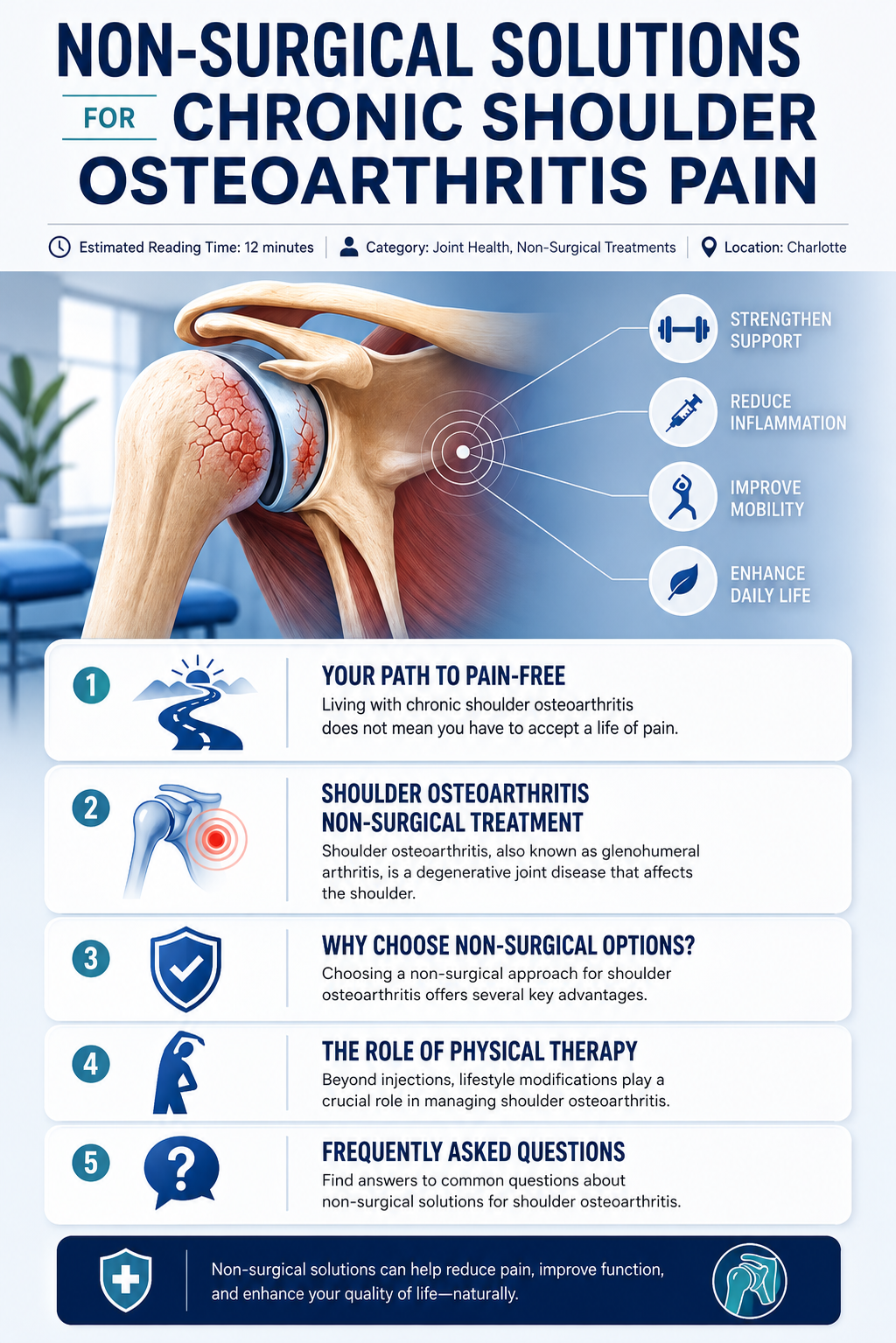
Shoulder osteoarthritis, also known as glenohumeral arthritis, is a degenerative joint disease that affects the ball-and-socket joint where the upper arm bone (humerus) meets the shoulder blade (scapula). The smooth cartilage that allows for effortless movement becomes rough and thin over time, leading to pain, swelling, and reduced range of motion. Unlike rheumatoid arthritis, which is an autoimmune condition, osteoarthritis is primarily a wear-and-tear condition. The shoulder is less commonly affected by osteoarthritis than weight-bearing joints like the hips and knees, but when it does occur, it can be severely disabling because the shoulder is involved in so many daily activities.
The progression of shoulder osteoarthritis is gradual. Early on, you might notice a dull ache after activity or stiffness in the morning that improves with movement. As the condition advances, the pain becomes more constant, and you may hear a grinding sensation (crepitus) when moving the shoulder. Eventually, the joint may become so stiff that it is difficult to perform routine tasks like combing your hair, reaching for a seatbelt, or putting on a jacket. The impact on quality of life can be significant, leading many to seek medical help.
Diagnosis typically involves a physical examination, review of symptoms, and imaging studies such as X-rays or MRI. X-rays can show joint space narrowing, bone spurs, and other signs of arthritis. An MRI provides a more detailed view of cartilage and soft tissues. Once diagnosed, your healthcare provider can recommend a treatment plan tailored to your severity and lifestyle. For many, non-surgical treatments are the first line of defense and can be highly effective.
Why Choose Non-Surgical Options?
Choosing a non-surgical approach for shoulder osteoarthritis offers several advantages. Surgery, such as shoulder replacement or arthroscopy, carries inherent risks including infection, blood clots, nerve damage, and a lengthy recovery period. Additionally, not everyone is a candidate for surgery due to age, overall health, or other medical conditions. Non-surgical treatments are generally safer, less invasive, and allow you to return to your daily activities more quickly. They also preserve the natural joint, which can be important for younger patients who may outlive a prosthetic joint.
Moreover, non-surgical treatments can be highly effective in managing pain and improving function. Many patients experience significant relief that lasts for months or even years, delaying or avoiding the need for surgery altogether. The key is to combine different modalities—such as injections, physical therapy, and lifestyle modifications—for a comprehensive approach. At Joint Health Solutions, we believe in treating the whole person, not just the joint. Our team works closely with you to develop a plan that addresses your specific needs and goals.
Another reason to consider non-surgical options is the ability to customize treatment. For example, if you have a flare-up of pain, a targeted cortisone injection can provide rapid relief. For longer-term management, hyaluronic acid injections or platelet-rich plasma (PRP) therapy may help support joint health. Physical therapy strengthens the muscles around the shoulder, taking pressure off the joint. Nutritional changes can reduce systemic inflammation. By combining these approaches, we can often achieve excellent outcomes without surgery.
Top Non-Surgical Treatments for Shoulder Arthritis
There are several non-surgical treatments available for shoulder osteoarthritis, each with its own mechanism of action and indications. The most common include corticosteroid injections, hyaluronic acid injections, PRP therapy, and physical therapy. Let us explore these in detail.
Corticosteroid Injections
Corticosteroid injections, often called cortisone shots, are powerful anti-inflammatory medications injected directly into the shoulder joint. They work by reducing inflammation and suppressing the immune response, which can provide rapid pain relief. These injections are typically used for acute flare-ups and can provide relief for several weeks to months. However, repeated use may accelerate cartilage breakdown, so they are usually limited to a few times per year.
Hyaluronic Acid Injections
Hyaluronic acid is a naturally occurring substance in joint fluid that acts as a lubricant and shock absorber. In osteoarthritis, the natural hyaluronic acid becomes depleted and less effective. Injecting supplemental hyaluronic acid (viscosupplementation) can restore the viscosity of the joint fluid, reducing friction and pain. This treatment is more commonly used in knees but is also effective for shoulders. It may take several weeks to see full benefit, and relief can last six months to a year.
Platelet-Rich Plasma (PRP) Therapy
PRP therapy involves drawing a small amount of your own blood, processing it to concentrate platelets and growth factors, and then injecting it into the damaged joint. The growth factors stimulate the body’s natural healing response, potentially reducing inflammation and promoting tissue repair. PRP is considered a regenerative therapy and may be particularly beneficial for patients with mild to moderate osteoarthritis. Multiple sessions are often needed, and results can be long-lasting.
Physical Therapy
Physical therapy is a cornerstone of non-surgical treatment for shoulder osteoarthritis. A skilled therapist can design a program to strengthen the rotator cuff and scapular stabilizers, improve range of motion, and correct movement patterns that contribute to joint stress. Manual therapy techniques, such as joint mobilization and soft tissue work, can also help reduce pain and stiffness. Consistency is key, and many patients find significant improvement with regular therapy.
The Role of Physical Therapy and Nutrition
Beyond injections, lifestyle modifications play a crucial role in managing shoulder osteoarthritis. Physical therapy not only strengthens muscles but also educates patients on proper body mechanics to avoid aggravating the joint. A nutrition plan focused on anti-inflammatory foods—such as fruits, vegetables, omega-3 fatty acids, and whole grains—can help reduce systemic inflammation that contributes to joint pain. Weight management is also important, as excess body weight increases the load on joints, even non-weight-bearing ones like the shoulder, due to metabolic factors.
At Joint Health Solutions, we offer comprehensive guidance on both physical therapy and nutrition as part of our non-surgical treatment plans. Our providers work with you to create a sustainable plan that fits your lifestyle. We believe that empowering patients with knowledge and tools is essential for long-term success.
When to Consider Advanced Regenerative Therapies
For patients who do not respond adequately to conservative treatments like injections and physical therapy, advanced regenerative therapies such as PRP or even bone marrow aspirate concentrate (BMAC) may be considered. These therapies aim to harness the body’s own healing potential to repair damaged tissues. While research is ongoing, many patients report significant improvement in pain and function. It is important to discuss these options with a qualified provider to determine if you are a candidate.
Your Path to Pain-Free Living in Charlotte
Living with chronic shoulder osteoarthritis does not mean you have to accept a life of pain. With the right non-surgical treatment plan, you can regain mobility and enjoy the activities you love. At our practice, we are committed to providing compassionate, evidence-based care. Our team of experienced providers will take the time to understand your unique situation and develop a personalized plan. Whether you need a series of injections, a tailored physical therapy program, or guidance on nutrition, we are here to help.
Take the first step toward pain relief without surgery—schedule a consultation with Joint Health Solutions today. Call us at 704-833-3566 or visit our about us page to learn more. You can also meet our team by visiting our providers page. We look forward to helping you find relief.
Comparison Table: Non-Surgical Treatments for Shoulder Osteoarthritis
| Treatment | How It Works | Duration of Relief | Considerations |
|---|---|---|---|
| Corticosteroid Injections | Reduce inflammation rapidly | Weeks to months | Limited frequency due to cartilage risk |
| Hyaluronic Acid Injections | Lubricate and cushion joint | 6–12 months | May take weeks for full effect |
| PRP Therapy | Stimulate healing with growth factors | 6–18 months | Multiple sessions may be needed |
| Physical Therapy | Strengthen muscles, improve range of motion | Ongoing with maintenance | Requires consistent effort |
Institutional Sources
- American Academy of Orthopaedic Surgeons – Shoulder Osteoarthritis
- Mayo Clinic – Shoulder Arthritis
- Arthritis Foundation – Shoulder Osteoarthritis
- National Institutes of Health – Non-surgical treatments for shoulder osteoarthritis
- OrthoInfo – Shoulder Arthritis
Frequently Asked Questions
What are the early signs of shoulder osteoarthritis?
Early signs include a dull ache in the shoulder after activity, morning stiffness that improves with movement, and a grinding sensation when moving the joint. Pain may also occur at night, especially when lying on the affected side.
How long do shoulder injections provide relief?
Corticosteroid injections can provide relief for several weeks to a few months. Hyaluronic acid injections typically last 6 to 12 months. PRP therapy may provide relief for 6 to 18 months, depending on the individual and severity of arthritis.
Is PRP therapy effective for shoulder arthritis?
PRP therapy has shown promise in reducing pain and improving function in patients with mild to moderate shoulder osteoarthritis. It may stimulate healing and reduce inflammation. Results vary, and multiple treatments may be needed.
Can physical therapy alone treat shoulder osteoarthritis?
Physical therapy can be very effective, especially for mild cases, by strengthening supporting muscles and improving flexibility. However, many patients benefit from combining therapy with injections or other treatments for optimal relief.
What lifestyle changes help manage shoulder pain?
Maintaining a healthy weight, adopting an anti-inflammatory diet, avoiding repetitive overhead activities, and performing regular shoulder exercises can help manage pain. Good posture and ergonomic adjustments at work also reduce strain.
Are there any risks with non-surgical treatments?
Non-surgical treatments are generally safe but carry some risks. Injections can cause infection, bleeding, or allergic reaction. Physical therapy may temporarily increase soreness. Discuss all risks with your provider before starting treatment.
How do I know if I am a candidate for non-surgical treatment?
Most patients with shoulder osteoarthritis are candidates for non-surgical treatment. A thorough evaluation, including imaging and physical exam, will determine the best approach. Factors include severity of arthritis, overall health, and personal goals.
What should I expect during my first visit?
Your first visit will include a detailed history, physical examination, and review of any imaging. The provider will discuss your symptoms, goals, and treatment options. A personalized plan will be created, which may include injections, therapy, or lifestyle advice.
Do insurance plans cover non-surgical treatments?
Many insurance plans cover corticosteroid injections and physical therapy. Coverage for hyaluronic acid and PRP varies. Our team can verify your benefits and discuss payment options. Contact us for more details.
How can I schedule a consultation in Charlotte?
You can schedule a consultation by calling 704-833-3566 or visiting our website. We are located in Charlotte, North Carolina, and welcome new patients. Take the first step toward pain relief today.