

How Chronic Dehydration Intensifies Trigger Points in Your Neck and Shoulders
Published July 18, 2026 | Category: Pain Management | Location: Charlotte, North Carolina | 🕒 12 min read
Dehydration Trigger Points Neck Shoulders: Introduction
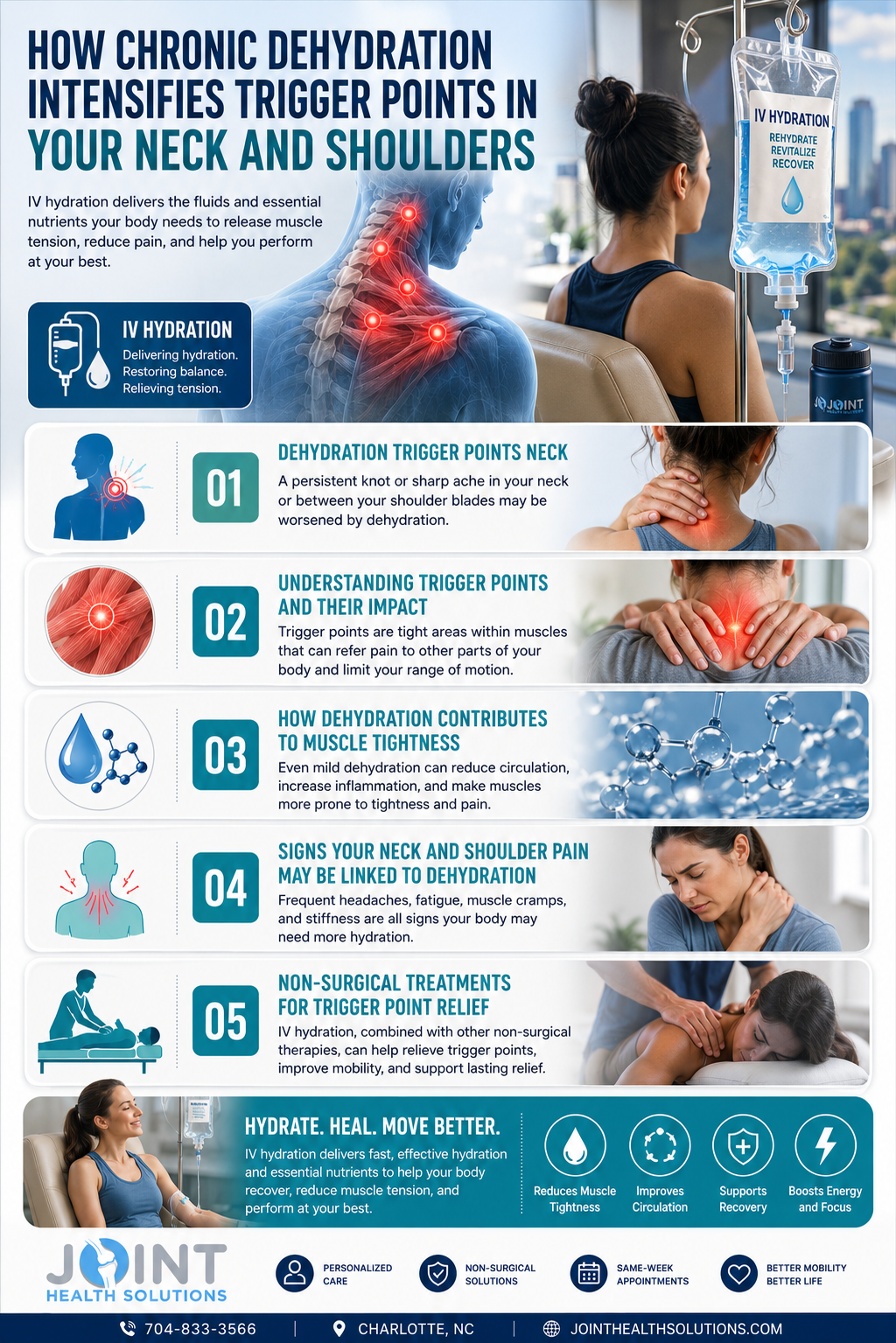
If you have ever experienced a persistent knot in your neck or a sharp ache between your shoulder blades, you know how disruptive muscle pain can be. Many people attribute these symptoms to poor posture, stress, or overuse — but there is another common culprit that often goes overlooked: chronic dehydration. When your body lacks adequate water, muscles become more prone to irritation and spasm, which can contribute to the formation of trigger points — hyperirritable spots within taut bands of muscle fibers.
In this article, we explore how chronic dehydration may intensify trigger points in your neck and shoulders, and what non-surgical treatment options are available. By understanding the physiological link between hydration and muscle health, you can take proactive steps to reduce pain and improve your quality of life.
At Joint Health Solutions in Charlotte, North Carolina, we specialize in non-surgical treatments for trigger points, including trigger point injections, IV hydration therapy, and physical therapy.
Understanding Trigger Points and Their Causes
Trigger points, often called muscle knots, are localized areas of muscle tightness that can refer pain to other parts of the body. They develop when muscle fibers contract and fail to release, creating a taut band that restricts blood flow and causes local ischemia. This environment may lead to a buildup of metabolic byproducts that sensitize nociceptors and perpetuate the pain cycle.2
Common causes include repetitive strain, poor posture, emotional stress, and inadequate hydration. When muscle cells lack sufficient water, they may be less able to efficiently remove metabolic waste products like lactic acid, potentially contributing to increased muscle tension. The trapezius, levator scapulae, and rhomboid muscles are particularly susceptible because of their high metabolic demand and constant postural role.
Even mild dehydration can impair muscle function and worsen existing trigger points. Dehydration reduces intracellular water content, which may impair the sodium-potassium pump and alter the resting membrane potential of muscle fibers, predisposing them to sustained contraction. Additionally, dehydration can diminish the lubrication of fascial planes, increasing friction between muscle layers and promoting adhesion formation. Over time, these adhesions may entrap nerves and blood vessels, amplifying pain signals and reducing range of motion.
How Dehydration Contributes to Muscle Knots
Water is essential for every cellular process in your body, including muscle contraction and relaxation. Dehydration reduces blood volume, which decreases oxygen delivery to muscles and slows the removal of waste products — an environment in which muscle fibers are more likely to remain contracted. Dehydration also affects the fascia, making it less pliable and more prone to adhesions.
Research indicates that even a 1–2% loss of body water can increase muscle soreness and reduce flexibility.1 When chronically dehydrated, muscles can exist in a low-grade state of tension, making them more susceptible to trigger point formation.
From a physiological standpoint, dehydration elevates serum osmolality, which triggers the release of antidiuretic hormone and aldosterone. The resulting electrolyte shifts may impair neuromuscular transmission, potentially contributing to prolonged muscle contraction and delayed relaxation — features associated with trigger point formation. Furthermore, dehydration promotes oxidative stress, and elevated markers of systemic inflammation have been observed in hypohydrated individuals.3 These inflammatory mediators can sensitize peripheral nerves and lower the pain threshold, making minor muscle irritations feel more intense.
It is important to note that while the mechanistic rationale for a dehydration–trigger point link is compelling, direct evidence from large randomized controlled trials is limited. The physiological connections described above are drawn from studies of dehydration and muscle function broadly — not from trials specifically designed to study trigger point formation. Individual responses vary considerably.
By maintaining optimal hydration, you support the viscoelastic properties of muscle and fascia, allowing them to stretch and contract more efficiently and reducing the mechanical stress that can contribute to knot formation.
Signs Your Neck and Shoulder Pain May Be Linked to Dehydration
How can you tell if your neck and shoulder pain is related to dehydration? Look for these signs:
- Muscle cramps or spasms that worsen with activity or heat
- A history of consistently low fluid intake
- Dark yellow urine
- Fatigue and lightheadedness
- Deep, aching knots in the neck or upper back that radiate pain toward the head or arms
- Morning stiffness that improves with movement
- Difficulty turning your head fully, or a feeling of heaviness in the shoulders
- Frequent tension-type headaches, which are commonly referred from trigger points in the upper trapezius and suboccipital muscles
If you notice that your pain tends to improve after drinking water, dehydration may be a contributing factor — but chronic trigger points often require professional treatment to fully resolve. A simple clinical clue is the skin turgor test: if the skin on the back of your hand doesn’t snap back quickly when pinched, it may suggest dehydration. Keeping a hydration diary and tracking fluid intake alongside pain levels can help identify patterns.
Non-Surgical Treatments for Trigger Points
If you are struggling with persistent trigger points, there are effective non-surgical options available at Joint Health Solutions:
Trigger Point Injections
Involves injecting a small amount of anesthetic or saline directly into the trigger point to release the muscle knot and reduce pain. This procedure is quick, minimally invasive, and provides rapid relief for many patients. Learn more about trigger point injections.
Physical Therapy
Manual techniques such as myofascial release, dry needling, and instrument-assisted soft tissue mobilization help break up adhesions and restore normal muscle length. We also teach self-care strategies including foam rolling, targeted stretching for the levator scapulae and pectoralis minor, and ergonomic adjustments for desk work. Explore physical therapy options.
Anti-Inflammatory IV Therapy
Delivers fluids, vitamins, and minerals directly into the bloodstream, bypassing the digestive system. This can be particularly useful for patients who have difficulty maintaining adequate oral intake due to busy schedules or gastrointestinal issues. Learn more about IV therapy.
Hydration Counseling
Personalized guidance based on body weight, activity level, and climate. A general starting point is 0.5 to 1 ounce of water per pound of body weight per day. For those with significant dehydration, we may recommend electrolyte supplementation with sodium, potassium, and magnesium to support muscle function.
Sports Recovery Protocols
For athletes or active individuals, sports recovery IV therapy can help prevent future injuries and support tissue healing. Explore sports recovery IV therapy.
By combining these modalities, we aim to address both the symptoms and contributing causes of trigger points, without the need for surgery.
How Trigger Point Treatments Compare
| Treatment | How It Works | Limitations | Risks |
|---|---|---|---|
| Oral Pain Relievers (NSAIDs, Muscle Relaxants) | Reduce inflammation and muscle spasm systemically | Does not address trigger points directly; temporary relief; GI side effects | Stomach ulcers, kidney issues, drowsiness |
| Trigger Point Injections | Inject anesthetic or saline directly into the muscle knot | May require multiple sessions; does not correct underlying dehydration | Minor bruising, rare infection |
| Physical Therapy | Manual release, stretching, and strengthening | Requires time and consistent attendance; results vary | Mild soreness after sessions |
| Anti-Inflammatory IV Therapy | Delivers fluids, vitamins, and minerals directly into the bloodstream | Typically not covered by insurance; requires multiple sessions | Minor bruising at IV site, rare infection |
| Combined Approach (IV + Injections + PT) | Addresses hydration, trigger points, and underlying biomechanics | Requires coordination of multiple treatments | Low; each component carries minimal risk individually |
Hydration Tips to Support Joint and Muscle Health
Staying properly hydrated is one of the most accessible ways to help prevent and manage muscle trigger points. Some practical strategies:
- Aim for at least 8–10 glasses of water per day; more if you are physically active or in a warm climate
- Start your day with a glass of water to rehydrate after sleep
- Carry a reusable water bottle and set reminders to drink at regular intervals
- Eat water-rich foods like cucumbers, watermelon, and oranges
- Limit caffeine and alcohol, which can contribute to fluid loss
- Monitor your urine color — pale yellow indicates good hydration
- If you exercise, drink water before, during, and after your workout
- Consider electrolyte-rich beverages such as diluted coconut water during prolonged activity or in hot weather; avoid sugary drinks, which may promote inflammation
Hydration is a daily commitment, not a one-time fix. Patients who adopt consistent habits often report not only fewer trigger points but also improved energy levels, better sleep, and reduced joint stiffness. Even modest increases in daily water intake can yield meaningful benefits over time.
Evidence and Clinical Research
| Component | FDA Status | Evidence Level | Key Findings |
|---|---|---|---|
| Trigger Point Injections | Not FDA-approved for this specific use; anesthetic components are FDA-approved | Established clinical evidence | Needling therapies produce clinically meaningful reductions in myofascial trigger point pain, especially when combined with physical therapy4 |
| Oral Hydration and Muscle Function | N/A (dietary practice) | Established clinical evidence | A loss of 1–2% body water can impair muscle performance, increase soreness, and reduce flexibility1 |
| IV Hydration for Muscle Recovery | Not a medical device; individual nutrient components are FDA-recognized | Limited human evidence; mechanistic rationale | IV hydration replenishes fluids and electrolytes rapidly; IV-specific benefit for trigger points has not been established in large RCTs5 |
| Glutathione (IV) | Not FDA-approved as a drug; available as a supplement | Mechanistic / limited human evidence | May reduce oxidative stress markers; no proven benefit for trigger points specifically in high-quality trials6 |
- FDA-approved: The product has received FDA approval for a specific indication.
- Established clinical evidence: Supported by multiple peer-reviewed human studies.
- Limited human evidence: Some human studies exist but are small or inconsistent.
- Mechanistic/animal studies: Findings from laboratory or animal research; do not prove patient benefit.
- Investigational: Not yet approved; being studied in clinical trials.
Important Note: The combination of IV hydration and trigger point injections for neck and shoulder pain is an integrated, personalized approach rather than a separately FDA-approved protocol. While the physiological rationale is sound, large-scale randomized controlled trials evaluating this specific combination for trigger points are lacking. Individual results vary, and not every patient is a candidate for every treatment.
When to Seek Professional Help in Charlotte
If your neck and shoulder pain persists despite adequate hydration and self-care, it may be time to see a specialist. Chronic trigger points can lead to ongoing pain, reduced range of motion, and recurring headaches that significantly impact daily function.
At Joint Health Solutions in Charlotte, North Carolina, our team will evaluate your condition, identify contributing factors, and create a personalized treatment plan. We offer trigger point injections, physical therapy, and IV hydration therapy to help you find relief without surgery.
During your initial visit, we conduct a comprehensive assessment including postural analysis, range of motion testing, and palpation of trigger points. We also review your hydration habits, diet, and daily activities to identify modifiable factors. Our goal is to provide immediate pain relief and equip you with long-term strategies to prevent recurrence.
Many patients find that combining professional treatments with improved hydration yields the best outcomes, allowing them to return to work, hobbies, and exercise without limitation. Early intervention can prevent the progression of acute trigger points into chronic pain syndromes. Learn more about Joint Health Solutions.
Book Your Consultation
Don’t let pain control your life. Call us at 704-833-3566 or schedule a consultation online to discuss your options for trigger point relief in Charlotte.
Sources
- Sawka MN, et al. American College of Sports Medicine Position Stand: Exercise and Fluid Replacement. Med Sci Sports Exerc. 2007;39(2):377–390. PMID 17277604
- Gerwin RD. Classification, epidemiology, and natural history of myofascial pain syndrome. Curr Pain Headache Rep. 2001;5(5):412–420. PMID 11604977
- Armstrong LE, et al. Mild dehydration affects mood in healthy young women. J Nutr. 2012;142(2):382–388. PMID 22190027
- Cummings TM, White AR. Needling therapies in the management of myofascial trigger point pain: a systematic review. Arch Phys Med Rehabil. 2001;82(7):986–992. PMID 11441390
- Maughan RJ, et al. IOC Consensus Statement: Dietary Supplements and the High-Performance Athlete. Br J Sports Med. 2018;52(7):439–455. PMID 29540394
- Pizzorno J. Glutathione! Integr Med (Encinitas). 2014;13(1):8–12. PMID 26770075
Frequently Asked Questions
Can dehydration really cause trigger points?
Dehydration can create conditions in the muscle that contribute to trigger point formation. Reduced blood volume, impaired waste clearance, and electrolyte imbalances can all make muscles more prone to sustained contraction and irritability. While the direct causal link between dehydration and trigger points hasn’t been proven in large clinical trials, the physiological evidence is well-established enough that hydration is considered a foundational aspect of trigger point prevention and management.
How much water should I drink to prevent muscle pain?
A widely used guideline is 0.5 to 1 ounce of water per pound of body weight per day. For example, a 160-pound person would aim for 80–160 ounces (10–20 cups). Physical activity, heat, and individual physiology all influence your actual needs. Pale yellow urine is a reliable everyday indicator of adequate hydration.
What treatments do you offer for trigger points?
At Joint Health Solutions, we offer trigger point injections, physical therapy (including myofascial release and dry needling), anti-inflammatory IV therapy, sports recovery IV therapy, and hydration counseling. We design individualized treatment plans based on your condition, history, and goals.
How long does it take for trigger point injections to work?
Many patients notice a reduction in pain within 1–3 days of their first injection. Some experience relief the same day; others require a series of injections over several weeks. Combining injections with physical therapy and improved hydration tends to produce more lasting results.
Can dehydration cause neck pain without trigger points?
Yes. General muscle tension, reduced fascial flexibility, and dehydration-related headaches can all produce neck pain even without discrete trigger points. Dehydration also contributes to cervicogenic (neck-sourced) headaches in some individuals.
Is it safe to exercise with trigger points?
Light to moderate activity is generally acceptable and can actually help by improving circulation to the affected muscles. High-intensity exercise or heavy loading of the affected muscle group is best avoided until the trigger point has been addressed. If in doubt, consult with your provider before resuming your usual workout routine.
What are the symptoms of chronic dehydration?
Common signs include persistent fatigue, dark urine, infrequent urination, dry skin, headaches, muscle cramps, and difficulty concentrating. In the context of muscle health, chronic low-grade dehydration can present as recurring tension, reduced flexibility, and more frequent trigger points over time.
Can drinking more water cure trigger points?
Improving hydration can help prevent new trigger points and may reduce the intensity of existing ones, but established trigger points often require direct treatment — such as injections, manual therapy, or dry needling — to fully resolve. Think of hydration as a necessary foundation, not a standalone cure.
How do I know if my trigger points are from dehydration?
Clues include: pain that worsens in the afternoon after hours without drinking, dark urine, a history of consistently low fluid intake, and symptoms that improve noticeably after drinking water. A provider can help confirm the connection through a clinical history and physical exam.
What should I expect during my first visit to Joint Health Solutions?
Your first appointment includes a comprehensive evaluation: we review your symptoms, medical history, and daily habits (including hydration and activity level), then perform a physical exam including postural assessment, range of motion testing, and palpation of trigger points. Based on the findings, we discuss your treatment options — including their evidence base, expected outcomes, and any risks — so you can make an informed decision.