
Offloading Knee Braces and Gel Injections: A Powerful Combo
If you have been told your knee is “bone-on-bone,” you likely know the feeling: a deep, aching pain that worsens with stairs, a grinding sensation that makes you hesitate before standing up, and a stiffness that seems to set in after just a few minutes of sitting. For many people, this diagnosis sounds like a verdict—a one-way ticket to joint replacement surgery. But the reality is more nuanced. There are non-surgical options that may help you manage symptoms, improve your daily function, and, in some cases, delay the need for more invasive procedures. Two of these options—offloading knee braces and gel injections—are often discussed separately, but they can be used together as part of a comprehensive treatment plan. This article explores how combining offloading knee braces gel injections might offer relief for bone-on-bone knee pain, what the evidence says, and how to determine if this approach is right for you.
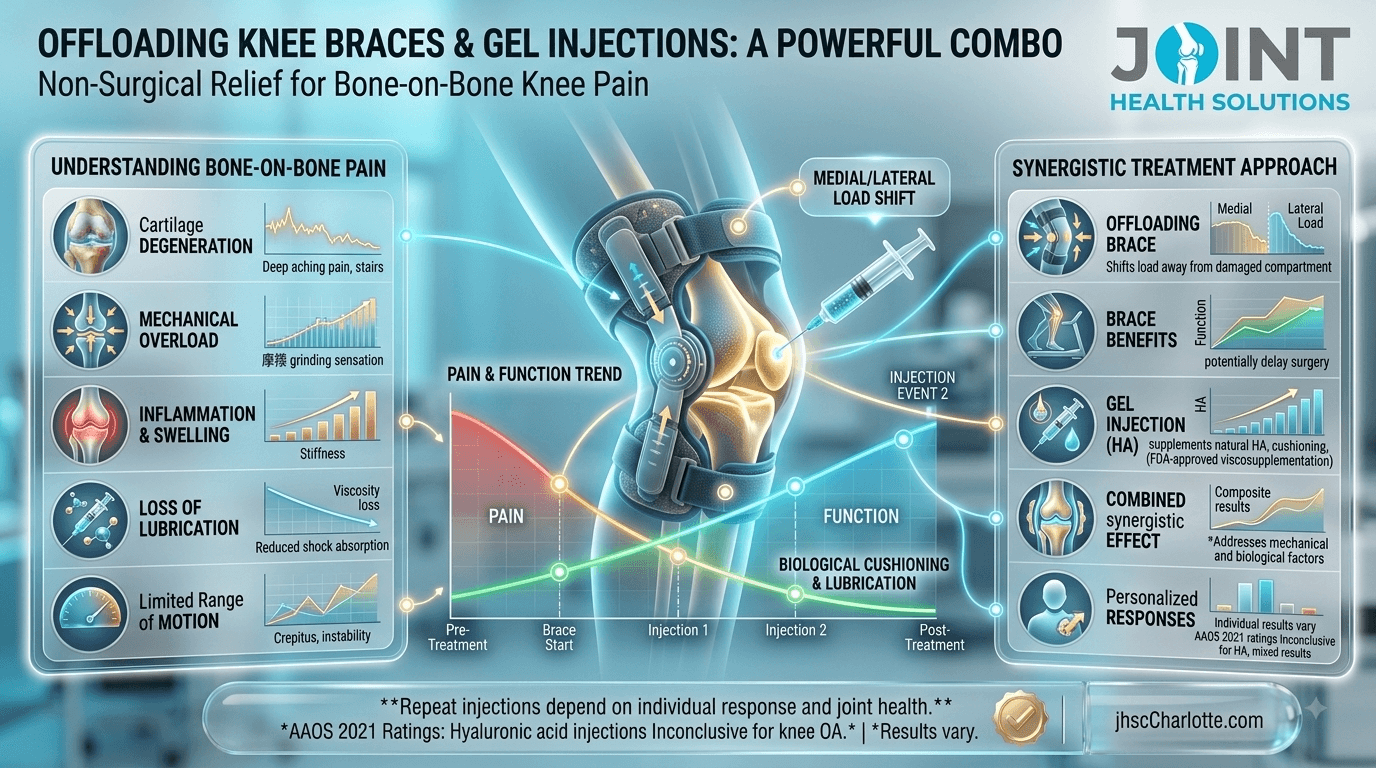
Understanding Bone-on-Bone Knee Pain
Knee osteoarthritis (OA) is the most common form of arthritis, affecting millions of adults. It occurs when the protective cartilage that cushions the ends of your bones gradually wears away. In advanced stages, the cartilage can become so thin that the bones literally rub against each other—hence the term “bone-on-bone.” This friction can cause pain, swelling, stiffness, and a reduced range of motion. The knee may feel unstable, and you might hear or feel a grating sensation called crepitus.
The progression of OA is influenced by multiple factors, including age, genetics, previous injuries, excess weight, and repetitive stress on the joint. While cartilage does have some ability to repair itself, it is limited because cartilage lacks a direct blood supply. Over time, the wear and tear can outpace the body’s natural repair processes, leading to the breakdown we see in advanced OA.
It is important to understand that bone-on-bone does not mean you are automatically destined for surgery. Many people live with advanced OA for years using conservative management strategies. The goal of treatment is to reduce pain, improve function, and maintain quality of life. Non-surgical options include physical therapy, weight management, activity modification, pain medications, injections, and bracing. In this article, we focus on two specific tools: offloading knee braces and gel injections (viscosupplementation).
Before diving into how they work together, it helps to understand each one individually. This will give you a clearer picture of why combining them might be beneficial—and why it is not a one-size-fits-all solution.
How Offloading Knee Braces Work
An offloading knee brace, also known as an unloader brace, is a specialized device designed to shift the mechanical load away from the most damaged part of your knee. Unlike a simple sleeve or compression wrap, which provides warmth and proprioceptive feedback, an offloading brace uses a three-point pressure system to gently push the knee into a slightly corrected alignment. This reduces the stress on the worn-down cartilage and the exposed bone, which can translate into less pain during weight-bearing activities like walking, climbing stairs, or standing for long periods.
There are two main types of offloading braces: one for medial compartment OA (the inner side of the knee) and one for lateral compartment OA (the outer side). At Joint Health Solutions, braces are custom-fitted in-office by our own team to ensure the brace applies the right amount of force without causing discomfort or skin irritation — there’s no need to be referred elsewhere for fitting.
How effective are they? The evidence is encouraging but not definitive. Some studies have shown that offloading braces can reduce pain and improve function in people with unicompartmental knee OA. However, results vary widely from person to person. Some people find significant relief, while others may not tolerate the brace due to bulkiness or skin issues. It is also worth noting that braces do not change the underlying disease process—they simply help manage the symptoms.
When used as part of a comprehensive plan, an offloading brace can be a valuable tool. It may allow you to stay active, which is important for maintaining muscle strength and joint health. It may also help you get more benefit from other treatments, such as physical therapy or injections, by reducing the mechanical stress on the joint.
What Are Gel Injections?
Gel injections, also known as viscosupplementation or hyaluronic acid injections, are a type of treatment for knee osteoarthritis. Hyaluronic acid (HA) is a natural substance found in joint fluid and cartilage. It acts as a lubricant and shock absorber, helping the joint move smoothly. In an osteoarthritic knee, the concentration and molecular weight of HA in the joint fluid are reduced, which may contribute to pain and stiffness.
The idea behind gel injections is to supplement this natural HA, restoring some of the viscous, elastic properties of the joint fluid. A course of treatment typically involves one to three injections, given over several weeks. The effects are not immediate; it may take a few weeks to notice improvement, and the relief can last for several months, though this varies widely.
It is important to note the regulatory and evidence landscape. Hyaluronic acid injections are FDA-approved for the knee. However, the American Academy of Orthopaedic Surgeons (AAOS) 2021 Clinical Practice Guideline rates HA injections as “Inconclusive” for knee OA—meaning the evidence is insufficient to recommend for or against their use. This does not mean they are ineffective; rather, the research is mixed, and individual responses vary. Some patients report significant pain relief, while others see little benefit. The decision to try gel injections should be based on a thorough discussion with your healthcare provider about your specific situation.
For more detailed information about how hyaluronic acid gel injections work and what to expect, you can read our blog post on hyaluronic acid gel injections.
Can You Use a Knee Brace and Gel Injections Together?
Yes, you can use an offloading knee brace and gel injections together. In fact, many specialists believe that combining mechanical support with a biological or chemical intervention may offer a synergistic benefit. The brace addresses the biomechanical overload—the excessive force on the damaged cartilage—while the gel improves the quality of the joint fluid, potentially reducing friction and providing a cushioning effect.
Think of it this way: if your knee is a door hinge that is worn out, a brace is like a hand that steadies the door, preventing it from wobbling. The gel is like a lubricant that helps the hinge move more smoothly. Together, they may allow the hinge to function better and last longer, even if the underlying wear remains.
There is no strong evidence that using them together is harmful, and some patients report that the combination provides better relief than either treatment alone. However, it is essential to approach this combination with realistic expectations. The brace does not cure OA, and the gel does not regenerate cartilage. They are tools to manage symptoms and improve function.
Your healthcare provider can help you determine if this combination is appropriate for you. They will consider factors such as the location and severity of your OA, your activity level, your overall health, and your personal preferences. They may also recommend other treatments, such as physical therapy or weight loss, to maximize your results.
Potential Benefits of Combining Both Treatments
When used together, offloading braces and gel injections may offer several potential benefits:
- Improved pain relief: The brace reduces mechanical stress, while the gel may improve joint lubrication. Together, they may address two different sources of pain—mechanical and inflammatory.
- Enhanced function: By reducing pain, the combination may allow you to walk farther, climb stairs with less difficulty, and participate in activities you enjoy.
- Potential to delay surgery: Some patients may be able to postpone knee replacement surgery by using conservative measures like these. However, this is not guaranteed, and the decision to delay surgery should be made with your surgeon.
- Non-surgical approach: Both treatments are minimally invasive and do not require hospitalization or lengthy recovery times.
- Complementary mechanisms: The brace works from the outside, the gel from the inside. This dual approach may be more effective than either alone for some people.
To illustrate how these options compare, consider the following table:
| Treatment | How It Works | Limitations | Risks |
|---|---|---|---|
| Offloading knee brace | Redistributes load away from the damaged compartment | Bulkiness, skin irritation, variable tolerance | Skin breakdown, discomfort, no disease modification |
| Gel injections (HA) | Adds viscosity and elasticity to joint fluid | Inconclusive evidence, effects vary, may take weeks to work | Injection site pain, swelling, rare infection |
| Combination | Addresses both mechanical and biological factors | Requires commitment to both treatments | Same as each individual treatment |
It is important to note that not every patient will experience these benefits. The response to both the brace and the gel is highly individual. Some people may find the brace uncomfortable, and some may not respond to the injections. A thorough evaluation by a qualified provider is essential to determine if this combination is likely to help you.
What to Expect During Treatment
If you and your provider decide to pursue a combined approach, here is what you can generally expect:
- Initial evaluation: Your provider will review your medical history, perform a physical exam, and may order imaging such as X-rays or an MRI to assess the severity and location of your OA.
- Brace fitting: If an offloading brace is recommended, our in-office team will measure your leg and fit the brace to provide the right amount of offloading. You will be instructed on how to wear it and how to gradually increase wear time.
- Gel injection series: Your provider will schedule your gel injections, typically one to three sessions spaced a week or two apart. The injection is performed in the office, often with ultrasound guidance to ensure accurate placement. You may feel a brief sting, but the procedure is usually well-tolerated.
- Follow-up: After completing the injections, you will have a follow-up visit to assess your response. Your provider may recommend additional treatments, such as physical therapy, to complement the effects.
Recovery and response times vary. Some patients notice improvement within a few weeks, while others may take longer. It is important to follow your provider’s instructions regarding activity levels and brace wear. You may need to adjust your daily activities to avoid overloading the knee, especially in the early stages.
Are There Any Risks or Side Effects?
Both offloading braces and gel injections are generally considered safe when used appropriately, but they are not without potential side effects.
Offloading braces: The most common issues are skin irritation, redness, or pressure sores from the brace. Some people find the brace bulky or uncomfortable, and it may take time to get used to. In rare cases, the brace may cause nerve compression or circulatory problems, especially if it is too tight.
Gel injections: Common side effects include temporary pain, swelling, or stiffness at the injection site. These usually resolve within a few days. More serious complications, such as infection or allergic reaction, are rare but possible. It is important to inform your provider if you have any allergies or are taking blood thinners.
When combining both treatments, the risks are essentially the same as for each individual treatment. There is no known interaction that makes the combination riskier. However, it is crucial to have a thorough discussion with your provider about your medical history and any concerns you may have.
Who Is a Good Candidate for This Combination?
Not everyone with knee OA is a good candidate for this combined approach. Generally, you might be considered if you have:
- Moderate to severe OA that is primarily in one compartment (medial or lateral).
- Pain that limits daily activities despite conservative measures like physical therapy and over-the-counter pain relievers.
- A desire to avoid or delay surgery and are willing to commit to a non-surgical treatment plan.
- Good skin integrity on the leg, so the brace can be worn without causing breakdown.
- No significant joint deformity that would make bracing ineffective.
On the other hand, you may not be a candidate if you have severe malalignment, advanced OA in multiple compartments, significant joint instability, or if you are not able to tolerate the brace. Additionally, if you have an active infection or certain medical conditions, gel injections may not be recommended.
The best way to determine if this combination is right for you is to schedule a consultation with a specialist who can evaluate your specific situation.
How to Get Started with Offloading Braces and Gel Injections in Charlotte
If you are in the Charlotte, North Carolina area and are interested in exploring non-surgical options for your knee pain, Joint Health Solutions may be able to help. Our team, including Dr. Jeffrey Galvin — Board-certified physician in Emergency Medicine and Obesity Medicine, and Ariel Curtis, FNP-C — Board-certified Family Nurse Practitioner, specializes in non-surgical orthopedic care. We offer a range of services, including joint injections, physical therapy, and offloading knee braces fitted right in our office.
During your consultation, we will review your medical history, perform a physical exam, and discuss your goals. We will determine if combining an offloading knee brace with gel injections is appropriate for you, or if another treatment plan may be more beneficial. We will also explain the evidence, including the limitations, so you can make an informed decision.
To learn more about gel injections for knee pain, you can read our blog post on gel injections for knee pain.
Our goal is to help you find relief and improve your quality of life without surgery whenever possible. We understand that knee pain can be frustrating, and we are here to support you every step of the way.
Your Next Step Toward Knee Pain Relief
Living with bone-on-bone knee pain can be challenging, but you do not have to face it alone. Combining an offloading knee brace with gel injections may offer a non-surgical path to better function and comfort. The key is to work with a knowledgeable team that can tailor a treatment plan to your unique needs.
At Joint Health Solutions in Charlotte, North Carolina, we are committed to helping you explore all your options. Whether you are considering offloading knee braces and gel injections, or simply want to learn more about non-surgical knee care, we are here to help. Explore our full treatments and services, or call us today at 704-833-3566 to schedule a consultation and take the first step toward a more active, comfortable life.
Institutional Sources
- AAOS: Treatment of Osteoarthritis of the Knee (Clinical Practice Guideline)
- AAOS: Osteoarthritis of the Knee
- NIAMS: Osteoarthritis
- Mayo Clinic: Knee Brace and Osteoarthritis
- Arthritis Foundation: Knee Braces for Osteoarthritis
Frequently Asked Questions
How long does a gel injection last?
The duration of relief from gel injections varies widely. Some patients experience relief for several months, while others may get a year or more. However, the effects are not permanent, and repeat injections may be needed. The evidence is mixed, so individual results can vary.
Can I wear a knee brace immediately after gel injections?
In most cases, yes. You can typically wear your offloading knee brace after gel injections, but you should follow your provider’s specific instructions. Some providers may recommend waiting a day or two to allow the injection site to settle. Always check with your provider before resuming brace wear.
What does an offloading knee brace cost?
Joint Health Solutions operates on a self-pay basis with transparent, upfront pricing. Braces are custom-fitted in-office, and cost depends on the type of brace recommended for your condition. Our team can provide a quote during your consultation.
How many gel injections will I need?
The number of gel injections typically ranges from one to three, depending on the specific product used and your provider’s recommendation. A common regimen is three weekly injections, but some newer formulations require only a single injection. Your provider will discuss the options with you.
Is the combination of a brace and gel injections painful?
The gel injection procedure itself may cause a brief sting, but it is generally well-tolerated. Wearing the brace may initially feel uncomfortable, but most people adjust over time. Any discomfort from the injection usually resolves within a few days.
How soon can I expect results from the combination?
Results vary. Some patients notice improvement within a few weeks, while others may take longer. The brace can provide immediate mechanical support, but the gel may take a few weeks to reach its full effect. It is important to be patient and follow your treatment plan.
Are there any activities I should avoid while wearing the brace?
Your provider will give you specific guidance. In general, you should avoid high-impact activities that put excessive stress on the knee, such as running or jumping. Low-impact activities like walking, swimming, or cycling are usually encouraged. Always listen to your body and avoid activities that cause sharp pain.
Can I get gel injections if I have had them before?
Yes, you can repeat gel injections if they were helpful in the past. However, your provider will assess whether it is appropriate to repeat the treatment based on your current condition and response. There is no strict limit, but repeated use should be discussed with your doctor.
Will the brace damage my knee further?
No, an offloading brace is designed to reduce stress on the damaged part of the knee, not to harm it. When used correctly, it may help protect the joint. However, if the brace is ill-fitting or worn incorrectly, it could cause skin issues or discomfort. Proper fitting and usage are essential.
Do I need a referral to get an offloading knee brace?
No. Joint Health Solutions fits and provides offloading knee braces in-office — you don’t need to be referred elsewhere. A consultation with our team is all that’s needed to determine if a brace is appropriate for you.
hello ?
world




 English
  Spanish