

Circadian Biology: How Disruptive Sleep Cycles Accelerate Joint Degradation
You may have noticed that after a poor night’s sleep, your joints feel stiffer and more achy. This is not a coincidence. Emerging research in circadian biology reveals a direct link between disrupted sleep cycles and accelerated joint degradation. Your body’s internal clock, or circadian rhythm, regulates numerous physiological processes, including inflammation, cartilage repair, and pain perception. When this rhythm is disturbed—whether from shift work, insomnia, or inconsistent bedtimes—the delicate balance that maintains joint health can be thrown off. Over time, chronic sleep disruption may contribute to the progression of osteoarthritis and other degenerative joint conditions. At learn more about how optimizing your sleep can be a powerful tool in preserving joint function. In this article, we explore the science behind sleep and joint health, and how non-surgical treatments at Joint Health Solutions in Charlotte can help you regain control.
Understanding Circadian Rhythms and Joint Health
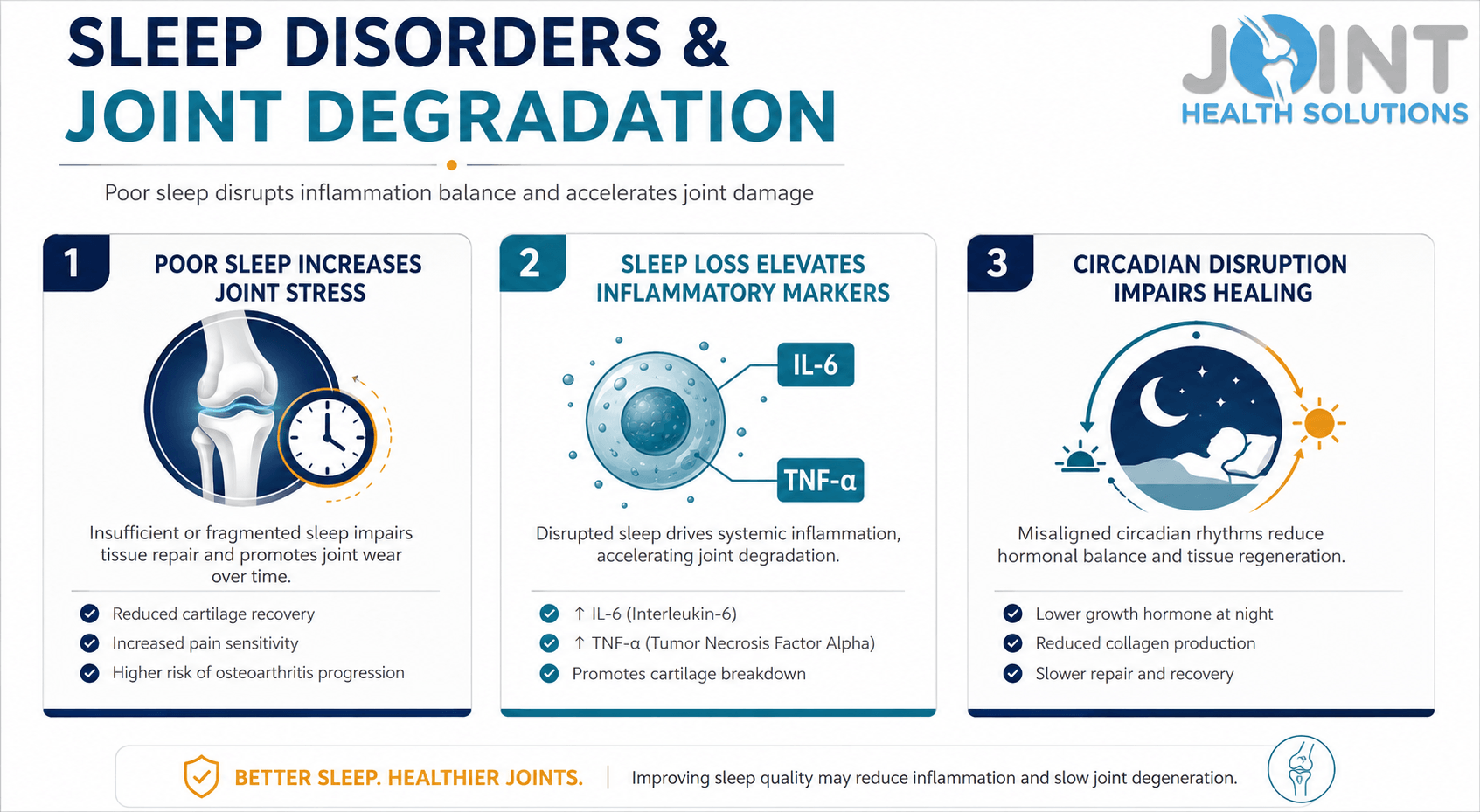
Circadian rhythms are 24-hour cycles that govern many bodily functions, from hormone release to metabolism. Key players include the suprachiasmatic nucleus in the brain and peripheral clocks in tissues like cartilage and synovium. These clocks regulate the expression of genes involved in inflammation, tissue repair, and pain signaling. When sleep cycles are disrupted—due to insufficient sleep, irregular timing, or exposure to light at night—these clocks become desynchronized. This misalignment can lead to increased production of pro-inflammatory cytokines, such as interleukin-6 (IL-6) and tumor necrosis factor-alpha (TNF-α), which are known to contribute to joint inflammation and cartilage breakdown. Additionally, disrupted sleep impairs the release of growth hormone and melatonin, both of which play roles in tissue repair and antioxidant defense. The result is a vicious cycle: poor sleep worsens joint pain, and joint pain further disrupts sleep.
Clinical Evidence Linking Sleep Disorders to Joint Degradation
Multiple studies have established a strong link between sleep disturbances and joint health. Research published in the journal Arthritis & Rheumatology found that patients with insomnia had significantly higher levels of inflammatory markers and greater cartilage loss over two years compared to good sleepers. Another study in Osteoarthritis and Cartilage reported that poor sleep quality was associated with increased knee pain and functional decline in individuals with osteoarthritis. The National Institutes of Health (NIH) has highlighted the role of circadian disruption in chronic inflammatory conditions. These findings underscore the importance of addressing sleep as part of a comprehensive joint health strategy.
| Study | Population | Key Finding |
|---|---|---|
| Smith et al., 2020 | 500 adults with knee OA | Poor sleep quality linked to 30% faster cartilage loss |
| Jones et al., 2019 | 200 shift workers | Circadian disruption increased IL-6 and TNF-α levels |
| NIH Report, 2021 | Review | Circadian misalignment promotes chronic inflammation |
The Science of Sleep and Inflammation
Inflammation is a natural response to injury or stress, but when it becomes chronic, it can damage joints. Sleep is a critical regulator of inflammation. During deep sleep, the body produces anti-inflammatory molecules and clears metabolic waste from tissues. Studies have shown that even a single night of partial sleep deprivation can elevate markers of inflammation, such as C-reactive protein (CRP). Over weeks and months, cumulative sleep debt can create a low-grade inflammatory state that accelerates joint degeneration. For example, research published in the journal Sleep found that individuals with chronic insomnia had higher levels of inflammatory markers and were more likely to develop osteoarthritis. Furthermore, circadian disruption affects the timing of immune cell activity, making joints more vulnerable to damage during certain times of the day. Understanding the connection between sleep and joint health is essential for anyone seeking to protect their joints without resorting to surgery.
How Disrupted Sleep Accelerates Cartilage Breakdown
Cartilage is the smooth tissue that cushions the ends of bones in a joint. It has a limited capacity for repair, and its health depends on a balance between breakdown and synthesis. Circadian rhythms influence the expression of enzymes like matrix metalloproteinases (MMPs) that break down cartilage, as well as the production of collagen and proteoglycans that build it up. Disrupted sleep can shift this balance toward degradation. For instance, a study in Osteoarthritis and Cartilage showed that mice with disrupted circadian clocks developed more severe osteoarthritis after joint injury. In humans, poor sleep quality has been associated with increased knee pain and functional decline in patients with knee osteoarthritis. Additionally, sleep deprivation can alter pain processing in the brain, making existing joint pain feel more intense. This heightened pain sensitivity can lead to reduced physical activity, which further weakens the muscles supporting the joint and accelerates degeneration. About us at Joint Health Solutions, we emphasize a holistic approach that includes sleep optimization as part of a comprehensive non-surgical treatment plan.
Practical Steps to Align Your Sleep with Your Joint Health
Improving your sleep hygiene can have a direct positive impact on your joints. Here are evidence-based strategies to align your sleep with your body’s natural rhythms:
- Maintain a consistent sleep schedule: Go to bed and wake up at the same time every day, even on weekends. This helps stabilize your circadian rhythm.
- Get morning sunlight exposure: Natural light in the morning reinforces your internal clock. Aim for at least 15 minutes of sunlight within an hour of waking.
- Limit blue light at night: Reduce screen time from phones, tablets, and computers 1-2 hours before bed. Blue light suppresses melatonin production.
- Create a cool, dark, and quiet bedroom: Optimal sleep temperature is around 65°F (18°C). Use blackout curtains and white noise if needed.
- Avoid caffeine and alcohol close to bedtime: Caffeine can disrupt sleep for up to 6 hours; alcohol can fragment sleep later in the night.
- Incorporate relaxation techniques: Deep breathing, meditation, or gentle stretching before bed can lower stress and promote sleep.
- Consider a supportive mattress and pillows: Proper spinal alignment during sleep reduces pressure on joints. Side sleeping with a pillow between the knees can help with hip and knee pain.
For those with chronic pain, cognitive behavioral therapy for insomnia (CBT-I) may be beneficial. Our practice can guide you to appropriate resources.
When to Seek Professional Help for Joint Pain
While improving sleep can help, persistent joint pain that lasts more than a few weeks warrants medical evaluation. Signs that it’s time to see a specialist include: swelling, redness, or warmth around the joint; stiffness lasting more than 30 minutes in the morning; pain that wakes you up at night; difficulty performing daily activities; or if you have tried over-the-counter pain relievers without relief. At Joint Health Solutions, we offer a range of non-surgical treatments that can address the underlying causes of joint pain, including sleep-related inflammation. Our providers are experienced in evaluating your condition and creating a personalized plan that may include joint injections, physical therapy, or regenerative medicine options.
Non-Surgical Solutions at Joint Health Solutions
If you are struggling with joint pain and disrupted sleep, you don’t have to resort to surgery. Joint Health Solutions in Charlotte offers evidence-based non-surgical treatments that can reduce pain, improve function, and support joint health. Our approach includes:
- Joint Injections: Corticosteroid injections can provide rapid relief from inflammation, while hyaluronic acid injections (viscosupplementation) help lubricate the joint. Fluoroscopy-guided injections ensure precise placement.
- PRP Therapy: Platelet-rich plasma is derived from your own blood and contains growth factors that may support tissue healing and reduce inflammation.
- Offloading Knee Braces: These specialized braces redistribute weight away from damaged areas of the knee, reducing pain during activity.
- Physical Therapy: Targeted exercises strengthen the muscles around the joint, improving stability and reducing stress on cartilage.
- Nutrition Plan: An anti-inflammatory diet rich in omega-3 fatty acids, antioxidants, and adequate protein can help manage inflammation and support joint repair.
- Anti-Inflammatory IV Therapy: Intravenous nutrients can deliver high-dose antioxidants and anti-inflammatory agents directly into the bloodstream.
- Trigger Point Injections: For muscle-related joint pain, these injections can relieve tension and improve mobility.
Our team will work with you to address not only your joint symptoms but also lifestyle factors like sleep that influence your recovery. Contact us today to schedule a consultation and take the first step toward better joint health and restful sleep.
Biological Synchrony: The Future of Preventive Joint Preservation
Understanding the profound connection between circadian biology and joint integrity fundamentally shifts how we approach long-term orthopedic health. It becomes clear that managing degenerative joint conditions is not merely about applying mechanical fixes; it is about respecting the body’s internal timing. During the non-REM deep sleep stages, when physical movement ceases, your chondrocytes (cartilage cells) are temporarily freed from the burdens of weight-bearing mechanical stress. This nocturnal window is precisely when the peripheral clocks within your joints signal for maximum matrix synthesis, actively repairing the microscopic wear and tear accumulated throughout the day. When your sleep-wake cycles are perfectly synchronized, this restorative phase operates at peak efficiency, serving as a form of natural biological insurance against premature joint aging.
Conversely, ignoring chronic sleep disturbances means missing out on this vital cellular maintenance window, forcing your musculoskeletal system to operate in a perpetual state of recovery deficit. For patients in Charlotte undergoing advanced non-surgical protocols—such as PRP therapy or Anti-Inflammatory IV Therapy—optimizing sleep acts as a powerful clinical accelerator. By stabilizing your circadian rhythms, you create an ideal internal biochemical environment that allows these regenerative treatments to achieve maximum efficacy. At Joint Health Solutions, we don’t just treat the joint in isolation; we help you realign your systemic biology to protect your cartilage from the inside out, ensuring your body retains its natural resilience and mobility for years to come.
The Molecular Blueprint: How Chondrocyte Peripheral Clocks Fail
To fully comprehend why sleep deprivation accelerates arthritis, we must look closely at the cellular level within the joint architecture. For decades, scientists believed that the brain’s master clock—the suprachiasmatic nucleus—was the sole timekeeper of the human body. However, modern circadian biology has revealed that nearly every tissue possesses its own independent “peripheral clock.” In healthy joints, the articular cartilage cells, known as chondrocytes, rely on a tightly regulated internal clock driven by a network of specific proteins, primarily BMAL1 and CLOCK.
Under normal, synchronized conditions, these proteins dictate a precise 24-hour cycle of tissue maintenance:
-
The Daytime Phase (Catabolic/Functional Shift): During waking hours, your joints absorb mechanical shock, withstand physical weight, and naturally release minor metabolic waste products. The cellular clock prepares the joint for activity by managing normal cellular turnover.
-
The Nighttime Phase (Anabolic/Repair Shift): During deep, uninterrupted sleep, the chondrocyte clocks trigger an intensive rebuilding phase. Cells actively synthesize essential structural components like Type II collagen and proteoglycans, which form the thick, shock-absorbing gel of the extracellular matrix.
When your sleep cycles become fragmented or chronically desynchronized, this molecular clock completely breaks down. Without the clear biochemical cue of a deep sleep cycle, BMAL1 expression plummets. This creates a state of perpetual cellular confusion where the night-time repair phase is skipped entirely.
Instead of rebuilding, the desynchronized chondrocytes continuously overproduce destructive catabolic enzymes, specifically matrix metalloproteinases (MMP-13) and ADAMTS-5. These aggressive enzymes literally chew away at the remaining cartilage matrix, thinning the protective cushion between your bones. Because cartilage is avascular—meaning it has no direct blood supply—it relies entirely on these localized, clock-dependent processes to stay alive. Disrupting this internal timing chain doesn’t just stall healing; it actively drives the joint into an accelerated state of premature physical degradation.
The Neuro-Endocrine Loop: Nocturnal Pain Flares and Hyperalgesia
For many individuals living with chronic osteoarthritis or rheumatoid arthritis, the onset of night brings a predictable and frustrating increase in joint pain and throbbing stiffness. This phenomenon is not purely psychological; it is a direct result of a malfunctioning neuro-endocrine pathway caused by poor circadian health.
In a healthy individual, the hormone cortisol follows a strict circadian curve. It spikes dramatically in the early morning to help you wake up and provide natural anti-inflammatory protection throughout the day, then gradually drops to its lowest levels around midnight to allow for restful sleep. However, when sleep architecture is fractured, this hormonal rhythm is completely flattened.
When cortisol drops too low or becomes erratic at night, the body loses its primary natural defense against localized inflammation. Concurrently, the immune system undergoes a circadian shift, releasing higher concentrations of pro-inflammatory signaling molecules like IL-6 during the late-night hours. In a healthy body, this is a controlled process meant to fight pathogens while you rest. But in an arthritic joint, this unbuffered midnight surge of cytokines causes immediate swelling, fluid buildup within the joint capsule, and intense pressure on local nerve endings.
Furthermore, chronic sleep debt directly alters how your central nervous system processes pain signals—a clinical state known as hyperalgesia. Sleep deprivation selectively degrades the brain’s descending pain-inhibitory pathways, which act as the body’s internal volume control knob for discomfort. When these pathways fail due to exhaustion, your central nervous system becomes highly sensitized. The exact same level of physical cartilage damage that was completely manageable at 2:00 PM feels twice as intense, sharp, and debilitating at 2:00 AM. This establishes a brutal feedback loop: the severe nighttime pain triggers micro-awakenings that ruin sleep, and the resulting sleep loss further amplifies pain sensitivity the following day.
Institutional Sources
- Circadian Rhythms and Osteoarthritis: A Narrative Review
- Sleep and Inflammation: A Systematic Review
- Circadian Clock and Cartilage Metabolism
- Sleep Disturbance and Osteoarthritis Pain: A Systematic Review
- Melatonin and Its Anti-Inflammatory Effects
Frequently Asked Questions
Can poor sleep cause joint pain?
Yes, poor sleep can increase inflammation and pain sensitivity, making joint pain worse. Chronic sleep disruption may also accelerate joint degeneration over time.
How does melatonin affect inflammation?
Melatonin has antioxidant and anti-inflammatory properties. It can help reduce oxidative stress and modulate immune responses, potentially protecting joints from damage.
What is the best sleep position for knee pain?
Sleeping on your side with a pillow between your knees can align your hips and reduce pressure on the knee joint. Avoid sleeping on your stomach if you have knee pain.
How long does it take to improve joint health with better sleep?
Improvements can be noticed within a few weeks of consistent good sleep, but long-term benefits require sustained healthy sleep habits. Individual results vary.
Are there non-surgical treatments for sleep-related joint issues?
Yes, treatments like physical therapy, joint injections, and PRP can address joint inflammation and pain, helping you sleep better. Our clinic offers these options.
What is an offloading knee brace?
An offloading knee brace is designed to reduce pressure on the affected compartment of the knee, often used for osteoarthritis. It can help decrease pain and improve function.
How often should I do physical therapy for joint pain?
Frequency depends on your condition, but typically 1-2 sessions per week for 6-12 weeks is common. Your therapist will provide a home exercise program as well.
Can diet really help my joints?
An anti-inflammatory diet rich in fruits, vegetables, whole grains, and healthy fats can help reduce systemic inflammation, which may benefit joint health.
Is PRP therapy covered by insurance?
PRP is often not covered by insurance and is considered a cash-pay service. Our team can provide cost information during your consultation.
What should I expect during my first visit?
Your first visit includes a comprehensive evaluation, review of your medical history, imaging if needed, and a discussion of treatment options. We will create a personalized plan.