
Hyaluronic Acid Injection Recovery: Post-Care and What to Expect
If you’re considering viscosupplementation for knee osteoarthritis, you likely have questions about what happens after the injection. The procedure itself takes only minutes, but your post-injection experience plays a crucial role in how well the treatment works. Understanding the typical recovery trajectory helps you plan your schedule, manage expectations, and recognize when something warrants medical attention.
This guide walks through the hours, days, and weeks following a hyaluronic acid injection, offering practical post-care advice and evidence-based context. Whether you’re preparing for your first injection or supporting a loved one through the process, knowing what to expect reduces anxiety and supports a smoother recovery. While every patient’s experience differs, the information below reflects common patterns observed in clinical practice and supported by research.
Before diving into the timeline, it’s important to understand what hyaluronic acid injections do. Hyaluronic acid is a naturally occurring substance in joint fluid that provides lubrication and shock absorption. In osteoarthritis, the concentration and molecular weight of hyaluronic acid in the joint decrease, contributing to pain and stiffness. Injecting supplemental hyaluronic acid aims to restore some of these properties, though the evidence for its effectiveness is mixed, as discussed later.
Your hyaluronic acid injections may be part of a broader treatment plan that includes physical therapy, activity modification, or other interventions. The recovery process should be viewed within this larger context, as outcomes depend on multiple factors.
Immediately After the Injection: First 24 Hours
The moments right after your injection set the stage for your recovery. Here’s what typically happens and what you should do in the first day.
Immediate Post-Injection Protocol
After the injection, your clinician will likely ask you to remain seated for a few minutes to ensure you don’t feel dizzy or lightheaded. The injection site is usually cleaned and a small bandage applied. You may be given ice packs to reduce initial swelling.
You’ll receive specific instructions tailored to your situation, but general guidelines include:
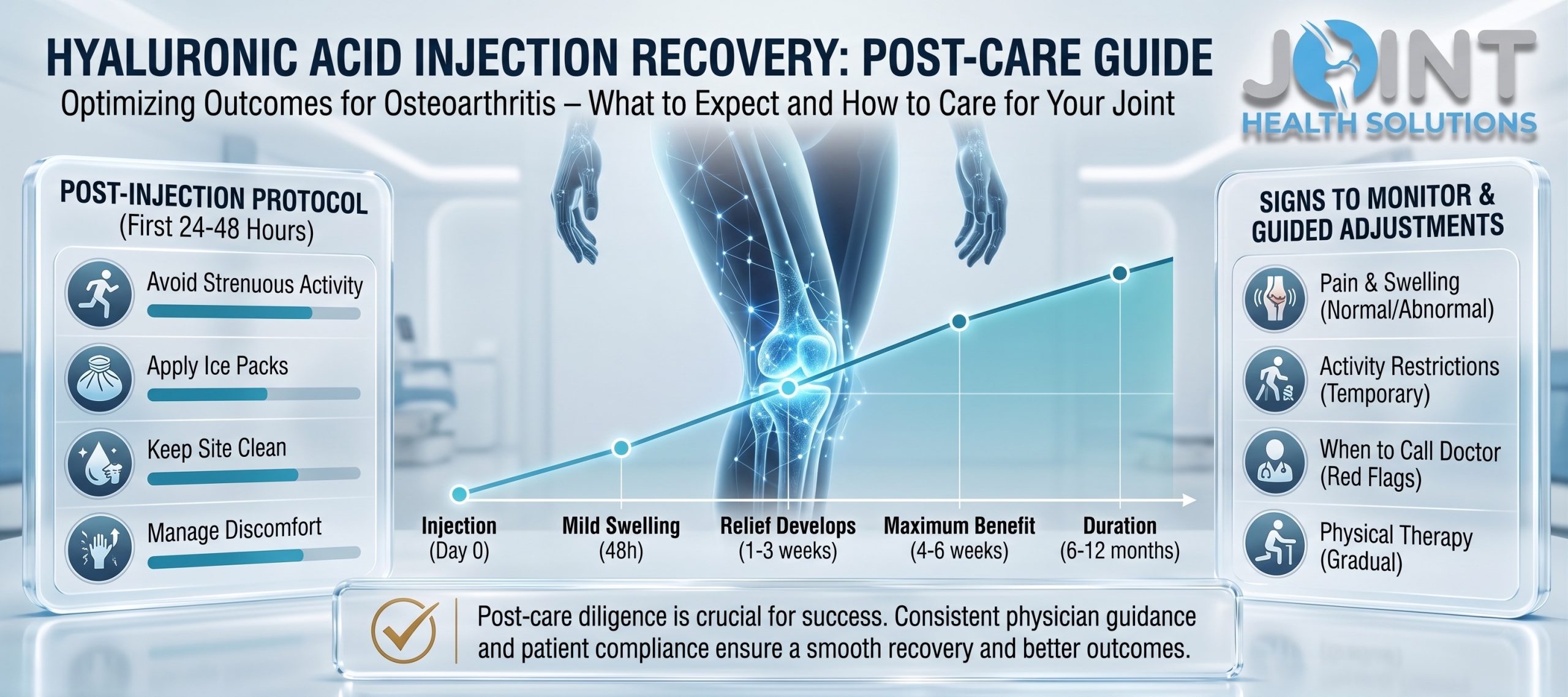
- Avoid strenuous activity for the first 24 hours
- Apply ice to the injection site for 15–20 minutes every 2–3 hours to reduce swelling
- Keep the injection site clean and dry; avoid submerging in water (baths, pools, hot tubs) for 24 hours
- Take over-the-counter pain relievers only if recommended by your doctor
- Monitor for any unusual redness, warmth, or drainage
Managing Discomfort
Mild discomfort at the injection site is common. You might feel a temporary increase in pain or swelling as the joint adjusts to the added fluid. This is typically mild and resolves within a day or two. If you experience severe pain, significant swelling, or fever, contact your healthcare provider immediately.
Some patients report a sensation of fullness or pressure in the joint, which is normal as the volume of fluid increases. This usually subsides within 24–48 hours.
Rest and Activity
While you don’t need to be bedridden, it’s wise to take it easy for the rest of the day. Avoid long periods of standing, heavy lifting, or high-impact activities like running or jumping. Gentle movement, such as walking around the house, is fine and may actually help distribute the injected fluid within the joint.
Listen to your body—if an activity causes pain, stop and rest. The goal is to allow the injection site to settle without undue stress.
Managing Pain and Swelling at the Injection Site
Pain and swelling are the most common side effects after hyaluronic acid injections. Knowing how to manage them can make your recovery more comfortable.
Why Swelling Occurs
The injection introduces additional fluid into the joint space, which can temporarily increase pressure. Additionally, the needle itself causes minor tissue trauma. Your body’s inflammatory response to this trauma is normal and typically short-lived.
Effective Home Remedies
- Ice therapy: Apply ice packs wrapped in a cloth to the injection site for 15–20 minutes at a time, several times a day. This constricts blood vessels and reduces swelling.
- Elevation: When resting, elevate the injected leg to help fluid drain away from the joint.
- Over-the-counter pain relievers: Acetaminophen or NSAIDs like ibuprofen may be used if your doctor approves. However, some evidence suggests that NSAIDs might interfere with the inflammatory response that is part of healing, so always ask your provider first.
- Gentle movement: After the first 24 hours, gentle range-of-motion exercises may help reduce stiffness and promote circulation.
When Swelling Is More Than Normal
While some swelling is expected, excessive swelling that doesn’t improve with ice and elevation, or is accompanied by severe pain, warmth, or redness, could indicate an infection or an inflammatory reaction. Contact your doctor if you notice any of these signs.
In rare cases, patients experience a condition called pseudogout or an acute inflammatory flare, which presents with sudden, severe pain and swelling. This typically occurs within 24–72 hours after injection and requires medical evaluation.
Activity Restrictions: What to Avoid and for How Long
Understanding which activities to avoid and for how long helps prevent complications and ensures the injected material remains in the joint.
Activities to Avoid in the First 48 Hours
- High-impact exercises (running, jumping, contact sports)
- Heavy lifting (over 10 pounds)
- Prolonged standing or walking on uneven surfaces
- Strenuous bending or squatting
- Submerging the injection site in water (baths, pools, hot tubs)
Activities Generally Allowed
Light walking, gentle stretching, and normal household activities are usually fine. Many patients return to desk work the next day. If your job involves physical labor, you may need to take a day or two off, depending on your doctor’s advice.
Duration of Restrictions
Most activity restrictions apply for 24–48 hours. After that, you can gradually resume your normal routine. However, you should avoid high-impact activities for at least a week to allow the joint to adapt to the increased fluid volume. Your doctor may provide specific guidance based on your condition and the injection technique used.
It’s also important to avoid anti-inflammatory medications (like ibuprofen or naproxen) for a few days after the injection unless prescribed, as they may reduce the intended inflammatory response that helps the hyaluronic acid integrate. Always ask your doctor.
When Can You Return to Normal Activities?
Returning to your regular routine is a gradual process. Here’s a general timeline, but individual recovery varies.
Day 1: Rest and light activity. You can walk short distances and perform basic self-care.
Day 2–3: Most patients feel well enough to return to work and light exercise like walking or swimming (if the injection site is not submerged). Avoid heavy lifting and high-impact workouts.
Week 1: You can typically resume moderate activities, including cycling, gentle strength training, and longer walks. Listen to your body—if you experience pain, back off.
Week 2–4: Full return to normal activities is usually possible, but high-impact sports should be introduced gradually. Some patients may benefit from physical therapy to strengthen the muscles around the joint.
Remember, the injection is not a quick fix. It takes time for the hyaluronic acid to integrate and for your symptoms to improve. Pushing too hard too soon can delay recovery or cause undue stress on the joint.
Expected Timeline for Symptom Relief
Knowing when to expect pain relief helps set realistic expectations.
Hyaluronic acid injections do not provide immediate relief. Instead, the effect builds over several weeks. Most patients notice some improvement within 1–3 weeks, with maximum benefit at 4–6 weeks. The duration of relief varies, typically lasting 6–12 months.
It’s important to note that not all patients respond to hyaluronic acid injections. The AAOS 2021 Clinical Practice Guideline rates the evidence as inconclusive for knee osteoarthritis, meaning current research does not clearly support or refute their use. Results vary widely among individuals.
Despite this, many patients do experience benefit. The decision to try hyaluronic acid injections should be made in consultation with your doctor, weighing potential benefits against the lack of robust evidence.
Comparison of Treatment Options for Knee OA
| Treatment | How It Works | Limitations | Risks |
|---|---|---|---|
| Hyaluronic Acid Injections | Adds lubricating fluid to the joint | Inconclusive evidence; results vary; not all patients respond | Injection site pain, swelling, rare infection |
| Corticosteroid Injections | Reduces inflammation quickly | Short-term relief (weeks to months); may accelerate cartilage loss with repeated use | Infection, nerve damage, cartilage damage |
| Physical Therapy | Strengthens muscles, improves range of motion | Requires commitment; may not be enough for severe OA | Minimal; soreness after sessions |
| NSAIDs (Oral) | Reduce inflammation and pain | Gastrointestinal, kidney, and cardiovascular risks with long-term use | Stomach ulcers, kidney damage, heart issues |
| Surgery (Knee Replacement) | Replaces damaged joint surfaces | Invasive, long recovery, potential complications | Blood clots, infection, implant failure |
Signs of Complications: When to Call Your Doctor
While complications are rare, it’s crucial to recognize warning signs.
Contact your healthcare provider immediately if you experience:
- Severe pain that worsens rather than improves
- Significant swelling that doesn’t reduce with ice and elevation
- Redness, warmth, or drainage at the injection site
- Fever (temperature above 100.4°F or 38°C)
- Numbness or weakness in the leg
- Difficulty bearing weight on the joint
These symptoms could indicate an infection, allergic reaction, or nerve injury. Prompt medical attention is essential.
Also, if you have any concerns during your recovery, don’t hesitate to call the clinic. It’s better to be safe and get professional advice.
Tips for a Smooth Recovery
Here are practical tips to enhance your recovery experience.
- Follow your doctor’s instructions: Adhere to the specific post-care guidelines provided.
- Stay hydrated: Proper hydration supports overall joint health.
- Eat a balanced diet: Anti-inflammatory foods may support recovery.
- Use cold therapy: Ice packs can reduce swelling and discomfort.
- Gradually resume activities: Don’t rush back to high-impact exercises.
- Consider physical therapy: Strengthening the muscles around the joint can improve outcomes.
- Keep a symptom diary: Track your pain levels and function to discuss with your doctor.
Remember, your recovery is as individual as you are. What works for one person may not work for another. Be patient and kind to your body.
Long-Term Care: Maintaining Joint Health After Treatment
Hyaluronic acid injections are not a cure for osteoarthritis. They may provide temporary relief, but long-term joint health requires ongoing management.
Weight Management
Excess weight increases stress on weight-bearing joints like the knees. Even modest weight loss can reduce pain and improve function.
Exercise
Low-impact activities such as swimming, cycling, and walking can strengthen muscles without stressing the joint. A physical therapist can design a program tailored to your needs.
Nutrition
A diet rich in fruits, vegetables, whole grains, and lean proteins may help reduce inflammation. Some studies suggest omega-3 fatty acids may be beneficial, but evidence is mixed.
Other Non-Surgical Options
If hyaluronic acid injections don’t provide adequate relief, other non-surgical treatments may be considered. Hyaluronic acid injections in Charlotte are just one option. Platelet-rich plasma (PRP) therapy is another injection-based treatment, though its evidence is also mixed. PRP is not FDA-approved as a drug; the device used to concentrate platelets is FDA-cleared, and studies show variable results for knee osteoarthritis.
Offloading knee braces can redistribute pressure away from the damaged part of the joint, potentially reducing pain. Physical therapy and activity modification remain foundational.
It’s essential to work with a healthcare team that can guide you through these options and help you make informed decisions.
Your Recovery Partner in Charlotte
Navigating your hyaluronic acid injection recovery doesn’t have to be done alone. At Joint Health Solutions in Charlotte, North Carolina, our team provides personalized guidance before, during, and after your injection. We understand that every patient’s joint condition is unique, and we tailor our recommendations to your specific needs.
If you’re considering hyaluronic acid injection as part of your osteoarthritis management, we invite you to schedule a consultation. Our non-surgical orthopedic care focuses on evidence-based treatments that may help reduce pain and improve function. Explore our full treatments and services, or call us at 704-833-3566 to discuss your options and develop a recovery plan that works for you.
Remember, the goal is not just to treat the injection site, but to support your overall joint health. With the right guidance, you can make informed decisions and take proactive steps toward better mobility and quality of life.
Institutional Sources
- AAOS Clinical Practice Guideline on Treatment of Osteoarthritis of the Knee
- Mayo Clinic – Hyaluronic Acid Injections
- Arthritis Foundation – Hyaluronic Acid Injections
- NIAMS – Osteoarthritis
Frequently Asked Questions
How long does it take for hyaluronic acid injections to work?
Most patients begin to notice improvement within 1–3 weeks, with maximum benefit at 4–6 weeks. However, response varies; some patients may not experience significant relief.
Can I walk after a hyaluronic acid injection?
Yes, you can walk immediately after the injection, but avoid strenuous walking or long distances for the first 24 hours. Light walking is encouraged to help distribute the fluid.
What are the common side effects of hyaluronic acid injections?
The most common side effects are temporary pain, swelling, and stiffness at the injection site. These typically resolve within a few days. Serious complications are rare.
How many hyaluronic acid injections will I need?
The number of injections depends on the product used and your doctor’s recommendation. Some products require a single injection, while others are given as a series of 3–5 injections at weekly intervals.
Can I take pain relievers after the injection?
You may take acetaminophen if needed, but avoid NSAIDs (ibuprofen, naproxen) for at least 48 hours unless your doctor advises otherwise, as they may interfere with the intended inflammatory response.
Is it normal to have increased pain after the injection?
Mild pain or a flare of symptoms within the first 24–48 hours can occur. This usually subsides. If pain is severe or persistent, contact your doctor.
Can I exercise after a hyaluronic acid injection?
Light exercise like walking is fine after 24 hours. Avoid high-impact activities for at least a week. Gradually resume your normal routine as tolerated.
How long does the effect of hyaluronic acid last?
The duration of relief varies, but many patients experience benefit for 6–12 months. Some may need repeat injections.
Are hyaluronic acid injections safe?
They are generally considered safe, with a low risk of serious complications. However, the AAOS rates the evidence as inconclusive for knee OA, so discuss risks and benefits with your doctor.
Can hyaluronic acid injections be used for other joints?
Hyaluronic acid injections are FDA-approved for the knee only. Use in other joints, such as the shoulder or hip, is off-label, and evidence is less robust.