
The Anatomy of an IV Treatment Tray: A Close-Up Look at Our Sterile Standards
Published July 7, 2026 | Last reviewed: July 14, 2026 | Category: Patient Resources | Location: Charlotte, NC
🕒 12 MIN READ
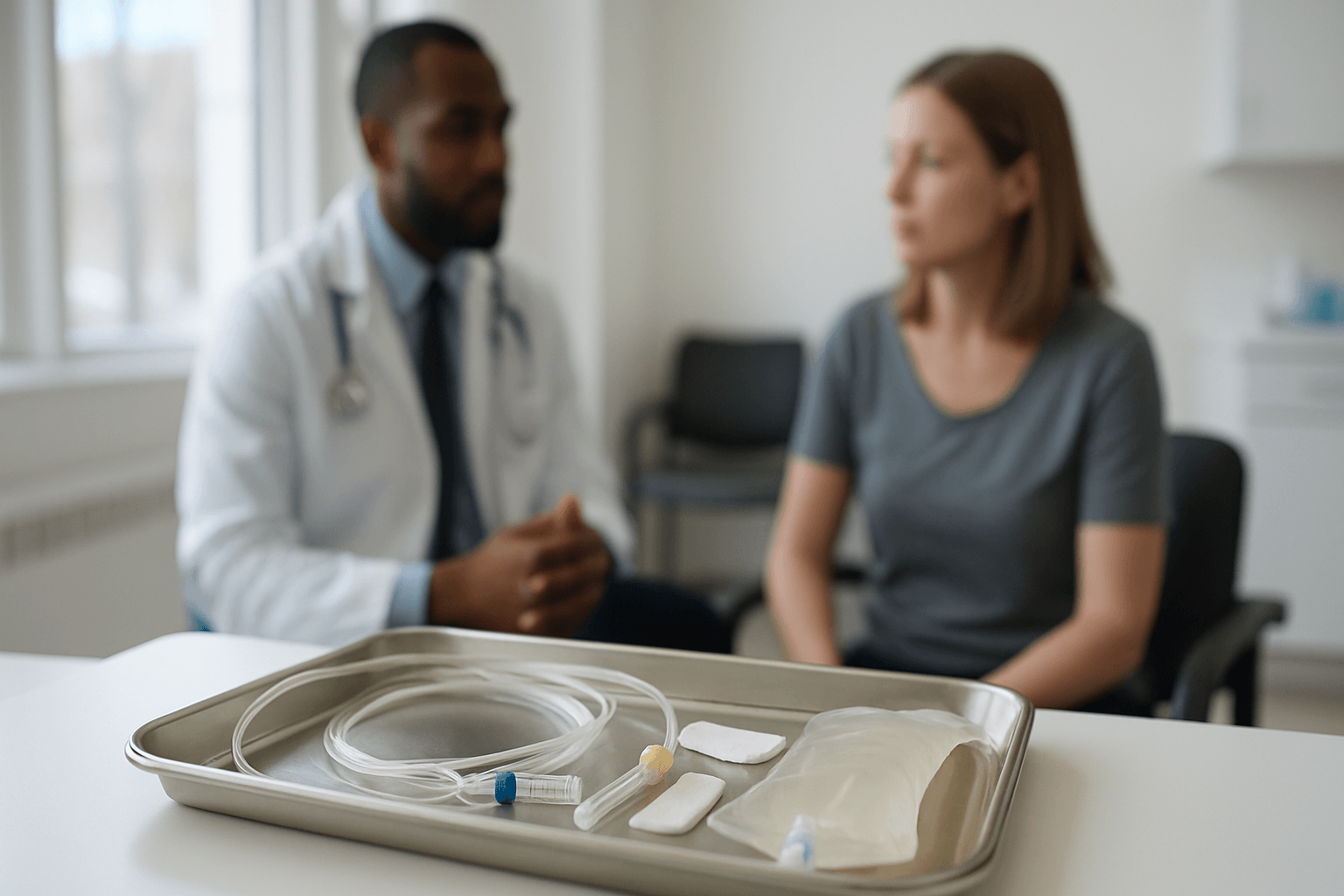
When you arrive at Joint Health Solutions in Charlotte, NC, for an IV therapy session, one of the first things you’ll notice is the meticulous preparation that goes into every treatment. At the heart of that preparation is the IV treatment tray — a carefully organized collection of supplies designed to deliver intravenous fluids and medications safely and effectively.
But what exactly is on that tray, and why does it matter for your health? This article takes a close-up look at the anatomy of a standard IV treatment tray and the sterile standards we follow at every step. Understanding our protocols can give you confidence in the safety and quality of your care — whether you’re seeking relief from joint pain, recovering from an injury, or supporting overall wellness.
The Components of a Standard IV Tray
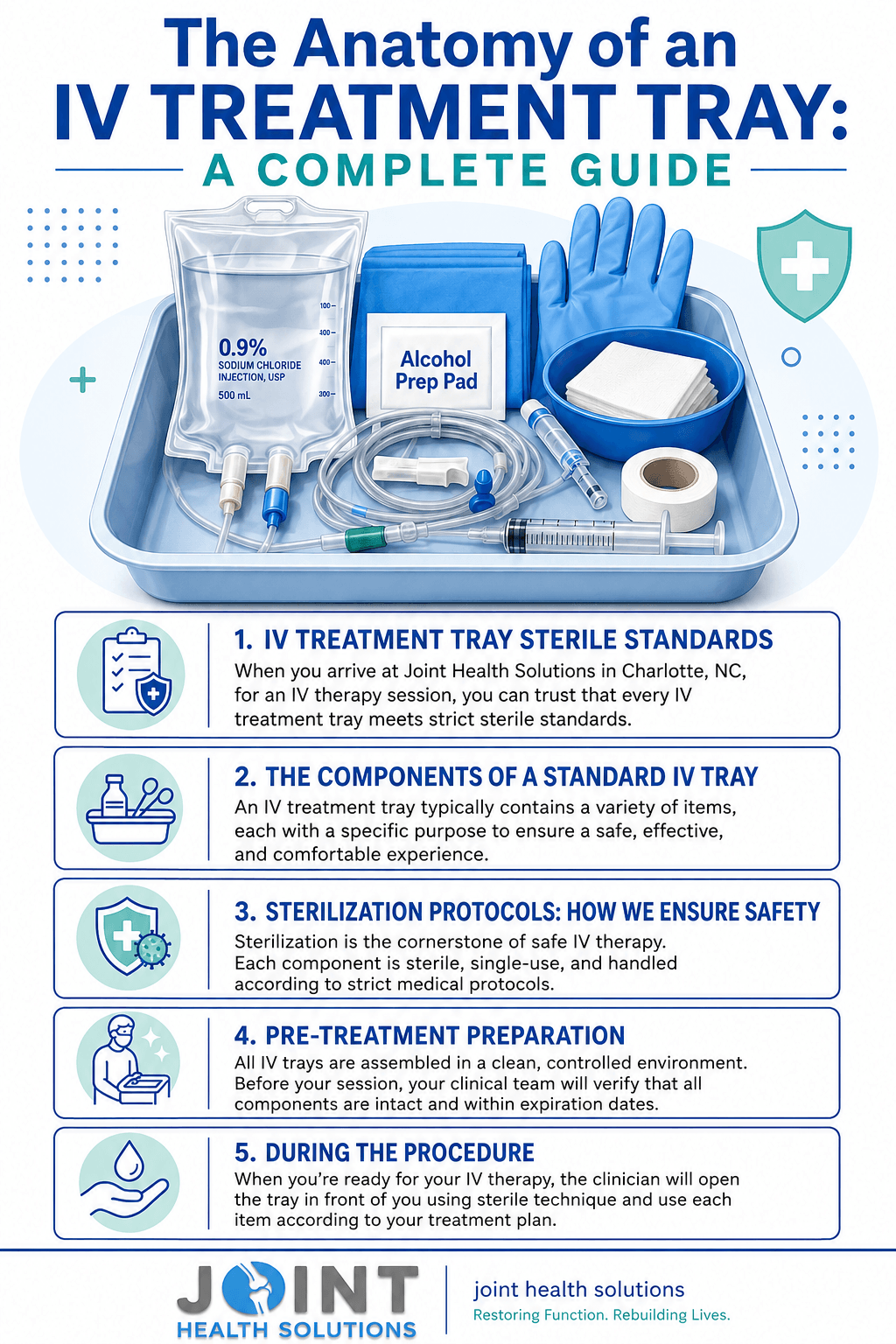
While the exact contents may vary depending on the therapy being administered — such as Anti-Inflammatory IV Therapy or Sports Recovery IV Therapy — the core components of every IV treatment tray at Joint Health Solutions remain consistent.
| Tray Item | Purpose | Sterility Notes |
|---|---|---|
| IV Catheter and Needle | Accesses the vein; needle is disposed of immediately after insertion | Individually packaged; sterilized via ethylene oxide gas; single use only |
| IV Tubing and Drip Chamber | Connects the IV bag to the catheter; allows controlled fluid flow and visual monitoring | Medical-grade PVC; kink-resistant; Luer lock connection; single use only |
| IV Bag with Solution | Contains the prescribed fluid — saline or a compounded blend of vitamins, minerals, and medications | Non-PVC materials; inspected for clarity, leaks, and expiration; solutions compounded under laminar flow hood |
| Alcohol Swabs and Antiseptic | Cleans the insertion site to reduce infection risk | Pre-saturated with 70% isopropyl alcohol; individually foil-packaged; chlorhexidine gluconate available for sensitive skin |
| Gauze and Medical Tape | Secures the catheter during infusion; applied to the site after removal | Sterile gauze (2×2 or 4×4 inches); hypoallergenic tape; changed if any bleeding or leakage occurs |
| Tourniquet | Restricts blood flow temporarily to help locate a suitable vein | Latex-free; single-use preferred; applied 4–6 inches above the intended insertion site and released once vein is accessed |
| Gloves and Face Mask | Personal protective equipment (PPE) for the clinician | Nitrile, powder-free gloves; donned immediately before handling the tray; face mask worn throughout catheter insertion |
| Sharps Disposal Container | Safe disposal of needles and sharp items | Puncture-resistant; leak-proof; biohazard-labeled; placed within arm’s reach; replaced at the fill line per OSHA regulations |
| Labels and Documentation | Records patient information, solution, dose, and administration time | Includes name, date of birth, medication, dose, and expiration time; documented in real time |
Our team inspects every tray before use, checking expiration dates and packaging integrity. Trays are also customized for specific therapies: for example, an Anti-Inflammatory IV tray may include additional antioxidants like glutathione or vitamin C, while a Sports Recovery tray might contain electrolytes and amino acids. The clinician verifies tray contents against the treatment plan before proceeding.
Sterilization Protocols: How We Ensure Safety
Sterilization is the cornerstone of safe IV therapy. Our protocols begin before you arrive and continue through disposal. These processes follow guidelines from the CDC, INS (Infusion Nurses Society), OSHA, and the Joint Commission.
Pre-Treatment Preparation
All IV trays are assembled in a clean, controlled environment. Staff wear sterile gloves and masks while handling supplies. Each component is checked for sterility indicators — color-changing stripes on packaging confirm that sterilization was effective. Trays are then sealed and stored in a clean area until use.
The assembly area is equipped with HEPA air filtration to reduce airborne contaminants, and surfaces are disinfected with hospital-grade solutions before each tray preparation. Staff follow a standardized checklist to ensure no items are missing or compromised. Any tray with damaged packaging or expired components is immediately discarded and replaced.
During the Procedure
When you’re ready for your IV therapy, the clinician opens the tray in front of you, confirming that every item is sterile. The insertion site is cleansed with antiseptic, and the clinician uses strict sterile technique throughout — meaning non-sterile surfaces are not touched once gloves are donned. The IV catheter is inserted with a single, smooth motion to minimize discomfort and reduce infection risk.
The clinician performs hand hygiene (alcohol-based hand rub for at least 20 seconds) before donning gloves. The tourniquet is applied and released as needed; a vein finder device may be used for patients with difficult access. Throughout the infusion, the clinician monitors the drip rate and the patient’s response. Any adjustments are made using sterile connectors to maintain the integrity of the closed system.
Post-Treatment Disposal
After IV therapy is complete, all used items are disposed of in accordance with medical waste regulations. Needles and sharps go into designated containers; remaining fluids are discarded properly; the tray is disposed of after a single use — nothing is reused. The clinician removes gloves and performs hand hygiene again before documenting the session. The catheter site is covered with a sterile bandage, and the patient is advised to keep it dry for at least 24 hours.
Waste is segregated into biohazard, sharps, and general waste streams per CDC and EPA guidelines. Disposal protocols are audited monthly to ensure ongoing compliance.
Equipment Validation and Staff Training
We conduct regular audits of our sterilization equipment and processes. Autoclaves are tested weekly to confirm they reach the required temperatures and pressures (121°C to 134°C for steam sterilization). Biological indicators — spore tests — are used monthly to confirm that sterilization cycles are effective. Staff receive ongoing training in infection control and sterile technique, including annual competency assessments. All sterilization cycle records (date, time, operator, results) are maintained for internal review.
The Role of IV Therapy in Joint Health
At Joint Health Solutions, we use IV therapy as a complementary treatment to support wellness and address systemic inflammation — a common contributor to joint pain. Anti-Inflammatory IV Therapy delivers a blend of vitamins, minerals, and antioxidants that may help reduce systemic inflammation. For patients with conditions like arthritis or those recovering from joint injections, reducing the inflammatory burden is a meaningful part of overall management.
Sports Recovery IV Therapy is designed to replenish fluids and nutrients after intense physical activity, aiding in muscle recovery and reducing soreness. Some patients use IV therapy alongside treatments like PRP Therapy or Hyaluronic Acid Injections as part of a broader care plan.
Important note: IV vitamin and nutrient therapy should be viewed as supportive care, not a primary treatment for osteoarthritis or structural joint disease. Evidence for IV therapy as a standalone treatment for joint pain is limited; its role at JHS is as a complement to evidence-based interventions, not a replacement for them.
What to Expect During Your IV Treatment Session
If you’ve never had IV therapy before, here’s a step-by-step guide to what happens at Joint Health Solutions.
- Check-In and Consultation: You’ll be greeted by our staff and asked to complete a brief health questionnaire. A clinician will review your medical history and discuss your goals for IV therapy.
- Preparation: You’ll be seated in a comfortable chair. The clinician selects an appropriate vein — usually in your forearm or hand — and cleans the area with antiseptic.
- Catheter Insertion: Using the sterile IV tray, the clinician inserts a small catheter into the vein. You may feel a brief pinch at insertion, similar to a blood draw.
- Infusion: The IV solution runs over approximately 30 to 60 minutes depending on the type of therapy. You can relax, read, or use your phone during this time. The clinician monitors you throughout.
- Completion: Once the infusion is complete, the catheter is removed and a bandage is applied. Most patients return to normal activities immediately with no required downtime.
Our team monitors you throughout the session for any signs of discomfort, adverse reactions, or infiltration (fluid leaking outside the vein). Any concern is addressed immediately.
Frequently Asked Questions
What is included in an IV treatment tray?
A standard tray includes an IV catheter, tubing with drip chamber, an IV bag with the prescribed solution, antiseptic swabs, gauze, medical tape, a tourniquet, gloves, a face mask, a sharps disposal container, and labels for documentation. All items are sterile and single-use.
How are IV tray components sterilized?
Components are sterilized using methods appropriate to the material — ethylene oxide gas (for plastics and packaged items), steam autoclaving, or gamma radiation. Each component is individually packaged with sterility indicators that change color when sterilization is confirmed. We validate our sterilization equipment weekly and run monthly biological indicator tests.
Is IV therapy safe for patients with joint pain?
IV therapy is generally safe when administered by trained professionals using proper sterile technique. At Joint Health Solutions, we use IV therapy as a complementary treatment to reduce systemic inflammation and support healing alongside injection-based care. However, individual results vary, and IV therapy is not a primary treatment for structural joint disease. A consultation is needed to confirm you are an appropriate candidate.
How long does an IV treatment session take?
Most sessions take between 30 and 60 minutes, depending on the type and volume of the solution. You can relax during the infusion and resume normal activities immediately afterward.
What should I do to prepare for IV therapy?
Stay well hydrated by drinking water before your appointment. Eat a light meal to prevent dizziness. Avoid alcohol and caffeine the morning of your session. Wear clothing with easy access to your forearms. Inform your clinician of all medications and supplements you are currently taking, including blood thinners.
What are the possible side effects?
Common and minor side effects include brief discomfort at the insertion site, bruising, a cool sensation during infusion, or a metallic taste from certain nutrients (such as magnesium). Rarer but possible side effects include a post-infusion headache, mild nausea, or dizziness if the infusion runs too quickly. Serious side effects — including infection, air embolism, or allergic reaction — are uncommon. Our sterile protocols and patient monitoring minimize these risks.
Can IV therapy be combined with other treatments?
Yes. IV therapy is commonly used alongside joint injections, PRP therapy, offloading braces, or physical therapy as part of a personalized care plan. Your clinician will discuss which combination is appropriate for your condition and goals.
How often should I receive IV therapy?
Frequency depends on your health goals and the type of therapy. Some patients benefit from a short course of weekly sessions; others use IV therapy monthly for maintenance. Your clinician will recommend a schedule based on your clinical picture and response to treatment.
Is IV therapy covered by insurance?
Coverage depends on the insurance plan and the medical necessity of the specific treatment. We can provide documentation for you to submit to your insurer. Contact us at 704-833-3566 to discuss coverage and payment options before your appointment.
Why choose Joint Health Solutions for IV therapy in Charlotte?
Our IV therapy is administered by board-certified clinicians using single-use, sterile supplies assembled following CDC and INS infection prevention guidelines. IV therapy is offered as part of a broader non-surgical joint care program — not as a standalone wellness service disconnected from clinical evaluation. Every patient is assessed individually before treatment is recommended.
Schedule an IV Therapy Consultation in Charlotte
If you’d like to learn whether IV therapy is appropriate for your situation — or to schedule any of our non-surgical joint treatments — contact Joint Health Solutions today.
📞 Call: 704-833-3566
Location: 9350 Benfield Rd, Suite 109, Charlotte, NC 28269
Sources
Clinical and Regulatory Guidelines
- Infusion Nurses Society (INS) — Infusion Therapy Standards of Practice (2021)
- CDC — Guidelines for the Prevention of Intravascular Catheter-Related Infections
- FDA — Sterilization of Medical Devices
- The Joint Commission — Infection Prevention and Control Standards
- World Health Organization — Injection Safety
- OSHA — Bloodborne Pathogens Standard (29 CFR 1910.1030) — Sharps Disposal Requirements
Medical Disclaimer: This article is for educational purposes only and is not a substitute for medical advice, diagnosis, or treatment. Results vary, and not every patient is a candidate for every treatment. A qualified healthcare provider should evaluate your condition and discuss risks, benefits, and alternatives before treatment. IV vitamin and nutrient therapy is a complementary supportive intervention; it is not a primary treatment for osteoarthritis or structural joint disease.