

Can Sports Recovery IV Therapy Prevent Muscle Cramps and Spasms?
If you are an active adult who regularly pushes through intense workouts, long runs, or competitive sports, you have likely experienced the sudden, sharp pain of a muscle cramp. These involuntary contractions can halt your training, disrupt your sleep, and leave you wondering what went wrong. While dehydration and electrolyte imbalance are well-known triggers, the question remains: can a sports recovery IV therapy session actually prevent these disruptive episodes? This article explores the science behind muscle cramps, the role of hydration and electrolytes, and how IV therapy — offered at Joint Health Solutions in Charlotte — may fit into your recovery plan.
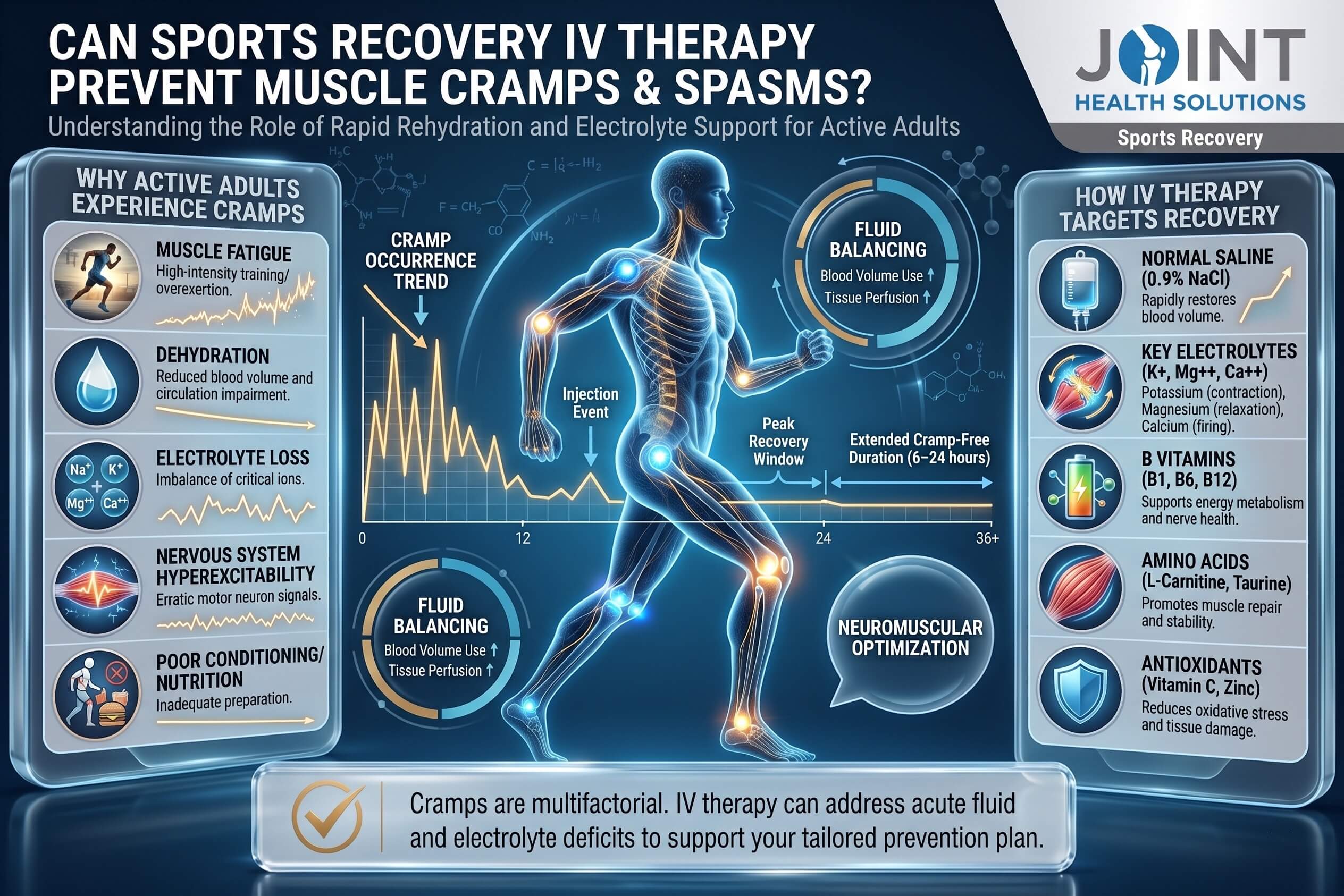
What Are Muscle Cramps and Spasms?
Muscle cramps are sudden, involuntary, and often painful contractions of one or more muscles. They can last from a few seconds to several minutes, and the underlying muscle may remain tender afterward. Spasms are similar but can be milder and may involve a twitching sensation. While cramps commonly affect the calf, hamstring, and quadriceps, they can occur in any skeletal muscle, including the feet, hands, and abdominal wall. The medical term for a cramp is a “charley horse” when it affects the leg, and the precise pathophysiology involves spontaneous, high-frequency firing of motor neurons that drive the muscle into a sustained contraction. This abnormal neural discharge is the reason cramps feel so intense and are often resistant to immediate voluntary relaxation.
Several factors contribute to cramping, including muscle fatigue, inadequate stretching, and, importantly, imbalances in fluid and electrolytes. When you sweat during exercise, you lose not only water but also sodium, potassium, calcium, and magnesium — all critical for normal muscle function. If these losses are not replaced, the delicate balance that allows muscles to contract and relax is disrupted, leading to hyperexcitability of nerve endings and subsequent cramping. In addition, muscle fatigue itself can alter the reflex pathways in the spinal cord, causing an imbalance between excitatory and inhibitory signals. This is why cramps often occur at the end of a long workout or during the night after a particularly strenuous day, when the muscles are recovering and the nervous system is still primed for overactivity.
Active adults are particularly vulnerable because their fluid and electrolyte needs are higher than those of sedentary individuals. A runner who loses a significant amount of sodium through sweat may experience cramps despite drinking water, because plain water dilutes the remaining sodium. This is why sports drinks and electrolyte supplements are popular, but they may not always be sufficient — especially when cramps become recurrent or severe. Endurance athletes, such as marathoners and triathletes, can lose anywhere from 1 to 3 liters of sweat per hour, depending on ambient temperature and humidity. In such conditions, the cumulative sodium loss can exceed 2,000 milligrams over a few hours, which is a substantial fraction of the daily recommended intake. Without aggressive replacement, the body’s sodium reserves become depleted, and the risk of cramping rises sharply.
It is also worth noting that cramps are not exclusively a problem for elite athletes. Recreational exercisers, weekend warriors, and even individuals who engage in manual labor or prolonged standing can experience cramps. Age is another factor, as older adults tend to have reduced muscle mass and changes in nerve function that may increase susceptibility. Additionally, certain medications, such as diuretics and statins, can predispose individuals to cramps by altering electrolyte balance or affecting muscle metabolism. Understanding these nuances is essential for developing a comprehensive prevention strategy, and it is why a one-size-fits-all approach to cramp management is rarely effective.
How Dehydration and Electrolyte Imbalance Trigger Cramps
The relationship between hydration status and muscle cramps is well-documented, though the exact mechanisms are still being studied. Dehydration reduces blood volume, which can impair circulation to muscles and increase the concentration of electrolytes in the extracellular fluid. This alteration disrupts the normal electrical activity of muscle cells, making them more prone to spontaneous contractions. When blood volume decreases, the body also reduces blood flow to non-essential areas, including skeletal muscles, to preserve perfusion to vital organs like the brain and heart. This reduced perfusion means that muscles receive less oxygen and nutrients, and metabolic waste products such as lactic acid accumulate more readily. Over time, this environment fosters an irritable neuromuscular state, where even minor stimuli can trigger a cramp.
Electrolyte imbalances, particularly low sodium (hyponatremia) or low potassium (hypokalemia), can directly affect the resting membrane potential of muscle cells. When sodium levels drop, the nerve signals that initiate muscle contraction become erratic. The sodium-potassium pump, which maintains the electrochemical gradient across cell membranes, relies on a precise ratio of these ions. If sodium is depleted, the pump cannot function efficiently, and the muscle cell becomes depolarized, meaning it is closer to the threshold for firing. This makes the muscle hyperexcitable and more likely to contract spontaneously. Similarly, magnesium deficiency is associated with increased neuromuscular excitability and cramping. Magnesium acts as a natural calcium channel blocker at the neuromuscular junction; when magnesium levels are low, calcium influx into the nerve terminal is unopposed, leading to excessive acetylcholine release and heightened muscle contraction.
Research on cramps has produced mixed findings. Some studies suggest that muscle fatigue and altered neuromuscular control play a larger role than hydration alone. Electrically induced cramps have been shown to occur more easily in fatigued muscles, regardless of hydration status, supporting an “altered neuromuscular control” hypothesis — the idea that muscle fatigue disrupts signals from muscle spindles and Golgi tendon organs, leading to uncontrolled contractions. This does not negate the importance of hydration; rather, it suggests that dehydration and electrolyte loss may be contributing factors that exacerbate the effects of fatigue. For practical purposes, athletes should address both hydration and conditioning to minimize cramp risk.
Another important consideration is the role of sweat rate and sweat sodium concentration. Individuals vary widely in how much sodium they lose in sweat, with some “salty sweaters” losing up to 2,000 milligrams per liter. These individuals are at higher risk for hyponatremia and cramps, even if they are drinking adequate volumes of fluid. In such cases, oral rehydration with plain water or low-sodium sports drinks may be insufficient, and targeted sodium supplementation becomes necessary. This is where IV therapy can be particularly valuable, as it delivers a controlled dose of sodium directly into the bloodstream, bypassing any gastrointestinal absorption issues that might slow oral replacement.
The Role of IV Therapy in Rapid Rehydration
Intravenous (IV) therapy delivers fluids, electrolytes, vitamins, and other nutrients directly into the bloodstream, bypassing the digestive system. This allows for rapid absorption and near-complete bioavailability of the infused substances. For athletes who are significantly dehydrated or have just completed a grueling event, IV therapy can restore fluid balance more quickly than drinking fluids. The speed of delivery is a key advantage: whereas oral fluids can take 30 to 60 minutes to be absorbed through the gastrointestinal tract, an IV infusion delivers fluids within minutes, allowing for rapid correction of volume deficits. This is particularly important in situations where an athlete is experiencing significant dehydration symptoms, such as dizziness or an inability to tolerate oral fluids.
However, it is important to note that oral rehydration with electrolyte solutions is a supported first-line option for mild-to-moderate dehydration. Most active adults can adequately rehydrate by drinking fluids, and oral intake also helps maintain gastrointestinal function. The digestive system is designed to absorb water and electrolytes, and the act of drinking stimulates gastric emptying and intestinal absorption. Additionally, oral hydration is more cost-effective and convenient, as it does not require a clinic visit or specialized equipment. For most everyday training sessions, a well-formulated sports drink or electrolyte tablet dissolved in water is sufficient to maintain hydration and electrolyte balance.
IV therapy is typically reserved for situations where oral intake is not possible, when rapid rehydration is needed, or for individuals who have difficulty absorbing fluids. Examples include athletes with significant gastrointestinal distress that prevents oral intake, or those who have a medical condition that impairs intestinal absorption. In these cases, IV therapy may be especially useful. For the average athlete, however, IV therapy should be viewed as an adjunct, not a replacement, for oral hydration.
At Joint Health Solutions, our sports recovery IV therapy is designed to support your body’s recovery after intense exercise. Each session is tailored to your individual needs, with a focus on replenishing fluids and electrolytes that are lost through sweat. Our medical team, led by Dr. Jeffrey Galvin, a board-certified physician in Emergency Medicine and Obesity Medicine, and Ariel Curtis, a board-certified Family Nurse Practitioner, will assess your hydration status, sweat rate, and electrolyte losses to create a personalized infusion. While IV therapy is not a magic bullet, it may help some active adults reduce the occurrence of muscle cramps by addressing acute hydration deficits that oral intake cannot quickly correct. It is often used within a short window after a long endurance event, when the body is in a state of peak fluid and electrolyte deficit.
Key Ingredients in Sports Recovery IV Drips
Sports recovery IV drips typically contain a combination of fluids and electrolytes that are essential for muscle function. The most common ingredients include:
- Normal saline (0.9% sodium chloride): This is the base fluid that helps restore blood volume and rehydrate tissues. It is isotonic, meaning it has the same osmotic pressure as blood plasma, which allows it to stay in the intravascular space and effectively expand blood volume. This is crucial for improving circulation to muscles and supporting cardiovascular function during recovery.
- Potassium chloride: Potassium is crucial for muscle contraction and nerve signaling. Low levels can lead to weakness and cramps. Potassium is the primary intracellular cation, and it plays a key role in repolarizing muscle cells after contraction. The dose is adjusted based on serum potassium levels and kidney function.
- Magnesium sulfate: Magnesium plays a role in muscle relaxation. Deficiency is linked to increased cramping. Magnesium also supports numerous enzymatic reactions in the body, including ATP production, protein synthesis, and neuromuscular transmission. Some studies suggest it can reduce the frequency of nocturnal leg cramps in older adults, although more research is needed in athletes.
- Calcium gluconate: Calcium is necessary for muscle contraction. Imbalances can cause spasms. Calcium is the trigger that initiates the sliding filament mechanism in muscle fibers, and it is also involved in neurotransmitter release at the neuromuscular junction.
- B vitamins (B1, B2, B3, B5, B6, B12): These vitamins support energy metabolism and nerve function, which may indirectly help prevent cramps. B vitamins are coenzymes in the pathways that produce ATP for muscle contraction. B12 is also essential for myelin sheath maintenance, which protects nerve fibers and ensures efficient signal transmission.
- Vitamin C: An antioxidant that may help reduce oxidative stress from intense exercise. Intense exercise generates reactive oxygen species that can damage muscle tissue and prolong recovery. Vitamin C helps neutralize these free radicals and plays a role in collagen synthesis, which is important for tendon and ligament health.
- Zinc and Selenium: These trace minerals are often added to sports recovery drips to support immune function and antioxidant defense.
- Amino acids (e.g., L-carnitine, taurine): Some advanced formulations include amino acids to support muscle repair. L-carnitine helps transport fatty acids into mitochondria for energy production, while taurine has been shown to help stabilize cell membranes and regulate calcium handling in muscle cells, which may reduce cramp susceptibility.
The exact composition of a sports recovery IV drip can be customized based on your activity level, sweat rate, and any underlying deficiencies. At Joint Health Solutions, our medical team will assess your needs and formulate a drip that supports your recovery goals.
Comparing IV Therapy to Oral Hydration for Athletes
To help you understand the differences between IV therapy and oral hydration, the table below summarizes key aspects. It is important to remember that both methods have their place, and the best choice depends on your specific situation.
| Aspect | IV Therapy | Oral Hydration |
|---|---|---|
| Speed of absorption | Rapid, direct into bloodstream | Slower, requires digestion |
| Bioavailability | Near-complete | Varies, typically lower depending on gut health and composition |
| Convenience | Requires a clinic visit (30-60 minutes) | Can be done anywhere, anytime |
| Cost | Self-pay, higher per session | Low (cost of sports drink or electrolyte tablets) |
| Risk of overhydration | Possible if not monitored, leading to hyponatremia | Less likely, as the body regulates absorption |
| Suited for | Significant dehydration, rapid correction, post-event recovery | Mild-to-moderate dehydration, maintenance, daily hydration |
| Effect on GI system | Bypasses GI tract, no risk of stomach upset | May cause bloating or nausea if too much is consumed quickly |
| Customization | Highly customizable with vitamins, minerals, and medications | Limited to what is available in commercial products |
As you can see, IV therapy offers faster absorption and near-complete bioavailability, but oral hydration remains a practical and effective method for most daily needs. For athletes who experience recurrent cramps despite adequate oral intake, IV therapy might provide an additional tool. However, it is essential to understand that IV therapy is not a performance-enhancing treatment; it does not directly improve strength, endurance, or speed. Instead, it supports the body’s recovery processes, which can indirectly support subsequent performance by addressing fatigue and fluid loss. The decision to use IV therapy should be based on individual needs and consultation with a healthcare professional.
Can IV Therapy Prevent Future Muscle Cramps?
The short answer is: it may help, but it is not a guaranteed prevention. Muscle cramps are multifactorial, and while hydration and electrolytes are important, other factors such as muscle fatigue, training intensity, and individual susceptibility play significant roles. IV therapy can address acute dehydration and electrolyte deficits, which may reduce the likelihood of cramps in the hours or days following a session. For example, if you complete a marathon and lose a significant amount of sodium and fluid, an IV drip can help restore these losses, potentially reducing the risk of post-race cramps that often occur during the recovery period. This is particularly relevant for athletes who are prone to “post-exercise cramps,” which can occur hours after the event has ended, often during sleep.
However, there is limited scientific evidence specifically examining the effect of IV therapy on cramp prevention in active adults. Most research on rehydration has focused on oral strategies rather than IV therapy specifically in athletic populations, so the evidence remains mixed and results vary from person to person. This is not to say that IV therapy is ineffective; rather, it highlights the need for more research. Some athletes report significant relief from cramping after IV therapy, while others notice no change. This variability is likely due to the multifactorial nature of cramps and the fact that not all cramps are caused by dehydration or electrolyte imbalance.
What we do know is that maintaining proper hydration and electrolyte balance is essential for muscle function. IV therapy can be a convenient way to ensure you are fully replenished, especially after an event or intense training session. But it should not replace a comprehensive approach that includes proper nutrition, stretching, and gradual training progression. For example, a runner who experiences cramps due to overtraining may not benefit from IV therapy if the root cause is inadequate recovery time between sessions. In such cases, rest and training modification are more effective than any infusion. Similarly, an athlete with a magnesium deficiency may need to address their dietary intake over weeks, not just rely on a single IV session.
Timing also matters. IV therapy tends to be most useful when given close to the period of greatest fluid and electrolyte loss — such as immediately after a long event or intense training session — rather than as a routine, disconnected from actual physical demand. Using IV therapy strategically around your training and competition schedule, rather than as a generic recurring habit, is more likely to align with the times your body actually needs rapid replenishment.
Is Sports Recovery IV Therapy Right for You?
If you experience frequent muscle cramps despite maintaining good hydration habits, or if you’re looking for support during intense training blocks or after competitive events, sports recovery IV therapy may be worth discussing with a provider. At Joint Health Solutions in Charlotte, our team evaluates your activity level, hydration habits, and symptom pattern before recommending any infusion, so your plan is based on your actual needs rather than a one-size-fits-all approach.
We also encourage a broader look at your overall recovery routine, including anti-inflammatory IV therapy if joint pain is part of the picture, and general guidance on nutrition and conditioning. Explore our full treatments and services, or call us at 704-833-3566 to schedule a consultation and find out if sports recovery IV therapy fits your training and recovery goals.
Institutional Sources
- Schwellnus 2009 — Exercise-Associated Muscle Cramps (PMID: 19528063)
- Armstrong 2012 — Mild Dehydration and Human Health (PMID: 22190027)
- Sawka 2007 — ACSM Position Stand on Fluid Replacement (PMID: 17277604)
- Maughan 2018 — IOC Consensus on Dietary Supplements (PMID: 29540394)
- Mayo Clinic: Muscle Cramps
Frequently Asked Questions
How quickly does IV therapy work for muscle cramps?
IV therapy delivers fluids and electrolytes directly into your bloodstream, so you may feel improvements in hydration and energy within minutes. However, the effect on muscle cramps can vary. Some patients report reduced cramping within hours, while others may need multiple sessions to notice a difference. It is not an instant cure, but it can be a helpful part of your recovery.
Is sports recovery IV therapy safe for all athletes?
Generally, IV therapy is safe for most healthy adults. However, it is not recommended for individuals with certain medical conditions, such as kidney disease, heart failure, or electrolyte disorders. Pregnant women should also consult their healthcare provider. At Joint Health Solutions, we perform a thorough assessment before any IV therapy to ensure it is appropriate for you.
How often should I get IV therapy for cramp prevention?
There is no one-size-fits-all answer. Some athletes benefit from a session after intense events, while others may schedule sessions during heavy training blocks. It depends on your activity level, sweat rate, and how your body responds. Our medical team can help you determine a frequency that makes sense for your goals and lifestyle.
Can IV therapy replace proper nutrition and hydration?
No. IV therapy is a supplement, not a replacement. You still need to consume adequate fluids, electrolytes, and nutrients through your diet and oral hydration. IV therapy can help correct deficits quickly, but it does not provide the long-term benefits of a balanced diet and consistent hydration habits.
What does sports recovery IV therapy cost in Charlotte?
Joint Health Solutions operates on a self-pay basis with transparent, upfront pricing. Cost depends on the specific formulation you choose. Our team can provide a quote during your consultation so you know what to expect.
Can IV therapy help with cramps caused by overtraining?
IV therapy addresses fluid and electrolyte deficits, but if cramps are caused primarily by overtraining or inadequate recovery time, addressing your training load and rest schedule is likely to be more effective than an infusion alone.
Are there side effects from sports recovery IV therapy?
Most side effects are mild, such as bruising at the injection site, a cool sensation during infusion, or a metallic taste. Serious complications are rare when administered by trained healthcare professionals following proper protocols.
Can I get IV therapy before an event instead of after?
IV therapy is most commonly used after intense training or competition to support recovery. Using it proactively before an event should be discussed with your provider, as pre-event hydration strategies are typically managed through oral intake.
Do I need a referral for sports recovery IV therapy?
No referral is needed. You can schedule a consultation directly with our team to discuss whether sports recovery IV therapy is appropriate for your situation.
What is the difference between sports recovery IV therapy and anti-inflammatory IV therapy?
Sports recovery IV therapy focuses on replenishing fluids and electrolytes lost through intense exercise, while anti-inflammatory IV therapy focuses more on antioxidants and nutrients intended to support recovery from joint-related inflammation. Some patients benefit from a formulation that addresses both, depending on their needs.



 English
  Spanish