

If you have been recommended a joint injection appointment—whether to manage the persistent ache of knee osteoarthritis, the restrictive pinch of shoulder impingement, deep hip arthritis, or another musculoskeletal condition—it is entirely natural to have questions about the process. You might find yourself wondering: Will the procedure hurt? What steps should I take to prepare? Will I be able to safely drive myself home afterward? What will my recovery look like in the hours and days that follow?
At Joint Health Solutions, we firmly believe that well-informed patients experience better clinical outcomes, lower anxiety, and a more streamlined recovery. This comprehensive guide walks you through every phase of the treatment process, from planning steps a week before your visit to your self-care routine at home. Whether you are scheduled to receive a corticosteroid flare-calmer, a hydrating hyaluronic acid (HA) visco-supplement, a regenerative Platelet-Rich Plasma (PRP) formulation, or a localized trigger point injection, following these preparation guidelines will help ensure a smooth, comfortable, and successful experience.
A joint injection is a minimally invasive medical procedure designed to deliver a precise dose of therapeutic medication directly into a compromised joint capsule, the surrounding intra-articular space, or nearby painful soft tissues. By placing the treatment directly at the source of your pain, this targeted approach bypasses the digestive system and avoids the systemic side effects often associated with oral anti-inflammatory drugs.
Depending on your specific diagnosis, current joint condition, and long-term recovery goals, our specialists utilize several different types of injections:
Corticosteroid (Cortisone) Injections: These powerful anti-inflammatory medications work rapidly to quiet intense joint swelling, heat, and pain. They are an excellent option for managing acute arthritis flare-ups or breaking a cycle of severe, disruptive pain.
Hyaluronic Acid (HA) Injections: Also known as viscosupplementation, HA treatments introduce a thick, lubricating gel that mimics your body’s natural joint fluid. This gel helps absorb shock and reduce friction, making it an excellent choice for managing mild-to-moderate knee osteoarthritis.
Platelet-Rich Plasma (PRP) Injections: Bypassing synthetic chemicals, PRP therapy utilizes concentrated growth factors harvested from your own blood to calm chronic inflammation and support natural tissue repair. This advanced regenerative option is frequently recommended for managing chronic tendinopathies, partial ligament strains, or mild cartilage wear.
Trigger Point Injections (TPIs): These injections target hyperirritable, tight knots within your skeletal muscles that often refer pain outward, mimicking or worsening localized joint discomfort.
While each type of injection involves slightly different preparation steps and post-care guidelines, the general office flow and procedural preparation remain consistent. To learn more about how these individual therapies function, explore our detailed PRP Therapy, Hyaluronic Acid Injections, and Cortisone Injections educational platforms.
Taking time to prepare in the days leading up to your joint injection appointment helps maximize patient safety, improve overall comfort, and optimize your treatment outcomes.
Prescription Blood Thinners: If you take anticoagulant or anti-platelet medications—such as warfarin (Coumadin), apixaban (Eliquis), rivaroxaban (Xarelto), dabigatran (Pradaxa), clopidogrel (Plavix), or high-dose daily aspirin—be sure to inform our clinical team well in advance. To reduce the risk of localized bleeding or bruising within the joint, you may be advised to temporarily pause these medications for a few days before your appointment. Crucial Safety Note: Never stop taking a prescribed blood thinner without direct approval and coordination from your prescribing physician.
Over-the-Counter NSAIDs: If you are scheduled to receive a PRP injection, you must strictly avoid taking any non-steroidal anti-inflammatory drugs (such as ibuprofen, naproxen, Advil, Aleve, or diclofenac) for 1 to 2 weeks before your procedure. NSAIDs suppress the natural inflammatory pathways that are essential for triggering the PRP healing cascade. For patients receiving cortisone or hyaluronic acid injections, continuing NSAIDs up to the day of treatment is generally perfectly fine.
Diabetes Management Adjustments: If you manage diabetes, keep in mind that a localized corticosteroid (cortisone) injection can cause a temporary elevation in your blood glucose levels for several days afterward. Monitor your blood sugar numbers closely during this window and coordinate any necessary temporary adjustments to your insulin or oral medications with your primary care provider.
To help us provide the most accurate care, please bring copies of any relevant diagnostic imaging studies—including recent X-rays, MRIs, or musculoskeletal ultrasound reports—either saved on a CD or via an accessible online patient portal link. It is also helpful to provide a complete, up-to-date list of all your current prescription medications, over-the-counter drugs, and herbal supplements, including exact dosages and frequencies. If you are visiting our clinic for a second opinion, bringing records from previous joint injections, physical therapy notes, or surgical reports will help us customize your care plan.
For the vast majority of routine joint treatments, including cortisone, hyaluronic acid, and trigger point injections, you will be able to safely drive yourself home or return to work immediately following your visit. For regenerative PRP treatments, driving yourself home is also perfectly fine because no systemic sedatives are used during the process. On rare occasions when a patient experiences high anxiety or undergoes a complex spinal procedure, a conscious sedative may be utilized. In those specific situations, you will be notified ahead of time and will need to arrange for a responsible adult driver to accompany you home.
We encourage all patients to jot down any questions they may have for their provider before their appointment. Consider asking:
Which specific type of injection medication am I receiving today, and what are its mechanical goals?
What is the typical timeline for experiencing meaningful pain relief?
What specific structural movements or high-impact activities should I avoid immediately after care?
Following a few simple steps on the day before and the morning of your visit can significantly improve your comfort during the procedure:
📅 Pre-Injection Checklist
* Prioritize Proper Hydration: Drink plenty of water leading up to your session. Good hydration expands your vascular volume, which makes the blood draw process much smoother and faster if you are receiving a PRP treatment. * Eat a Balanced, Light Meal: Please do not show up on an empty stomach. Enjoying a light meal or healthy snack prior to your appointment keeps your blood sugar stable, helping to prevent nerves or lightheadedness during the injection. * Dress in Loose, Comfortable Clothing: Wear garments that allow easy access to the target joint without constriction. We recommend loose-fitting shorts or wide-leg track pants for knee treatments, and a tank top, loose button-down shirt, or camisole for shoulder procedures. * Shower Using Normal Soap: Maintaining clean skin is an easy way to help reduce the risk of introduction of skin bacteria into the injection track. * Avoid Topical Skin Products: Do not apply any moisturizing lotions, body oils, cosmetic creams, or topical pain rubs directly over or around the target joint on the morning of your appointment.
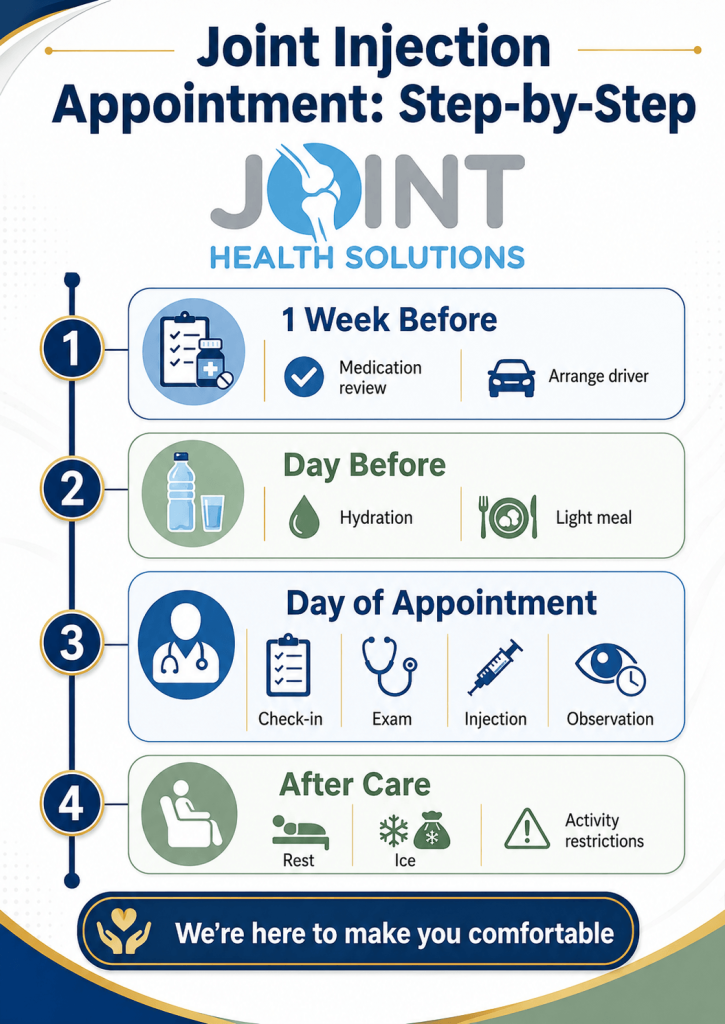
A standard joint injection appointment at our clinic is structured into four clear phases to ensure your comfort, safety, and clear communication every step of the way:
Upon arriving at our facility, our front desk team will complete your check-in, update your medical insurance details, and provide an informed consent document. Once in the treatment room, your clinical provider will review your medical history, double-check your medication list, and confirm your allergy profile to ensure everything is safe to proceed.
Your provider will examine the affected joint, checking its range of motion, assessing localized swelling, and reviewing your imaging studies. If your treatment involves a deep or anatomically complex joint space—such as the hip, spine, or sacroiliac joint—the team may utilize our live fluoroscopic C-arm x-ray guidance to ensure needle placement. To learn more about this approach, please visit our dedicated Fluoroscopy-Guided Injections page.
Our interventional specialists use specific techniques to ensure the process is quick and causes minimal discomfort:
Localized Numbing: We apply a topical cooling spray or inject a small amount of local lidocaine to numb the skin, making the therapeutic needle insertion as comfortable as possible.
Medication Delivery: Using a small needle, your specialist enters the target joint space and smoothly delivers the treatment. This phase is efficient and typically takes only 2 to 5 minutes to complete.
Dressing and Rest: A small, clean bandage is applied over the site, and you will rest comfortably in the room for 5 to 10 minutes before leaving.
Before you leave, your provider will review your customized post-injection care guidelines. It is important to match your activity levels with the specific type of injection you received to support optimal healing:
| Injection Medication Type | Post-Treatment Activity Restrictions | Ice Application Guidelines | Targeted Medications to Avoid |
| Corticosteroid (Cortisone) | Avoid all strenuous exercise, heavy lifting, or repetitive loading for 24 to 48 hours. Gentle everyday movements are perfectly fine. | Yes; apply cold packs for 10–15 minutes several times a day to manage local discomfort. | No specific restrictions on standard medications. |
| Hyaluronic Acid (HA) | Avoid all high-impact activities, running, or heavy gym workouts for 48 hours. | Apply cold packs if you experience localized soreness or minor aching after treatment. | No specific medication restrictions. |
| Platelet-Rich Plasma (PRP) | Avoid heavy physical demands and strenuous activity for 3 to 7 days. Avoid overhead lifting after shoulder treatments. | Yes; use cold packs for soreness, but avoid applying heating pads or deep heat to the joint for 3 days. | Strictly avoid all NSAID medications for 4 to 6 weeks post-injection. |
| Trigger Point (TPI) | You can safely resume all your normal, everyday physical activities immediately. | Apply cold packs if you notice minor soreness around the injection sites. | No specific medication restrictions. |
Understanding your treatment’s typical timeline and normal healing responses can help you track your progress and know when to reach out to our office.
It is important to remember that different injection therapies have varied timelines for providing relief, depending on how they interact with your body’s tissues:
Cortisone Injections: Typically begin providing meaningful pain relief within 1 to 3 days. Note that some patients experience a brief “cortisone flare”—a temporary increase in local aching—during the first 24 to 48 hours before the medication’s anti-inflammatory effects fully take hold.
Hyaluronic Acid Injections: Work gradually as the gel integrates with your joint structures, with most patients noticing a steady reduction in stiffness and pain within 2 to 4 weeks.
PRP Therapy: Follows a natural biological healing timeline, with functional improvements and pain relief typically developing over 2 to 6 weeks as tissue inflammation settles.
Trigger Point Injections: Provide immediate relaxation to tight, locked muscle fibers, though the treated area may feel slightly tender for a few days as the muscle recovers.
Experiencing mild soreness, minor localized swelling, or light bruising around the injection site is a completely normal response to the needle path. These issues are temporary and respond well to rest and cold packs.
However, if you experience any signs that could indicate a complication, please contact our triage line immediately:
A fever over 100.4°F, or chills.
Worsening redness, warmth, or red streaks spreading outward from the injection site.
Cloudy or yellowish drainage coming from the needle entry point.
Severe, throbbing joint pain that shows no improvement after 48 hours.
Our team will coordinate a follow-up appointment—either in person or via telemedicine—to assess your response, review your physical therapy progress, and determine if follow-up sessions are recommended.
You should plan to be at our office for approximately 30 to 60 minutes total. This window includes your check-in, a targeted physical exam, reviewing your images, preparing the skin, performing the injection, and resting for a brief 5 to 10-minute observation window. The injection itself is efficient and takes only about 2 to 5 minutes to complete.
Most patients find the procedure very well tolerated and report feeling only a brief, minor pinch from the local numbing agent. Once the skin is numbed, you may feel a dull sense of pressure as the therapeutic medication is introduced into the joint space. Any mild aching afterward is normal and can be managed easily with an ice pack.
Yes, absolutely. We highly recommend eating a light, balanced meal or snack and staying well-hydrated before your visit. This keeps your blood sugar stable and helps prevent lightheadedness or vasovagal responses during the treatment.
Yes, for routine cortisone, hyaluronic acid, PRP, and trigger point treatments, you can safely drive yourself home or head back to work right after your session. A driver is only necessary on rare occasions if conscious oral sedation is used to manage severe procedure anxiety.
You should never stop taking a prescribed blood-thinning medication without direct approval and guidance from your prescribing doctor. During your initial consultation, our team will coordinate with your cardiologist or primary physician to design a safe, temporary medication plan for your procedure.
Your timeline depends on the specific injection you receive: cortisone typically works within 1 to 3 days after any initial flare settles, while hyaluronic acid gel options take about 2 to 4 weeks. Regenerative PRP treatments follow a biological pathway and take 2 to 6 weeks to show full results, while trigger point muscle releases offer immediate relaxation.
We recommend avoiding high-impact exercise, heavy lifting, or strenuous workouts for 24 to 48 hours after a cortisone or HA treatment, and for 3 to 7 days following a PRP injection. Engaging in light, flat-surface walking and gentle range-of-motion movements is safe and encouraged right away.
Corticosteroid injections focus on providing temporary anti-inflammatory pain relief, while HA and PRP options offer longer-lasting functional improvements. However, these treatments do not structurally reverse advanced, bone-on-bone joint arthritis. For long-term joint health, injections work best when paired with ongoing conservative strategies like custom bracing, physical therapy, and lifestyle modifications.
To protect your joint tissues over time, cortisone injections are generally limited to 2 to 3 treatments per year in a single joint space. Hyaluronic acid treatments can be repeated as a single injection or brief series every 6 to 12 months. PRP protocols are customized to your needs, often starting with an initial series of 1 to 3 sessions followed by maintenance care as required.
Getting started is simple. Call our office line or log into our online patient scheduling portal to arrange an initial orthopedic consultation. Our medical team will thoroughly evaluate your joint symptoms, review your diagnostic images, and help you select the injection pathway that best supports your recovery goals.

A board-certified physician in Emergency Medicine and Obesity Medicine with over 25 years of experience

A board-certified Family Nurse Practitioner with over 12 years of nursing experience

 English
  Spanish