
Meniscus Tears in Athletes Over 40: When to Avoid the Scalpel
Meniscus Tear Treatment Charlotte is the focus of this guide. Estimated reading time: 12 minutes | Category: Joint Health, Injury Recovery | Location: Charlotte, North Carolina
You’ve been active your whole life—running, cycling, playing tennis, or maybe just keeping up with your kids. Then one day, you twist your knee during a game or feel a sharp pop while squatting. The diagnosis: a meniscus tear. For many athletes over 40, the first recommendation from a doctor or well-meaning friend is surgery. But is the scalpel always necessary? At Joint Health Solutions in Charlotte, we believe that many meniscus tears can be effectively treated without surgery, especially in the active population over 40. This article explores when you can avoid the knife and how non-surgical meniscus tear treatment Charlotte can get you back to the activities you love.
The meniscus is a remarkable but vulnerable structure. Each knee has two menisci—the medial (inner) and lateral (outer)—that distribute weight, absorb shock, and provide stability. In athletes over 40, the meniscus undergoes age-related changes, including reduced blood supply and increased brittleness, making it more susceptible to tears from seemingly minor movements. Understanding the anatomy and healing potential is the first step toward making an informed decision about treatment. This guide will walk you through the nuances of meniscus tears, the evidence behind non-surgical care, and a step-by-step plan to reclaim your active lifestyle without unnecessary surgery.
Meniscus Tear Treatment Charlotte: Understanding Meniscus Tears in Athletes Over 40
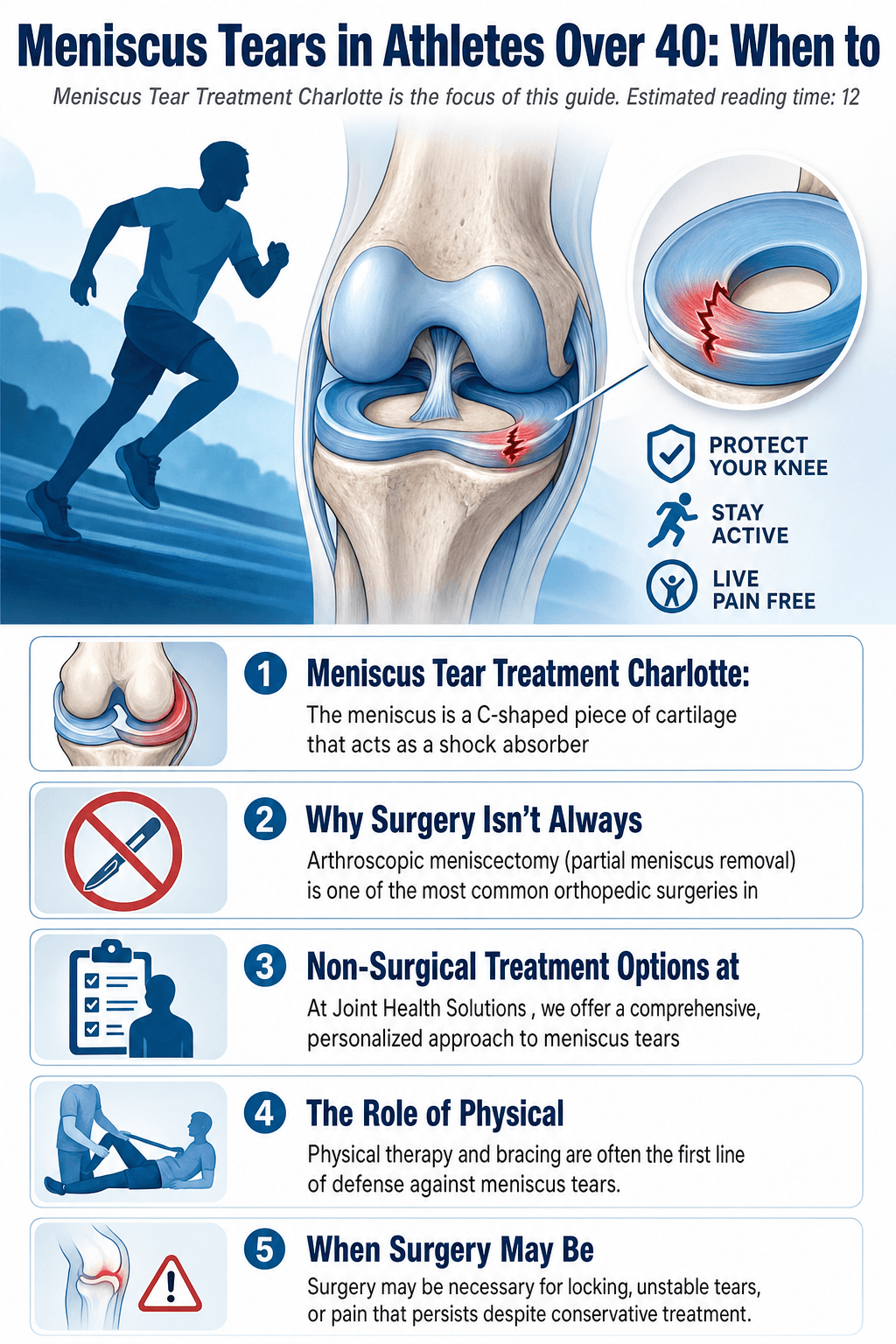
The meniscus is a C-shaped piece of cartilage that acts as a shock absorber between your thighbone and shinbone. As we age, the meniscus becomes more brittle and prone to tearing, even from seemingly minor movements. In athletes over 40, meniscus tears often occur during twisting, pivoting, or deep squatting. But not all tears are created equal. The location, size, and stability of the tear determine whether surgery is needed. Many tears, especially those in the vascular zone (the outer third of the meniscus), have the potential to heal with the right non-surgical approach.
It’s important to understand that a meniscus tear does not automatically mean a trip to the operating room. In fact, research suggests that for many patients over 40, conservative management can yield excellent outcomes. The key is to identify the type of tear and your specific goals—whether that’s returning to competitive sports or simply walking without pain.
Meniscus tears are classified by their pattern and location. Common types include:
- Bucket-handle tears: A large, unstable tear that can cause the knee to lock, often requiring surgical intervention.
- Flap tears: A piece of the meniscus folds over, causing catching or locking sensations.
- Radial tears: A tear that runs perpendicular to the meniscus, often impairing its shock-absorbing function.
- Degenerative tears: Common in athletes over 40, these tears occur due to age-related wear and tear, often without a specific injury.
The vascular zone—the outer third of the meniscus—receives blood supply from the genicular arteries, which deliver oxygen and nutrients necessary for healing. Tears in this region, often called “red-red” tears, have the best healing potential. In contrast, tears in the inner two-thirds (the “white-white” zone) have poor blood supply and are less likely to heal without intervention. For athletes over 40, many degenerative tears occur in the vascular zone, making them excellent candidates for non-surgical care. A thorough evaluation, including an MRI, helps determine the tear’s characteristics and guide treatment decisions.
Why Surgery Isn’t Always the Answer
Arthroscopic meniscectomy (partial meniscus removal) is one of the most common orthopedic surgeries in the United States. However, recent studies have questioned its necessity, especially in older athletes. The reason? Removing part of the meniscus can accelerate the development of osteoarthritis over time. The meniscus is not just a spacer; it’s a vital structure that protects the joint cartilage. Preserving as much meniscus as possible is crucial for long-term knee health.
Non-surgical meniscus tear treatment Charlotte focuses on reducing pain, improving function, and allowing the meniscus to heal naturally. This approach is particularly effective for tears that are stable, small, or located in the vascular zone. Even larger tears may respond well to conservative care if the knee is stable and the patient commits to a structured rehabilitation program.
Below is a comparison of surgical and non-surgical options to help you understand the trade-offs.
| Treatment | How It Works | Limitations | Risks |
|---|---|---|---|
| Surgery (Arthroscopic Meniscectomy) | Removes torn portion of meniscus | May accelerate arthritis; requires downtime; not always effective for degenerative tears | Infection, blood clots, nerve damage, persistent pain, arthritis progression |
| Non-Surgical Care (Physical Therapy, PRP, Bracing) | Strengthens supporting muscles, promotes healing, unloads the meniscus | Requires patient compliance; slower recovery; not suitable for large unstable tears | Low risk; temporary soreness from injections; no guarantee of complete healing |
Consider the case of a 52-year-old tennis player who presented with a medial meniscus tear after a sudden pivot. An MRI revealed a stable, 8-mm tear in the vascular zone. Instead of opting for surgery, she committed to a 12-week physical therapy program, PRP injections, and an offloading brace. Within four months, she returned to the court without pain. Her meniscus healed naturally, and she avoided the long-term risk of arthritis associated with meniscectomy. This success story is not unique—thousands of athletes over 40 benefit from conservative care each year.
Non-Surgical Treatment Options at Joint Health Solutions
At Joint Health Solutions, we offer a comprehensive, personalized approach to meniscus tears that avoids the scalpel whenever possible. Our treatments are designed to reduce pain, improve knee mechanics, and support the body’s natural healing processes.
1. Physical Therapy
A targeted physical therapy program is the cornerstone of non-surgical meniscus care. Our therapists focus on strengthening the quadriceps, hamstrings, and hip muscles to offload the meniscus. We also work on balance, proprioception, and gait retraining to prevent reinjury. Most patients attend therapy 2-3 times per week for 6-12 weeks.
Physical therapy for meniscus tears involves several phases:
- Phase 1 (Weeks 1-4): Pain reduction, range of motion restoration, and gentle strengthening. Exercises may include quad sets, straight-leg raises, and heel slides.
- Phase 2 (Weeks 4-8): Progressive strengthening of the quadriceps, hamstrings, glutes, and core. Closed-chain exercises like mini-squats and step-ups are introduced.
- Phase 3 (Weeks 8-12): Sport-specific training, agility drills, and return-to-activity preparation. Patients practice cutting, jumping, and pivoting under supervision.
For example, a 45-year-old runner with a lateral meniscus tear worked on hip strengthening to correct a valgus collapse (knee caving inward) that was stressing the meniscus. By the end of 10 weeks, her pain resolved, and she gradually resumed running with a modified gait pattern. Physical therapy not only healed the tear but also addressed the underlying biomechanical issues that caused it.
2. PRP Therapy
Platelet-rich plasma (PRP) therapy involves injecting a concentration of your own platelets into the torn area. These platelets release growth factors that may stimulate healing. PRP is especially promising for meniscus tears in the vascular zone. At Joint Health Solutions, we use image guidance to ensure precise placement. Most patients receive one to three injections over several months.
PRP therapy is a minimally invasive procedure that harnesses the body’s natural healing mechanisms. The process begins with a blood draw, similar to a routine lab test. The blood is then placed in a centrifuge, which spins at high speed to separate the platelet-rich plasma from other blood components. The resulting PRP concentrate contains 5-10 times the normal concentration of platelets, rich in growth factors like platelet-derived growth factor (PDGF), transforming growth factor-beta (TGF-β), and vascular endothelial growth factor (VEGF). These factors promote cell proliferation, collagen synthesis, and angiogenesis (new blood vessel formation) in the torn meniscus.
Clinical studies have shown promising results. A 2020 systematic review published in the American Journal of Sports Medicine found that PRP injections improved pain and function in patients with meniscal tears, with success rates ranging from 70-80% in the vascular zone. However, PRP is not a magic bullet—it works best when combined with a structured rehabilitation program. Patients should avoid anti-inflammatory medications like ibuprofen for a week after injection, as these can interfere with the healing response.
3. Offloading Knee Braces
A custom-fit offloading brace can reduce pressure on the torn meniscus by shifting weight away from the affected compartment. This allows the tear to heal while you stay active. We offer advanced bracing options that are comfortable and effective for daily use and sports.
Offloading braces work through a three-point pressure system that unloads the medial or lateral compartment. For a medial meniscus tear, the brace applies a valgus force (pushing the knee outward) to shift weight away from the inner knee. For lateral tears, a varus force (pushing the knee inward) is applied. Studies show that offloading braces can reduce meniscal load by up to 50%, significantly decreasing pain during weight-bearing activities. Most patients wear the brace during high-risk activities like running, tennis, or hiking, and gradually wean off as strength improves.
Custom fitting is essential for comfort and effectiveness. Our specialists take precise measurements and adjust the brace to your unique anatomy. We also provide guidance on proper use, including when to wear it and how to gradually reduce dependence as healing progresses.
4. Anti-Inflammatory IV Therapy
For patients with significant swelling or pain, anti-inflammatory IV therapy can provide rapid relief. This treatment delivers a high dose of vitamins and anti-inflammatory medications directly into the bloodstream, helping to calm the joint and create a favorable environment for healing.
Our IV therapy protocol includes a blend of vitamin C, magnesium, zinc, and anti-inflammatory agents like glutathione. Vitamin C is essential for collagen synthesis, which is critical for meniscus healing. Magnesium helps reduce muscle spasms and improve sleep, while zinc supports immune function and tissue repair. Glutathione, a powerful antioxidant, reduces oxidative stress in the joint. The infusion takes about 45-60 minutes and can be repeated weekly for 4-6 weeks, depending on the severity of inflammation.
Patients often report reduced swelling and pain within 24-48 hours after the first infusion. This rapid relief allows them to engage more fully in physical therapy, accelerating the overall recovery process. While not a standalone treatment, IV therapy is a valuable adjunct to other non-surgical modalities.
5. Nutrition Plan
An anti-inflammatory diet rich in omega-3 fatty acids, vitamin C, and collagen precursors can support meniscus healing. Our nutrition plans are tailored to your needs and may include supplements like glucosamine and chondroitin. We work with you to reduce inflammation from the inside out.
Key dietary recommendations include:
- Omega-3 fatty acids: Found in fatty fish (salmon, mackerel, sardines), flaxseeds, and walnuts. These reduce inflammation and support joint health.
- Vitamin C: Essential for collagen synthesis. Sources include citrus fruits, bell peppers, strawberries, and broccoli.
- Collagen peptides: Supplementation with hydrolyzed collagen may improve meniscus integrity. A 2017 study in Nutrients found that collagen supplements improved knee joint function in athletes.
- Glucosamine and chondroitin: These supplements are commonly used for osteoarthritis but may also support meniscus health. Evidence is mixed, but some patients report symptom improvement.
- Anti-inflammatory spices: Turmeric (curcumin) and ginger have potent anti-inflammatory properties. Adding them to meals or taking supplements can help reduce joint inflammation.
For example, a 48-year-old cyclist with a degenerative meniscus tear adopted a Mediterranean-style diet rich in omega-3s and antioxidants. Combined with physical therapy, she experienced a 60% reduction in pain within eight weeks. Nutrition is a powerful tool that enhances the body’s innate healing capacity.
Physical Therapy Protocol
Initial evaluation, 2-3 sessions/week for 8-12 weeks, home exercise program, gradual return to sport.
PRP Therapy Protocol
Blood draw, centrifugation, ultrasound-guided injection, rest 48 hours, gradual activity, repeat at 4-6 weeks.
Offloading Brace Protocol
Custom fitting, worn during activity, wean off as strength improves, typically 3-6 months.
The Role of Physical Therapy and Bracing
Physical therapy and bracing are often the first line of defense against meniscus tears. A well-designed therapy program can correct muscle imbalances that place excessive stress on the meniscus. For example, weak hips cause the knee to collapse inward, increasing torque on the meniscus. By strengthening the glutes and core, we can reduce this torque and allow the tear to heal.
Bracing provides mechanical support, especially during pivoting or cutting motions. An offloading brace can reduce meniscal load by up to 50%, which is often enough to allow healing of stable tears. Combined with therapy, bracing can help you return to sports with confidence.
Consider the biomechanics: during a single-leg squat, the knee experiences forces up to 2.5 times body weight. With a meniscus tear, these forces can exacerbate pain and delay healing. Physical therapy improves neuromuscular control, ensuring that the quadriceps and hamstrings work in harmony to stabilize the knee. Proprioception training—exercises that improve your sense of joint position—reduces the risk of reinjury by helping you avoid dangerous positions. For example, a 50-year-old golfer with a meniscus tear practiced single-leg balance on a foam pad, which improved his knee stability during the golf swing. Within three months, he was back on the course without pain.
Bracing is particularly valuable during the early stages of healing. A study in the Journal of Orthopaedic & Sports Physical Therapy found that patients who used an offloading brace for six weeks had significantly less pain and better function than those who did not. The brace acts as a temporary support, allowing the meniscus to heal while you build strength. As your muscles become stronger, you gradually reduce brace use, eventually relying solely on your own musculature for protection.
When Surgery May Be Necessary
While we advocate for non-surgical care, surgery is still the right choice for some patients. Indications for surgery include:
- Large, unstable tears that cause the knee to lock or catch
- Tears in the avascular zone (inner two-thirds) that have poor healing potential
- Failure of 3-6 months of conservative treatment
- Persistent pain that limits daily activities
If surgery is needed, we work closely with trusted orthopedic surgeons in Charlotte to ensure you receive the best possible care. Our goal is always to preserve as much meniscus as possible, using techniques like meniscal repair when appropriate.
Meniscal repair is a surgical procedure that stitches the torn edges together, allowing them to heal. This technique is most effective for tears in the vascular zone and can preserve meniscus function. However, it requires a longer recovery period (4-6 months) and has a higher failure rate than meniscectomy in older patients. For degenerative tears or tears in the avascular zone, partial meniscectomy (removing the torn fragment) may be the better option. Our team will help you weigh the risks and benefits based on your specific tear and activity goals.
It’s important to recognize that surgery is not a failure of conservative care. Rather, it is a tool to be used when non-surgical options have been exhausted or are unlikely to succeed. The key is to make an informed decision based on evidence, not fear. For example, a 55-year-old basketball player with a bucket-handle tear that caused his knee to lock was not a candidate for non-surgical care. He underwent arthroscopic meniscectomy and returned to recreational basketball within 12 weeks. In his case, surgery was the right choice, and he avoided the complications of a neglected unstable tear.
Your Path to Recovery: Next Steps
If you’re an athlete over 40 with a meniscus tear, you don’t have to rush into surgery. Start with a thorough evaluation at
Frequently Asked Questions
Can a meniscus tear heal without surgery?
Yes, many meniscus tears can heal without surgery, especially if they are small, stable, and located in the vascular zone. Non-surgical treatments like physical therapy, PRP, and bracing can promote healing and reduce pain.
How long does non-surgical treatment take?
Most patients see significant improvement within 6-12 weeks of consistent therapy and lifestyle modifications. Full recovery may take 3-6 months, depending on the severity of the tear.
What is the success rate of PRP for meniscus tears?
Studies show PRP can improve pain and function in 70-80% of patients with meniscus tears, particularly those in the vascular zone. Success depends on tear type and patient adherence to rehab.
Is it safe to return to sports after a meniscus tear?
Yes, with proper rehabilitation and bracing, many athletes over 40 return to sports. It’s important to progress gradually and address any muscle imbalances to prevent reinjury.
What activities should I avoid with a meniscus tear?
Avoid deep squats, pivoting, twisting, and high-impact activities like running on hard surfaces. Low-impact exercises like swimming and cycling are generally safe.
Do I need an MRI for diagnosis?
An MRI is the gold standard for diagnosing meniscus tears and determining tear location and stability. It helps guide treatment decisions.
Can physical therapy alone fix a meniscus tear?
Physical therapy can be very effective, especially for stable tears. It strengthens the muscles around the knee to offload the meniscus and improve joint mechanics.
Is PRP covered by insurance?
PRP is often considered experimental and may not be covered by insurance. We offer transparent pricing and payment plans. Contact us for details.
How do I know if my tear is stable?
Your doctor will assess stability through physical exam and MRI. Stable tears do not cause locking or catching and are more likely to heal without surgery.
What happens if I delay treatment?
Delaying treatment may allow the tear to become larger or cause secondary damage to the joint surface. Early intervention improves outcomes.
Sources
-
Harvard Health Publishing (2021) Workout or wipeout? Managing meniscus tears without surgery, Harvard Medical School. Available at: https://www.health.harvard.edu/pain/workout-or-wipeout-managing-meniscus-tears-without-surgery (Accessed: 12 June 2026).
-
Mayo Clinic (2024) Meniscus tear: Diagnosis and treatment, Mayo Clinic Pathology and Orthopedics. Available at: https://www.mayoclinic.org/diseases-conditions/meniscus-tear/diagnosis-treatment/drc-20351214 (Accessed: 12 June 2026).