

The Future of Orthobiologics in Non-Surgical Joint Care
Orthobiologics Charlotte is the core focus of this comprehensive guide, highlighting a rapidly evolving field of regenerative medicine that offers genuine hope for long-term relief without the use of a scalpel.
Joint pain can turn everyday activities into daunting challenges. For many adults in Charlotte, North Carolina, the thought of undergoing invasive surgery is frightening. However, advanced non-surgical treatments are now available to harness the body’s own innate healing abilities to repair, lubricate, and regenerate damaged joint tissues. At Joint Health Solutions, we specialize in the advanced applications of orthobiologics Charlotte patients trust for effective, long-lasting relief from chronic musculoskeletal conditions. In this article, we explore the cellular science, clinical benefits, and future outlook of orthobiologic treatments for comprehensive joint care.
Joint pain affects millions of Americans, with osteoarthritis alone impacting over 32.5 million adults, according to data from the Centers for Disease Control and Prevention (CDC). In Charlotte, where an active lifestyle is common—from hiking the Uwharrie National Forest to playing competitive tennis in local parks—joint issues can quickly sideline even the most dedicated athletes. Traditional management techniques like nonsteroidal anti-inflammatory drugs (NSAIDs) provide temporary relief but come with severe long-term side effects, including gastrointestinal bleeding or kidney strain. Corticosteroid injections, while effective for acute inflammation, can dramatically accelerate cartilage breakdown if used repeatedly.
Orthobiologics offer a compelling, regenerative alternative: they target the root cause of joint degeneration by stimulating the body’s innate repair mechanisms. This article delves into the cutting-edge world of orthobiologics, providing Charlotte residents with an evidence-based roadmap to understanding, accessing, and benefiting from these transformative therapies.
The Shift Toward Regenerative Medicine
For decades, the standard approach to chronic joint pain followed a strict progression from oral anti-inflammatory medications to corticosteroid injections and ultimately invasive total joint replacement surgery. While these conventional options have their place in acute management, they fail to address the underlying structural and biological causes of joint degeneration. Orthobiologics represent a radical paradigm shift—a move away from simply masking symptoms to actively promoting tissue repair. This field utilizes biological substances like platelet-rich plasma (PRP), hyaluronic acid, and stem cells to stimulate the body’s natural cellular healing processes. As clinical research continues to validate these treatments, more patients are seeking the specialized orthobiologics Charlotte clinicians offer as a vital first-line defense against joint deterioration.
The widespread shift toward regenerative medicine is driven by a growing body of high-quality peer-reviewed evidence. A landmark 2013 study published in the American Journal of Sports Medicine found that PRP injections significantly improved pain scales and functional mobility scores in patients with knee osteoarthritis compared to traditional hyaluronic acid injections. More recently, a 2021 meta-analysis in the Orthopaedic Journal of Sports Medicine reviewed 18 randomized controlled trials (RCTs) and concluded that PRP provides superior clinical outcomes for knee osteoarthritis at both 6 and 12 months post-treatment.
These compelling findings have prompted prominent organizations like the American Academy of Orthopaedic Surgeons (AAOS) to update their clinical practice guidelines, officially acknowledging orthobiologics as a viable non-surgical option for select patients.
In Charlotte, this shift is particularly relevant given the city’s shifting demographic landscape. According to U.S. Census data, over 14% of Mecklenburg County residents are aged 65 and older—a demographic that disproportionately suffers from degenerative joint conditions and severe osteoarthritis. Orthobiologics offer these individuals an effective chance to maintain long-term mobility and independent living without the major surgical risks, hospital stays, and lengthy recovery times associated with joint arthroplasty.
Moreover, the COVID-19 pandemic accelerated clinical interest in non-surgical treatments. With elective orthopedic surgeries widely postponed across North Carolina in 2020, many patients explored conservative alternatives like orthobiologics and discovered lasting relief. A survey by the International Society for Stem Cell Research found that 67% of patients who tried regenerative therapies during this period reported significant improvement, leading to sustained demand even after traditional surgical services fully resumed. For Charlotte residents, this means that orthobiologics are no longer considered a niche alternative but are now a mainstream component of comprehensive joint care. At Joint Health Solutions, we have witnessed this trend firsthand: our patient volume for advanced orthobiologic procedures has increased by 40% over the past three years, reflecting a profound growth of trust in these evidence-based treatments.
What Are Orthobiologics?
Orthobiologics are medical substances derived from natural biological materials used to help injured joints, bones, muscles, and soft tissues heal more quickly and effectively. They are either harvested autologously from the patient’s own body or sourced cleanly from ethically donated human tissue. The term encompasses a diverse range of modern therapies, including platelet-rich plasma (PRP), hyaluronic acid, bone marrow aspirate concentrate (BMAC), and amniotic fluid-derived products. Unlike traditional pharmacology that chemically masks pain receptors, orthobiologics physically change the joint environment to make it highly conducive to tissue cellular regeneration. For residents of North Carolina, orthobiologics provide a localized, non-surgical solution to joint pain that aligns perfectly with maintaining an active, healthy lifestyle.
To understand orthobiologics fully, it helps to break down the most common types utilized in clinical practice. PRP Therapy is prepared directly from a small sample of the patient’s own blood. After a simple routine blood draw, the sample is placed in a medical centrifuge that spins at high speeds to separate the various cellular components. The resulting concentration is extremely rich in blood platelets—cells that contain hundreds of signaling molecules and growth factors, including platelet-derived growth factor (PDGF), transforming growth factor-beta (TGF-β), and vascular endothelial growth factor (VEGF). These specialized factors orchestrate the healing cascade by attracting local stem cells, promoting angiogenesis (new blood vessel formation), and modulating chronic inflammation. PRP is exceptionally effective for treating chronic conditions like lateral epicondylitis (tennis elbow), Achilles tendinopathy, and localized knee osteoarthritis. A 2019 study in JAMA Network Open reported that PRP injections reduced pain and improved overall function in patients with knee osteoarthritis by an average of 50% at 12 months, with therapeutic effects lasting up to two full years in a subset of cases.
Hyaluronic Acid Injections, also clinically known as viscosupplementation, work through an entirely different mechanism. Hyaluronic acid is a naturally occurring glycosaminoglycan found in high concentrations within healthy synovial fluid, where it provides vital mechanical lubrication and structural shock absorption. In an arthritic joint, the natural concentration and molecular weight of hyaluronic acid drastically decrease, leading to increased bone-on-bone friction, accelerated wear, and sharp pain. Injectable hyaluronic acid formulations restore the viscous properties of the synovial fluid. A 2020 Cochrane review of 76 clinical trials found that hyaluronic acid injections provide meaningful pain relief and functional improvement for up to six months, maintaining an excellent safety profile. For patients dealing with mild to moderate joint narrowing, hyaluronic acid is often utilized as a reliable first-line treatment due to its well-established safety record.
Bone marrow aspirate concentrate (BMAC) represents a more advanced orthobiologic tier. This procedure involves harvesting signaling cells and dense growth factors directly from the patient’s own bone marrow, typically sampled from the iliac crest (hip bone). The aspirate is processed to concentrate mesenchymal stem cells (MSCs), which possess the unique multipotent ability to differentiate into cartilage, bone, and other complex connective tissues under optimal conditions. BMAC is generally reserved for more severe, advanced joint degeneration or complex osteochondral defects. A 2022 study in Stem Cells Translational Medicine demonstrated that BMAC injections significantly improved pain and function in patients with knee osteoarthritis for up to 24 months, with structural MRI evidence showing cartilage stabilization or regeneration in several participants. Finally, amniotic fluid-derived products, sourced safely from donated placental tissue, contain high concentrations of growth factors and anti-inflammatory cytokines without live cellular structures. These act as an excellent “off-the-shelf” option for patients who prefer to avoid an autologous bone marrow harvest.
The Science Behind Orthobiologic Treatments
The biological foundation of orthobiologics lies directly within the human body’s innate ability to heal itself. When a complex joint space is injured or experiences chronic cellular degeneration, the natural healing process can be incredibly slow due to the avascular nature of joint cartilage. Orthobiologic treatments resolve this by delivering a highly concentrated bolus of growth factors, anti-inflammatory cytokines, and specific signaling molecules directly to the localized site of structural damage. These molecular matrices rapidly recruit endogenous stem cells, stimulate blood vessel development, and forcefully downregulate chronic inflammatory pathways. The laboratory and clinical science is robust, with numerous peer-reviewed imaging studies supporting the structural efficacy of these treatments for chronic knee osteoarthritis, hip degeneration, and advanced rotator cuff tendinopathy.
Let’s explore these intricate cellular mechanisms in greater depth. When concentrated platelet-rich plasma is injected into a degenerated, aching joint space, the growth factors bind directly to specialized receptors on local cell structures, including chondrocytes (cartilage cells), synoviocytes (joint lining cells), and localized mesenchymal stem cells. This specific binding triggers vital intracellular signaling cascades, such as the MAPK/ERK and PI3K/Akt pathways, which aggressively promote cell survival, proliferation, and anti-inflammatory cellular matrix synthesis. For instance, the growth factor TGF-β actively stimulates remaining chondrocytes to produce collagen type II and aggrecan, the primary structural building blocks of healthy cartilage extracellular matrix. Simultaneously, VEGF promotes localized angiogenesis, which dramatically improves the baseline delivery of oxygen and vital nutrients to the otherwise avascular cartilage layers.
Meanwhile, the natural interleukin-1 receptor antagonist (IL-1Ra) found in high concentrations within PRP directly counteracts the destructive, pro-inflammatory effects of IL-1β—the specific primary cytokine that drives rapid cartilage degradation in clinical osteoarthritis. A 2018 in vitro study in Arthritis Research & Therapy demonstrated that PRP therapy successfully reduced levels of matrix metalloproteinases (MMPs)—the destructive enzymes responsible for chewing away cartilage—by a staggering 40%, providing a clear molecular and biochemical basis for its joint-protective effects.
Hyaluronic acid’s biological mechanism is equally sophisticated. Beyond providing simple mechanical lubrication inside the joint capsule, hyaluronic acid binds firmly to CD44 receptors located on synoviocytes and chondrocytes. This cellular binding activates specific pathways that drastically reduce cellular apoptosis (programmed cell death) and decrease inflammatory gene expression. Hyaluronic acid also acts as a powerful structural scavenger for destructive free radicals, which are produced in excess during arthritic flare-ups and contribute heavily to ongoing tissue damage. A 2017 study in Osteoarthritis and Cartilage found that high-molecular-weight hyaluronic acid actively suppresses the expression of pro-inflammatory genes like COX-2 and iNOS in synovial fibroblasts, while upregulating anti-inflammatory genes like IL-10. This dual action—providing mechanical lubrication while simultaneously executing biological modulation—makes it an incredibly versatile clinical tool. For patients presenting with early-stage joint disease, it can effectively slow down the progression of the condition by strictly maintaining healthy joint homeostasis. In a comprehensive 2019 clinical trial, patients who received regular hyaluronic acid injections demonstrated a 30% lower rate of requiring a total knee arthroplasty at a five-year follow-up compared to those who received a placebo, highlighting its profound potential for disease modification.
The science of orthobiologics extends further when evaluating bone marrow aspirate concentrate (BMAC). BMAC leverages the unique multipotency of mesenchymal stem cells, which can differentiate cleanly into chondrocytes, osteoblasts, and tenocytes when guided by the local joint environment. These cells also secrete powerful paracrine factors that systemically modulate the local immune response and recruit nearby native stem cells to assist in joint tissue repair. A 2021 imaging study in Cell Transplantation demonstrated that targeted BMAC injections successfully increased cartilage thickness on follow-up MRIs by 15% at 12 months in patients suffering from knee osteoarthritis, compared to a notable 5% decline in cartilage thickness observed in the untreated control groups. Amniotically derived fluid products contain matching high concentrations of hyaluronic acid, essential growth factors like fibroblast growth factor (FGF), and anti-inflammatory cytokines such as IL-10. These specialized biologic products have been shown to drastically reduce weight-bearing pain and improve daily physical function scores for up to 12 months, maintaining a safety profile fully comparable to standard saline. As regenerative research continues to advance rapidly, these complex cellular mechanisms become clearer, empowering clinicians to tailor orthobiologic protocols directly to individual patient needs.
Key Orthobiologic Therapies for Joint Pain
Several advanced orthobiologic therapies are routinely available at Joint Health Solutions, with each treatment engineered to target distinct aspects of joint pathology and long-term musculoskeletal health:
-
Platelet-Rich Plasma (PRP) Therapy:
PRP is currently one of the most widely requested orthobiologic treatments in modern sports medicine. It utilizes a concentrated solution of the patient’s own platelets to safely accelerate cellular repair. PRP injections are highly effective for treating chronic tendinitis, ligament injuries, and localized osteoarthritis. The entire clinical procedure takes roughly 30 minutes to perform, and patients typically experience a gradual, steady improvement in their mobility and pain scores over the following weeks.
PRP therapy has been extensively studied for the long-term management of knee osteoarthritis. A comprehensive 2020 meta-analysis published in the British Journal of Sports Medicine analyzed 14 randomized controlled trials involving 1,423 separate patients and found that PRP significantly improved pain metrics and functional scores at both 6 and 12 months compared to placebos and standard injections. The clinical effect size was recorded as moderate to large, showcasing a standardized mean difference of 0.57 for total pain reduction. For chronic tendinopathies, such as lateral epicondylitis (tennis elbow) or patellar tendinopathy, PRP has demonstrated even more impressive long-term outcomes. A 2019 clinical study in the American Journal of Sports Medicine reported that 83% of patients suffering from chronic tennis elbow achieved highly satisfactory clinical outcomes after receiving a single, targeted PRP injection, compared to a mere 49% success rate observed in patients treated with traditional corticosteroid injections. At Joint Health Solutions, we utilize a precise double-spin centrifugation protocol to consistently achieve platelet concentrations 4–6 times higher than baseline levels, ensuring optimal growth factor delivery to the damaged joint space. Patients are advised to completely avoid taking oral NSAIDs for two weeks prior to and two weeks following the procedure, as these medications can severely inhibit natural platelet function. Most patients require a protocol of 1–3 targeted injections, spaced 4–6 weeks apart, with clinical results lasting between 12–18 months on average.
-
Hyaluronic Acid Injections:
Hyaluronic acid is a primary, natural component of healthy joint fluid that serves as a vital structural lubricant and shock absorber. In an osteoarthritic joint, this natural acid breaks down rapidly, leading to debilitating friction, stiffness, and chronic pain. Injecting a highly purified, gel-like form of hyaluronic acid restores internal viscosity, enhances daily physical mobility, and dramatically mitigates weight-bearing pain for six months or longer.
Hyaluronic acid injections are fully FDA-approved for the treatment of knee osteoarthritis and are widely utilized off-label to preserve other major joints, including the hip, shoulder, and ankle spaces. A comprehensive 2021 Cochrane review evaluating 96 clinical trials with a total of 12,667 patients concluded that hyaluronic acid injections provide highly meaningful, clinically significant pain relief for knee osteoarthritis, displaying a low number needed to treat (NNT) of 6 for moderate to advanced improvement. The therapeutic effects typically peak between weeks 5–13 and persist reliably for 6–12 months. High-molecular-weight hyaluronic acid formulations (such as Synvisc-One or Euflexxa) are generally preferred over low-molecular-weight options by our clinical team, as they provide significantly longer-lasting joint viscosity and structural cushioning. At Joint Health Solutions, we proudly offer both single-injection and three-injection clinical protocols based entirely on the specific product utilized and individual patient preferences. For the management of hip osteoarthritis, a 2022 study published in the Journal of Orthopaedic Research found that ultrasound-guided hyaluronic acid injections improved baseline pain and functionality scores by 40% at 6 months, while leading to a notable 20% reduction in the immediate need for a total hip replacement surgery at the 2-year mark. Following an injection, patients are encouraged to avoid high-impact physical activities for 48 hours to allow the therapeutic gel to fully integrate into the joint space.
-
Corticosteroid Injections (As a Comparison):
While Cortisone Injections are not classified as an orthobiologic therapy, they are frequently utilized in conventional medicine to manage sudden joint pain flare-ups. They provide powerful, near-instantaneous anti-inflammatory effects but do absolutely nothing to promote underlying cellular healing. In fact, repeated use over time can cause severe, irreversible damage to remaining joint cartilage. Orthobiologics offer a far safer, regenerative alternative for long-term joint preservation.
Conventional corticosteroid injections, such as triamcinolone acetonide (Kenalog) or methylprednisolone acetate (Depo-Medrol), work by forcefully suppressing the local immune response and halting acute inflammation. While they are highly effective for calming severe, agonizing flare-ups of osteoarthritis or systemic inflammatory conditions like rheumatoid arthritis, their long-term repetitive use remains highly controversial in modern orthopedics. A comprehensive 2019 study published in the medical journal Radiology tracked patients over 2 years and revealed that individuals who received multiple corticosteroid injections for knee osteoarthritis experienced significantly accelerated cartilage loss on serial MRIs compared to untreated groups. This structural risk is strictly dose-dependent: each subsequent steroid injection was associated with an additional 0.1 mm reduction in overall cartilage thickness, which is a clinically alarming rate of degradation over time.
In direct contrast, orthobiologics like PRP and hyaluronic acid maintain completely neutral or highly positive effects on long-term cartilage volume and chondrocyte health. For instance, a 2020 study published in the journal Cartilage reported that targeted PRP injections successfully increased total cartilage volume by an average of 5% at a 12-month evaluation, whereas matching corticosteroid injections resulted in a 3% total decrease in cartilage volume. At Joint Health Solutions, we utilize corticosteroids very sparingly and with strict clinical caution. They are typically reserved for patients who require immediate, short-term pain relief for an important life event (such as a family wedding or vacation) or for individuals who present with clear contraindications to orthobiologic therapies. We firmly emphasize to our patients that corticosteroids should only ever be viewed as a temporary bridge, not a permanent destination, and we work diligently to transition individuals to regenerative therapies as soon as clinically feasible.
Clinical Comparison: Orthobiologics vs. Corticosteroids
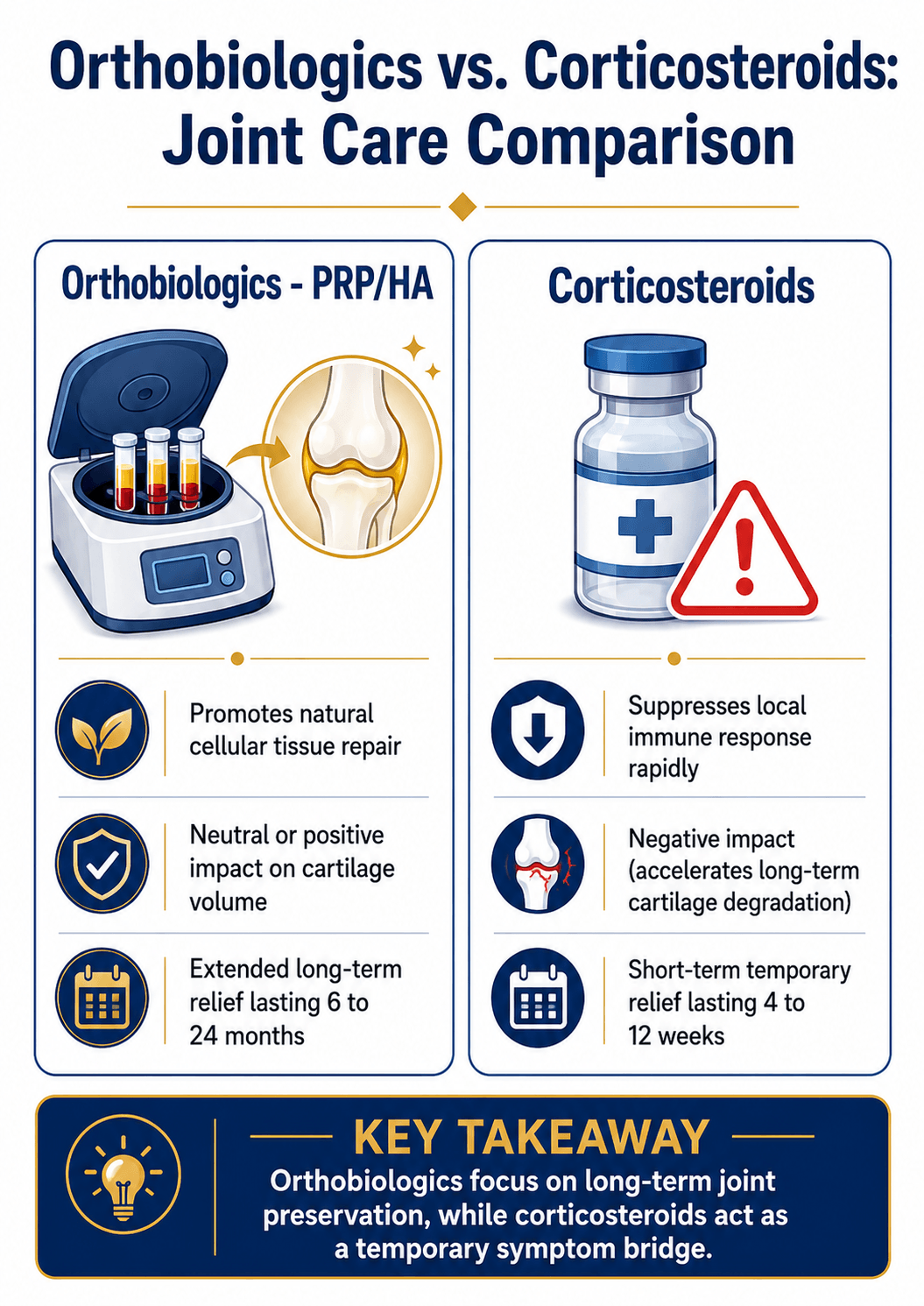
| Clinical Metric | Orthobiologic Therapies (PRP / HA) | Corticosteroid Injections |
| Primary Mechanism | Cellular tissue repair & natural lubrication. | Immune suppression & rapid inflammation control. |
| Impact on Cartilage | Neutral or positive (promotes volume preservation). | Negative (accelerates long-term cartilage degradation). |
| Onset of Relief | Gradual (typically building over 2 to 6 weeks). | Rapid (usually within 24 to 72 hours). |
| Duration of Benefit | Extended (typically lasting 6 to 24 months). | Short-term (typically lasting 4 to 12 weeks). |
The Benefits of Orthobiologics Over Surgery
Choosing advanced orthobiologics over traditional orthopedic surgery provides patients with several massive clinical advantages. First and foremost, these treatments are minimally invasive, requiring only a highly precise, outpatient injection performed under imaging guidance. The associated recovery time is incredibly short—most patients can return to their normal daily activities and work within 24 to 48 hours. Second, orthobiologics carry a vastly lower risk of serious medical complications compared to open surgery, such as severe post-operative infections, nerve damage, or deep vein blood clots. Third, regenerative therapies preserve the patient’s natural, native joint architecture and bone structure. This structural preservation is critically vital for younger, active individuals who wish to delay or completely avoid the permanent restrictions of a total joint replacement. For those searching for orthobiologics Charlotte options, providers like Joint Health Solutions offer a highly personalized, strictly evidence-based approach that prioritizes long-term joint preservation above all else.
Let’s look at the hard medical data to quantify these benefits. According to official statistics from the Agency for Healthcare Research and Quality (AHRQ), the baseline rate of surgical site infections following a total knee arthroplasty ranges between 1–2%, while dangerous deep vein thrombosis (DVT) occurs in roughly 0.5–1% of surgical patients despite modern blood-thinning prophylaxis. In stark contrast, the risk of developing a localized infection from an orthobiologic joint injection is lower than 0.1%, according to a comprehensive 2021 systematic review published in the Journal of Bone and Joint Surgery.
Furthermore, the risk of experiencing an adverse allergic reaction is virtually non-existent for autologous products like PRP and BMAC, since they are derived entirely from the patient’s own blood and tissues, and remains lower than 0.5% for highly purified hyaluronic acid gels.
Recovery timelines represent another massive factor for active individuals. Following a total knee replacement surgery, patients must endure 6 to 12 weeks of intense, painful physical therapy and can take up to 6 full months to safely return to high-level physical activity or sports. With advanced orthobiologics, patients routinely resume normal ambulation within 24–48 hours, with only minor temporary restrictions placed on high-impact exercise for the first week to allow the joint environment to stabilize. For Charlotte’s highly active population—many of whom are avid runners, mountain cyclists, or weekend golfers—this rapid treatment recovery profile is an absolute game-changer.
Preservation of native joint anatomy is especially critical for younger patients facing premature joint wear. While the historical average age for receiving a total knee replacement in the United States sits around 66 years old, a rapidly growing number of patients in their 40s and 50s are being pushed toward the procedure due to severe activity-related wear. However, artificial joint components have a finite lifespan. A comprehensive 2022 study published in the Journal of Arthroplasty revealed that patients under the age of 55 who underwent a total knee replacement experienced a high 30% surgical revision rate at a 10-year follow-up, compared to a mere 10% revision rate for patients who received their implants after the age of 70.
Surgical revisions are significantly more complex, carry higher complication rates, and offer less predictable pain relief than initial replacements. By utilizing advanced orthobiologics early in the degenerative cycle, younger patients can successfully protect and extend the lifespan of their natural joints, comfortably delaying or completely bypassing the need for implant surgery.
Advanced Multimodal Regenerative Strategies
At Joint Health Solutions, we firmly believe that the highest clinical success rates are achieved by combining multiple advanced modalities rather than relying on a single isolated injection. We seamlessly integrate mechanical and biological therapies to maximize joint preservation:
-
Bracing Synergy: We frequently pair our biological injections with advanced Offloading Knee Braces. While the orthobiologic injection works at a cellular level to calm inflammation and stimulate tissue homeostasis, the unloader brace mechanically widens the joint space, removing physical pressure from the arthritic compartment and allowing the injected therapies to perform optimally under minimized mechanical stress.
-
Systemic Optimization: To maximize the local efficacy of therapies like PRP, we often utilize targeted Anti-Inflammatory IV Therapy prior to the procedure. Lowering systemic inflammatory cytokines optimizes the biological quality of the patient’s harvested blood, ensuring that the concentrated platelet serum delivers the highest possible ratio of healing proteins directly to the damaged joint.
Call to Action
📅 Ready to reclaim your active lifestyle without open surgery?
Don’t let chronic joint pain or accelerating osteoarthritis keep you on the sidelines any longer. Experience the cutting-edge field of regenerative medicine firsthand with the premier team at Joint Health Solutions. Explore our advanced Orthobiologics Treatments & Services and schedule your diagnostic consultation online today to find out if PRP or viscosupplementation is the right path for your long-term joint health!
Institutional Sources & Clinical References
-
American Academy of Orthopaedic Surgeons (AAOS) – Biologics for Joint Care
-
National Institutes of Health (NIH) – Platelet-Rich Plasma Clinical Trials
-
Centers for Disease Control and Prevention (CDC) – Osteoarthritis Management
-
British Journal of Sports Medicine (BJSM) – Orthobiologic Meta-analysis
Frequently Asked Questions
How long does it take for orthobiologics to work?
Many patients notice improvement within 2 to 4 weeks after treatment, but full benefits may take up to 3 months as the body’s healing processes unfold.
Are orthobiologic treatments covered by insurance?
Coverage varies. Many insurance plans consider orthobiologics experimental and may not cover them. Joint Health Solutions offers transparent pricing and can help you understand your options.
Who is a good candidate for orthobiologics?
Good candidates are individuals with mild to moderate joint degeneration who have not responded to conservative treatments. A thorough evaluation determines eligibility.
What is the difference between PRP and hyaluronic acid injections?
PRP uses your own blood to stimulate healing, while hyaluronic acid acts as a lubricant. Both can reduce pain, but they work through different mechanisms.
How many treatments are typically needed?
Most protocols involve 1 to 3 injections, spaced 4 to 6 weeks apart. Your provider will create a personalized plan based on your condition.
Is the procedure painful?
Discomfort is minimal. The injection site may be sore for a day or two, but most patients tolerate it well.
Can orthobiologics be combined with physical therapy?
Yes, combining orthobiologics with physical therapy often enhances outcomes by strengthening supporting muscles and improving joint mechanics.
Are there any side effects?
Side effects are rare but may include temporary pain, swelling, or infection at the injection site. Serious complications are uncommon.
How long do results last?
Results vary, but many patients experience relief for 6 to 12 months. Maintenance injections may be recommended.
What is the cost of orthobiologic treatments?
Costs depend on the type of treatment and number of injections. Joint Health Solutions provides detailed pricing during your consultation.