
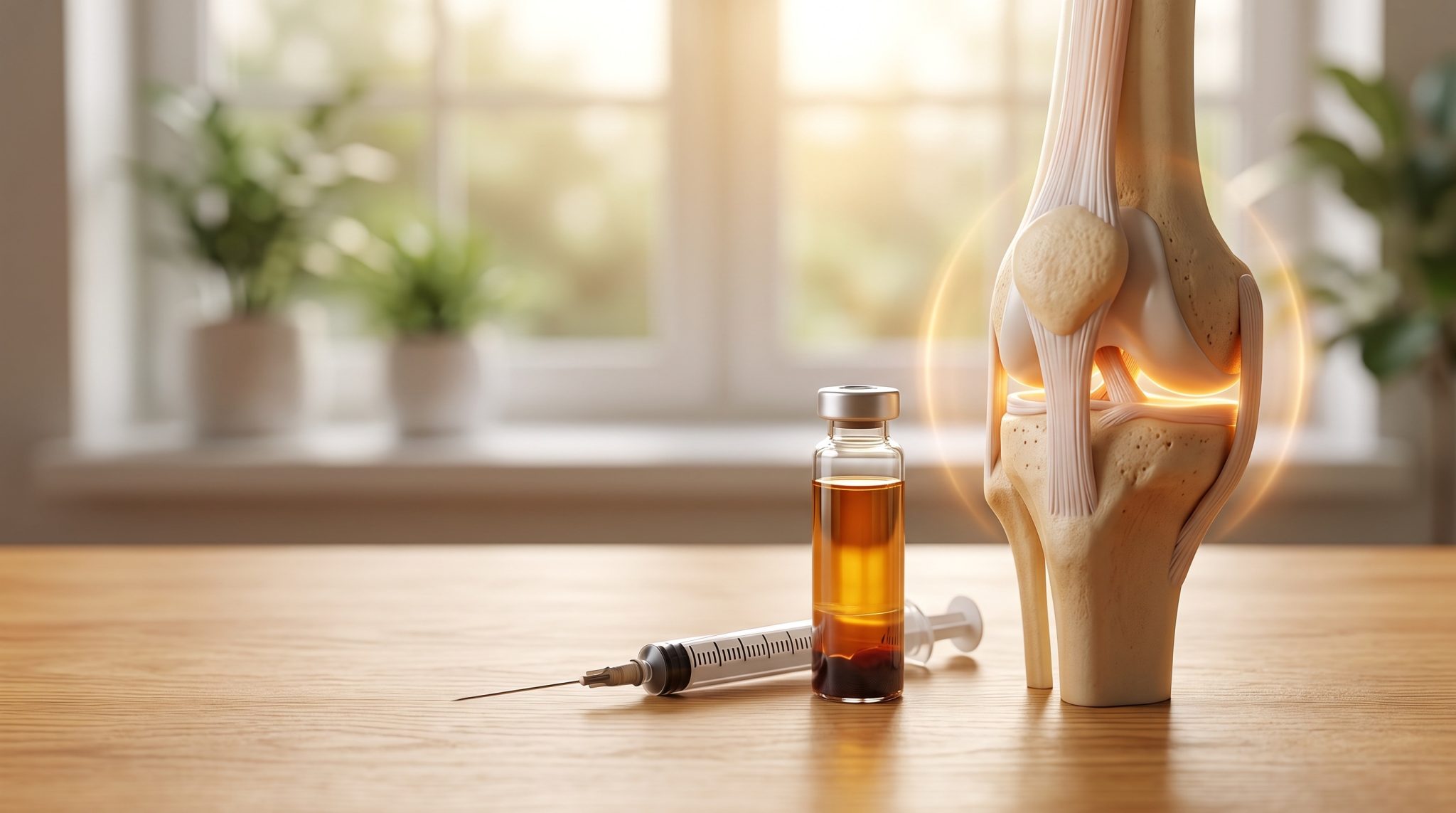
PRP Injections for Knee Osteoarthritis in Charlotte: What to Expect
If you have knee osteoarthritis and have already tried physical therapy, activity modification, and oral pain relievers without lasting relief, you may have come across platelet-rich plasma, or PRP, as a possible next step. PRP has become a popular topic in sports medicine and orthopedic circles, partly because of its use by professional athletes recovering from injury. But what actually happens during a PRP injection, what does the evidence say about knee osteoarthritis specifically, and is it the right option for you? This article walks through the science, the procedure, and what to realistically expect, so you can have an informed conversation with your provider.
Understanding Knee Osteoarthritis and Why Treatment Options Vary
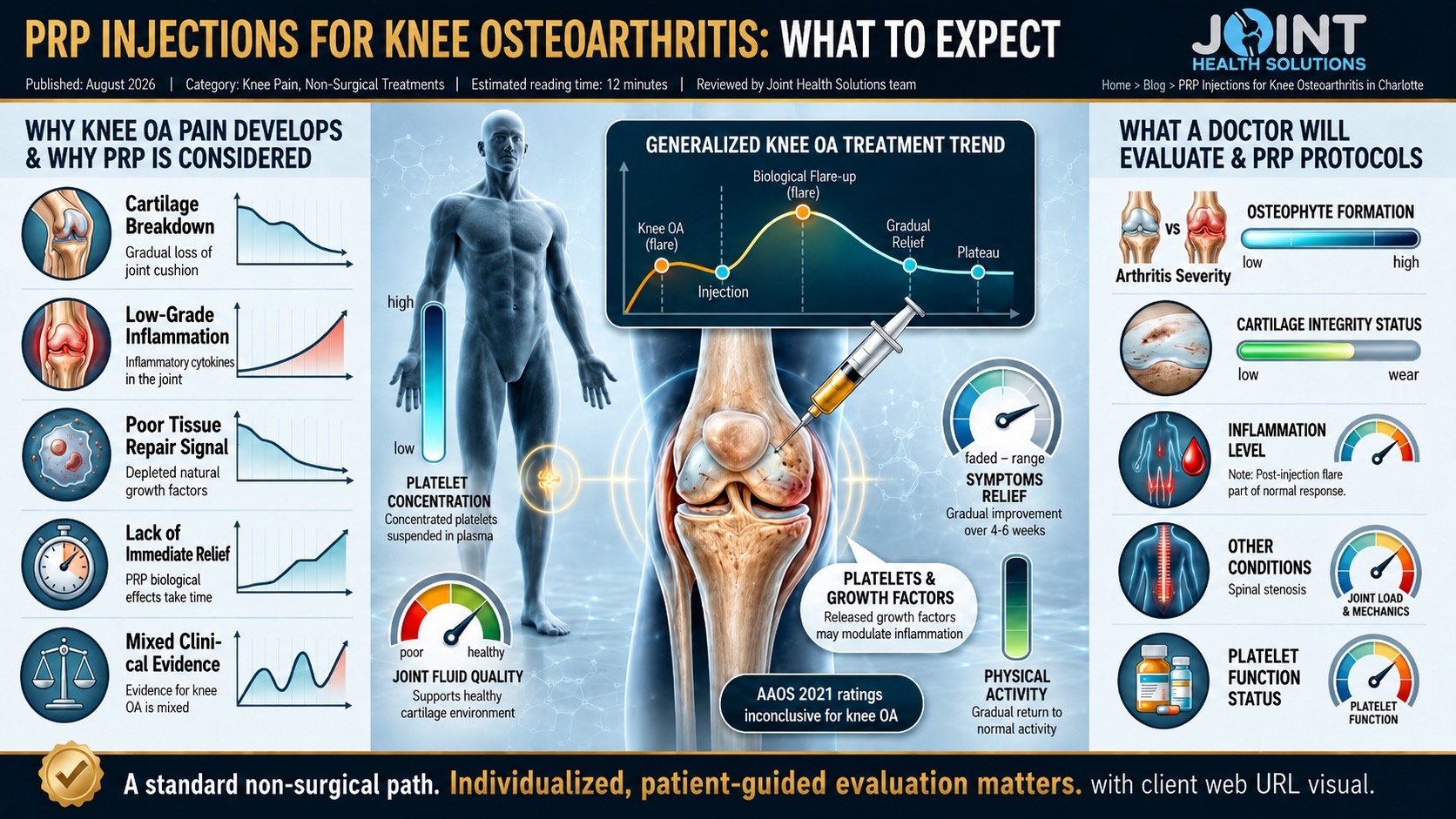
Knee osteoarthritis is the gradual breakdown of the cartilage that cushions the ends of the bones in the knee joint. As this cartilage thins, the joint loses some of its natural shock absorption, and the surrounding tissues — including the joint lining, or synovium — often become mildly inflamed. This combination of mechanical wear and low-grade inflammation is what produces the classic symptoms of osteoarthritis: pain with activity, stiffness after rest, swelling, and sometimes a grinding or catching sensation.
Because osteoarthritis involves both a mechanical component (worn cartilage) and a biological component (inflammation), no single treatment addresses everything at once. Physical therapy strengthens the muscles around the knee to reduce mechanical stress. Corticosteroid injections calm inflammation quickly but temporarily. Hyaluronic acid injections aim to improve the lubricating quality of the joint fluid. PRP takes a different approach: it attempts to use your body’s own biological materials to influence the inflammatory and healing environment inside the joint. Understanding where PRP fits among these options helps set realistic expectations before you decide whether to try it.
What Is PRP and How Is It Made?
Platelet-rich plasma is a concentration of platelets — small blood cells best known for their role in clotting — suspended in plasma, the liquid portion of blood. Platelets also contain granules packed with growth factors and signaling proteins that are involved in tissue repair throughout the body, from healing a cut to remodeling tendon after injury. The idea behind PRP therapy is that concentrating these platelets and injecting them into a damaged or arthritic joint may help support the body’s natural healing processes at the site where it’s needed most.
To prepare PRP, a small sample of your blood is drawn, similar to a routine blood test. The blood is then placed in a centrifuge, a machine that spins the sample at high speed to separate its components by density — red blood cells settle at the bottom, plasma and platelets remain suspended above, and white blood cells form a layer in between. This process concentrates the platelets into a smaller volume of plasma, which is then drawn up and prepared for injection into the knee joint. Different PRP systems concentrate platelets to different degrees and may or may not include white blood cells, which is one of several reasons why research results on PRP can be inconsistent from study to study.
It’s important to understand the regulatory status of PRP. PRP is not FDA-approved as a drug; the device used to concentrate platelets is FDA-cleared, and evidence for knee OA is mixed. This means the preparation equipment has been cleared for use, but PRP itself has not gone through the same approval process as a prescription medication. Your provider should discuss this distinction with you as part of informed consent, and you should feel comfortable asking questions about the specific system used in your treatment.
How PRP May Help With Knee Osteoarthritis
Knee osteoarthritis involves the gradual breakdown of cartilage, along with low-grade inflammation within the joint. The theory behind PRP for knee OA is that the growth factors released by concentrated platelets may help modulate inflammation and support the health of the remaining cartilage and surrounding tissue. Some laboratory research suggests PRP may influence cell signaling pathways involved in joint health — for example, by encouraging cells in the joint lining to produce more of the lubricating and cushioning molecules found in healthy joint fluid. This research does not always translate directly into predictable clinical outcomes, however, and the leap from a laboratory dish to a living, weight-bearing joint is a significant one.
Unlike a corticosteroid injection, which works quickly by suppressing inflammation, PRP is not designed to provide immediate relief. Many patients don’t notice a significant change for several weeks, as the biological effects take time to develop. Some patients report a temporary increase in soreness or stiffness in the days immediately following the injection, sometimes called a post-injection flare, before symptoms begin to improve. This flare is thought to reflect the initial inflammatory signaling that PRP triggers as part of the healing cascade, though it can be uncomfortable in the short term.
It’s worth being clear-eyed about the evidence: while some clinical studies report improved pain scores and function with PRP for knee osteoarthritis compared to placebo, others show no meaningful difference. Study designs vary in how PRP is prepared, how many injections are given, how the outcomes are measured, and how long patients are followed, which makes it difficult to draw firm, universal conclusions. Some researchers believe that certain PRP preparations — particularly those with higher platelet concentrations and fewer white blood cells — may perform better than others, but standardization across the field is still a work in progress. PRP should be viewed as one option among several, not a guaranteed fix, and patients considering it should go in with realistic, tempered expectations.
Preparing for Your PRP Appointment
A little preparation can help your PRP appointment go smoothly and may improve the quality of your platelet sample. Your provider may ask you to:
- Stay hydrated: Good hydration in the days leading up to your appointment can make the blood draw easier and may support a better-quality plasma sample.
- Avoid NSAIDs beforehand: Nonsteroidal anti-inflammatory drugs like ibuprofen or naproxen can affect platelet function, so most providers ask patients to avoid them for several days before the procedure.
- Eat a normal meal: Unlike some blood tests, PRP preparation does not typically require fasting. Eating normally beforehand can help prevent lightheadedness during the blood draw.
- Wear comfortable clothing: Loose pants or shorts make it easier to access the knee for the injection.
- Plan for mild post-procedure soreness: While you likely won’t need someone to drive you home, it can help to have a lighter schedule for the rest of the day.
Your provider will also review your medical history in detail, including any blood disorders, medications, and prior joint injections, to confirm that PRP is an appropriate option for you.
What to Expect During the Procedure
At Joint Health Solutions, PRP injections for the knee are performed as an outpatient procedure. Here is a general overview of what happens:
- Blood draw: A small amount of blood is drawn from your arm, typically 15 to 60 milliliters depending on the PRP system used.
- Centrifugation: The blood is processed in a centrifuge for approximately 10 to 15 minutes to concentrate the platelets.
- Joint preparation: The skin over the knee is cleaned with an antiseptic. A local anesthetic may be used to numb the injection site.
- Injection: The concentrated PRP is injected into the knee joint, often with ultrasound guidance to help confirm accurate placement.
- Observation: You’ll be monitored briefly afterward before being released to go home.
The entire visit, including the blood draw and processing time, typically takes about 45 minutes to an hour. Most patients tolerate the procedure well, with the injection itself causing only brief discomfort — often described as a feeling of pressure or fullness within the joint rather than sharp pain.
Recovery and What Comes Next
After a PRP injection, it’s common to experience soreness, mild swelling, or stiffness in the knee for a few days. This is generally considered a normal part of the healing response rather than a complication, though your provider will give you guidance on what level of discomfort is expected versus what warrants a call to the office.
You’ll typically be advised to avoid NSAIDs like ibuprofen for a period around the injection, since these medications work by blocking the same inflammatory pathways that PRP is intended to engage. Acetaminophen is usually an acceptable alternative for discomfort. Most providers recommend limiting strenuous activity for a few days, then gradually returning to normal activity as tolerated. Light activities such as walking are usually fine within a day or two, but higher-impact exercise, heavy lifting, or intense sports training are typically discouraged for a week or more.
Because PRP works gradually, meaningful improvement — when it occurs — is usually reported over four to six weeks, with some patients continuing to notice gains for a few months afterward. Some treatment protocols involve a single injection, while others involve a short series spaced several weeks apart. Your provider will recommend an approach based on your specific situation, and it’s reasonable to check in with your provider partway through the process to reassess how you’re responding before committing to additional injections.
Setting Realistic Expectations
One of the most important parts of considering PRP is going in with a clear, honest picture of what it can and cannot do. PRP is not a cure for osteoarthritis, and it will not regrow lost cartilage. At best, it may help reduce pain and improve function for a period of time in patients who respond to it — and not every patient does. Because the research is mixed, no provider can promise you a specific outcome or duration of relief.
That said, many patients appreciate PRP as a lower-risk option compared to surgery, particularly if they want to try a treatment that uses their own biological material rather than a manufactured medication. Discussing your personal goals — whether that’s returning to a specific activity, delaying a bigger intervention, or simply reducing day-to-day discomfort — can help your provider tailor a plan and set expectations that make sense for you specifically.
Comparing PRP to Other Knee Osteoarthritis Treatments
PRP is one of several injection-based options for knee osteoarthritis. The table below offers a general comparison to help put it in context.
| Treatment | How It Works | Onset | Limitations |
|---|---|---|---|
| PRP | Concentrated platelets may support the body’s healing response | Gradual, over several weeks | Evidence mixed; not FDA-approved as a drug; results vary |
| Corticosteroid injection | Suppresses inflammation directly | Fast, within days | Short-term relief; repeated use may affect cartilage over time |
| Hyaluronic acid injection | Supplements joint lubrication | Gradual, over a few weeks | AAOS rates evidence as inconclusive for knee OA; results vary |
| Physical therapy | Strengthens supporting muscles, improves mechanics | Gradual | Requires consistent participation; may not be enough alone for advanced OA |
Some patients ask whether treatments can be combined or sequenced — for example, trying a corticosteroid injection for a flare-up while considering PRP as part of a longer-term plan. This kind of sequencing should be discussed individually with your provider, since combining certain injections too close together may reduce PRP’s intended effect. As a general rule, corticosteroid injections are usually spaced well apart from PRP injections to avoid the steroid dampening the inflammatory signaling PRP relies on.
Who May Be a Candidate for PRP?
PRP is generally considered for patients with mild to moderate knee osteoarthritis who have not found adequate relief from conservative measures such as physical therapy, activity modification, and oral medications. It may also be discussed with patients who want to avoid or delay corticosteroid injections due to concerns about repeated steroid use, or who are looking for a treatment option that uses their own biological material.
PRP may be less appropriate for patients with very advanced, bone-on-bone osteoarthritis, though some patients in this category still choose to try it as part of a broader non-surgical plan, understanding that expectations should be modest. It is generally avoided in patients with active infections, certain blood disorders (such as clotting or platelet disorders), or those on medications that significantly affect platelet function, and it is not recommended during pregnancy.
A thorough evaluation — including your symptoms, imaging, activity goals, and treatment history — helps your provider determine whether PRP is a reasonable option for your specific knee, or whether another treatment (or combination of treatments) might serve you better.
Potential Risks and Side Effects
Because PRP is derived from your own blood, the risk of allergic reaction is low. The most common side effects are related to the injection itself:
- Soreness, swelling, or stiffness at the injection site for a few days
- A temporary flare in pain before improvement begins
- Bruising at the blood draw or injection site
- A small risk of infection, as with any injection
Serious complications are uncommon when the procedure is performed by an experienced provider using sterile technique. If you experience worsening pain, fever, or signs of infection such as increasing redness or warmth, contact your provider promptly.
Schedule a Consultation in Charlotte
If you’re exploring non-surgical options for knee osteoarthritis, the team at Joint Health Solutions can help you understand whether PRP, hyaluronic acid, corticosteroid injections, or a combination approach makes the most sense for your situation. Explore our full treatments and services, or call us at 704-833-3566 to schedule a consultation.
Institutional Sources
- AAOS: Treatment of Osteoarthritis of the Knee (Clinical Practice Guideline)
- NIAMS: Osteoarthritis
- Mayo Clinic: Platelet-Rich Plasma (PRP) Injections
- FDA: Platelet-Rich Plasma Information
Frequently Asked Questions
Is PRP FDA-approved for knee osteoarthritis?
PRP is not FDA-approved as a drug. The device used to concentrate platelets is FDA-cleared, and evidence for knee osteoarthritis is mixed. Your provider should discuss this distinction with you before treatment.
How long does it take to feel results from PRP?
PRP works gradually. Most patients who respond report noticing improvement over four to six weeks, with some continued benefit over the following months. It does not provide the fast relief of a corticosteroid injection.
How many PRP injections will I need?
Protocols vary. Some providers recommend a single injection, while others recommend a short series spaced a few weeks apart. Your provider will recommend an approach based on your knee and your goals.
Is PRP painful?
The blood draw feels like a routine lab draw, and the knee injection itself typically causes brief discomfort. Some patients experience soreness or a temporary flare in pain for a few days afterward.
What does PRP cost?
Joint Health Solutions operates on a self-pay basis with transparent, upfront pricing. Cost depends on the number of injections recommended for your treatment plan. Our team can provide a quote during your consultation.
Can I take ibuprofen after a PRP injection?
Most providers recommend avoiding NSAIDs like ibuprofen around the time of a PRP injection, since they may blunt the inflammatory response PRP is intended to engage. Acetaminophen is usually an acceptable alternative — check with your provider for specific guidance.
How does PRP compare to hyaluronic acid injections?
They work differently: hyaluronic acid aims to supplement joint lubrication, while PRP aims to support the body’s healing response through growth factors. Evidence for both is mixed for knee osteoarthritis, and the right choice depends on your specific situation.
Who is not a good candidate for PRP?
PRP is generally avoided in patients with active infections, certain blood disorders, or those taking medications that significantly affect platelet function. It is also not recommended during pregnancy. A thorough evaluation will help determine if it’s appropriate for you.
Can PRP be combined with other treatments?
PRP may be used alongside physical therapy and activity modification. Combining it closely in time with a corticosteroid injection is generally not recommended, as the steroid may interfere with PRP’s intended effect. Discuss sequencing with your provider.
Does PRP repair cartilage damage?
PRP is not a cure and does not regenerate lost cartilage. It is intended as a symptomatic and potentially supportive treatment, not a disease-modifying therapy. Results vary, and not every patient responds.




 English
  Spanish