
People searching for shoulder injections Concord NC can receive provider-guided evaluation and treatment planning through Joint Health Solutions. Shoulder injections can be considered for selected cases of arthritis-related inflammation, bursitis, painful stiffness, and rotator cuff-related shoulder pain when symptoms interfere with reaching, lifting, dressing, working, exercising, or sleeping.
Patients from Concord and Cabarrus County are seen at the Joint Health Solutions clinic at 9350 Benfield Rd, #109, Charlotte, NC 28269. The appropriate treatment depends on the likely source of symptoms, the structure being targeted, medical history, current medications, previous care, and functional goals.
Shoulder injections can provide short-term symptom support for selected inflammatory or painful shoulder conditions, but they do not repair a rotator cuff tear, restore cartilage, reverse arthritis, or guarantee that surgery will not be needed. A corticosteroid injection can be considered for selected patients after a clinical evaluation. Hyaluronic acid is not recommended for glenohumeral shoulder osteoarthritis. Routine PRP use is not supported for common rotator cuff tendinopathy or tears, and reliable evidence is lacking for shoulder osteoarthritis. Toradol IM is injected into a muscle for short-term acute-pain support and is not a shoulder-joint injection.
Shoulder injections are procedures used to place medication into or near a selected shoulder structure. The treatment target can include the main glenohumeral joint, the acromioclavicular joint, the subacromial bursa, or another clinically appropriate area.
An injection should be chosen according to the likely diagnosis and treatment goal. The same procedure is not appropriate for every form of shoulder pain.

A shoulder injection places medication into or near the structure believed to be contributing to symptoms. Accurate treatment planning depends on distinguishing joint pain from bursal, tendon-related, muscular, or referred pain.

A corticosteroid injection can reduce inflammation-related symptoms for selected patients. Symptom improvement does not prove that cartilage, tendons, or other shoulder structures have healed.

Many shoulder injections can be performed in a clinical setting after an evaluation and safety review. The exact procedure, positioning, comfort measures, and aftercare depend on the treatment target.

An injection can be combined with activity modification, movement rehabilitation, strengthening, or referral when appropriate. It should not replace necessary evaluation or be presented as a guaranteed alternative to surgery.
Joint Health Solutions evaluates shoulder symptoms before recommending an injection. Treatment decisions should reflect the affected structure, likely diagnosis, evidence, health history, medication risks, and previous response.

Corticosteroid injections, commonly called cortisone shots, are used to reduce inflammation in a selected shoulder area. A single injection can be considered for short-term improvement in pain and function for selected patients with rotator cuff-related shoulder pain, bursitis, or another appropriate inflammatory condition.
Cortisone can also be discussed for selected arthritis flare-ups or painful shoulder stiffness. It does not rebuild cartilage, repair a rotator cuff tear, regenerate a tendon, or cure arthritis.
Repeated injections require individualized review. The provider should consider previous injections, diabetes, medication use, tissue health, possible future surgery, and whether earlier injections provided meaningful functional improvement.
Learn more about cortisone injections for Concord-area patients.
Hyaluronic acid injections are used for selected knee osteoarthritis patients, but they should not be promoted as a treatment for glenohumeral shoulder osteoarthritis.
Clinical guidance has found no demonstrated benefit for hyaluronic acid in the main shoulder joint. This page therefore does not recommend knee gel products such as Orthovisc, Hyalgan, GenVisc, Monovisc, or Durolane for shoulder osteoarthritis.
Patients with shoulder arthritis can instead discuss clinically appropriate options such as activity modification, physical therapy, short-term corticosteroid support, medication review, and orthopedic referral when nonsurgical care is insufficient.
Platelet-rich plasma, or PRP, is prepared from a patient’s own blood and contains a concentrated platelet component. It is sometimes marketed as a regenerative shoulder treatment, but current evidence does not support broad claims.
Routine PRP use is not supported for rotator cuff tendinopathy or partial tears, and it may not be indicated for nonoperative treatment of full-thickness rotator cuff tears. Reliable evidence is also lacking for PRP as an established treatment for glenohumeral shoulder osteoarthritis.
PRP should not be described as rebuilding cartilage, repairing a tear, reversing arthritis, or preventing surgery. Any discussion must include evidence limitations, variable preparation methods, costs, alternatives, and the absence of guaranteed structural healing.
Toradol is a common brand name for ketorolac, a prescription nonsteroidal anti-inflammatory medication. A Toradol IM injection is administered into a muscle and works systemically through the body.
It is not injected into the shoulder joint, bursa, or tendon region and is not an ultrasound-guided shoulder procedure. Toradol can be considered only for selected short-term acute-pain situations after screening for medication and health risks.
Ketorolac is not ongoing treatment for chronic shoulder arthritis, frozen shoulder, or recurring stiffness. It carries important gastrointestinal, kidney, cardiovascular, allergy, medication-interaction, and bleeding risks.
A shoulder injection can be discussed when the likely source of symptoms is reasonably supported and the treatment goal is clear.
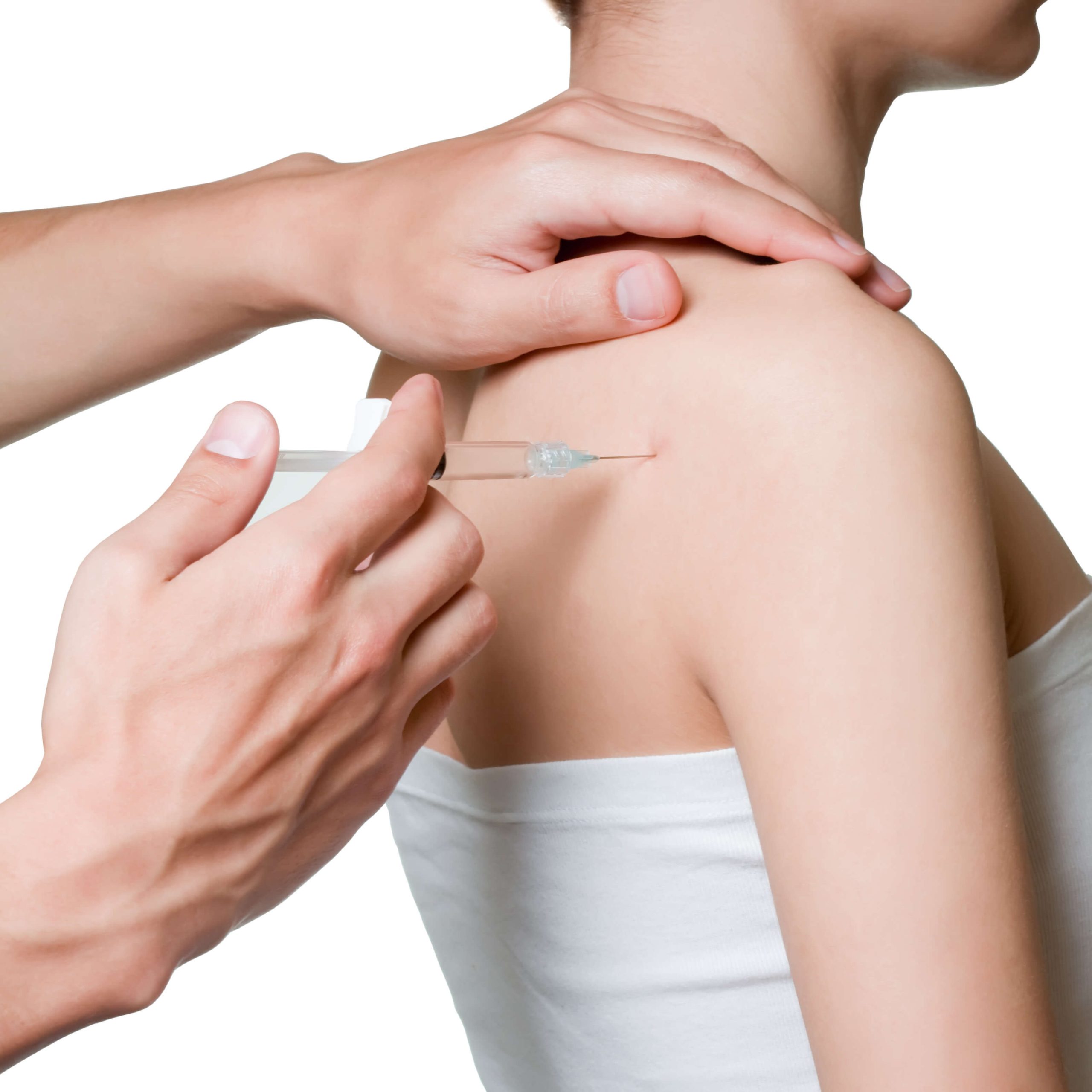
Glenohumeral osteoarthritis can cause deep aching, stiffness, grinding, reduced motion, and discomfort during reaching or rotation. A corticosteroid injection can be considered for short-term symptom support in selected patients, but it does not restore lost cartilage.
Patients seeking detailed arthritis information should review shoulder arthritis treatment near Concord.
The acromioclavicular joint is located near the top of the shoulder. Arthritis or irritation in this area can cause localized pain during reaching across the body, lifting, or overhead activity. A targeted injection can be considered after evaluation when the AC joint is a likely symptom source.
Frozen shoulder, also called adhesive capsulitis, can cause progressive pain and restricted movement. Injection treatment can be discussed for selected patients, but movement rehabilitation usually remains an important part of care.
This page does not represent hydrodilatation as an available service unless that procedure has been separately confirmed by the clinic.
Not every painful shoulder requires an injection. Symptoms can also come from injury, muscle strain, instability, referred pain, nerve irritation, fracture, infection, or other conditions.
Patients whose main concern is undiagnosed pain should begin with a shoulder pain evaluation near Concord.
Seek urgent medical care for:
An injection should not delay urgent assessment, appropriate imaging, or specialist referral.
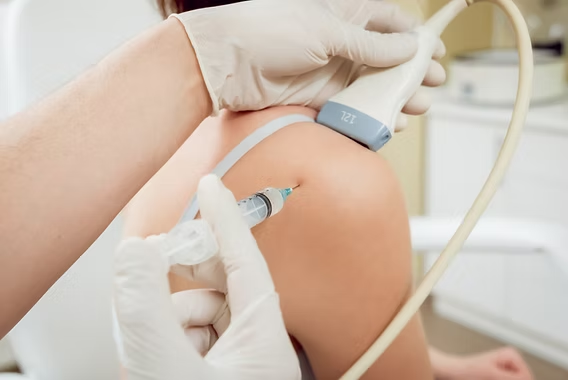
Ultrasound guidance can be used during selected shoulder injections to help the provider visualize the procedural target and needle path in real time.
Depending on the treatment plan, ultrasound can support placement near the subacromial bursa, glenohumeral joint, AC joint, or another selected structure. The provider determines whether ultrasound, fluoroscopy, a landmark-based approach, another method, or no injection is appropriate.
Procedural ultrasound guidance is not automatically the same as a complete diagnostic ultrasound examination. It should not be used on this page to claim that Joint Health Solutions routinely diagnoses tears, calcifications, fluid disorders, or other structural conditions through ultrasound.
Image guidance can support a controlled procedure, but it does not guarantee relief, eliminate every risk, or prove that the proposed treatment is appropriate.
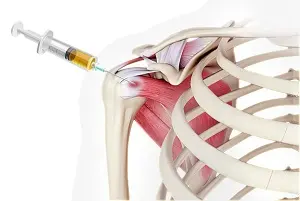
The visit begins with a review of symptoms, when they started, previous injuries, medical conditions, current medications, allergies, previous injections, and treatments already attempted.
The evaluation can include movement, range of motion, strength, tenderness, stability, and functional limitations. Existing records or imaging can be reviewed when available.
If an injection is appropriate, the provider explains the target, medication, expected goal, alternatives, evidence limitations, risks, and aftercare.
The skin is cleaned using an antiseptic technique. Patients should disclose blood thinners, diabetes, active infections, medication allergies, and previous injection reactions.
The provider places the needle into or near the selected shoulder structure. Ultrasound or another guidance method can be used when clinically appropriate.
Patients can feel a brief pinch, pressure, or temporary discomfort. The experience varies according to the target, medication, technique, and individual sensitivity.
After treatment, the provider gives instructions about activity, site care, medication use, symptom monitoring, and follow-up.
Temporary soreness can occur. Contact the clinic if pain or swelling increases, symptoms feel unusual, or new concerns develop. Fever, spreading redness, major swelling, severe weakness, breathing difficulty, or other serious symptoms require prompt medical attention.

Every shoulder injection has potential risks and limitations. Individual risk depends on the medication, treatment target, medical history, current medications, and frequency of previous procedures.
General procedural risks can include:
Corticosteroid-specific considerations can include temporary blood-glucose elevation, skin thinning, changes in skin color, fat atrophy, and possible tendon or cartilage effects. Multiple steroid injections can affect rotator cuff integrity and require careful review, particularly when surgery could later be considered.
PRP can cause temporary pain, swelling, or stiffness. It also involves cost and evidence limitations, and it should not be presented as proven structural repair.
Toradol IM has different risks because ketorolac circulates systemically. Important concerns include gastrointestinal bleeding, ulcers, kidney injury, cardiovascular events, bleeding complications, medication interactions, and NSAID-related allergic reactions.
Tell the provider about:
Do not independently stop a prescribed medication before an injection. Medication changes should be coordinated with the clinician who manages that medication.
PRP can cause temporary pain, swelling, or stiffness. It also involves cost and evidence limitations, and it should not be presented as proven structural repair.
There is no guaranteed duration for any shoulder injection. Treatment response depends on the diagnosis, structure treated, medication, symptom severity, activity demands, medical history, rehabilitation plan, and individual response.
| Treatment or Option | What Patients Should Understand |
|---|---|
| Corticosteroid injection | Intended primarily for short-term symptom support. Onset and duration vary, and repeated injections require individualized review. |
| Hyaluronic acid | Not recommended on this page for glenohumeral shoulder osteoarthritis because demonstrated benefit is lacking. |
| PRP | No fixed schedule or duration applies. Routine use is not supported for common rotator cuff tendinopathy or tears, and reliable shoulder-arthritis evidence is lacking. |
| Toradol IM | Short-term systemic acute-pain support only. It is injected into a muscle and is not ongoing shoulder arthritis treatment. |
A treatment should not be automatically repeated when symptoms return. The provider can reconsider the diagnosis, response to previous care, rehabilitation needs, medication risks, and whether orthopedic referral is more appropriate.
Individualized Shoulder Evaluation
Treatment decisions are based on the likely source of symptoms, physical findings, health history, current medications, previous care, activity limitations, and goals.
Evidence-Informed Recommendations
Cortisone, PRP, hyaluronic acid, and Toradol are not presented as interchangeable treatments. Each option is explained according to its actual purpose, evidence, limitations, and risks.
Image Guidance When Appropriate
Ultrasound or another guidance method can be considered when it supports the selected procedure. Guidance is not presented as a guarantee of benefit or a substitute for evaluation.
Rehabilitation and Referral Planning
Shoulder care can include physical therapy, activity modification, progressive strengthening, medication review, and referral. An injection is not automatically the final or only treatment.
Clinical Team
Jeffrey Galvin, MD, serves as Medical Director. Ariel Curtis, FNP-C, is a board-certified family nurse practitioner and Joint Injection Specialist.
These credentials do not mean either provider authored or medically reviewed this page unless that work has been completed and documented.
Access for Concord-Area Patients
Joint Health Solutions serves patients traveling from Concord and Cabarrus County at its Charlotte clinic. The practice focuses on non-surgical knee and shoulder care, evidence-informed treatment planning, and referral guidance when a higher level of care is needed.
Most patients feel a brief pinch, pressure, or temporary discomfort during a shoulder injection. The experience depends on the treatment target, medication, positioning, guidance method, and individual sensitivity. The provider explains the procedure before beginning and can discuss appropriate comfort measures. Temporary soreness can occur afterward. Increasing pain, spreading redness, major swelling, fever, or new weakness should be reported promptly.
There is no single injection that is appropriate for every shoulder condition. A corticosteroid injection can be considered for selected inflammation-related shoulder pain after evaluation, particularly when short-term symptom support has a clear purpose. The provider should first consider the likely diagnosis, target structure, previous care, diabetes, medications, possible future surgery, and whether physical therapy or referral would be more appropriate.
Hyaluronic acid should not be promoted for glenohumeral shoulder osteoarthritis. Clinical guidance has found no demonstrated benefit for that condition. Products commonly used as knee gel injections should therefore not be represented as established shoulder arthritis treatment. Patients with shoulder osteoarthritis can instead discuss physical therapy, activity modification, short-term corticosteroid support, medication considerations, and orthopedic referral when nonsurgical care is insufficient.
No. PRP has not been proven to reliably repair rotator cuff tears or restore normal tendon structure. Routine use is not supported for rotator cuff tendinopathy or partial tears, and it may not be indicated for full-thickness tears. PRP also cannot be recommended as established treatment for glenohumeral osteoarthritis. Any discussion should address uncertainty, costs, alternatives, and the difference between symptom improvement and structural healing.
No fixed duration applies to every patient. A corticosteroid injection is intended mainly for short-term symptom support, and the response depends on the diagnosis, treatment target, severity, activity demands, medical history, and rehabilitation plan. PRP does not have a guaranteed schedule or duration. Hyaluronic acid is not recommended here for shoulder osteoarthritis, while Toradol IM provides only short-term systemic acute-pain support.
The appropriate number depends on the shoulder condition, target, previous injections, response, diabetes, tissue health, medication risks, and possible future surgery. A universal annual number should not replace individualized review. Multiple steroid injections can affect rotator cuff integrity and could influence later repair decisions. The provider should reassess the diagnosis and broader care plan before recommending another injection.
A shoulder injection does not reconnect or structurally repair a torn rotator cuff tendon. A corticosteroid injection can sometimes support short-term pain and function, but symptom improvement is not proof of tendon healing. Traumatic injury, substantial weakness, persistent loss of function, or suspected high-grade tearing can require additional imaging and orthopedic evaluation. Repeated injections should not delay appropriate referral.
No. Ultrasound can support procedural placement for selected shoulder targets, but not every injection requires the same method. The provider determines whether ultrasound, fluoroscopy, a landmark-guided technique, another approach, or no injection is appropriate. Ultrasound guidance does not guarantee symptom improvement or eliminate every risk. A procedure-guidance scan should also not be presented as a complete diagnostic ultrasound examination.
Possibly, but the medication, dose, treatment target, bleeding risk, and reason for anticoagulation must be reviewed. Some patients can proceed with precautions, while others require coordination with the clinician who prescribed the medication. Do not stop a blood thinner independently. Also disclose aspirin, ibuprofen, naproxen, diabetes medication, kidney disease, gastrointestinal bleeding, allergies, and previous injection reactions.
Appointments for patients traveling from Concord and Cabarrus County are held at the Joint Health Solutions clinic at 9350 Benfield Road, Suite 109, Charlotte, NC 28269. Joint Health Solutions does not currently operate a physical clinic in Concord.
Shoulder pain or stiffness can interfere with reaching, lifting, dressing, work, exercise, and sleep. Schedule an evaluation to identify the likely source of symptoms and discuss whether an injection, physical therapy, activity modification, medication review, or orthopedic referral is the appropriate next step. Contact Joint Health Solutions
Schedule your visit today for Shoulder Injections Concord NC and take the next step toward better comfort, improved mobility, and personalized shoulder support.