
Knee pain can make walking, climbing stairs, exercising, working, sleeping, and completing ordinary daily activities more difficult. Joint Health Solutions provides knee pain evaluation and personalized nonsurgical care for adults from Concord and surrounding Cabarrus County communities.
Joint Health Solutions serves patients from Concord and Cabarrus County at its clinic located at 9350 Benfield Rd, #109, Charlotte, NC 28269. The practice does not currently operate a physical clinic in Concord.
Because knee pain can develop for many reasons, care begins by reviewing your symptoms, movement limitations, health history, and goals. The next step can involve conservative care, a treatment-specific consultation, further assessment, or orthopedic referral.
Care is led by experienced medical professionals, including Dr. Jeffrey Galvin and Ariel Curtis, FNP-C.
Joint Health Solutions evaluates adults from Concord and Cabarrus County who are experiencing knee pain, stiffness, swelling, instability or reduced mobility. Patients are seen at the practice’s Charlotte clinic. Depending on the cause and severity of symptoms, care may include activity guidance, physical therapy, bracing, joint aspiration or selected injection options. Some injuries and advanced conditions require urgent or orthopedic assessment.

Knee pain should be evaluated when it continues, repeatedly returns, becomes worse, or begins limiting normal movement. An appointment can be appropriate when symptoms interfere with walking, stairs, work, exercise, sleep, or your ability to bend and straighten the knee.
Other reasons to arrange an evaluation include:
These symptoms do not confirm a specific diagnosis. An evaluation helps identify the most appropriate care pathway rather than assuming that every painful knee has arthritis or requires an injection.
Some symptoms should not wait for a routine appointment. Seek urgent or emergency medical assessment after a major injury or when you experience:

Knee pain can develop from gradual joint changes, repetitive loading, inflammation, muscle weakness, or an acute injury. The location and pattern of symptoms can provide clues, but a diagnosis cannot be established from symptoms alone.
Knee osteoarthritis can cause aching, stiffness, swelling, grinding, and reduced movement. Symptoms can become more noticeable during walking, stairs, standing, or after sitting for an extended period.
Osteoarthritis is only one possible cause of knee pain. Detailed arthritis information belongs on the dedicated Knee Arthritis Treatment Concord NC
The menisci help distribute pressure through the knee. Meniscus problems can follow a twisting injury or develop through gradual degenerative changes.
Possible symptoms include: Pain along the knee joint line, Swelling, Catching or locking, Difficulty fully straightening the knee, A feeling that the knee gives way
Some meniscus-related symptoms respond to conservative care, while persistent mechanical symptoms can require orthopedic assessment.
Tendons around the knee can become irritated after repetitive activity, jumping, running, sudden changes in training, or continued loading without adequate recovery.
Tendon-related pain often requires a different approach from pain caused by osteoarthritis or joint inflammation. Identifying the likely source helps avoid selecting an inappropriate procedure.
Bursae are small fluid-filled structures that reduce friction around the knee. Irritation can cause localized tenderness or swelling, particularly with kneeling, bending, or direct pressure.
Not every swollen knee has bursitis. Joint inflammation, injury, infection, and other conditions can create similar symptoms.
Patellofemoral pain is usually felt around or behind the kneecap. It can become worse with stairs, squatting, running, repeated bending, or sitting with the knee bent for an extended period.
Contributing factors can include activity changes, muscle weakness, movement patterns, or kneecap mechanics. Rehabilitation and activity modification are commonly considered before invasive treatment.
Ligament injuries can follow twisting, sudden direction changes, falls, or collisions. Symptoms can include swelling, instability, a popping sensation, and difficulty bearing weight.
A suspected major ligament injury can require further imaging or orthopedic evaluation.
Sometimes the knee may not be the only structure contributing to symptoms. When examination findings suggest another source or a more complex movement problem, the provider can recommend an appropriate referral.

A knee pain evaluation begins with a detailed discussion of your symptoms. The provider can ask when the pain began, whether an injury occurred, where the discomfort is located, and which activities make it better or worse.
The review can also cover:
A focused examination can assess tenderness, visible swelling, range of motion, strength, stability, and movement patterns. Existing medical records or imaging can be reviewed when available.
Additional outside testing, urgent assessment or specialist referral may be recommended when the examination and symptom pattern indicate that more information is needed.
The appropriate plan depends on the likely cause, symptom severity, medical history, functional limitations, and patient goals. Not every patient requires an injection, brace, or procedure.

Early care can involve reducing activities that repeatedly aggravate the knee while maintaining safe movement when possible. Complete inactivity is not always necessary or helpful.
Physical therapy can support:
Exercise is strongly supported in major knee osteoarthritis guidelines, but the program should match the patient’s condition and tolerance.
Learn more about Physical Therapy at Joint Health Solutions

A knee brace can be considered when added stability or unloading of an affected knee compartment could support function. The correct brace depends on the condition, alignment, fit, and activity needs.
Learn more about Offloading Knee Braces
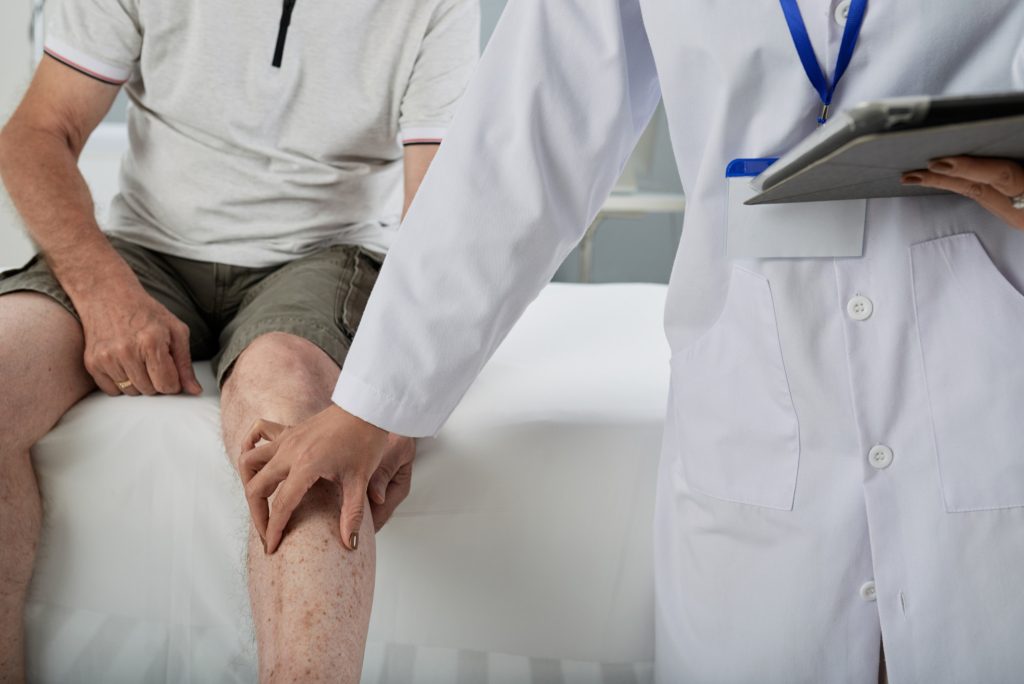
Knee arthrocentesis, also called joint aspiration, can be considered when significant fluid buildup creates swelling or pressure. Removing fluid does not treat every cause of swelling, and fluid can return.
Learn more about Knee Arthrocentesis Treatment in Concord NC

Selected patients can be evaluated for an injection after the likely cause, medical history, previous care, alternatives, and treatment limitations are reviewed.

For appropriate patients with symptomatic knee osteoarthritis, gradual weight management can reduce mechanical demand on the knee and support movement.
Nutrition, sleep, recovery, and sustainable activity habits can also support participation in a broader care plan. Detailed guidance is available on the Nutrition Plan
| Treatment or Approach | Commonly Considered For | Typical Goal | General Timing | Evidence Considerations | Important Limitations |
|---|---|---|---|---|---|
| Activity guidance and exercise | Activity-related symptoms, weakness, stiffness, or osteoarthritis | Reduce aggravating stress and improve movement | Requires consistent participation | Strong support for knee osteoarthritis exercise | Program must match the condition and tolerance |
| Physical therapy | Reduced strength, mobility, balance, or movement control | Improve function and movement quality | Progress develops over time | Guideline-supported conservative care | Results depend on participation and diagnosis |
| Knee bracing | Selected stability or compartment-loading concerns | Support movement or redistribute stress | Support occurs while worn | Supported for selected knee osteoarthritis patients | Fit and diagnosis affect usefulness |
| Arthrocentesis | Significant knee fluid buildup | Reduce pressure by removing excess fluid | Procedure-specific | Established option for selected swollen knees | Fluid can return |
| Cortisone injection | Selected inflammatory or osteoarthritis flare-ups | Short-term symptom reduction | Response varies | Moderate evidence for short-term relief | Not a structural cure |
| Hyaluronic acid injection | Selected symptomatic knee osteoarthritis | Attempt symptom and function improvement | Generally gradual | Guidelines differ on routine use | Does not rebuild cartilage |
| PRP therapy | Selected knee osteoarthritis cases | Attempt symptom and function improvement | Can be gradual | AAOS rates evidence as limited | Protocols vary; regeneration is not guaranteed |
| Toradol IM injection | Selected acute pain presentations | Short-term systemic pain control | Short-term only | Official labeling limits treatment duration | Not routine chronic arthritis care |
Treatment suitability and response vary. A clinical evaluation is needed before selecting a treatment, and separate studies do not establish that one option is universally superior.
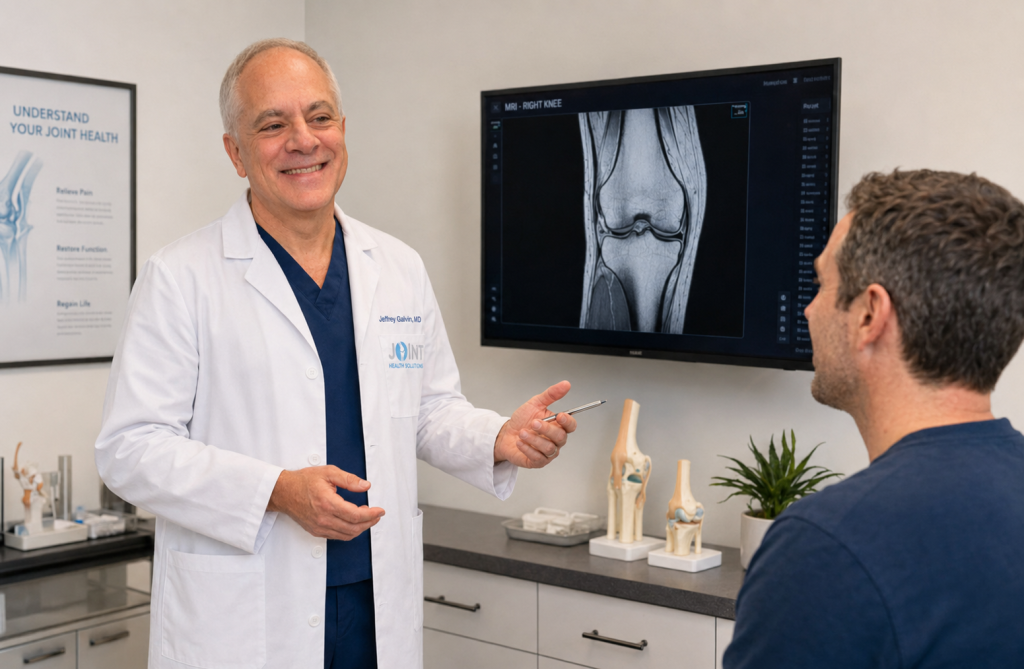
Exercise, education, self-management, weight management, and selected bracing are well-supported for knee osteoarthritis. Serious injury, instability, locking, or possible infection require separate medical evaluation.
Corticosteroid, PRP, and hyaluronic acid treatments may help some patients, but results vary and evidence is mixed. Ketorolac is only for short-term acute pain. These treatments mainly reduce symptoms and improve function rather than rebuild cartilage.
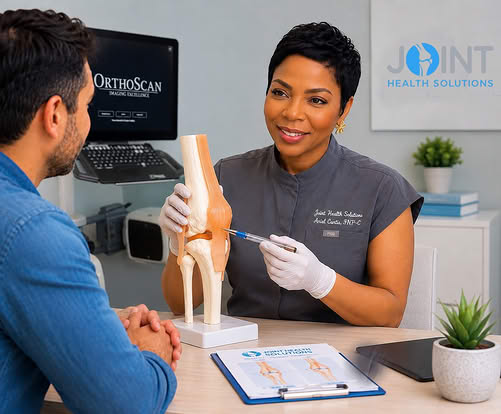
Treatment selection can depend on:
Physical therapy requires consistent participation. Braces must be selected and fitted correctly. Aspiration does not prevent fluid from returning. Cortisone is not a permanent treatment. Hyaluronic acid recommendations are mixed. PRP evidence remains limited. Toradol is restricted to short-term acute pain management.
No nonsurgical treatment can guarantee that surgery will never be needed.


Orthopedic assessment can be appropriate after a major injury, suspected fracture, significant ligament damage, a persistently locked knee, progressive instability, deformity, or symptoms that continue despite an appropriate conservative plan.
Advanced osteoarthritis with substantial loss of function can also justify a joint-replacement consultation.
A referral does not mean surgery will automatically be recommended. It provides access to further assessment and a broader discussion of treatment options.
Bring available medical records, prior imaging reports, a current medication list, and information about treatments already attempted.
Discuss when the pain began, where it is located, and which activities are affected.
Review previous injuries, health conditions, medications, and treatment goals.
Assess tenderness, swelling, motion, strength, stability, and movement.
Review conservative care, a treatment-specific consultation, additional assessment, or referral.
Adjust the plan according to findings, response, and functional goals.
Symptom-Led Evaluation
Care begins by reviewing the likely cause and functional effect of your symptoms rather than assuming that every patient needs the same treatment.
Nonsurgical Care Focus
The practice helps patients explore conservative and minimally invasive pathways when those options are clinically appropriate.
Clear Location Information
Concord patients receive transparent information about where appointments take place and how the Charlotte clinic serves Cabarrus County.
Dedicated Treatment Education
Separate pages explain injections, bracing, aspiration, PRP, physical therapy, and other services without forcing every treatment detail into a general knee pain page.
Provider-Led Planning
The verified care team includes Ariel Curtis, FNP-C, Joint Injection Specialist, and Jeffrey Galvin, MD, Medical Director.
Referral-Aware Care
Nonsurgical treatment is not presented as the only pathway. Orthopedic or urgent referral remains appropriate when symptoms or examination findings require it.
Schedule an evaluation when knee pain continues, repeatedly returns, becomes worse, or limits walking, stairs, exercise, work, sleep, or normal movement. Recurring swelling, locking, catching, instability, or difficulty fully bending or straightening the knee also deserves assessment. Severe trauma, deformity, inability to bear weight, or fever with a hot and swollen joint should receive urgent medical attention instead of waiting for a routine visit.
Knee pain without a clear injury can be related to osteoarthritis, degenerative meniscus changes, tendon irritation, bursitis, patellofemoral pain, repetitive loading, muscle weakness, or altered movement mechanics. Several conditions can create similar discomfort or swelling. A clinical history and focused examination help determine whether conservative care, further assessment, or specialist referral is the most appropriate next step.
Many causes of knee pain can initially be managed without surgery. Depending on the condition, care can include activity changes, physical therapy, exercise, weight management when appropriate, or selected bracing. Aspiration or injection options can be considered for some patients. Significant injuries, progressive instability, a locked knee, or severe osteoarthritis can still require orthopedic evaluation.
The evaluation can include a review of symptoms, previous injuries, medical history, medications, earlier treatments, and mobility goals. The provider can assess tenderness, swelling, range of motion, strength, stability, and movement patterns. Existing records or imaging can be reviewed when available. Additional assessment or specialist referral can be recommended when the findings suggest that more information is needed.
No. Many patients do not need a knee injection. Physical therapy, exercise, activity modification, bracing, or other conservative strategies can be more appropriate depending on the cause. An injection is considered only when the symptoms, clinical findings, medical history, previous treatment response, and patient preferences support it. Risks, alternatives, evidence limitations, and realistic expectations should be reviewed first.
No. PRP is prepared from the patient’s blood and contains concentrated platelets, but this does not prove cartilage regeneration. AAOS describes the evidence for PRP in knee osteoarthritis as limited. Some patients experience symptom or function improvement, while others do not respond. PRP does not guarantee reversal of arthritis, cartilage restoration, or avoidance of future surgery.
No. Hyaluronic acid injections are considered for selected patients with symptomatic knee osteoarthritis, not every cause of knee pain. Professional guidelines differ about routine use. The treatment does not rebuild cartilage, and individual response varies. The diagnosis, health history, previous treatment, alternatives, evidence, and possible costs should be discussed before choosing viscosupplementation.
Orthopedic referral can be appropriate after a major injury, suspected fracture, significant ligament damage, a locked knee, progressive instability, deformity, or persistent symptoms despite an appropriate conservative plan. Advanced osteoarthritis with substantial loss of function can also justify a joint-replacement consultation. Referral does not mean surgery is inevitable; it provides access to further assessment and a broader discussion of options.
Coverage depends on the insurance plan, diagnosis, network status, medical-necessity rules, selected treatment, and authorization requirements. An office evaluation and a specific procedure can have different coverage rules, and PRP is often handled differently from conventional care. Patients should confirm current benefits with Joint Health Solutions and their insurer before treatment. Exact coverage and out-of-pocket expenses cannot be guaranteed in advance.
Persistent knee pain, stiffness, swelling, or instability can have several possible causes. A focused evaluation can help clarify whether conservative care, a treatment-specific consultation, additional assessment, or orthopedic referral should be considered.
Knee pain can make everyday activities—walking, climbing stairs, exercising, or simply standing—more difficult. At Joint Health Solutions, we provide personalized knee pain evaluation and nonsurgical care for adults traveling from Concord and Cabarrus County to our Charlotte clinic.
Our provider-guided approach may include conservative therapies, lifestyle support, physical therapy guidance, weight-management strategies, and injections when clinically appropriate. The goal is to help you manage symptoms and explore non-surgical options based on your individual needs.