
People searching for cortisone injections Concord NC can receive provider-guided knee and shoulder care through Joint Health Solutions. Cortisone injections can be considered for selected arthritis flare-ups, bursitis, inflammation-related stiffness, and rotator cuff-related shoulder symptoms when pain or restricted movement interferes with daily life.
Joint Health Solutions is physically located at 9350 Benfield Rd, #109, Charlotte, NC 28269. Patients from Concord and Cabarrus County are evaluated and treated at this Charlotte clinic.
Cortisone injections use corticosteroid medication to reduce inflammatory activity in a selected knee or shoulder area. They can provide short-term symptom support for some patients with knee osteoarthritis, shoulder pain, arthritis flare-ups, or bursitis. Cortisone does not rebuild cartilage, reconnect a torn tendon, reverse arthritis, or guarantee permanent relief. Treatment selection depends on the likely diagnosis, target structure, medical history, current medications, previous injections, diabetes, infection risk, and rehabilitation plan. Repeated injections should not be scheduled automatically, and symptoms requiring urgent or orthopedic evaluation should not be managed with an injection alone.
Care is led by experienced medical professionals, including Dr. Jeffrey Galvin and Ariel Curtis, FNP-C.
Cortisone injections, also called corticosteroid or steroid injections, place anti-inflammatory medication into or near a selected knee or shoulder structure.
Depending on the findings, the treatment target can include:
The word “cortisone” is commonly used for several injectable corticosteroid medications. The exact medication, dose, treatment location, and guidance method depend on the condition and clinical plan.
Cortisone is not a traditional painkiller. It reduces inflammatory activity that can contribute to pain, swelling, irritation, and restricted movement. A reduction in symptoms does not mean that cartilage, tendons, ligaments, or other structures have regenerated.
An injection is not appropriate simply because a knee or shoulder hurts. A provider should first review the likely cause, previous treatment, relevant health conditions, current medications, and whether another care pathway is more appropriate.
Inflammation is a natural response to irritation or injury, but ongoing inflammation around an arthritic or irritated joint can cause pain, swelling, stiffness, and reduced function. A corticosteroid injection may help reduce inflammation in the targeted treatment area.

Corticosteroid medication suppresses parts of the local inflammatory response. This can reduce irritation around an arthritic joint, inflamed bursa, or another selected structure.

When inflammation decreases, some patients experience improved comfort during walking, reaching, lifting, exercise, sleep, or rehabilitation. The degree and duration of improvement differ from patient to patient.

Cortisone does not correct every cause of pain. It cannot stabilize an unstable knee, repair a significant rotator cuff tear, reverse advanced cartilage loss, treat an infection, or correct a fracture or dislocation.
Joint Health Solutions focuses this service on selected knee and shoulder conditions. The likely diagnosis and treatment target must be evaluated before an injection is recommended.

Knee or shoulder osteoarthritis can cause aching, stiffness, swelling, grinding, and reduced movement. Cortisone can be considered for short-term symptom support when inflammatory symptoms become more active.
For symptomatic knee osteoarthritis, corticosteroid injections can provide short-term relief for selected patients. The injection does not rebuild cartilage or change the underlying structural severity of arthritis.
Patients needing detailed condition education can review:
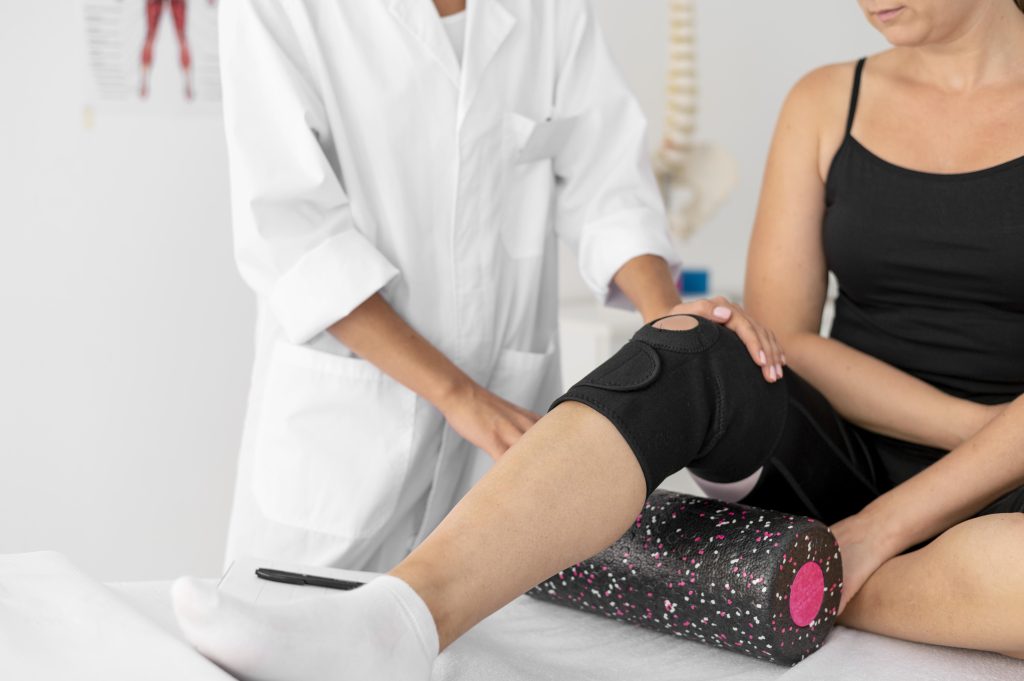
A corticosteroid injection can be considered for selected cases of subacromial bursitis or rotator cuff-related shoulder pain. The medication is placed according to the intended treatment target rather than being used to repair a tendon.
Cortisone does not reconnect a torn rotator cuff or regenerate tendon tissue. Repeated steroid exposure around a tendon requires caution because corticosteroids can contribute to tendon weakening.
Significant weakness, a traumatic injury, or suspected major tearing can require additional assessment or orthopedic referral instead of repeated injections.

Selected inflammation around a knee bursa can be considered for cortisone treatment when the likely cause has been evaluated.
Not every swollen knee has bursitis. Swelling can also be associated with osteoarthritis, injury, infection, bleeding, crystal-related disease, or fluid inside the knee joint. When excess joint fluid is present, a separate knee aspiration evaluation can be appropriate.

Cortisone can be discussed when a knee or shoulder condition produces a temporary increase in inflammation-related symptoms.
The goal is short-term symptom control, not permanent structural correction. A care plan can also include activity modification, physical therapy, knee bracing when appropriate, or specialist referral.
For procedure-specific information, review:

Cortisone can reduce inflammation contributing to stiffness in selected patients, but it is not a general treatment for every stiff knee or shoulder.
Stiffness can also result from advanced arthritis, weakness, scar tissue, reduced activity, a mechanical block, adhesive capsulitis, injury, or another condition. Movement rehabilitation can remain important even when an injection reduces pain.

An injection should not delay urgent medical assessment or specialist care. Seek prompt attention for fever with a hot, red, swollen joint, major swelling or trauma, visible deformity, inability to bear weight or use the arm, a locked knee, suspected shoulder dislocation, sudden severe weakness, new calf swelling, chest pain, or breathing difficulty.
Ultrasound or fluoroscopic guidance can be used during selected cortisone injections when the provider determines that imaging supports treatment placement.


The visit includes a review of the affected joint, symptoms, injuries, medical history, medications, allergies, prior injections, and treatments.
The provider may assess tenderness, swelling, range of motion, strength, stability, movement limits, symptom triggers, and functional goals. Existing records or imaging can be reviewed, and additional evaluation may be recommended when the cause is unclear or concerning findings are present.
If a cortisone injection is appropriate, the provider explains the treatment target, medication, short-term goal, alternatives, limitations, risks, and aftercare. The skin is cleaned with antiseptic, and positioning depends on the knee or shoulder area treated.
Patients should disclose blood thinners, diabetes, infections, recent antibiotics, allergies, pregnancy, upcoming surgery, and previous injection reactions. Do not stop prescribed medications without guidance from the managing clinician.
The provider guides the needle into or near the selected knee or shoulder structure. Ultrasound or fluoroscopy can be used when clinically appropriate.
A cortisone injection can include a local anesthetic, corticosteroid medication, or both, depending on the treatment plan.
Patients can feel a brief pinch, pressure, or temporary discomfort. The experience varies according to the target, medication, technique, and individual sensitivity.
Patients receive instructions based on the procedure performed. Guidance can include temporary activity modification, treatment-site care, medication considerations, symptom monitoring, and follow-up recommendations.
A temporary increase in soreness, swelling, or irritation can occur after the injection. This is sometimes called a post-injection flare.
Contact the clinic if symptoms are increasing rather than settling or if an unexpected reaction develops. Fever, spreading redness, severe pain, major swelling, breathing difficulty, or another concerning symptom requires prompt medical attention.
Cortisone injections can offer several practical benefits for selected patients when the treatment target and goal are appropriate.

Medication is placed into or near the selected knee or shoulder structure rather than being used only as a systemic oral treatment.

Cortisone can reduce inflammation-related pain, swelling, or irritation for selected arthritis and bursitis presentations.

When symptoms decrease, some patients can move, walk, reach, sleep, or complete daily tasks more comfortably.

Temporary symptom control can support participation in physical therapy, strengthening, mobility work, or a home exercise plan.

Many cortisone injections can be performed in a clinical setting without a hospital stay.
The medication, target, guidance method, and follow-up plan can be selected according to the condition, medical history, and functional goals.
Cortisone injections are commonly used, but they are not risk-free. The likelihood and importance of complications depend on the medication, dose, target, medical history, previous injections, and frequency of treatment.

Pain, swelling, or irritation can temporarily increase after an injection before settling.

Infection
Infection is uncommon but potentially serious. Fever, increasing warmth, redness, drainage, severe pain, or rapidly worsening swelling requires prompt medical assessment.

Corticosteroid injections can temporarily raise blood glucose, particularly in people with diabetes. Patients should discuss monitoring and medication planning with their diabetes clinician.

Bleeding risk can be higher in people taking anticoagulants, antiplatelet medications, aspirin, or certain supplements.

Possible local effects include skin thinning, changes in skin color, or loss of fat beneath the skin.

Tendon Weakening
Steroid exposure around a tendon can contribute to weakening or rupture. A cortisone injection should not be described as repairing a tendon.
Some patients receive little or no relief from an injection. If symptoms do not improve, the diagnosis and treatment plan should be reassessed before repeating the procedure.
Tell the provider about diabetes, kidney or heart disease, stroke history, blood thinners, aspirin or NSAID use, bleeding disorders, infection, recent antibiotics, medication allergies, pregnancy, upcoming surgery, prior corticosteroid injections, and previous injection reactions.
There is no guaranteed onset or duration. Response depends on the condition, treatment target, symptom severity, previous care, health history, activity demands, and individual response.
| Condition or Situation | What Patients Should Understand |
|---|---|
| Knee osteoarthritis | Cortisone can provide short-term symptom support for selected patients. The degree and duration of improvement vary. |
| Shoulder pain | A single injection can be considered for short-term improvement in pain and function for selected patients. |
| Shoulder osteoarthritis | Cortisone can be discussed for short-term symptom support, but it does not restore cartilage. |
| Bursitis | Improvement varies according to the diagnosis, activity demands, mechanical irritation, and rehabilitation plan. |
| Tendon-related symptoms | An injection can reduce surrounding inflammation but does not repair a damaged tendon. |
| No meaningful response | The diagnosis, target, and broader care plan should be reconsidered before another injection is proposed. |
Cortisone should not be marketed as providing a fixed number of weeks or months of relief. Some patients improve, some experience only brief support, and others do not respond.
There is no universal limit for corticosteroid injections. The provider considers the joint condition, treatment target, medication, previous response, timing, diabetes, tissue health, bleeding risk, possible surgery, and available alternatives.
Because repeated injections may increase tissue-related risks, frequency should be individualized. If symptoms return, a new evaluation can determine whether rehabilitation, activity changes, another treatment, further assessment, or orthopedic referral is more appropriate.

Cortisone is rarely the complete answer to a knee or shoulder problem. It can be one component of a broader plan designed around movement, strength, function, and the underlying condition.
Treatment begins by reviewing the likely diagnosis, target structure, health history, medications, previous care, and functional limitations.
The clinic’s approved joint-care content focuses on selected knee and shoulder concerns rather than unrelated spine, hip, hand, wrist, elbow, or ankle procedures.
Cortisone is presented as short-term symptom support rather than a cure, cartilage-restoration treatment, or guaranteed alternative to surgery.
Ultrasound or fluoroscopy can be used for selected procedures when it supports treatment placement. Guidance is chosen according to the procedure and clinical findings.
An injection can be coordinated with physical therapy, movement support, activity changes, knee bracing when appropriate, or referral.
Jeffrey Galvin, MD, serves as Medical Director. Ariel Curtis, FNP-C, is a board-certified family nurse practitioner and Joint Injection Specialist.
These credentials do not mean that either provider authored or medically reviewed this page unless that review has been completed and documented.
A cortisone injection places corticosteroid medication into or near a selected knee or shoulder structure to reduce inflammatory activity. The treatment can be considered for selected arthritis flare-ups, bursitis, or rotator cuff-related shoulder symptoms. It is intended primarily for short-term symptom support. Cortisone does not rebuild cartilage, repair a tendon, reverse arthritis, or guarantee permanent improvement.
There is no guaranteed onset. Some patients notice improvement relatively soon, while others experience a more gradual response or little benefit. A local anesthetic included in an injection can produce temporary early numbness that should not be confused with the longer corticosteroid effect. The response depends on the diagnosis, treatment target, medication, severity, medical history, and individual reaction.
No fixed duration applies to every patient. Cortisone is intended mainly for short-term symptom support. The response can differ according to whether the treatment involves knee osteoarthritis, shoulder pain, arthritis, bursitis, or another selected inflammatory concern. Activity demands, tissue health, rehabilitation, and previous treatment also matter. A fixed number of weeks or months should not be promised.
No. Cortisone reduces inflammatory activity but does not regrow cartilage or reverse osteoarthritis. A patient can experience less pain or improved movement without any structural restoration. Symptom improvement and cartilage healing are separate outcomes. Patients with advanced cartilage loss can still require rehabilitation, activity modification, bracing for selected knee conditions, or an orthopedic consultation.
No. A corticosteroid injection does not reconnect or regenerate a torn rotator cuff tendon. A single injection can provide short-term pain and functional support for selected shoulder symptoms, but it does not correct structural tearing. Significant weakness, a traumatic injury, or suspected high-grade tearing can require additional imaging and orthopedic assessment rather than repeated injections.
They can be considered for selected patients, but corticosteroid injections can temporarily increase blood glucose. The provider should review diabetes control, medications, previous steroid reactions, and the proposed dose. Patients can need additional glucose monitoring after treatment. Medication adjustments should be coordinated with the clinician managing the patient’s diabetes rather than made independently.
Possibly, but the medication, dose, reason for anticoagulation, treatment target, and bleeding risk must be reviewed. Do not stop a prescribed blood thinner without guidance from the clinician who manages it. Patients should also disclose aspirin, antiplatelet medication, NSAIDs, supplements affecting bleeding, previous bruising, and any history of a bleeding disorder.
The appropriate frequency depends on the affected joint, treatment target, previous injections, previous response, diabetes, tendon health, cartilage considerations, skin condition, bleeding risk, and possible future surgery. A universal annual number should not replace individualized review. Repeating an injection automatically can expose the patient to risk without addressing an incorrect diagnosis or inadequate broader care plan.
No. Image guidance can support placement for selected knee or shoulder procedures, but not every injection requires the same method. The provider decides whether ultrasound, fluoroscopy, another approach, or no injection is appropriate. Guidance does not guarantee relief or eliminate every risk. Procedural guidance should not be presented as a complete diagnostic-imaging examination.
Appointments are held at Joint Health Solutions, 9350 Benfield Rd, #109, Charlotte, NC 28269. Joint Health Solutions does not claim a physical clinic in Concord. Call 704-833-3566 to discuss your knee or shoulder symptoms, confirm appointment details, and schedule an evaluation.
Persistent knee or shoulder inflammation can interfere with walking, stairs, reaching, lifting, work, exercise, sleep, and daily activity. Schedule an evaluation to determine whether cortisone, rehabilitation, another nonsurgical option, or orthopedic referral is the appropriate next step. Contact Joint Health Solutions