
People searching for Knee Injections Concord NC can receive provider-guided evaluation and selected nonsurgical knee injection care through Joint Health Solutions. Knee injections can be considered when arthritis symptoms, inflammatory flare-ups, stiffness, swelling, or persistent discomfort continue to interfere with walking, stairs, work, exercise, or everyday movement.
Joint Health Solutions serves patients from Concord and Cabarrus County at its physical clinic located at 9350 Benfield Rd, #109, Charlotte, NC 28269. The practice does not operate a separate office in Concord.
Care is led by experienced medical professionals, including Dr. Jeffrey Galvin and Ariel Curtis, FNP-C.
Knee injections are minimally invasive treatment options used to deliver medication or another selected treatment material into or near a clinically appropriate knee structure. They are not automatically recommended for every painful knee. Evaluation is needed to determine the likely cause of symptoms, identify important safety concerns, and decide whether an injection supports the broader treatment plan.
For people comparing Knee Injections Concord NC options, the main goal should be informed treatment selection rather than choosing a procedure based only on speed, popularity, or advertised duration.

An intra-articular injection places treatment directly into the knee joint. Other knee procedures can target a bursa or another nearby structure when that location is identified as a likely source of symptoms.

Cortisone, hyaluronic acid, and PRP are not interchangeable. Each has different evidence, limitations, preparation requirements, risks, and candidate considerations.

A knee injection does not require an open surgical incision. Temporary soreness or activity modification can still be necessary after treatment, depending on the procedure.

Injection treatment can be combined with activity modification, physical therapy, strengthening, weight support, bracing, or orthopedic referral when appropriate. An injection should not replace evaluation of an unstable, injured, infected, or physically locked knee.
Treatment selection depends on the knee condition, symptom pattern, previous care, medications, health history, and treatment goals. The following options require individualized review.

Corticosteroid injections, often called cortisone shots, are used primarily for short-term symptom support during selected inflammatory or osteoarthritis flare-ups. They can reduce inflammation and help some patients participate more comfortably in normal movement or rehabilitation.
Response and duration vary. Cortisone does not rebuild cartilage, repair a meniscus, heal a tendon, reverse arthritis, or permanently prevent future symptoms. Repeated injections require individualized review because prior response, frequency, tissue health, blood sugar, medications, and other medical conditions matter.
Learn more about cortisone injections for Concord-area patients.
Hyaluronic acid, also called viscosupplementation, is injected into the knee joint for selected patients with symptomatic knee osteoarthritis. It is intended to supplement the lubricating properties of joint fluid rather than rebuild damaged cartilage.
When improvement occurs, it can develop gradually. Benefit is not guaranteed, and professional organizations differ regarding routine use for knee osteoarthritis. Diagnosis, prior conservative care, arthritis pattern, alternatives, possible costs, product instructions, and patient preferences should be discussed before treatment.
Hyaluronic acid is limited here to selected knee osteoarthritis care. Learn more about hyaluronic acid injections near Concord.
Platelet-rich plasma, or PRP, is prepared from a sample of the patient’s blood. The concentrated preparation is injected into a selected knee treatment area.
Some patients with symptomatic knee osteoarthritis report improvement in pain or function, but current evidence remains limited. PRP does not prove cartilage regeneration, arthritis reversal, meniscus regrowth, or guaranteed avoidance of surgery. There is no universal number of treatments, spacing schedule, or duration that applies to every patient.
Patients considering this option should review the evidence, possible soreness, medication instructions, cost, alternatives, and realistic goals. Additional information is available on the PRP Therapy in Concord, NC page.
Toradol is a brand name commonly associated with ketorolac, a prescription nonsteroidal anti-inflammatory medication. At Joint Health Solutions, Toradol is administered as an intramuscular injection, meaning it is injected into a muscle rather than into the knee joint.
It is used only for short-term acute-pain support in selected patients. Toradol is not a chronic knee arthritis treatment, a viscosupplement, a regenerative procedure, or an image-guided knee injection.
Ketorolac can involve serious gastrointestinal, kidney, cardiovascular, and bleeding risks. Current medications, NSAID use, bleeding history, kidney health, cardiovascular history, pregnancy considerations, age, and other risk factors must be reviewed before treatment.

Knee injections can be discussed when a clinical evaluation suggests that a targeted procedure is appropriate. Commonly considered situations include:
A knee injection is not the correct first step for every symptom. Pain can come from arthritis, injury, instability, infection, mechanical locking, tendon or bursal irritation, referred symptoms, or other causes.

Seek urgent medical assessment rather than waiting for a routine injection consultation if you have:
A knee with major instability, suspected fracture, possible infection, significant trauma, or a true mechanical lock requires appropriate assessment before injection treatment is considered.
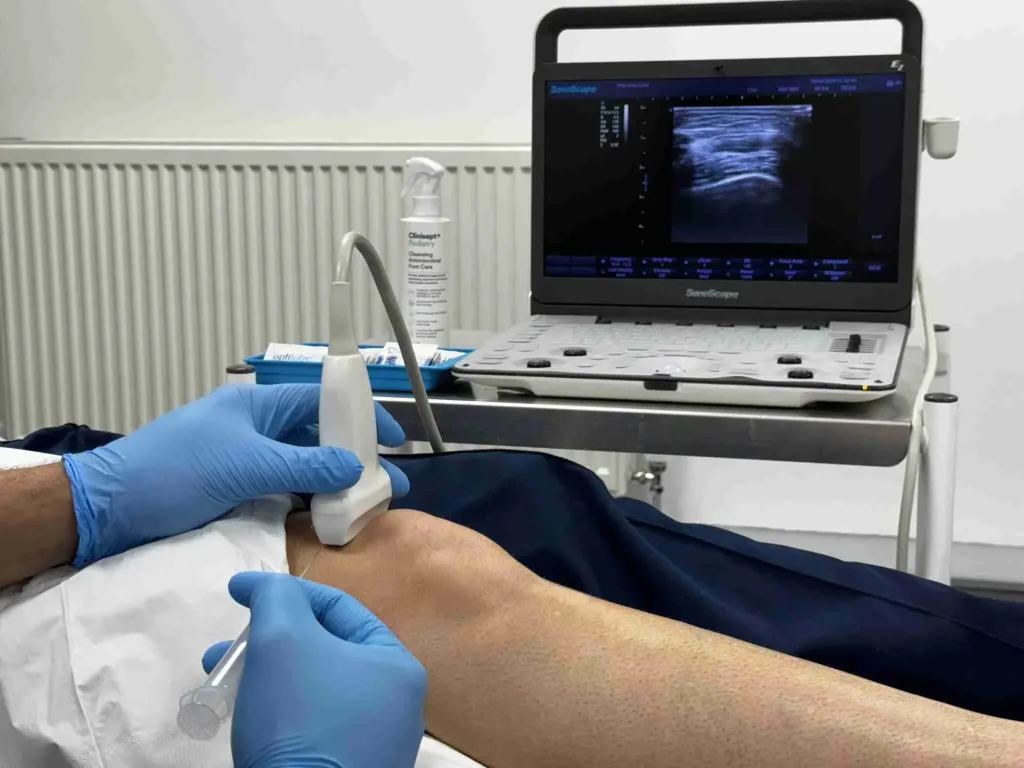
Image guidance can support needle placement during selected knee procedures. The need for guidance depends on the planned injection, anatomy, treatment target, previous procedures, swelling, and provider judgment.
Ultrasound provides real-time visualization of soft tissues, fluid, the joint capsule, tendons, and bursae. It can help the provider identify the intended treatment area and observe needle movement during selected procedures.
Fluoroscopy uses real-time X-ray imaging to show bone and joint-space landmarks. It can be considered when the planned procedure or anatomy makes that form of guidance useful.
Not every knee injection requires the same guidance method. The provider determines whether ultrasound, fluoroscopy, another approach, or no imaging guidance is appropriate for the planned procedure.
Image guidance supports placement, but it does not guarantee symptom improvement, prevent every complication, or determine whether a particular treatment is medically suitable.

The visit begins with a review of your symptoms, medical history, previous injuries, current medications, allergies, prior treatments, and functional goals.
The provider can assess swelling, tenderness, range of motion, strength, stability, movement limitations, and how the knee affects walking, stairs, work, sleep, or exercise. Existing imaging or medical records can be reviewed when available.
Additional imaging, laboratory evaluation, urgent assessment, or specialist referral can be recommended when clinically appropriate. This does not mean that every patient automatically receives imaging or testing at Joint Health Solutions.
If an injection is appropriate, the provider explains the selected treatment, alternatives, likely goals, limitations, possible risks, and aftercare.
The knee is positioned and the skin is cleaned using an antiseptic technique. Depending on the procedure, local numbing medication can be discussed. Patients can feel a brief pinch, pressure, or temporary discomfort.
The provider places the needle into the intended treatment area. Ultrasound or fluoroscopy can be used when clinically appropriate.
The procedure varies according to whether the treatment involves cortisone, hyaluronic acid, PRP, aspiration with a subsequent injection, or another selected approach. Toradol IM is administered into a muscle and is not part of this knee-joint injection step.
After treatment, patients receive instructions based on the injection performed. These can include temporary activity modification, monitoring the injection site, and guidance about medications or exercise.
Mild soreness, stiffness, or a temporary symptom flare can occur. Contact the practice if pain or swelling becomes severe, symptoms continue to worsen, or you develop fever, spreading redness, drainage, significant weakness, or another concerning reaction.
Knee injections are generally tolerated by many appropriately selected patients, but every procedure has possible risks and limitations.
Possible considerations include:
The specific risk profile differs by treatment.
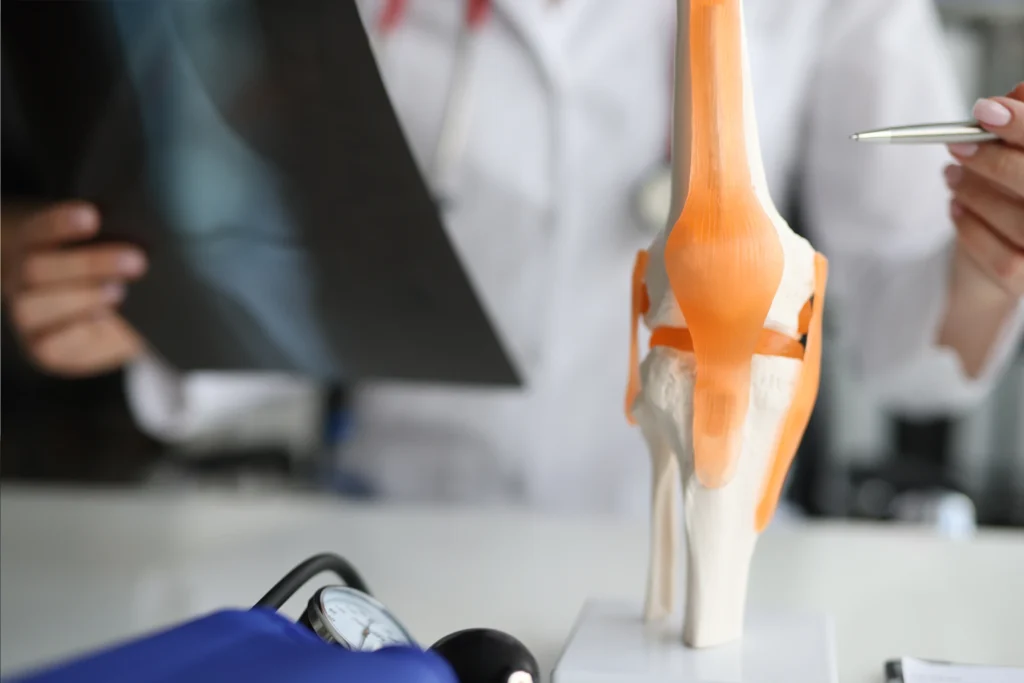
There is no single duration that applies to every patient. Response depends on the diagnosis, treatment selected, arthritis pattern, previous care, activity level, medical history, and individual response.
| Treatment or Option | What Patients Should Understand | Important Limitations |
|---|---|---|
| Corticosteroid Injection | Intended primarily for short-term symptom support. Onset and duration differ among patients and conditions. | It does not restore cartilage or provide permanent relief. Repeated use requires individualized review. |
| Hyaluronic Acid | Improvement, when it occurs, is often gradual. The appropriate product and course depend on the clinical plan. | Benefit is not guaranteed, recommendations differ regarding routine knee use, and it does not rebuild cartilage. |
| PRP | Improvement can be gradual, and response varies. No fixed schedule or duration applies to every patient. | Knee osteoarthritis evidence remains limited. PRP does not prove cartilage regeneration or arthritis reversal. |
| Toradol IM | Used for short-term acute-pain support when clinically appropriate. | It is injected into a muscle, not the knee joint, and is not ongoing arthritis treatment. Medication risks apply. |
An injection that improves pain does not prove that cartilage, a meniscus, or another structure has healed. Symptom improvement, functional improvement, and structural restoration are different outcomes.
No knee injection can guarantee that knee replacement or another procedure will never be needed. Orthopedic referral remains appropriate when symptoms, instability, deformity, injury, or advanced joint damage require surgical evaluation.
Joint Health Solutions provides Knee Injections Concord NC for adults who want personalized, non-surgical care for knee arthritis, stiffness, inflammation, and mobility concerns.
Provider-Guided Planning
Treatment begins with an evaluation rather than an automatic procedure. The provider reviews whether an injection is appropriate, which option fits the clinical situation, and how it should relate to other care.
Evidence-Aware Recommendations
Cortisone, hyaluronic acid, PRP, and Toradol are explained with their different goals, evidence levels, risks, and limitations. Patients receive realistic information rather than fixed outcome promises.
Conservative and Minimally Invasive Focus
The practice provides nonsurgical knee-care pathways while recognizing that urgent assessment or orthopedic referral can be the correct next step for some patients.
Care Team
Ariel Curtis, FNP-C, is a board-certified family nurse practitioner and Joint Injection Specialist. Jeffrey Galvin, MD, serves as Medical Director and is board-certified in Emergency Medicine and Obesity Medicine.
Access for Concord-Area Patients
Joint Health Solutions’ Charlotte clinic serves adults traveling from Concord, Cabarrus County, and nearby communities for evaluation, treatment planning, procedures, and follow-up care.
Connected Knee-Care Options
Depending on the findings, a broader plan can include physical therapy support, an offloading knee brace, or knee arthrocentesis when excess fluid is present.
Most patients feel a brief pinch, pressure, or temporary discomfort during a knee injection. The experience depends on the treatment area, amount of swelling, individual sensitivity, and type of procedure. Local numbing medication can be discussed when appropriate. Mild soreness can occur afterward. Severe or progressively worsening pain, marked swelling, fever, spreading redness, or another concerning reaction should be reported promptly.
The timing depends on the treatment and individual response. Cortisone is intended for short-term symptom support and can act differently from hyaluronic acid or PRP, which can have a more gradual response pattern. Some patients do not obtain meaningful improvement. Your provider should explain realistic expectations for the selected treatment without promising an exact onset or fixed duration.
There is no universal number of injections for every patient. The appropriate plan depends on the treatment selected, product instructions where applicable, diagnosis, previous response, medical history, and clinical goals. Cortisone is not automatically repeated on a fixed calendar, and PRP does not have one established schedule that applies to all patients. Your provider will discuss each procedure individually.
Cortisone is used primarily for short-term inflammatory symptom support. Hyaluronic acid is considered for selected patients with knee osteoarthritis and is intended to supplement joint-fluid lubrication. PRP is prepared from the patient’s blood and has limited evidence for symptom and function improvement in knee osteoarthritis. None of these treatments rebuilds cartilage, reverses arthritis, or guarantees avoidance of surgery.
Possibly, but the decision requires an individualized bleeding-risk review. Do not stop a blood thinner, aspirin, antiplatelet medicine, or another prescribed medication on your own. The injection provider needs to know the exact medication, dose, reason it was prescribed, and relevant health history. Coordination with the clinician who manages the medication can be necessary before treatment.
Bring an updated medication list, allergy information, details about previous injections, relevant medical records, and any existing knee imaging available to you. Tell the provider about blood thinners, diabetes, kidney disease, infection symptoms, recent antibiotics, pregnancy, or reactions to previous injections. Wear clothing that allows access to the knee and arrange your schedule around any procedure-specific activity instructions.
PRP has not been proven to regrow knee cartilage. Some studies report pain or function improvement in selected patients with symptomatic knee osteoarthritis, but the evidence remains limited and preparation methods vary. Symptom improvement does not establish structural restoration. PRP should not be described as reversing arthritis, rebuilding a meniscus, guaranteeing tissue regeneration, or ensuring that knee surgery will never be required.
No. Hyaluronic acid is not routinely recommended for every person with knee osteoarthritis. Professional organizations differ in their recommendations, and benefit is not guaranteed. It can still be discussed for selected patients after considering the diagnosis, arthritis pattern, prior conservative care, alternative treatments, possible costs, product instructions, and personal preferences. Hyaluronic acid does not rebuild cartilage or cure osteoarthritis.
An orthopedic referral can be appropriate when knee symptoms remain severe despite reasonable nonsurgical care, daily function is substantially limited, the knee is unstable or deformed, imaging shows advanced changes, or the clinical findings suggest that surgical assessment is needed. Major trauma, inability to bear weight, a locked knee, severe rapid swelling, or fever with a hot and red joint requires prompt assessment rather than routine injection scheduling.
Joint Health Solutions does not operate a physical clinic in Concord. The practice serves Concord and Cabarrus County patients at 9350 Benfield Rd, #109, Charlotte, NC 28269. Call 704-833-3566 to discuss scheduling, the type of evaluation you need, and what information to bring to your appointment.
Knee pain can affect how you walk, climb stairs, stand, exercise, work, and enjoy daily life. If knee stiffness, inflammation, swelling, or osteoarthritis symptoms are limiting your movement, Joint Health Solutions can help you explore non-surgical knee injection options.
Schedule your visit today for Knee Injections Concord NC and take the next step toward better comfort, improved mobility, and personalized knee support.