
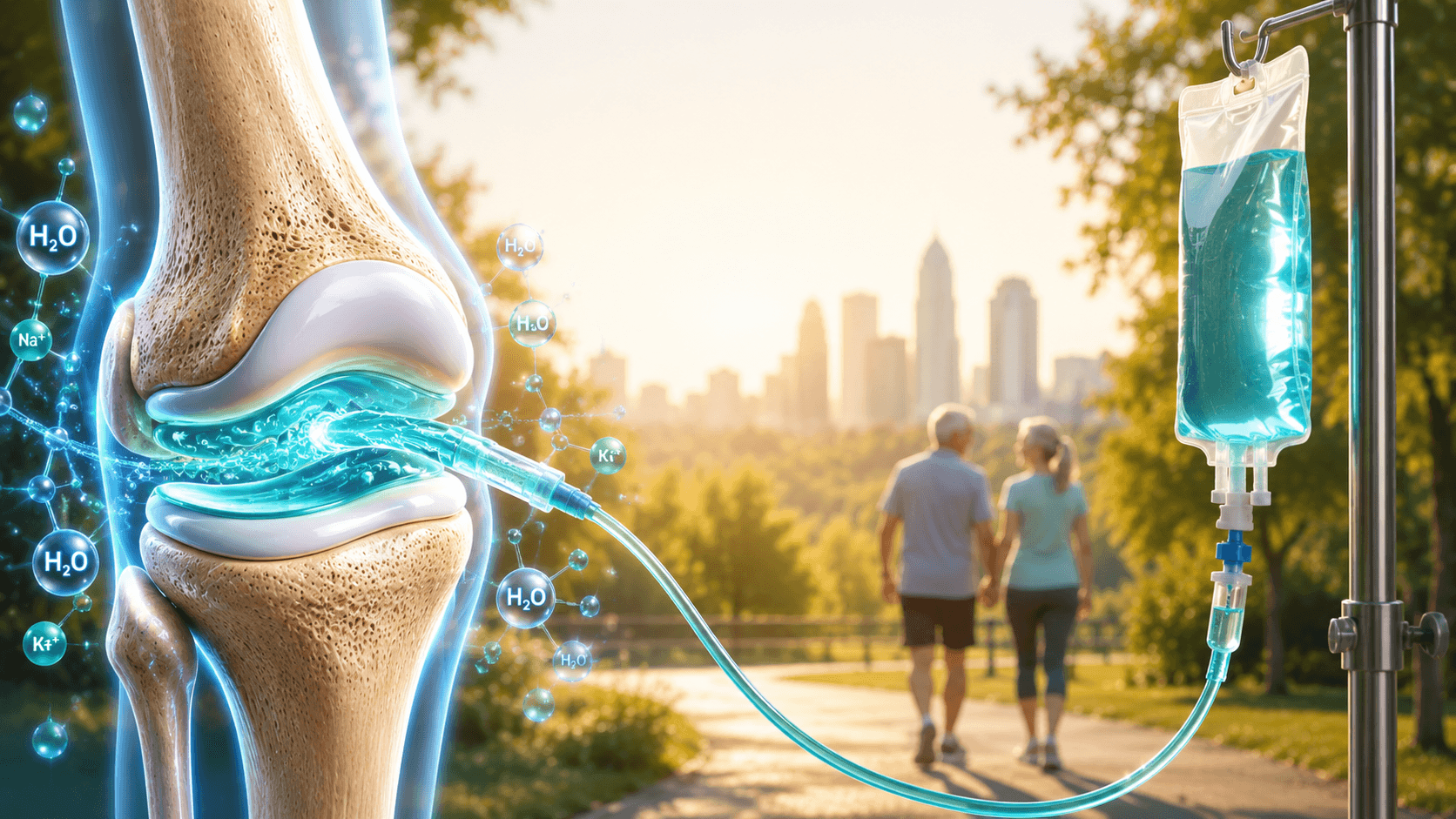
Senior Joint Health & Hydration Guide | Charlotte Non-Surgical Care
Published July 24, 2026 | Category: Joint Health, Senior Care | Location: Charlotte, NC | 🕒 12 min read
Introduction
If you are a senior living in Charlotte, you may have noticed that your joints feel stiffer in the morning or ache after a long day. Perhaps you have tried over-the-counter pain relievers or rest, but the discomfort persists. What many older adults do not realize is that hydration may be playing a meaningful role in their joint pain — a connection that is especially relevant in a warm climate where fluid loss can happen quickly.
At Joint Health Solutions, we see many patients who are surprised to learn that their chronic joint pain is linked to inadequate fluid intake. This guide explores why staying hydrated is important for joint function, how it may influence inflammation, and what Charlotte seniors can do to support their joint health through better hydration and targeted non-surgical treatments.
Cartilage is composed of approximately 70–80% water, and adequate hydration helps maintain its pliability and shock-absorbing properties. Dehydration reduces synovial fluid production, increases joint friction, and may worsen inflammation — effects that are more pronounced in older adults whose water retention capacity already declines with age. Charlotte seniors should generally aim for 8–10 cups (64–80 oz) of water daily, adjusting for activity level and heat exposure. At Joint Health Solutions, we combine hydration guidance with non-surgical treatments — including hyaluronic acid injections, PRP therapy, and anti-inflammatory IV therapy — to address both the physiological and structural contributors to joint pain. Individual results vary; many patients benefit from a combination of consistent hydration habits and targeted clinical therapy over several weeks to months.
Why Hydration Matters for Joint Health
Water is fundamental to the health of your joints. Cartilage — the tissue that cushions the ends of bones — is roughly 70–80% water by weight.1 When you are well-hydrated, cartilage remains pliable and able to absorb impact during movement. Dehydration causes cartilage to lose water content, making it more rigid and prone to wear. This is particularly relevant for seniors because natural aging already reduces tissue water retention — meaning any additional fluid deficit can have a more pronounced effect on joint comfort.
In Charlotte’s humid subtropical climate, seniors may not feel thirsty as often as their fluid needs require, yet they still lose fluids through perspiration and daily activities. Consistent hydration supports joint lubrication, delivers nutrients to joint tissues, and helps remove metabolic waste that can contribute to inflammation.
Water also plays a critical role in the production of synovial fluid — the viscous substance that lubricates joints and acts as a shock absorber between bones. When dehydration occurs, synovial fluid volume and quality can decrease, increasing joint stiffness and friction. For seniors who may already have reduced synovial fluid due to age and arthritis, even modest fluid deficits can amplify discomfort.
At the cellular level, chondrocytes — the cells that maintain cartilage — rely on adequate hydration to synthesize collagen and proteoglycans, the structural building blocks of cartilage. Chronic dehydration may stress these cells and, over time, contribute to accelerated cartilage breakdown, though the direct causal relationship in humans is primarily understood from mechanistic studies rather than large clinical trials.
Additionally, adequate hydration helps maintain the elasticity of ligaments and tendons surrounding the joint. Dehydrated connective tissue becomes less flexible, which may increase the risk of strains and sprains during everyday activities like walking or climbing stairs.
The Connection Between Hydration and Inflammation
Chronic inflammation is a hallmark of many joint conditions, including osteoarthritis. Dehydration can exacerbate inflammation through several mechanisms: it reduces blood volume and impairs the delivery of oxygen and nutrients to joint tissues, and research suggests that even a 1–2% loss of body water can impair physical performance.2 For Charlotte seniors, where summer temperatures frequently exceed 90°F, the risk of fluid loss is elevated and the impact on joints can be significant.
When fluid levels drop, compensatory hormonal responses — including release of vasopressin — can reduce blood flow to peripheral tissues, potentially limiting the delivery of anti-inflammatory compounds to joints and allowing waste products to accumulate. Dehydration may also slow lymphatic clearance of inflammatory debris from tissue spaces, though these mechanisms are largely understood from laboratory and observational research rather than intervention trials in joint disease specifically.
For seniors with existing arthritis, dehydration can contribute to flare-ups with increased pain, swelling, and stiffness. Charlotte seniors may also experience electrolyte imbalances from sweating, which can further disrupt cellular hydration and cause muscle cramps that put additional stress on joints.
At Joint Health Solutions, we often discuss the potential role of dietary omega-3 fatty acids (found in oily fish, flaxseed, and walnuts) in supporting anti-inflammatory pathways. Whether to add omega-3 supplements, turmeric, or other dietary agents should be discussed with a physician, as some can interact with medications common in older adults, particularly anticoagulants.
Signs of Dehydration in Seniors
Recognizing dehydration in older adults can be challenging because the thirst sensation often diminishes with age. Common general signs include dry mouth, fatigue, dizziness, confusion, and decreased urine output. From a joint perspective, patients sometimes report increased stiffness and more frequent joint pain on days when fluid intake has been low.
Other signs worth monitoring:
- Dark amber or brown urine (pale yellow indicates adequate hydration)
- Dry skin and reduced skin elasticity (the skin pinch test: slow rebound on the back of the hand suggests dehydration)
- Headaches, difficulty concentrating
- Orthostatic hypotension — lightheadedness when standing up, which can increase fall risk and lead to joint injuries
- Increased sensitivity to weather changes; some patients report that barometric pressure shifts feel more painful when tissues are already fluid-depleted
Seniors taking diuretic medications for hypertension or heart conditions face an elevated dehydration risk and should monitor their intake closely and discuss hydration targets with their prescribing physician. If joint pain persists despite improving hydration, it is time to consult a specialist for a thorough evaluation.
Hydration Tips for Charlotte Seniors
Staying hydrated in Charlotte’s climate requires intentional effort. Some practical strategies:
- Aim for 8–10 cups (64–80 oz) of water daily, adjusting upward for heat, exercise, or illness. For specific targets with chronic conditions (kidney disease, heart failure), consult your physician first.
- Spread intake evenly throughout the day rather than drinking large amounts at once, which can overwhelm the kidneys and cause frequent urination.
- Include water-rich foods: cucumbers, watermelon, oranges, celery, broth-based soups.
- Infuse water with lemon, lime, mint, or berries to improve palatability without added sugar.
- Set phone reminders or use a marked water bottle to track intake.
- Limit excess caffeine and alcohol, which can promote fluid loss.
- Avoid outdoor activity during peak heat hours (roughly 10 a.m.–4 p.m.) during Charlotte’s summer months; carry water when outdoors.
- Consider electrolyte-containing beverages after heavy sweating or prolonged outdoor activity — particularly to replace sodium, potassium, and magnesium.3
- Monitor urine color daily as a simple indicator of hydration status.
At Joint Health Solutions, we can provide individualized hydration guidance as part of your overall treatment plan — including how to time fluid intake around physical therapy sessions to support joint lubrication during exercise.
How Hyaluronic Acid Injections Compare to Other Treatments
| Treatment | How It Works | Limitations | Risks |
|---|---|---|---|
| Oral NSAIDs | Reduce pain and inflammation systemically | Do not restore joint lubrication; carry significant risks for older adults with longer use | Stomach ulcers, kidney damage, cardiovascular risk |
| Corticosteroid (Cortisone) Injections | Powerful localized anti-inflammatory effect | Temporary relief; repeated use may accelerate cartilage breakdown | Cartilage damage, infection, tendon weakening |
| Surgery (Arthroscopy, Knee Replacement) | Removes damaged tissue or replaces the joint | Invasive; long recovery; higher risk in older patients | Infection, blood clots, nerve damage, implant failure |
| Hyaluronic Acid Injections (Viscosupplementation) | Supplements synovial fluid viscosity and shock-absorbing properties | Variable results; requires repeat treatments; AAOS 2021 rates evidence as Inconclusive | Mild injection-site reaction, rare infection |
| Non-Surgical Personalized Care (Hydration + HA + PT) | Addresses hydration, joint lubrication, and muscle support together | Requires multiple modalities and lifestyle commitment | Minimal with proper clinical supervision |
How Joint Health Solutions Can Help
Hydration is one piece of a broader joint health strategy. At Joint Health Solutions, our non-surgical approach combines clinical treatments with lifestyle guidance to address the root contributors to joint pain in seniors.
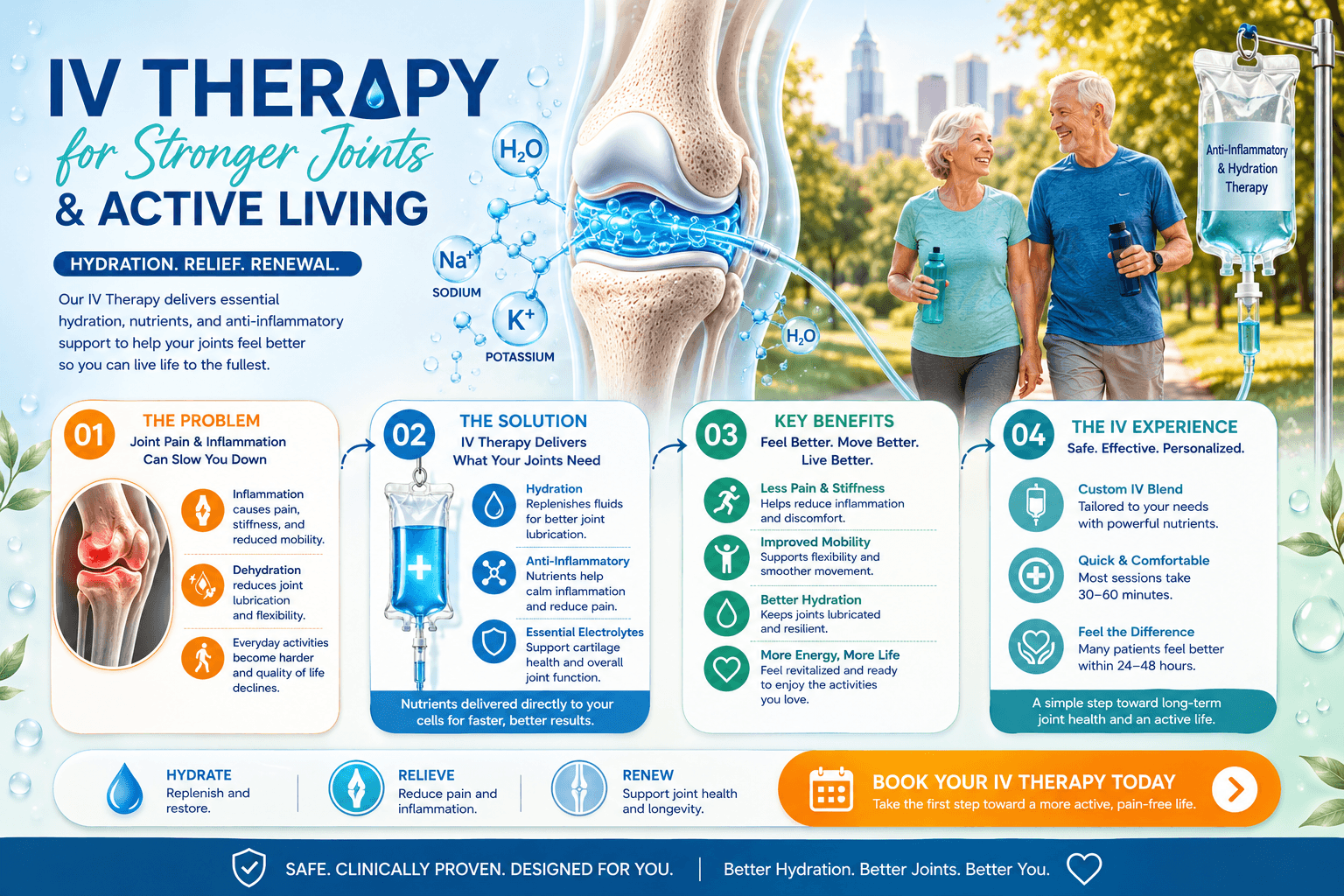
Sports Recovery IV Therapy delivers fluids, electrolytes, and anti-inflammatory nutrients directly into the bloodstream, providing rapid rehydration for seniors who have difficulty maintaining adequate oral intake. Explore sports recovery IV therapy.
Hyaluronic Acid Injections supplement the synovial fluid that cushions arthritic joints, aiming to restore the lubrication that declines with age and arthritis. See the evidence section below for a realistic assessment of what the research shows. Explore joint injections.
Platelet-Rich Plasma (PRP) Therapy uses growth factors from your own blood to support tissue healing. Note: PRP is not FDA-approved as a drug; the device used to prepare the concentrate has received FDA clearance. Evidence for PRP in knee OA is mixed and varies by clinical indication. Adequate hydration before blood draw supports a good draw volume, but the claim that hydration meaningfully improves PRP efficacy is not established in clinical trials. Learn more about PRP therapy.
Anti-Inflammatory IV Therapy delivers a blend of vitamin C, magnesium, and glutathione to reduce oxidative stress and support cellular recovery. Learn more about anti-inflammatory IV therapy.
Physical Therapy promotes synovial fluid circulation through gentle range-of-motion and low-impact strengthening exercises, which can be particularly valuable for seniors whose mobility has been restricted. Explore physical therapy options.
Nutritional Counseling addresses dietary patterns that affect inflammation and fluid balance, including sodium intake and anti-inflammatory food choices. Learn more.
Our providers take time to understand your situation and create a plan that fits your health status, activity level, and goals. Learn more about Joint Health Solutions.
The Science Behind the Approach (Evidence Summary)
The role of hydration in cartilage health is well-established at a structural level: cartilage is approximately 70–80% water, and its load-bearing and lubricating properties depend on this water content.1 Research also supports that adequate fluid intake supports synovial fluid production and overall joint function. The direct clinical link between specific hydration interventions and measured reductions in osteoarthritis pain, however, is less well-studied in rigorous clinical trials — the mechanisms are plausible and well-supported physiologically, but large interventional studies targeting hydration as an isolated variable for joint pain are limited.
For hyaluronic acid injections, the evidence base is substantial in volume but heterogeneous in conclusions — see the AAOS callout below.
The American Academy of Orthopaedic Surgeons (AAOS) 2021 Clinical Practice Guideline on Treatment of Osteoarthritis of the Knee (4th Edition) gives an Inconclusive recommendation for hyaluronic acid injections — meaning the current evidence is insufficient to support a recommendation either for or against this treatment. This reflects heterogeneous results across available trials, not a judgment that the treatment is ineffective. At Joint Health Solutions, we discuss this evidence context fully with every patient so you can make an informed decision.AAOS CPG 2021
Evidence and Clinical Research
| Component | FDA Status | Evidence Level | Key Findings |
|---|---|---|---|
| Hydration and Cartilage Structure | Not a medical device | Established biological evidence | Cartilage is ~70–80% water; its mechanical properties depend on hydration; dehydration reduces pliability1 |
| Hydration and Inflammation | Not a medical device | Mechanistic / emerging evidence | Dehydration may increase inflammatory cytokine production and impair lymphatic clearance; direct RCT evidence in joint disease is limited2 |
| Hyaluronic Acid Injections (Viscosupplementation) | FDA-approved for knee OA pain in patients who failed conservative therapy | Mixed / established in volume but variable in effect size; AAOS 2021: Inconclusive | Multiple meta-analyses show pain reduction vs. placebo; effect sizes are often modest and clinical significance is debated4 |
| IV Hydration Therapy | Not a medical device; individual components are FDA-recognized | Limited human evidence for joint applications specifically | IV hydration restores fluid and electrolyte levels rapidly; clinical benefit for joint pain specifically is not established in large RCTs |
- FDA-approved: The product has received FDA approval for a specific indication.
- Established clinical evidence: Supported by multiple peer-reviewed human studies.
- Limited human evidence: Some human studies exist but are small or inconsistent.
- Mechanistic/animal studies: Findings from laboratory or animal research; do not prove patient benefit.
- Emerging / mechanistic: Early-stage research suggesting potential mechanisms; not yet established as clinical benefit.
Important Note: The combination of hydration strategies with clinical treatments for joint health is an integrated, personalized approach rather than a separately FDA-approved protocol. Individual results vary, and not every patient is a candidate for every treatment.
Take the First Step Toward Pain-Free Living
If you are ready to explore your options for joint health and pain relief, Joint Health Solutions is here to help. Schedule a consultation by calling 704-833-3566 or visiting our contact page. We will assess your hydration status, joint function, and overall health to create a personalized treatment plan.
Sources
- Bhosale AM, Richardson JB. Articular cartilage: structure, injuries and review of management. Br Med Bull. 2008;87:77–95. PMID 18514821
- Armstrong LE, et al. Mild dehydration affects mood in healthy young women. J Nutr. 2012;142(2):382–388. PMID 22190027
- Volpe SL. Magnesium in disease prevention and overall health. Adv Nutr. 2013;4(3):378S–383S. PMID 23674807
- Bannuru RR, et al. OARSI guidelines for the non-surgical management of knee, hip, and polyarticular osteoarthritis. Osteoarthritis Cartilage. 2019;27(11):1578–1589. PMID 31278997
- Sawka MN, et al. American College of Sports Medicine Position Stand: Exercise and Fluid Replacement. Med Sci Sports Exerc. 2007;39(2):377–390. PMID 17277604
- Arthritis Foundation — Hydration and Joint Health. arthritis.org
- National Institute on Aging — Hydration and Older Adults. nia.nih.gov
- American Academy of Orthopaedic Surgeons. Clinical Practice Guideline: Treatment of Osteoarthritis of the Knee, 4th Edition (2021). aaos.org
Frequently Asked Questions
How much water should seniors drink daily?
A general starting target is 8–10 cups (64–80 oz) per day, but individual needs vary based on health conditions, activity level, climate, and medications. Seniors with kidney disease, heart failure, or who take diuretics should discuss specific targets with their physician before changing their intake significantly.
Can dehydration cause joint pain?
Dehydration can reduce cartilage hydration, decrease synovial fluid quality, and may worsen joint stiffness and friction — particularly in older adults whose tissue water retention is already reduced with age. Whether dehydration directly causes clinically significant joint pain in otherwise healthy adults is not fully established in intervention trials, but it is a recognized contributing factor that is worth addressing as part of a comprehensive joint health plan.
What are the best hydrating foods for joint health?
Water-rich foods that support overall hydration include cucumbers, watermelon, celery, oranges, strawberries, and broth-based soups. Many also contain vitamins and minerals relevant to joint health (vitamin C for collagen, potassium for electrolyte balance). They complement but do not replace adequate fluid intake from water.
Does IV therapy help with hydration?
IV therapy delivers fluids and electrolytes directly into the bloodstream, bypassing the digestive system. This can rapidly restore fluid balance — particularly for seniors who have experienced significant fluid loss or who have difficulty maintaining adequate oral intake. For routine hydration maintenance, oral hydration is generally sufficient and preferred.
How soon can I feel relief from joint injections?
This varies by treatment type. Corticosteroid injections often provide relief within a few days. Hyaluronic acid injections typically take 2–4 weeks for noticeable effect, with benefit building over the full treatment course. Individual response varies considerably, and not all patients respond to every treatment.
What is the best type of joint injection for seniors?
There is no single best option — it depends on the type and severity of joint disease, your medical history, and your goals. Hyaluronic acid injections are FDA-approved for knee OA; corticosteroids can address acute flare-ups; PRP may be considered for select indications. A thorough evaluation is essential to determine the most appropriate approach for you.
Can physical therapy improve joint hydration?
Physical therapy improves joint mobility and muscle support, and movement stimulates synovial fluid circulation within the joint. This supports the distribution of nutrients to cartilage and the removal of waste products. While physical therapy does not directly increase the water content of cartilage, it supports the joint environment in ways that complement good hydration habits.
Are there any risks to drinking too much water?
Excessive water intake can lead to hyponatremia (low blood sodium), which can be dangerous — particularly for seniors with kidney impairment or those taking medications that affect sodium balance. The risk is generally low at the levels recommended (8–10 cups daily), but seniors with chronic conditions should confirm appropriate targets with their physician.
How does Charlotte’s climate affect senior hydration?
Charlotte’s hot, humid summers — with heat index temperatures frequently above 100°F — accelerate fluid loss through sweat. Because the thirst mechanism diminishes with age, Charlotte seniors may become significantly dehydrated before feeling thirsty. Proactive, scheduled fluid intake is more reliable than drinking only when thirsty during summer months.
What non-surgical treatments does Joint Health Solutions offer for joint pain?
We offer hyaluronic acid injections, cortisone injections, PRP therapy, fluoroscopy-guided injections, anti-inflammatory and sports recovery IV therapy, trigger point injections, knee arthrocentesis, offloading knee braces, physical therapy, and nutritional counseling. Call 704-833-3566 to discuss which options may be appropriate for you.
Medical Disclaimer: This article is for educational purposes only and is not a substitute for medical advice, diagnosis, or treatment. Results vary, and not every patient is a candidate for every treatment. A qualified healthcare provider should evaluate your condition and discuss risks, benefits, and alternatives before treatment.