Active Living in Charlotte: Maintaining Joint Health While Exploring the USNWC
Estimated reading time: 12 minutes | Category: Joint Health, Active Living | Location: Charlotte, North Carolina
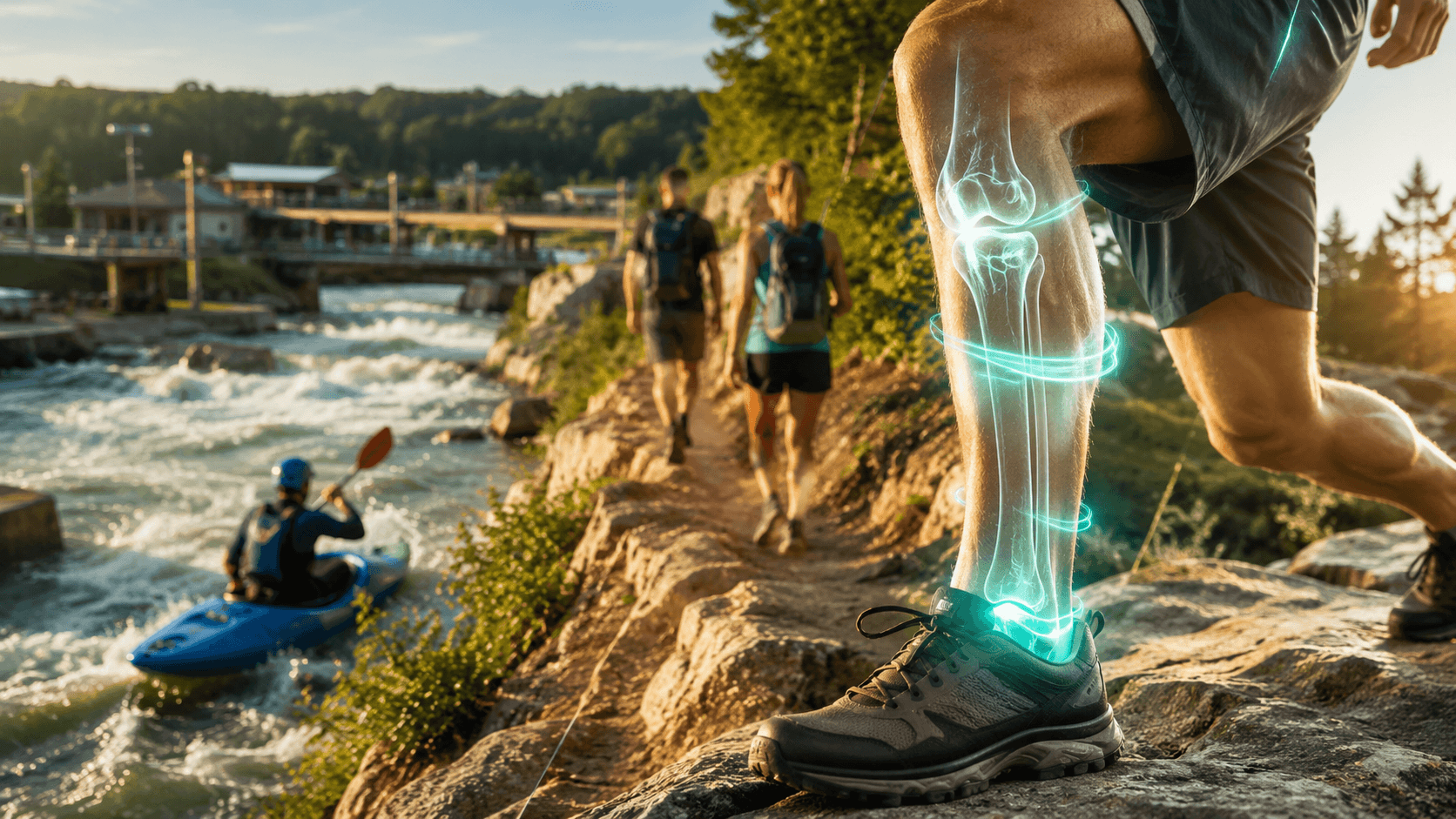
Imagine this: you are an active adult in Charlotte, North Carolina, and you have planned a weekend trip to the U.S. National Whitewater Center (USNWC) to go hiking, kayaking, or paddleboarding. But as you lace up your boots or strap on your life jacket, a familiar ache in your knee or a twinge in your shoulder gives you pause. Joint pain can be a frustrating barrier to the active lifestyle you love, especially when you want to explore everything the USNWC has to offer. Whether it is the result of years of wear and tear, a past sports injury, or the natural aging process, joint discomfort can make even the most exciting outdoor adventure feel daunting. The good news is that you do not have to give up your passion for the outdoors. With the right approach to joint health, you can continue to enjoy the trails, rapids, and climbing walls of the USNWC while managing pain and protecting your joints for years to come. In this article, we will explore common joint issues from outdoor activities, non-surgical solutions available in Charlotte, and how Joint Health Solutions can help you stay active and pain-free.
Joint Health Charlotte: Why Joint Health Matters for Active Lifestyles in Charlotte
Charlotte is a city that thrives on outdoor recreation. From the scenic trails of the USNWC to the numerous parks and greenways, residents and visitors alike embrace an active lifestyle. However, the very activities that bring joy and fitness—like hiking, kayaking, mountain biking, and climbing—place significant stress on your joints. Your knees, hips, shoulders, and ankles bear the brunt of these repetitive movements and impacts. Over time, this can lead to joint pain, inflammation, and even degenerative conditions like osteoarthritis. Maintaining joint health is not just about avoiding pain; it is about preserving your ability to participate in the activities you love. For Charlotte residents, joint health is a key component of a vibrant, active life. Whether you are a weekend warrior or a daily fitness enthusiast, understanding how to care for your joints can help you stay on the trails and out of the doctor’s office. At Joint Health Solutions, we specialize in non-surgical treatments that support joint health, so you can keep exploring the USNWC and beyond.
Understanding Common Joint Issues from Outdoor Activities
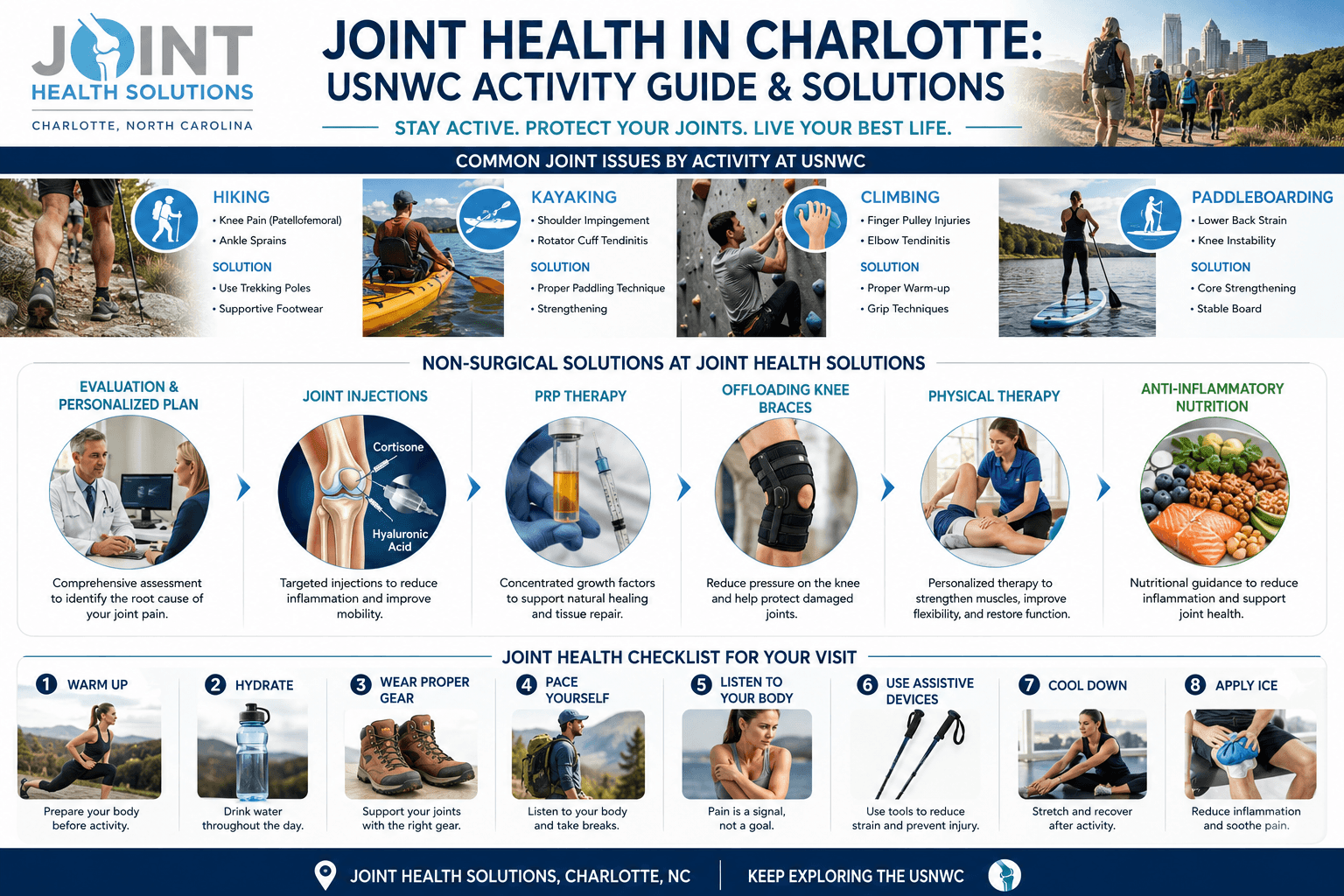
Outdoor activities at the USNWC can lead to specific joint problems. Hiking on uneven terrain can strain the knees and ankles, while kayaking and paddling can cause shoulder overuse injuries. Climbing places high demands on finger, wrist, elbow, and shoulder joints. Even seemingly low-impact activities like paddleboarding require core stability and can aggravate lower back issues. Understanding these common issues is the first step toward prevention and treatment.
| Activity | Common Joint Issues | Prevention Tips |
|---|---|---|
| Hiking | Knee pain (patellofemoral), ankle sprains | Use trekking poles, wear supportive footwear, strengthen quadriceps |
| Kayaking | Shoulder impingement, rotator cuff tendinitis | Proper paddling technique, shoulder strengthening exercises |
| Climbing | Finger pulley injuries, elbow tendinitis | Warm up properly, use correct grip, rest between climbs |
| Paddleboarding | Lower back strain, knee instability | Core strengthening, use a board with good stability |
If you experience persistent pain during or after these activities, it is important to seek evaluation. Early intervention can prevent minor issues from becoming chronic problems.
Non-Surgical Solutions for Joint Pain Relief
When joint pain interferes with your active lifestyle, surgery is not your only option. At Joint Health Solutions in Charlotte, we offer a range of non-surgical treatments designed to reduce pain, improve function, and support your body’s natural healing processes. Our approach is personalized, evidence-based, and focused on helping you return to the activities you love without the downtime and risks of surgery.
Joint Injections
Joint injections deliver medication directly into the affected joint to reduce inflammation and relieve pain. Common types include cortisone injections for rapid pain relief and hyaluronic acid injections to lubricate the joint in cases of osteoarthritis. These injections are performed under fluoroscopy guidance to ensure precise placement.
PRP Therapy
Platelet-rich plasma (PRP) therapy uses your own blood components to concentrate growth factors that may support tissue healing. PRP is often used for tendon injuries, ligament sprains, and early arthritis. The procedure involves drawing a small amount of blood, processing it to concentrate platelets, and injecting the PRP into the injured area.
Offloading Knee Braces
Offloading knee braces are designed to reduce pressure on the affected compartment of the knee, often used for unicompartmental osteoarthritis. By shifting the load away from the painful area, these braces can help you stay active with less discomfort.
Physical Therapy
Physical therapy is a cornerstone of non-surgical joint care. A tailored program of strengthening, stretching, and neuromuscular re-education can improve joint stability, correct movement patterns, and reduce pain. Our therapists work with you to develop a plan that supports your specific activities, whether that is hiking at the USNWC or playing tennis.
Nutrition Plan
An anti-inflammatory nutrition plan can support joint health by reducing systemic inflammation. Foods rich in omega-3 fatty acids, antioxidants, and vitamins may help manage pain and slow cartilage breakdown. Our team provides guidance on dietary changes that complement your treatment plan.
Preparing for Your Visit to the USNWC: A Joint Health Checklist
Before you head to the USNWC, use this checklist to prepare your joints for a safe and enjoyable experience:
- Warm up: Spend 5-10 minutes doing dynamic stretches like leg swings, arm circles, and walking lunges.
- Hydrate: Drink water before, during, and after activity to keep joints lubricated.
- Wear proper gear: Use supportive footwear for hiking, a well-fitted life jacket for kayaking, and appropriate padding for climbing.
- Pace yourself: Start with shorter, less intense activities and gradually increase duration and intensity.
- Listen to your body: If you feel sharp pain, stop and rest. Pushing through pain can worsen injuries.
- Use assistive devices: Trekking poles can reduce knee stress by up to 25% on downhill sections.
- Cool down: After activity, perform static stretches for major muscle groups to reduce stiffness.
- Apply ice: If you experience swelling, ice the affected joint for 15-20 minutes after activity.
How Joint Health Solutions Can Help You Stay Active
At Joint Health Solutions, we understand that your active lifestyle is important to you. Our team of providers in Charlotte specializes in non-surgical orthopedic and regenerative treatments. We take the time to understand your goals, whether that is completing a 10-mile hike or paddling the rapids at the USNWC. Our comprehensive approach includes thorough evaluation, personalized treatment plans, and ongoing support to help you maintain joint health and avoid unnecessary surgery. To learn more about our services, visit our website. You can also read about us and meet our providers to see how we can help. We invite you to explore our practice and discover why patients trust us for their joint health needs.
Beyond the Weekend Warrior: Building Sustainable Joint Longevity
Embracing the outdoor adventures at the USNWC shouldn’t just be about surviving your next weekend excursion; it should be about building a structural foundation for decades of continuous movement. The rugged, uneven terrain of local Piedmont trails and the high-impact, multi-planar demands of white-water sports require more than just temporary pain management—they demand active joint preservation. By transitioning from a reactive mindset (only addressing pain after a grueling day on the water) to a proactive, long-term care strategy, Charlotte residents can significantly slow down cellular wear and tear. Protecting your cartilage and stabilizing surrounding ligaments ensures that your body can efficiently absorb shock and adapt to physical stress.
At Joint Health Solutions, our ultimate goal is to help you view specialized joint care as an essential component of your athletic training regimen, right alongside cardiovascular conditioning and proper hydration. When we combine advanced non-surgical modalities like PRP therapy or custom offloading bracing with targeted biomechanical education, we aren’t just treating symptoms. We are fortifying your musculoskeletal system from the inside out. This comprehensive approach ensures that the rapids, canopy trails, and climbing walls of the U.S. National Whitewater Center remain your personal playground for years to come, allowing you to live, explore, and age actively without limitations.
Institutional Sources
- American Academy of Orthopaedic Surgeons: Exercise and Arthritis
- National Institutes of Health: Physical Activity and Joint Health
- Mayo Clinic: Osteoarthritis – Symptoms and Causes
- Cleveland Clinic: Joint Pain – Causes and Treatments
- Harvard Health: The Benefits of Exercise for Joint Health
Frequently Asked Questions
What are the best non-surgical treatments for knee pain from hiking?
For knee pain from hiking, options include physical therapy to strengthen supporting muscles, offloading knee braces to reduce pressure, and joint injections such as hyaluronic acid for lubrication. PRP therapy may also help in some cases. A thorough evaluation is needed to determine the best approach.
How can I prevent shoulder injuries while kayaking?
Prevent shoulder injuries by using proper paddling technique, engaging your core, and avoiding overreaching. Strengthening the rotator cuff and scapular muscles through targeted exercises can also help. If you experience pain, consider a consultation to assess your shoulder mechanics.
Are joint injections safe for active adults?
Yes, joint injections are generally safe when performed by a qualified provider. Common side effects include temporary soreness or swelling. Serious complications are rare. It is important to discuss your activity level with your provider to ensure the injection is appropriate for your goals.
How long does recovery take after PRP therapy?
Recovery after PRP therapy varies. Most patients experience an initial increase in pain for a few days, followed by gradual improvement over weeks. Full benefits may take 4-6 weeks or longer. Activity restrictions are typically recommended for the first week, with a gradual return to normal activities.
Can physical therapy help me get back to outdoor activities?
Absolutely. Physical therapy is often the first line of treatment for joint pain. It can address muscle imbalances, improve flexibility, and teach proper movement patterns to reduce stress on joints. Many patients return to hiking, kayaking, and other activities after a course of therapy.
What should I do if I have a sudden joint injury at the USNWC?
If you sustain a sudden injury, stop the activity immediately. Apply ice, elevate the affected limb, and use compression if possible. Seek medical evaluation if you cannot bear weight, have significant swelling, or hear a popping sound. Prompt treatment can prevent further damage.
How often should I have joint checkups if I am active?
There is no set frequency, but it is wise to have a joint health assessment if you experience persistent pain, stiffness, or swelling. Annual checkups may be beneficial for those with a history of joint issues or high activity levels. Early detection of problems can lead to more effective treatment.
Are there any activities I should avoid with knee arthritis?
High-impact activities like running on hard surfaces or jumping may aggravate knee arthritis. However, low-impact activities such as swimming, cycling, and hiking on gentle terrain can be beneficial. An offloading knee brace or physical therapy may help you continue moderate activities.
Can nutrition really affect my joint health?
Yes, diet plays a role in inflammation. An anti-inflammatory diet rich in fruits, vegetables, whole grains, and healthy fats can help manage joint pain. Omega-3 fatty acids from fish, for example, have been shown to reduce inflammation. A nutrition plan can complement other treatments.
How do I schedule a consultation at Joint Health Solutions?
You can schedule a consultation by calling our office at 704-833-3566 or by visiting our website. Our team will work with you to find a convenient time. During the consultation, we will discuss your symptoms, activity goals, and treatment options to develop a personalized plan.