
People searching for joint injections Concord NC can receive provider-guided knee and shoulder care through Joint Health Solutions. Injection treatment can be considered for selected patients with osteoarthritis, inflammation, stiffness, swelling, or painful flare-ups when symptoms continue to interfere with movement and daily activities.
Joint Health Solutions is physically located at 9350 Benfield Rd, #109, Charlotte, NC 28269. Patients from Concord and Cabarrus County are seen at this Charlotte clinic for evaluation, treatment planning, and follow-up care.
Joint injections can provide targeted symptom support for selected knee and shoulder conditions, but the appropriate option depends on the affected joint, likely diagnosis, medical history, medications, previous treatment, and functional goals. Cortisone is generally used for short-term inflammation relief. Hyaluronic acid is limited to selected knee osteoarthritis patients, and professional recommendations differ. PRP evidence for knee osteoarthritis remains limited, while reliable evidence for shoulder osteoarthritis is lacking. Toradol is a short-term intramuscular medication, not a joint injection. No injection can guarantee cartilage restoration, permanent relief, or avoidance of surgery.
Care is led by experienced medical professionals, including Dr. Jeffrey Galvin and Ariel Curtis, FNP-C.
Joint injections are minimally invasive procedures used to place medication or another treatment material into or near a selected knee or shoulder structure. Depending on the condition, the treatment area could include the joint space, a bursa, or another clinically appropriate location.
An injection is not automatically recommended simply because a joint hurts. The first step is identifying the likely source of symptoms, reviewing safety considerations, and determining whether an injection supports the patient’s broader care plan.
Joint Injections Concord NC may be used as part of a larger care plan that includes clinical evaluation, physical therapy support, PRP therapy, bracing when appropriate, lifestyle guidance, and osteoarthritis management.

A therapeutic injection is designed to reduce symptoms such as inflammation-related discomfort, painful flare-ups, or movement limitations. Symptom improvement does not mean that damaged cartilage or other joint structures have been restored.

Before recommending an injection, the provider reviews the patient’s symptoms, affected joint, medical history, medications, previous injuries, previous treatment, movement limitations, and functional goals.

Different injections have different purposes, evidence, risks, and limitations. Treatment selection should be based on clinical findings rather than choosing a procedure solely because it is popular or described as regenerative.
Joint Health Solutions provides selected knee and shoulder injection options as part of non-surgical joint care. Each treatment requires an individualized evaluation.

Cortisone, also called a corticosteroid injection, is used to reduce inflammation in a targeted area. It can be considered for selected knee or shoulder arthritis flare-ups, bursitis, or other inflammation-related symptoms.
Cortisone is intended primarily for short-term symptom support. It does not rebuild cartilage, heal a tendon, reverse arthritis, or guarantee that surgery will not eventually be needed. Repeated injections require individualized review because frequency, medical conditions, tissue health, and previous response all matter.
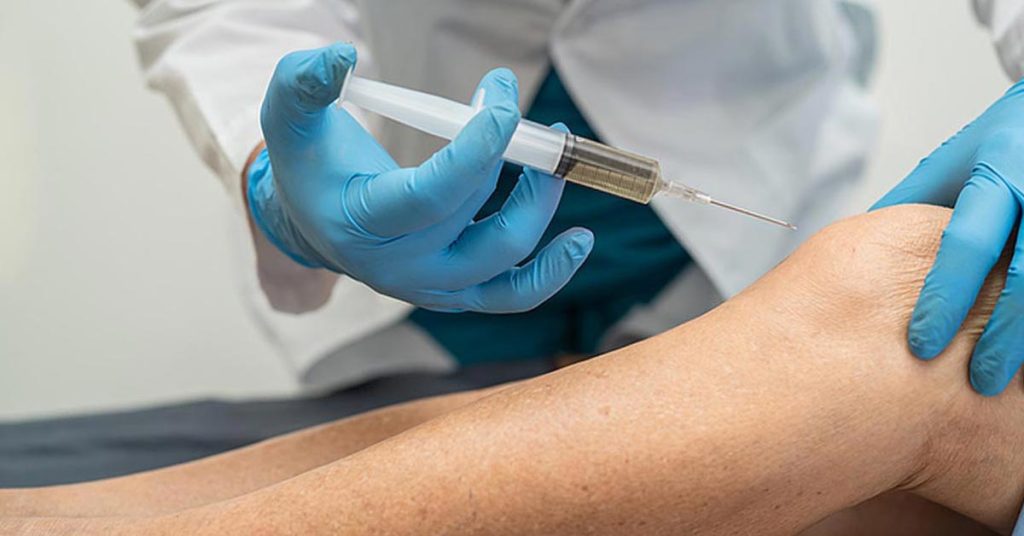
Hyaluronic acid injections, also called viscosupplementation or knee gel injections, are used for selected patients with symptomatic knee osteoarthritis. The treatment is designed to supplement joint-fluid lubrication and attempt to improve comfort or function.
Professional recommendations differ regarding routine use for knee osteoarthritis. Some patients discuss this option after other conservative measures have not provided enough support, but benefit is not guaranteed. Hyaluronic acid does not rebuild cartilage or cure arthritis.
Joint Health Solutions does not promote hyaluronic acid injections as a treatment for glenohumeral shoulder osteoarthritis because strong evidence has found no demonstrated benefit for that condition.

Platelet-rich plasma, or PRP, is prepared from a patient’s own blood. The platelet-concentrated portion is injected into a selected treatment area.
Evidence for PRP in knee osteoarthritis remains limited, and preparation methods and treatment protocols vary. Some studies report symptom or functional improvement in selected patients, but PRP has not been shown to regenerate cartilage, reverse arthritis, or reliably prevent surgery.
Reliable evidence is lacking for PRP as an established treatment for glenohumeral shoulder osteoarthritis. This broad page therefore does not recommend shoulder PRP as a proven arthritis treatment.

Toradol is the brand name commonly used for ketorolac, a prescription nonsteroidal anti-inflammatory drug. At Joint Health Solutions, Toradol is administered as an intramuscular injection, meaning it is injected into a muscle rather than into the knee or shoulder joint.
Toradol can be considered for selected acute-pain presentations when short-term non-opioid support is clinically appropriate. It is not an image-guided joint injection and should not be presented as routine treatment for chronic arthritis or ongoing joint stiffness.
Ketorolac has important gastrointestinal, kidney, cardiovascular, and bleeding risks. Medication history, kidney health, cardiovascular history, bleeding risk, and concurrent use of aspirin or other NSAIDs must be reviewed before treatment.
Different treatment options work through different mechanisms and are not interchangeable.
| Treatment or Approach | Commonly Considered For | Typical Goal | Evidence Considerations | Important Limitations |
|---|---|---|---|---|
| Cortisone injection | Selected knee or shoulder inflammation and arthritis flare-ups | Short-term reduction of inflammation-related symptoms | Evidence supports short-term relief for symptomatic knee osteoarthritis | Does not heal cartilage or tendons; repeated use requires individualized review |
| Hyaluronic acid injection | Selected symptomatic knee osteoarthritis patients | Attempt to support comfort, lubrication, and movement | Professional recommendations differ; AAOS does not recommend routine use | Knee only on this page; no cartilage regrowth; response is not guaranteed |
| PRP injection | Selected knee osteoarthritis cases | Attempt to improve symptoms and function | AAOS describes knee evidence as limited; recommendations differ | No proven cartilage regeneration; protocols vary; not established for shoulder osteoarthritis |
| Toradol IM injection | Selected acute-pain presentations | Short-term systemic non-opioid pain support | Use is governed by ketorolac prescribing precautions | Injected into a muscle, not the joint; not chronic arthritis treatment |
| Physical therapy and movement support | Knee or shoulder pain, weakness, stiffness, or reduced activity tolerance | Improve movement, strength, balance, function, and activity participation | Stronger evidence supports exercise-based care for knee osteoarthritis | Requires appropriate programming and participation; does not guarantee surgery avoidance |
Treatment response varies. A positive symptom response does not prove that cartilage, tendons, or other structures have regenerated.
Joint injections can be discussed for selected knee and shoulder conditions after a clinical evaluation.
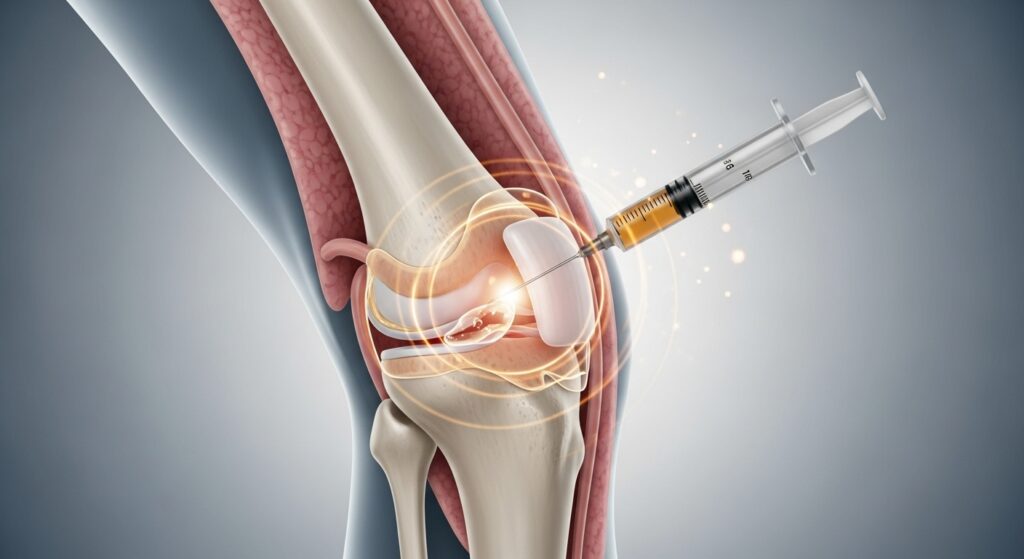
An injection should not delay urgent or specialist evaluation. Seek prompt medical care for:
Additional imaging, laboratory evaluation, urgent assessment, or specialist referral can be recommended when clinically appropriate. Joint Health Solutions does not claim to perform every form of diagnostic imaging, laboratory testing, or fluid analysis.
Knee swelling sometimes requires a separate evaluation. When excess fluid is contributing to pressure and restricted movement, knee arthrocentesis may be considered to remove fluid. Aspiration does not permanently prevent swelling from returning.
The treatment used for a knee condition is not automatically appropriate for the shoulder. In particular, hyaluronic acid should not be promoted for glenohumeral shoulder osteoarthritis, and PRP is not an established shoulder osteoarthritis treatment.

The visit begins with a review of symptoms, medical history, current medications, allergies, previous injuries, available records, prior treatment, and functional limitations.
The provider can assess movement, range of motion, strength, stability, tenderness, swelling, and activities that trigger symptoms. Existing imaging can be reviewed when available. Additional evaluation or referral can be recommended when the findings require it.
If an injection is appropriate, the provider explains the proposed treatment, alternatives, expected goals, evidence limitations, risks, and aftercare.
The treatment area is cleaned using an antiseptic. Positioning and comfort measures depend on the joint and procedure. Patients should not stop blood thinners or other prescribed medications unless instructed by the clinician who manages those medications.
The provider places the needle into or near the selected treatment area. Ultrasound or fluoroscopic guidance can be used when clinically appropriate.
Patients can feel a brief pinch, pressure, or temporary discomfort. The exact experience depends on the treated area, medication, technique, and individual sensitivity.
After the procedure, patients receive instructions based on the treatment performed. These can include temporary activity modification, monitoring the injection site, medication guidance, and follow-up recommendations.
Mild soreness can occur after an injection. Contact the clinic if pain or swelling is increasing rather than improving, or if unusual symptoms develop. Fever, spreading redness, severe pain, breathing difficulty, or other concerning symptoms require prompt medical attention.

Every injection or medication has potential risks. The provider should review individual health factors before treatment.
General procedural risks can include:
Toradol IM can cause serious gastrointestinal bleeding, kidney injury, cardiovascular events, and bleeding complications. It should not be combined casually with aspirin or other NSAIDs and is not appropriate for every patient.
Patients should tell the provider about:
There is no guaranteed duration for an injection. Response depends on the treatment, diagnosis, severity, affected joint, medical history, activity demands, rehabilitation plan, and individual response.
| Treatment | What Patients Should Understand |
|---|---|
| Cortisone | Intended primarily for short-term symptom support. Onset and duration differ by patient and condition. |
| Hyaluronic acid | Improvement, when it occurs, can be gradual. Benefit is not guaranteed, and recommendations differ regarding routine knee use. |
| PRP | Improvement can be gradual. Knee osteoarthritis evidence is limited, and no fixed treatment schedule or duration applies to every patient. |
| Toradol IM | Intended only for short-term acute-pain support. It is not ongoing treatment for chronic arthritis or stiffness. |
Treatment should be reassessed when symptoms return rather than automatically repeated. A provider can determine whether another injection, rehabilitation, bracing, aspiration, medication review, or orthopedic referral is the more appropriate next step.

Treatment recommendations are based on the affected joint, symptoms, medical history, current medications, previous care, movement limitations, and patient goals.
Joint Health Solutions focuses its injection content and treatment planning on approved knee and shoulder concerns rather than unrelated spine, hip, hand, wrist, elbow, or ankle procedures.
Cortisone, knee hyaluronic acid, knee PRP, and Toradol IM are discussed according to their different purposes, evidence levels, and limitations. No treatment is presented as universally superior.
Selected injections can use ultrasound or fluoroscopic guidance when it supports accurate treatment placement. Guidance is chosen according to the procedure rather than being promoted as necessary for every patient.
When the findings suggest infection, serious injury, instability, advanced structural disease, or symptoms that are unlikely to improve with injection care, the provider can recommend urgent assessment or orthopedic referral.
Jeffrey Galvin, MD, serves as Medical Director. Ariel Curtis, FNP-C, is a board-certified family nurse practitioner and Joint Injection Specialist. Provider credentials should not be interpreted as a statement that either provider authored or medically reviewed this page unless that review is separately documented.
For Concord-area patients, appointments and procedures are provided at the Joint Health Solutions clinic in Charlotte.
Most patients feel a brief pinch, pressure, or temporary discomfort during an injection. The experience varies according to the joint, target area, medication, positioning, and individual sensitivity. The provider explains the procedure before beginning and can discuss available comfort measures. Mild soreness can occur afterward. Increasing pain, spreading redness, fever, major swelling, or other concerning symptoms should be reported promptly.
Joint Health Solutions focuses this service on selected knee and shoulder concerns. The page does not represent treatment for the spine, facet joints, sacroiliac joints, hips, hands, wrists, elbows, or ankles. The provider first evaluates the likely cause of symptoms and can recommend another clinician, imaging, laboratory evaluation, urgent care, or orthopedic assessment when the condition falls outside the clinic’s treatment scope.
No. Cortisone is used primarily for short-term reduction of inflammation-related symptoms. It does not restore cartilage, heal a damaged tendon, reverse arthritis, or guarantee that symptoms will not return. The provider considers the affected joint, diagnosis, diabetes, previous injections, tissue health, medications, and prior response before recommending treatment or discussing whether a future injection could be appropriate.
Joint Health Solutions should not promote hyaluronic acid injections for glenohumeral shoulder osteoarthritis. AAOS guidance reports no demonstrated benefit for that condition. Hyaluronic acid is discussed only for selected patients with symptomatic knee osteoarthritis. Even for the knee, professional recommendations differ, benefit is not guaranteed, and the treatment does not regrow cartilage or cure osteoarthritis.
Evidence for PRP in knee osteoarthritis remains limited. Some research reports improvement in symptoms or function for selected patients, but preparation methods and protocols vary, and professional recommendations are not uniform. PRP has not been proven to regenerate cartilage or reverse arthritis. Reliable evidence is lacking for PRP as an established treatment for glenohumeral shoulder osteoarthritis, so shoulder claims must remain particularly cautious.
No. Toradol, or ketorolac, is given as an intramuscular injection into a muscle. It is not injected into the knee or shoulder joint and is not an image-guided procedure. It can be considered only for selected acute-pain situations requiring short-term non-opioid support. Gastrointestinal, kidney, cardiovascular, medication-interaction, and bleeding risks must be reviewed before treatment.
No. Image guidance can be used for selected procedures when it supports treatment placement, but the appropriate method depends on the joint, target, treatment, available records, and clinical findings. Guidance does not guarantee relief or eliminate all risk. Toradol IM is not image-guided. The provider should explain whether ultrasound, fluoroscopy, another approach, or no injection is recommended.
Provide a complete medication list and disclose blood thinners, aspirin, NSAIDs, diabetes medications, allergies, kidney disease, heart disease, previous stroke, stomach ulcers, bleeding problems, infections, antibiotic use, pregnancy, and previous injection reactions. Also explain previous injuries, treatment responses, and available imaging. Do not independently stop a prescribed blood thinner or another important medication before the appointment.
Referral can be appropriate when severe structural damage, major instability, persistent locking, significant weakness, traumatic injury, deformity, progressive loss of function, or inadequate response to appropriate non-surgical care is present. Injection treatment should not be repeated automatically when it is not helping. Urgent assessment is necessary for suspected infection, dislocation, fracture, inability to bear weight, or other serious symptoms.
Patients traveling from Concord are seen at Joint Health Solutions, 9350 Benfield Rd, #109, Charlotte, NC 28269. The practice does not claim a physical office in Concord. Call 704-833-3566 to discuss your knee or shoulder symptoms, confirm appointment details, and schedule an evaluation.
If knee or shoulder symptoms are limiting walking, stairs, reaching, lifting, sleep, work, or daily activity, schedule an evaluation to identify the likely cause and discuss whether an injection or another non-surgical pathway is appropriate.